
UNESCO World Heritage — Mixed

- 1
UNESCO World Heritage site inscribed 1979, located in United Republic of Tanzania. The Ngorongoro Conservation Area spans vast expanses of highland plains, savanna, savanna woodlands and forests. Established in 1959 as a multiple land use area, with wildlife coexisting with semi-nomadic Maasai pastoralists practicing traditional livestock grazing, it includes the spectacular Ngorongoro Crater, the world’s largest caldera. The property has global importance for biodiversity conservation due to the presence of globally threatened species, the density of wildlife inhabiting the area, and the annual migration of wildebeest, zebra, gazelles and other animals into the northern plains. Extensive archaeological research has also yielded a long sequence of evidence of human evolution and human-environment dynamics, including early hominid footprints dating back 3.6 million years.

- 2
UNESCO World Heritage site inscribed 1979, located in Guatemala. In the heart of the jungle, surrounded by lush vegetation, lies one of the major sites of Mayan civilization, inhabited from the 6th century B.C. to the 10th century A.D. The ceremonial centre contains superb temples and palaces, and public squares accessed by means of ramps. Remains of dwellings are scattered throughout the surrounding countryside.

- 3
UNESCO World Heritage site inscribed 1979, transnational across Albania,North Macedonia. A superlative natural phenomenon, Lake Ohrid provides a refuge for numerous endemic species of freshwater fauna and flora dating from the Tertiary period. Situated on the shores of the lake, the town of Ohrid is one of the oldest human settlements in Europe. Built mainly between the 7th and 19th centuries, it has the oldest Slav monastery (St Pantelejmon) and more than 800 Byzantine-style icons dating from the 11th to the end of the 14th century. In the shallow waters near the shores of the lake, three sites testify to the presence of prehistoric pile dwellings, and the small Lin Peninsula is the site of the remains of an Early Christian church founded in the middle of the 6th century.

- 4
UNESCO World Heritage site inscribed 1981, located in Australia. This unique archaeological and ethnological reserve, located in the Northern Territory, has been inhabited continuously for more than 40,000 years. The cave paintings, rock carvings and archaeological sites record the skills and way of life of the region’s inhabitants, from the hunter-gatherers of prehistoric times to the Aboriginal people still living there. It is a unique example of a complex of ecosystems, including tidal flats, floodplains, lowlands and plateaux, and provides a habitat for a wide range of rare or endemic species of plants and animals.

- 5
UNESCO World Heritage site inscribed 1981, located in Australia. The fossil remains of a series of lakes and sand formations that date from the Pleistocene can be found in this region, together with archaeological evidence of human occupation dating from 45–60,000 years ago. It is a unique landmark in the study of human evolution on the Australian continent. Several well-preserved fossils of giant marsupials have also been found here.

- 6
UNESCO World Heritage site inscribed 1982, located in Algeria. Located in a strange lunar landscape of great geological interest, this site has one of the most important groupings of prehistoric cave art in the world. More than 15,000 drawings and engravings record the climatic changes, the animal migrations and the evolution of human life on the edge of the Sahara from 6000 BC to the first centuries of the present era. The geological formations are of outstanding scenic interest, with eroded sandstones forming ‘forests of rock’.

- 7
UNESCO World Heritage site inscribed 1982, located in Australia. In a region that has been subjected to severe glaciation, these parks and reserves, with their steep gorges, covering an area of over 1 million ha, constitute one of the last expanses of temperate rainforest in the world. Remains found in limestone caves attest to the human occupation of the area for more than 20,000 years.

- 8
UNESCO World Heritage site inscribed 1983, located in Peru. Machu Picchu stands 2,430 m above sea-level, in the middle of a tropical mountain forest, in an extraordinarily beautiful setting. It was probably the most amazing urban creation of the Inca Empire at its height; its giant walls, terraces and ramps seem as if they have been cut naturally in the continuous rock escarpments. The natural setting, on the eastern slopes of the Andes, encompasses the upper Amazon basin with its rich diversity of flora and fauna.

- 9
UNESCO World Heritage site inscribed 1985, located in Türkiye. In a spectacular landscape, entirely sculpted by erosion, the Göreme valley and its surroundings contain rock-hewn sanctuaries that provide unique evidence of Byzantine art in the post-Iconoclastic period. Dwellings, troglodyte villages and underground towns – the remains of a traditional human habitat dating back to the 4th century – can also be seen there.

- 10
UNESCO World Heritage site inscribed 1986, located in United Kingdom of Great Britain and Northern Ireland. This volcanic archipelago, with its spectacular landscapes, is situated off the coast of the Hebrides and comprises the islands of Hirta, Dun, Soay and Boreray. It has some of the highest cliffs in Europe, which have large colonies of rare and endangered species of birds, especially puffins and gannets. The archipelago, uninhabited since 1930, bears the evidence of more than 2,000 years of human occupation in the extreme conditions prevalent in the Hebrides. Human vestiges include built structures and field systems, the cleits and the traditional Highland stone houses. They feature the vulnerable remains of a subsistence economy based on the products of birds, agriculture and sheep farming.

- 11
UNESCO World Heritage site inscribed 1987, located in China. The sacred Mount Tai ('shan' means 'mountain') was the object of an imperial cult for nearly 2,000 years, and the artistic masterpieces found there are in perfect harmony with the natural landscape. It has always been a source of inspiration for Chinese artists and scholars and symbolizes ancient Chinese civilizations and beliefs.

- 12
UNESCO World Heritage site inscribed 1987, located in Australia. This park, formerly called Uluru (Ayers Rock – Mount Olga) National Park, features spectacular geological formations that dominate the vast red sandy plain of central Australia. Uluru, an immense monolith, and Kata Tjuta, the rock domes located west of Uluru, form part of the traditional belief system of one of the oldest human societies in the world. The traditional owners of Uluru-Kata Tjuta are the Anangu Aboriginal people.

- 13
UNESCO World Heritage site inscribed 1988, located in Greece. An Orthodox spiritual centre since 1054, Mount Athos has enjoyed an autonomous statute since Byzantine times. The 'Holy Mountain', which is forbidden to women and children, is also a recognized artistic site. The layout of the monasteries (about 20 of which are presently inhabited by some 1,400 monks) had an influence as far afield as Russia, and its school of painting influenced the history of Orthodox art.

- 14
UNESCO World Heritage site inscribed 1988, located in Greece. In a region of almost inaccessible sandstone peaks, monks settled on these 'columns of the sky' from the 11th century onwards. Twenty-four of these monasteries were built, despite incredible difficulties, at the time of the great revival of the eremetic ideal in the 15th century. Their 16th-century frescoes mark a key stage in the development of post-Byzantine painting.

- 15
UNESCO World Heritage site inscribed 1988, located in Türkiye. Deriving from springs in a cliff almost 200 m high overlooking the plain, calcite-laden waters have created at Pamukkale (Cotton Palace) an unreal landscape, made up of mineral forests, petrified waterfalls and a series of terraced basins. At the end of the 2nd century B.C. the dynasty of the Attalids, the kings of Pergamon, established the thermal spa of Hierapolis. The ruins of the baths, temples and other Greek monuments can be seen at the site.

- 16
UNESCO World Heritage site inscribed 1989, located in Mali. The Bandiagara site is an outstanding landscape of cliffs and sandy plateaux with some beautiful architecture (houses, granaries, altars, sanctuaries and Togu Na, or communal meeting-places). Several age-old social traditions live on in the region (masks, feasts, rituals, and ceremonies involving ancestor worship). The geological, archaeological and ethnological interest, together with the landscape, make the Bandiagara plateau one of West Africa's most impressive sites.

- 17
UNESCO World Heritage site inscribed 1990, located in New Zealand. In 1993 Tongariro became the first property to be inscribed on the World Heritage List under the revised criteria describing cultural landscapes. The mountains at the heart of the park have cultural and religious significance for the Maori people and symbolize the spiritual links between this community and its environment. The park has active and extinct volcanoes, a diverse range of ecosystems and some spectacular landscapes.

- 18
UNESCO World Heritage site inscribed 1990, located in China. Huangshan, known as 'the loveliest mountain of China', was acclaimed through art and literature during a good part of Chinese history (e.g. the Shanshui 'mountain and water' style of the mid-16th century). Today it holds the same fascination for visitors, poets, painters and photographers who come on pilgrimage to the site, which is renowned for its magnificent scenery made up of many granite peaks and rocks emerging out of a sea of clouds.

- 19
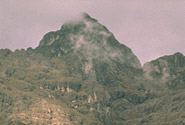
UNESCO World Heritage site inscribed 1990, located in Peru. The park was created in 1983 to protect the fauna and flora of the rainforests that are characteristic of this region of the Andes. There is a high level of endemism among the fauna and flora found in the park. The yellow-tailed woolly monkey, previously thought extinct, is found only in this area. Research undertaken since 1985 has already uncovered 36 previously unknown archaeological sites at altitudes of between 2,500 and 4,000 m, which give a good picture of pre-Inca society.
- 20
UNESCO World Heritage site inscribed 1996, located in Sweden. The Arctic Circle region of northern Sweden is the home of the Saami people. It is the largest area in the world (and one of the last) with an ancestral way of life based on the seasonal movement of livestock. Every summer, the Saami lead their huge herds of reindeer towards the mountains through a natural landscape hitherto preserved, but now threatened by the advent of motor vehicles. Historical and ongoing geological processes can be seen in the glacial moraines and changing water courses.

- 21
UNESCO World Heritage site inscribed 1996, located in China. The first Buddhist temple in China was built here in Sichuan Province in the 1st century A.D. in the beautiful surroundings of the summit Mount Emei. The addition of other temples turned the site into one of Buddhism's holiest sites. Over the centuries, the cultural treasures grew in number. The most remarkable is the Giant Buddha of Leshan, carved out of a hillside in the 8th century and looking down on the confluence of three rivers. At 71 m high, it is the largest Buddha in the world. Mount Emei is also notable for its exceptionally diverse vegetation, ranging from subtropical to subalpine pine forests. Some of the trees there are more than 1,000 years old.

- 22
UNESCO World Heritage site inscribed 1997, transnational across France,Spain. This outstanding mountain landscape, which spans the contemporary national borders of France and Spain, is centred around the peak of Mount Perdu, a calcareous massif that rises to 3,352 m. The site, with a total area of 30,639 ha, includes two of Europe's largest and deepest canyons on the Spanish side and three major cirque walls on the more abrupt northern slopes with France, classic presentations of these geological landforms. The site is also a pastoral landscape reflecting an agricultural way of life that was once widespread in the upland regions of Europe but now survives only in this part of the Pyrénées. Thus it provides exceptional insights into past European society through its landscape of villages, farms, fields, upland pastures and mountain roads.

- 23
UNESCO World Heritage site inscribed 1999, located in Spain. Ibiza provides an excellent example of the interaction between the marine and coastal ecosystems. The dense prairies of oceanic Posidonia (seagrass), an important endemic species found only in the Mediterranean basin, contain and support a diversity of marine life. Ibiza preserves considerable evidence of its long history. The archaeological sites at Sa Caleta (settlement) and Puig des Molins (necropolis) testify to the important role played by the island in the Mediterranean economy in protohistory, particularly during the Phoenician-Carthaginian period. The fortified Upper Town (Alta Vila) is an outstanding example of Renaissance military architecture; it had a profound influence on the development of fortifications in the Spanish settlements of the New World.

- 24
UNESCO World Heritage site inscribed 1999, located in China. Mount Wuyi is the most outstanding area for biodiversity conservation in south-east China and a refuge for a large number of ancient, relict species, many of them endemic to China. The serene beauty of the dramatic gorges of the Nine Bend River, with its numerous temples and monasteries, many now in ruins, provided the setting for the development and spread of neo-Confucianism, which has been influential in the cultures of East Asia since the 11th century. In the 1st century B.C. a large administrative capital was built at nearby Chengcun by the Han dynasty rulers. Its massive walls enclose an archaeological site of great significance.

- 25
UNESCO World Heritage site inscribed 2000, transnational across Lesotho,South Africa. The Maloti-Drakensberg Park is a transnational property composed of the uKhahlamba Drakensberg National Park in South Africa and the Sehlathebe National Park in Lesotho. The site has exceptional natural beauty in its soaring basaltic buttresses, incisive dramatic cutbacks, and golden sandstone ramparts as well as visually spectacular sculptured arches, caves, cliffs, pillars and rock pools. The site's diversity of habitats protects a high level of endemic and globally important plants. The site harbors endangered species such as the Cape vulture (Gyps coprotheres) and the bearded vulture (Gypaetus barbatus). Lesotho’s Sehlabathebe National Park also harbors the Maloti minnow (Pseudobarbus quathlambae), a critically endangered fish species only found in this park. This spectacular natural site contains many caves and rock-shelters with the largest and most concentrated group of paintings in Africa south of the Sahara. They represent the spiritual life of the San people, who lived in this area over a period of 4,000 years.

- 26
UNESCO World Heritage site inscribed 2002, located in Mexico. The site is located in the central/southern portion of the Yucatán Peninsula, in southern Mexico and includes the remains of the important Maya city Calakmul, set deep in the tropical forest of the Tierras Bajas. The city played a key role in the history of this region for more than twelve centuries and is characterized by well-preserved structures providing a vivid picture of life in an ancient Maya capital. The property also falls within the Mesoamerica biodiversity hotspot, the third largest in the world, encompassing all subtropical and tropical ecosystems from central Mexico to the Panama Canal.

- 27
UNESCO World Heritage site inscribed 2007, located in Gabon. The Ecosystem and Relict Cultural Landscape of Lopé-Okanda demonstrates an unusual interface between dense and well-conserved tropical rainforest and relict savannah environments with a great diversity of species, including endangered large mammals, and habitats. The site illustrates ecological and biological processes in terms of species and habitat adaptation to post-glacial climatic changes. It contains evidence of the successive passages of different peoples who have left extensive and comparatively well-preserved remains of habitation around hilltops, caves and shelters, evidence of iron-working and a remarkable collection of some 1,800 petroglyphs (rock carvings). The property’s collection of Neolithic and Iron Age sites, together with the rock art found there, reflects a major migration route of Bantu and other peoples from West Africa along the River Ogooué valley to the north of the dense evergreen Congo forests and to central east and southern Africa, that has shaped the development of the whole of sub-Saharan Africa.

- 28
UNESCO World Heritage site inscribed 2010, located in United States of America. Papahānaumokuākea is a vast and isolated linear cluster of small, low lying islands and atolls, with their surrounding ocean, roughly 250 km to the northwest of the main Hawaiian Archipelago and extending over some 1931 km. The area has deep cosmological and traditional significance for living Native Hawaiian culture, as an ancestral environment, as an embodiment of the Hawaiian concept of kinship between people and the natural world, and as the place where it is believed that life originates and to where the spirits return after death. On two of the islands, Nihoa and Makumanamana, there are archaeological remains relating to pre-European settlement and use. Much of the monument is made up of pelagic and deepwater habitats, with notable features such as seamounts and submerged banks, extensive coral reefs and lagoons. It is one of the largest marine protected areas (MPAs) in the world.

- 29
UNESCO World Heritage site inscribed 2011, located in Jordan. The 74,000-hectare property, inscribed as a mixed natural and cultural site, is situated in southern Jordan, near the border with Saudi Arabia. It features a varied desert landscape consisting of a range of narrow gorges, natural arches, towering cliffs, ramps, massive landslides and caverns. Petroglyphs, inscriptions and archaeological remains in the site testify to 12,000 years of human occupation and interaction with the natural environment. The combination of 25,000 rock carvings with 20,000 inscriptions trace the evolution of human thought and the early development of the alphabet. The site illustrates the evolution of pastoral, agricultural and urban activity in the region.

- 30
UNESCO World Heritage site inscribed 2012, located in Palau. Rock Islands Southern Lagoon covers 100,200 ha and includes 445 uninhabited limestone islands of volcanic origin. Many of them display unique mushroom-like shapes in turquoise lagoons surrounded by coral reefs. The aesthetic beauty of the site is heightened by a complex reef system featuring over 385 coral species and different types of habitat. They sustain a large diversity of plants, birds and marine life including dugong and at least thirteen shark species. The site harbours the highest concentration of marine lakes anywhere, isolated bodies of seawater separated from the ocean by land barriers. They are among the islands’ distinctive features and sustain high endemism of populations which continue to yield new species discoveries. The remains of stonework villages, as well as burial sites and rock art, bear testimony to the organization of small island communities over some three millennia. The abandonment of the villages in the 17th and 18th centuries illustrates the consequences of climate change, population growth and subsistence behaviour on a society living in a marginal marine environment.

- 31
UNESCO World Heritage site inscribed 2014, located in Viet Nam. Situated near the southern margin of the Red River Delta, the Trang An Landscape Complex is a spectacular landscape of limestone karst peaks permeated with valleys, many of them partly submerged and surrounded by steep, almost vertical cliffs. Exploration of caves at different altitudes has revealed archaeological traces of human activity over a continuous period of more than 30,000 years. They illustrate the occupation of these mountains by seasonal hunter-gatherers and how they adapted to major climatic and environmental changes, especially the repeated inundation of the landscape by the sea after the last ice age. The story of human occupation continues through the Neolithic and Bronze Ages to the historical era. Hoa Lu, the ancient capital of Viet Nam, was strategically established here in the 10th and 11th centuries AD. The property also contains temples, pagodas, paddy-fields and small villages.

- 32
UNESCO World Heritage site inscribed 2015, located in Jamaica. The site encompasses a rugged and extensively forested mountainous region in the south-east of Jamaica, which provided refuge first for the indigenous Tainos fleeing slavery and then for Maroons (former enslaved peoples). They resisted the European colonial system in this isolated region by establishing a network of trails, hiding places and settlements, which form the Nanny Town Heritage Route. The forests offered the Maroons everything they needed for their survival. They developed strong spiritual connections with the mountains, still manifest through the intangible cultural legacy of, for example, religious rites, traditional medicine and dances. The site is also a biodiversity hotspot for the Caribbean Islands with a high proportion of endemic plant species, especially lichens, mosses and certain flowering plants.

- 33
UNESCO World Heritage site inscribed 2016, located in Chad. In the northeast of the country, the sandstone Ennedi Massif has been sculpted over time by water and wind erosion into a plateau featuring canyons and valleys that present a spectacular landscape marked by cliffs, natural arches and pitons. In the largest canyons, the permanent presence of water plays an essential role in the Massif’s ecosystem, sustaining flora and fauna as well as human life. Thousands of images have been painted and carved into the rock surface of caves, canyons and shelters, presenting one of the largest ensembles of rock art in the Sahara.

- 34The Ahwar of Southern Iraq: Refuge of Biodiversity and the Relict Landscape of the Mesopotamian Cities ↗ 2016
UNESCO World Heritage site inscribed 2016, located in Iraq. The Ahwar is made up of seven components: three archaeological sites and four wetland marsh areas in southern Iraq. The archaeological cities of Uruk and Ur and the Tell Eridu archaeological site form part of the remains of the Sumerian cities and settlements that developed in southern Mesopotamia between the 4th and the 3rd millennium BCE in the marshy delta of the Tigris and Euphrates rivers. The Ahwar of Southern Iraq – also known as the Iraqi Marshlands – are unique, as one of the world’s largest inland delta systems, in an extremely hot and arid environment.

- 35
UNESCO World Heritage site inscribed 2016, located in India. Located at the heart of the Himalayan range in northern India (State of Sikkim), the Khangchendzonga National Park includes a unique diversity of plains, valleys, lakes, glaciers and spectacular, snow-capped mountains covered with ancient forests, including the world’s third highest peak, Mount Khangchendzonga. Mythological stories are associated with this mountain and with a great number of natural elements (caves, rivers, lakes, etc.) that are the object of worship by the indigenous people of Sikkim. The sacred meanings of these stories and practices have been integrated with Buddhist beliefs and constitute the basis for Sikkimese identity.

- 36
UNESCO World Heritage site inscribed 2018, located in Canada. Pimachiowin Aki ('The Land That Gives Life') is a landscape of rivers, lakes, wetlands, and boreal forest. It forms part of the ancestral home of the Anishinaabeg, an indigenous people living from fishing, hunting and gathering. The site encompasses the traditional lands of four Anishinaabeg communities (Bloodvein River, Little Grand Rapids, Pauingassi and Poplar River). It is an exceptional example of the cultural tradition of Ji-ganawendamang Gidakiiminaan ('keeping the land'), which consists of honouring the gifts of the Creator, respecting all forms of life, and maintaining harmonious relations with others. A complex network of livelihood sites, habitation sites, travel routes and ceremonial sites, often linked by waterways, provides testimony to this ancient and continuing tradition.

- 37
UNESCO World Heritage site inscribed 2018, located in Mexico. Tehuacán-Cuicatlán Valley, part of the Mesoamerican region, is the arid or semi-arid zone with the richest biodiversity in all of North America. Consisting of three components, Zapotitlán-Cuicatlán, San Juan Raya and Purrón, it is one of the main centres of diversification for the cacti family, which is critically endangered worldwide. The valley harbours the densest forests of columnar cacti in the world, shaping a unique landscape that also includes agaves, yuccas and oaks. Archaeological remains demonstrate technological developments and the early domestication of crops. The valley presents an exceptional water management system of canals, wells, aqueducts and dams, the oldest in the continent, which has allowed for the emergence of agricultural settlements.

- 38
UNESCO World Heritage site inscribed 2019, located in Brazil. This natural-cultural landscape encompasses the historic centre of Paraty, one of Brazil's best-preserved coastal towns, four Brazilian Atlantic Forest protected natural areas, one of the world’s five key biodiversity hotspots, as well as part of the Serra da Bocaina mountain range and the Atlantic coastal region. Serra do Mar and Ilha Grande Bay is home to an impressive diversity of animal species, some of which are threatened, such as the jaguar (Panthera onca), the white-lipped peccary (Tayassu pecari) and several primate species, including the Southern Muriqui (Brachyteles arachnoides), which are emblematic of the property. In the late 17th century, Paraty was the end-point of the Caminho do Ouro (Gold Route), along which gold was shipped to Europe. Its port also served as an entry point for tools and African slaves, sent to work in the mines. A defence system was built to protect the wealth of the port and the town. The historic centre of Paraty has retained its 18th century plan and much of its colonial architecture dating from the 18th and early 19th centuries.
