
UNESCO World Heritage — Natural
 by UNESCO World Heritage @unesco_world_heritage 213 places · 1 saves
 - 1
UNESCO World Heritage site inscribed 1978, located in Ecuador. Situated in the Pacific Ocean some 1,000 km from the South American continent, these 19 islands and the surrounding marine reserve have been called a unique ‘living museum and showcase of evolution’. Located at the confluence of three ocean currents, the Galápagos are a ‘melting pot’ of marine species. Ongoing seismic and volcanic activity reflects the processes that formed the islands. These processes, together with the extreme isolation of the islands, led to the development of unusual animal life – such as the land iguana, the giant tortoise and the many types of finch – that inspired Charles Darwin’s theory of evolution by natural selection following his visit in 1835.

- 2
UNESCO World Heritage site inscribed 1978, located in Ethiopia. Massive erosion over the years on the Ethiopian plateau has created one of the most spectacular landscapes in the world, with jagged mountain peaks, deep valleys and sharp precipices dropping some 1,500 m. The park is home to some extremely rare animals such as the Gelada baboon, the Simien fox and the Walia ibex, a goat found nowhere else in the world.

- 3
UNESCO World Heritage site inscribed 1978, located in Canada. Located along the South Nahanni River, one of the most spectacular wild rivers in North America, this park contains deep canyons and huge waterfalls, as well as a unique limestone cave system. The park is also home to animals of the boreal forest, such as wolves, grizzly bears and caribou. Dall's sheep and mountain goats are found in the park's alpine environment.

- 4
UNESCO World Heritage site inscribed 1978, located in United States of America. The vast natural forest of Yellowstone National Park covers nearly 9,000 km2 ; 96% of the park lies in Wyoming, 3% in Montana and 1% in Idaho. Yellowstone contains half of all the world's known geothermal features, with more than 10,000 examples. It also has the world's largest concentration of geysers (more than 300 geyers, or two thirds of all those on the planet). Established in 1872, Yellowstone is equally known for its wildlife, such as grizzly bears, wolves, bison and wapitis.

- 5
UNESCO World Heritage site inscribed 1979, transnational across Belarus,Poland. The Białowieża Forest World Heritage site, on the border between Poland and Belarus, is an immense range of primary forest including both conifers and broadleaved trees covering a total area of 141,885 hectares. Situated on the watershed of the Baltic Sea and Black Sea, this transboundary property is exceptional for the opportunities it offers for biodiversity conservation. It is home to the largest population of the property’s iconic species, the European bison.

- 6
UNESCO World Heritage site inscribed 1979, located in Democratic Republic of the Congo. Virunga National Park (covering an area of 790,000 ha) comprises an outstanding diversity of habitats, ranging from swamps and steppes to the snowfields of Rwenzori at an altitude of over 5,000 m, and from lava plains to the savannahs on the slopes of volcanoes. Mountain gorillas are found in the park, some 20,000 hippopotamuses live in the rivers and birds from Siberia spend the winter there.

- 7
UNESCO World Heritage site inscribed 1979, located in Canada. In addition to its particularly beautiful scenery, Dinosaur Provincial Park – located at the heart of the province of Alberta's badlands – contains some of the most important fossil discoveries ever made from the 'Age of Reptiles', in particular about 35 species of dinosaur, dating back some 75 million years.

- 8
UNESCO World Heritage site inscribed 1979, transnational across Canada,United States of America. These parks comprise an impressive complex of glaciers and high peaks on both sides of the border between Canada (Yukon Territory and British Columbia) and the United States (Alaska). The spectacular natural landscapes are home to many grizzly bears, caribou and Dall's sheep. The site contains the largest non-polar icefield in the world.

- 9
UNESCO World Heritage site inscribed 1979, located in United States of America. Carved out by the Colorado River, the Grand Canyon (nearly 1,500 m deep) is the most spectacular gorge in the world. Located in the state of Arizona, it cuts across the Grand Canyon National Park. Its horizontal strata retrace the geological history of the past 2 billion years. There are also prehistoric traces of human adaptation to a particularly harsh environment.

- 10
UNESCO World Heritage site inscribed 1979, located in United States of America. This site at the southern tip of Florida has been called 'a river of grass flowing imperceptibly from the hinterland into the sea'. The exceptional variety of its water habitats has made it a sanctuary for a large number of birds and reptiles, as well as for threatened species such as the manatee.

- 11
UNESCO World Heritage site inscribed 1979, located in Croatia. The waters flowing over the limestone and chalk have, over thousands of years, deposited travertine barriers, creating natural dams which in turn have created a series of beautiful lakes, caves and waterfalls. These geological processes continue today. The forests in the park are home to bears, wolves and many rare bird species.

- 12
UNESCO World Heritage site inscribed 1979, located in Nepal. Sagarmatha is an exceptional area with dramatic mountains, glaciers and deep valleys, dominated by Mount Everest, the highest peak in the world (8,848 m). Several rare species, such as the snow leopard and the lesser panda, are found in the park. The presence of the Sherpas, with their unique culture, adds further interest to this site.

- 13
UNESCO World Heritage site inscribed 1980, located in Tunisia. The Ichkeul lake and wetland are a major stopover point for hundreds of thousands of migrating birds, such as ducks, geese, storks and pink flamingoes, who come to feed and nest there. Ichkeul is the last remaining lake in a chain that once extended across North Africa.

- 14
UNESCO World Heritage site inscribed 1980, located in Montenegro. This breathtaking national park was formed by glaciers and is traversed by rivers and underground streams. Along the Tara river canyon, which has the deepest gorges in Europe, the dense pine forests are interspersed with clear lakes and harbour a wide range of endemic flora.

- 15
UNESCO World Heritage site inscribed 1980, located in United States of America. Redwood National Park comprises a region of coastal mountains bordering the Pacific Ocean north of San Francisco. It is covered with a magnificent forest of coastal redwood trees, the tallest and most impressive trees in the world. The marine and land life are equally remarkable, in particular the sea lions, the bald eagle and the endangered California brown pelican.

- 16
UNESCO World Heritage site inscribed 1980, located in Democratic Republic of the Congo. The park's immense savannahs, grasslands and woodlands, interspersed with gallery forests along the river banks and the swampy depressions, are home to four large mammals: the elephant, giraffe, hippopotamus and above all the white rhinoceros. Though much larger than the black rhino, it is harmless; only some 30 individuals remain.

- 17
UNESCO World Heritage site inscribed 1980, located in Democratic Republic of the Congo. A vast area of primary tropical forest dominated by two spectacular extinct volcanoes, Kahuzi and Biega, the park has a diverse and abundant fauna. One of the last groups of eastern lowland (graueri) gorillas (consisting of only some 250 individuals) lives at between 2,100 and 2,400 m above sea-level.

- 18
UNESCO World Heritage site inscribed 1981, located in Senegal. Situated in the Senegal River delta, the Djoudj Sanctuary is a wetland of 16,000 ha, comprising a large lake surrounded by streams, ponds and backwaters. It forms a living but fragile sanctuary for some 1.5 million birds, such as the white pelican, the purple heron, the African spoonbill, the great egret and the cormorant.

- 19
UNESCO World Heritage site inscribed 1981, located in Argentina. The Los Glaciares National Park is an area of exceptional natural beauty, with rugged, towering mountains and numerous glacial lakes, including Lake Argentino, which is 160 km long. At its farthest end, three glaciers meet to dump their effluvia into the milky grey glacial water, launching massive igloo icebergs into the lake with thunderous splashes.

- 20
UNESCO World Heritage site inscribed 1981, located in United States of America. Mammoth Cave National Park, located in the state of Kentucky, has the world's largest network of natural caves and underground passageways, which are characteristic examples of limestone formations. The park and its underground network of more than 560 surveyed km of passageways are home to a varied flora and fauna, including a number of endangered species.

- 21
UNESCO World Heritage site inscribed 1981, located in United States of America. Located in the north-west of Washington State, Olympic National Park is renowned for the diversity of its ecosystems. Glacier-clad peaks interspersed with extensive alpine meadows are surrounded by an extensive old growth forest, among which is the best example of intact and protected temperate rainforest in the Pacific Northwest. Eleven major river systems drain the Olympic mountains, offering some of the best habitat for anadromous fish species in the country. The park also includes 100 km of wilderness coastline, the longest undeveloped coast in the contiguous United States, and is rich in native and endemic animal and plant species, including critical populations of the endangered northern spotted owl, marbled murrelet and bull trout.

- 22
UNESCO World Heritage site inscribed 1981, located in Senegal. Located in a well-watered area along the banks of the Gambia river, the gallery forests and savannahs of Niokolo-Koba National Park have a very rich fauna, among them Derby elands (largest of the antelopes), chimpanzees, lions, leopards and a large population of elephants, as well as many birds, reptiles and amphibians.

- 23
UNESCO World Heritage site inscribed 1981, located in Australia. The Great Barrier Reef is a site of remarkable variety and beauty on the north-east coast of Australia. It contains the world’s largest collection of coral reefs, with 400 types of coral, 1,500 species of fish and 4,000 types of mollusc. It also holds great scientific interest as the habitat of species such as the dugong (‘sea cow’) and the large green turtle, which are threatened with extinction.

- 24
UNESCO World Heritage site inscribed 1981, transnational across Côte d'Ivoire,Guinea. Located on the borders of Guinea, Liberia and Côte d’Ivoire, Mount Nimba rises above the surrounding savannah. Its slopes are covered by dense forest at the foot of grassy mountain pastures. They harbour an especially rich flora and fauna, with endemic species such as the viviparous toad and chimpanzees that use stones as tools.

- 25
UNESCO World Heritage site inscribed 1981, located in United Republic of Tanzania. The vast plains of the Serengeti comprise 1.5 million ha of savannah. The annual migration to permanent water holes of vast herds of herbivores (wildebeest, gazelles and zebras), followed by their predators, is one of the most impressive natural events in the world.

- 26
UNESCO World Heritage site inscribed 1981, located in Panama. Forming a bridge between the two continents of the New World, Darien National Park contains an exceptional variety of habitats – sandy beaches, rocky coasts, mangroves, swamps, and lowland and upland tropical forests containing remarkable wildlife. Two Indian tribes live in the park.

- 27
UNESCO World Heritage site inscribed 1982, located in Seychelles. The atoll is comprised of four large coral islands which enclose a shallow lagoon; the group of islands is itself surrounded by a coral reef. Due to difficulties of access and the atoll's isolation, Aldabra has been protected from human influence and thus retains some 152,000 giant tortoises, the world's largest population of this reptile.

- 28
UNESCO World Heritage site inscribed 1982, located in Australia. A remarkable example of isolated oceanic islands, born of volcanic activity more than 2,000 m under the sea, these islands boast a spectacular topography and are home to numerous endemic species, especially birds.

- 29
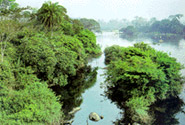
UNESCO World Heritage site inscribed 1982, located in Côte d'Ivoire. This park is one of the last major remnants of the primary tropical forest of West Africa. Its rich natural flora, and threatened mammal species such as the pygmy hippopotamus and 11 species of monkeys, are of great scientific interest.
- 30
UNESCO World Heritage site inscribed 1982, located in Honduras. Located on the watershed of the Río Plátano, the reserve is one of the few remains of a tropical rainforest in Central America and has an abundant and varied plant and wildlife. In its mountainous landscape sloping down to the Caribbean coast, over 2,000 indigenous people have preserved their traditional way of life.

- 31
UNESCO World Heritage site inscribed 1982, located in United Republic of Tanzania. Large numbers of elephants, black rhinoceroses, cheetahs, giraffes, hippopotamuses and crocodiles live in this immense sanctuary, which measures 50,000 km2 and is relatively undisturbed by human impact. The park has a variety of vegetation zones, ranging from dense thickets to open wooded grasslands.

- 32
UNESCO World Heritage site inscribed 1983, transnational across Costa Rica,Panama. The location of this unique site in Central America, where Quaternary glaciers have left their mark, has allowed the fauna and flora of North and South America to interbreed. Tropical rainforests cover most of the area. Four different Indian tribes inhabit this property, which benefits from close co-operation between Costa Rica and Panama.

- 33
UNESCO World Heritage site inscribed 1983, located in Bulgaria. The Srebarna Nature Reserve is a freshwater lake adjacent to the Danube and extending over 600 ha. It is the breeding ground of almost 100 species of birds, many of which are rare or endangered. Some 80 other bird species migrate and seek refuge there every winter. Among the most interesting bird species are the Dalmatian pelican, great egret, night heron, purple heron, glossy ibis and white spoonbill.

- 34
UNESCO World Heritage site inscribed 1983, located in Bulgaria. Spread over an area of over 27,000 ha, at an altitude between 1008 and 2914 m in the Pirin Mountains, southwest Bulgaria, the site comprises diverse limestone mountain landscapes with glacial lakes, waterfalls, caves and predominantly coniferous forests. It was added to the World Heritage List in 1983. The extension now covers an area of around 40,000 ha in the Pirin Mountains, and overlaps with the Pirin National Park, except for two areas developed for tourism (skiing). The dominant part of the extension is high mountain territory over 2000m in altitude, and covered mostly by alpine meadows, rocky screes and summits.

- 35
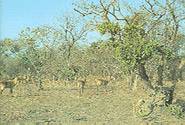
UNESCO World Heritage site inscribed 1983, located in Côte d'Ivoire. One of the largest protected areas in West Africa, this park is characterized by its great plant diversity. Due to the presence of the Comoé river, it contains plants which are normally only found much farther south, such as shrub savannahs and patches of thick rainforest.
- 36
UNESCO World Heritage site inscribed 1983, located in Canada. Situated on the plains in the north-central region of Canada, the park (which covers 44,807 km2) is home to North America's largest population of wild bison. It is also the natural nesting place of the whooping crane. Another of the park's attractions is the world's largest inland delta, located at the mouth of the Peace and Athabasca rivers.

- 37
UNESCO World Heritage site inscribed 1983, located in France. The nature reserve, which is part of the Regional Natural Park of Corsica, occupies the Scandola peninsula, an impressive, porphyritic rock mass. The vegetation is an outstanding example of scrubland. Seagulls, cormorants and sea eagles can be found there. The clear waters, with their islets and inaccessible caves, host a rich marine life.

- 38
UNESCO World Heritage site inscribed 1983, located in United States of America. Stretching over more than 200,000 ha, this exceptionally beautiful park is home to more than 3,500 plant species, including almost as many trees (130 natural species) as in all of Europe. Many endangered animal species are also found there, including what is probably the greatest variety of salamanders in the world. Since the park is relatively untouched, it gives an idea of temperate flora before the influence of humankind.

- 39
UNESCO World Heritage site inscribed 1983, located in Ecuador. With its outstanding natural beauty and two active volcanoes, the park illustrates the entire spectrum of ecosystems, ranging from tropical rainforests to glaciers, with striking contrasts between the snowcapped peaks and the forests of the plains. Its isolation has encouraged the survival of indigenous species such as the mountain tapir and the Andean condor.

- 40
UNESCO World Heritage site inscribed 1983, located in Seychelles. In the heart of the small island of Praslin, the reserve has the vestiges of a natural palm forest preserved in almost its original state. The famous coco de mer, from a palm-tree once believed to grow in the depths of the sea, is the largest seed in the plant kingdom.

- 41
UNESCO World Heritage site inscribed 1984, located in Democratic Republic of the Congo. Salonga National Park is Africa's largest tropical rainforest reserve. Situated at the heart of the central basin of the Congo river, the park is very isolated and accessible only by water. It is the habitat of many endemic endangered species, such as the dwarf chimpanzee, the Congo peacock, the forest elephant and the African slender-snouted or 'false' crocodile.

- 42
UNESCO World Heritage site inscribed 1984, located in Nepal. At the foot of the Himalayas, Chitwan is one of the few remaining undisturbed vestiges of the 'Terai' region, which formerly extended over the foothills of India and Nepal. It has a particularly rich flora and fauna. One of the last populations of single-horned Asiatic rhinoceros lives in the park, which is also one of the last refuges of the Bengal tiger.

- 43
UNESCO World Heritage site inscribed 1984, located in Malawi. Located at the southern end of the great expanse of Lake Malawi, with its deep, clear waters and mountain backdrop, the national park is home to many hundreds of fish species, nearly all endemic. Its importance for the study of evolution is comparable to that of the finches of the Galapagos Islands.

- 44
UNESCO World Heritage site inscribed 1984, located in Zimbabwe. On the banks of the Zambezi, great cliffs overhang the river and the floodplains. The area is home to a remarkable concentration of wild animals, including elephants, buffalo, leopards and cheetahs. An important concentration of Nile crocodiles is also be found in the area.

- 45
UNESCO World Heritage site inscribed 1984, located in Argentina. The semicircular waterfall at the heart of this site is some 80 m high and 2,700 m in diameter and is situated on a basaltic line spanning the border between Argentina and Brazil. Made up of many cascades producing vast sprays of water, it is one of the most spectacular waterfalls in the world. The surrounding subtropical rainforest has over 2,000 species of vascular plants and is home to the typical wildlife of the region: tapirs, giant anteaters, howler monkeys, ocelots, jaguars and caymans.

- 46
UNESCO World Heritage site inscribed 1984, located in Canada. The contiguous national parks of Banff, Jasper, Kootenay and Yoho, as well as the Mount Robson, Mount Assiniboine and Hamber provincial parks, studded with mountain peaks, glaciers, lakes, waterfalls, canyons and limestone caves, form a striking mountain landscape. The Burgess Shale fossil site, well known for its fossil remains of soft-bodied marine animals, is also found there.

- 47
UNESCO World Heritage site inscribed 1984, located in United States of America. Yosemite National Park lies in the heart of California. With its 'hanging' valleys, many waterfalls, cirque lakes, polished domes, moraines and U-shaped valleys, it provides an excellent overview of all kinds of granite relief fashioned by glaciation. At 600–4,000 m, a great variety of flora and fauna can also be found here.

- 48
UNESCO World Heritage site inscribed 1985, located in Peru. Situated in the Cordillera Blanca, the world's highest tropical mountain range, Mount Huascarán rises to 6,768 m above sea-level. The deep ravines watered by numerous torrents, the glacial lakes and the variety of the vegetation make it a site of spectacular beauty. It is the home of such species as the spectacled bear and the Andean condor.

- 49
UNESCO World Heritage site inscribed 1985, located in India. In the heart of Assam, this park is one of the last areas in eastern India undisturbed by a human presence. It is inhabited by the world's largest population of one-horned rhinoceroses, as well as many mammals, including tigers, elephants, panthers and bears, and thousands of birds.

- 50
UNESCO World Heritage site inscribed 1985, located in India. On a gentle slope in the foothills of the Himalayas, where wooded hills give way to alluvial grasslands and tropical forests, the Manas sanctuary is home to a great variety of wildlife, including many endangered species, such as the tiger, pygmy hog, Indian rhinoceros and Indian elephant.

- 51
UNESCO World Heritage site inscribed 1985, located in India. This former duck-hunting reserve of the Maharajas is one of the major wintering areas for large numbers of aquatic birds from Afghanistan, Turkmenistan, China and Siberia. Some 364 species of birds, including the rare Siberian crane, have been recorded in the park.

- 52
UNESCO World Heritage site inscribed 1986, located in Brazil. The park shares with Iguazú National Park in Argentina one of the world’s largest and most impressive waterfalls, extending over some 2,700 m. It is home to many rare and endangered species of flora and fauna, among them the giant otter and the giant anteater. The clouds of spray produced by the waterfall are conducive to the growth of lush vegetation.

- 53
UNESCO World Heritage site inscribed 1986, located in Australia. This site, comprising several protected areas, is situated predominantly along the Great Escarpment on Australia’s east coast. The outstanding geological features displayed around shield volcanic craters and the high number of rare and threatened rainforest species are of international significance for science and conservation.

- 54
UNESCO World Heritage site inscribed 1986, located in United Kingdom of Great Britain and Northern Ireland. The Giant's Causeway lies at the foot of the basalt cliffs along the sea coast on the edge of the Antrim plateau in Northern Ireland. It is made up of some 40,000 massive black basalt columns sticking out of the sea. The dramatic sight has inspired legends of giants striding over the sea to Scotland. Geological studies of these formations over the last 300 years have greatly contributed to the development of the earth sciences, and show that this striking landscape was caused by volcanic activity during the Tertiary, some 50–60 million years ago.

- 55
UNESCO World Heritage site inscribed 1986, located in Spain. Laurel forest covers some 70% of this park, situated in the middle of the island of La Gomera in the Canary Islands archipelago. The presence of springs and numerous streams assures a lush vegetation resembling that of the Tertiary, which, due to climatic changes, has largely disappeared from southern Europe.

- 56
UNESCO World Heritage site inscribed 1986, located in Slovenia. This exceptional system of limestone caves comprises collapsed dolines, some 6 km of underground passages with a total depth of more than 200 m, many waterfalls and one of the largest known underground chambers. The site, located in the Kras region (literally meaning Karst), is one of the most famous in the world for the study of karstic phenomena.

- 57
UNESCO World Heritage site inscribed 1987, located in Peru. This huge 1.5 million-ha park has successive tiers of vegetation rising from 150 to 4,200 m above sea-level. The tropical forest in the lower tiers is home to an unrivalled variety of animal and plant species. Some 850 species of birds have been identified and rare species such as the giant otter and the giant armadillo also find refuge there. Jaguars are often sighted in the park.

- 58
UNESCO World Heritage site inscribed 1987, located in United Republic of Tanzania. At 5,895 m, Kilimanjaro is the highest point in Africa. This volcanic massif stands in splendid isolation above the surrounding plains, with its snowy peak looming over the savannah. The mountain is encircled by mountain forest. Numerous mammals, many of them endangered species, live in the park.

- 59
UNESCO World Heritage site inscribed 1987, located in Cameroon. This is one of the largest and best-protected rainforests in Africa, with 90% of its area left undisturbed. Almost completely surrounded by the Dja River, which forms a natural boundary, the reserve is especially noted for its biodiversity and a wide variety of primates. It contains 107 mammal species, five of which are threatened.

- 60
UNESCO World Heritage site inscribed 1987, located in United States of America. This site contains two of the most active volcanoes in the world, Mauna Loa (4,170 m high) and Kilauea (1,250 m high), both of which tower over the Pacific Ocean. Volcanic eruptions have created a constantly changing landscape, and the lava flows reveal surprising geological formations. Rare birds and endemic species can be found there, as well as forests of giant ferns.

- 61
UNESCO World Heritage site inscribed 1987, located in Mexico. In the language of the Mayan peoples who once inhabited this region, Sian Ka'an means 'Origin of the Sky'. Located on the east coast of the Yucatán peninsula, this biosphere reserve contains tropical forests, mangroves and marshes, as well as a large marine section intersected by a barrier reef. It provides a habitat for a remarkably rich flora and a fauna comprising more than 300 species of birds, as well as a large number of the region's characteristic terrestrial vertebrates, which cohabit in the diverse environment formed by its complex hydrological system.

- 62
UNESCO World Heritage site inscribed 1987, located in Canada. Situated on the west coast of the island of Newfoundland, the park provides a rare example of the process of continental drift, where deep ocean crust and the rocks of the earth's mantle lie exposed. More recent glacial action has resulted in some spectacular scenery, with coastal lowland, alpine plateau, fjords, glacial valleys, sheer cliffs, waterfalls and many pristine lakes.

- 63
UNESCO World Heritage site inscribed 1987, located in India. The Sundarbans covers 10,000 km2 of land and water (more than half of it in India, the rest in Bangladesh) in the Ganges delta. It contains the world's largest area of mangrove forests. A number of rare or endangered species live in the park, including tigers, aquatic mammals, birds and reptiles.

- 64
UNESCO World Heritage site inscribed 1988, located in India. Nestled high in West Himalaya, India’s Valley of Flowers National Park is renowned for its meadows of endemic alpine flowers and outstanding natural beauty. This richly diverse area is also home to rare and endangered animals, including the Asiatic black bear, snow leopard, brown bear and blue sheep. The gentle landscape of the Valley of Flowers National Park complements the rugged mountain wilderness of Nanda Devi National Park. Together they encompass a unique transition zone between the mountain ranges of the Zanskar and Great Himalaya, praised by mountaineers and botanists for over a century and in Hindu mythology for much longer.

- 65
UNESCO World Heritage site inscribed 1988, located in Sri Lanka. Located in south-west Sri Lanka, Sinharaja is the country's last viable area of primary tropical rainforest. More than 60% of the trees are endemic and many of them are considered rare. There is much endemic wildlife, especially birds, but the reserve is also home to over 50% of Sri Lanka's endemic species of mammals and butterflies, as well as many kinds of insects, reptiles and rare amphibians.

- 66
UNESCO World Heritage site inscribed 1988, located in Central African Republic. The importance of this park derives from its wealth of flora and fauna. Its vast savannahs are home to a wide variety of species: black rhinoceroses, elephants, cheetahs, leopards, wild dogs, red-fronted gazelles and buffalo, while various types of waterfowl are to be found in the northern floodplains.

- 67
UNESCO World Heritage site inscribed 1988, located in United Kingdom of Great Britain and Northern Ireland. Henderson Island, which lies in the eastern South Pacific, is one of the few atolls in the world whose ecology has been practically untouched by a human presence. Its isolated location provides the ideal context for studying the dynamics of insular evolution and natural selection. It is particularly notable for the 10 plants and four land birds that are endemic to the island.

- 68
UNESCO World Heritage site inscribed 1989, located in Mauritania. Fringing the Atlantic coast, the park comprises sand-dunes, coastal swamps, small islands and shallow coastal waters. The contrast between the harsh desert environment and the biodiversity of the marine zone has resulted in a land- and seascape of outstanding natural significance. A wide variety of migrating birds spend the winter there. Several species of sea turtle and dolphin, used by the fishermen to attract shoals of fish, can also be found.

- 69
UNESCO World Heritage site inscribed 1989, transnational across Zambia,Zimbabwe. These are among the most spectacular waterfalls in the world. The Zambezi River, which is more than 2 km wide at this point, plunges noisily down a series of basalt gorges and raises an iridescent mist that can be seen more than 20 km away.

- 70
UNESCO World Heritage site inscribed 1990, located in New Zealand. The landscape in this park, situated in south-west New Zealand, has been shaped by successive glaciations into fjords, rocky coasts, towering cliffs, lakes and waterfalls. Two-thirds of the park is covered with southern beech and podocarps, some of which are over 800 years old. The kea, the only alpine parrot in the world, lives in the park, as does the rare and endangered takahe, a large flightless bird.

- 71
UNESCO World Heritage site inscribed 1991, located in Niger. This is the largest protected area in Africa, covering some 7.7 million ha, though the area considered a protected sanctuary constitutes only one-sixth of the total area. It includes the volcanic rock mass of the Aïr, a small Sahelian pocket, isolated as regards its climate and flora and fauna, and situated in the Saharan desert of Ténéré. The reserves boast an outstanding variety of landscapes, plant species and wild animals.

- 72
UNESCO World Heritage site inscribed 1991, located in Australia. At the most westerly point of the Australian continent, Shark Bay, with its islands and the land surrounding it, has three exceptional natural features: its vast sea-grass beds, which are the largest (4,800 km2) and richest in the world; its dugong (‘sea cow’) population; and its stromatolites (colonies of algae which form hard, dome-shaped deposits and are among the oldest forms of life on earth). Shark Bay is also home to five species of endangered mammals.

- 73
UNESCO World Heritage site inscribed 1991, located in Romania. The waters of the Danube, which flow into the Black Sea, form the largest and best preserved of Europe's deltas. The Danube delta hosts over 300 species of birds as well as 45 freshwater fish species in its numerous lakes and marshes.

- 74
UNESCO World Heritage site inscribed 1991, located in Thailand. Stretching over more than 600,000 ha along the Myanmar border, the sanctuaries, which are relatively intact, contain examples of almost all the forest types of continental South-East Asia. They are home to a very diverse array of animals, including 77% of the large mammals (especially elephants and tigers), 50% of the large birds and 33% of the land vertebrates to be found in this region.

- 75
UNESCO World Heritage site inscribed 1991, located in Indonesia. This national park, located in the extreme south-western tip of Java on the Sunda shelf, includes the Ujung Kulon peninsula and several offshore islands and encompasses the natural reserve of Krakatoa. In addition to its natural beauty and geological interest – particularly for the study of inland volcanoes – it contains the largest remaining area of lowland rainforests in the Java plain. Several species of endangered plants and animals can be found there, the Javan rhinoceros being the most seriously under threat.

- 76
UNESCO World Heritage site inscribed 1991, located in Indonesia. These volcanic islands are inhabited by a population of around 5,700 giant lizards, whose appearance and aggressive behaviour have led to them being called 'Komodo dragons'. They exist nowhere else in the world and are of great interest to scientists studying the theory of evolution. The rugged hillsides of dry savannah and pockets of thorny green vegetation contrast starkly with the brilliant white sandy beaches and the blue waters surging over coral.

- 77
UNESCO World Heritage site inscribed 1992, located in Australia. K’gari lies just off the east coast of Australia. At 122 km long, it is the largest sand island in the world. Majestic remnants of tall rainforest growing on sand and half the world’s perched freshwater dune lakes are found inland from the beach. The combination of shifting sand-dunes, tropical rainforests and lakes makes it an exceptional site.

- 78
UNESCO World Heritage site inscribed 1992, located in China. Stretching over 72,000 ha in the northern part of Sichuan Province, the jagged Jiuzhaigou valley reaches a height of more than 4,800 m, thus comprising a series of diverse forest ecosystems. Its superb landscapes are particularly interesting for their series of narrow conic karst land forms and spectacular waterfalls. Some 140 bird species also inhabit the valley, as well as a number of endangered plant and animal species, including the giant panda and the Sichuan takin.

- 79
UNESCO World Heritage site inscribed 1992, located in China. Situated in the north-west of Sichuan Province, the Huanglong valley is made up of snow-capped peaks and the easternmost of all the Chinese glaciers. In addition to its mountain landscape, diverse forest ecosystems can be found, as well as spectacular limestone formations, waterfalls and hot springs. The area also has a population of endangered animals, including the giant panda and the Sichuan golden snub-nosed monkey.

- 80
UNESCO World Heritage site inscribed 1992, located in China. A spectacular area stretching over more than 26,000 ha in China's Hunan Province, the site is dominated by more than 3,000 narrow sandstone pillars and peaks, many over 200 m high. Between the peaks lie ravines and gorges with streams, pools and waterfalls, some 40 caves, and two large natural bridges. In addition to the striking beauty of the landscape, the region is also noted for the fact that it is home to a number of endangered plant and animal species.

- 81
UNESCO World Heritage site inscribed 1993, located in Mexico. Located in the central part of the peninsula of Baja California, the sanctuary contains some exceptionally interesting ecosystems. The coastal lagoons of Ojo de Liebre and San Ignacio are important reproduction and wintering sites for the grey whale, harbour seal, California sea lion, northern elephant-seal and blue whale. The lagoons are also home to four species of the endangered marine turtle.

- 82
UNESCO World Heritage site inscribed 1993, located in Philippines. The Tubbataha Reef Marine Park covers 96,828 ha, including the North and South Atolls and the Jessie Beazley Reef. It is a unique example of an atoll reef with a very high density of marine species; the North Islet serving as a nesting site for birds and marine turtles. The site is an excellent example of a pristine coral reef with a spectacular 100-m perpendicular wall, extensive lagoons and two coral islands.

- 83
UNESCO World Heritage site inscribed 1993, located in Japan. Located in the interior of Yaku Island, at the meeting-point of the palaearctic and oriental biotic regions, Yakushima exhibits a rich flora, with some 1,900 species and subspecies, including ancient specimens of the sugi (Japanese cedar). It also contains a remnant of a warm-temperate ancient forest that is unique in this region.

- 84
UNESCO World Heritage site inscribed 1993, located in Japan. Situated in the mountains of northern Honshu, this trackless site includes the last virgin remains of the cool-temperate forest of Siebold's beech trees that once covered the hills and mountain slopes of northern Japan. The black bear, the serow and 87 species of birds can be found in this forest.

- 85
UNESCO World Heritage site inscribed 1994, located in Uganda. Located in south-western Uganda, at the junction of the plain and mountain forests, Bwindi Park covers 32,000 ha and is known for its exceptional biodiversity, with more than 160 species of trees and over 100 species of ferns. Many types of birds and butterflies can also be found there, as well as many endangered species, including the mountain gorilla.

- 86
UNESCO World Heritage site inscribed 1994, located in Uganda. The Rwenzori Mountains National Park covers nearly 100,000 ha in western Uganda and comprises the main part of the Rwenzori mountain chain, which includes Africa's third highest peak (Mount Margherita: 5,109 m). The region's glaciers, waterfalls and lakes make it one of Africa's most beautiful alpine areas. The park has many natural habitats of endangered species and a rich and unusual flora comprising, among other species, the giant heather.

- 87
UNESCO World Heritage site inscribed 1994, located in Spain. Doñana National Park in Andalusia occupies the right bank of the Guadalquivir river at its estuary on the Atlantic Ocean. It is notable for the great diversity of its biotopes, especially lagoons, marshlands, fixed and mobile dunes, scrub woodland and maquis. It is home to five threatened bird species. It is one of the largest heronries in the Mediterranean region and is the wintering site for more than 500,000 water fowl each year.

- 88
UNESCO World Heritage site inscribed 1994, located in Australia. Riversleigh and Naracoorte, situated in the north and south respectively of eastern Australia, are among the world’s 10 greatest fossil sites. They are a superb illustration of the key stages of evolution of Australia’s unique fauna.

- 89
UNESCO World Heritage site inscribed 1994, located in Venezuela (Bolivarian Republic of). Canaima National Park is spread over 3 million ha in south-eastern Venezuela along the border between Guyana and Brazil. Roughly 65% of the park is covered by table mountain (tepui) formations. The tepuis constitute a unique biogeological entity and are of great geological interest. The sheer cliffs and waterfalls, including the world's highest (1,000 m), form a spectacular landscape.

- 90
UNESCO World Heritage site inscribed 1994, located in Colombia. Extending over 72,000 ha in north-western Colombia, Los Katios National Park comprises low hills, forests and humid plains. An exceptional biological diversity is found in the park, which is home to many threatened animal species, as well as many endemic plants.

- 91
UNESCO World Heritage site inscribed 1995, transnational across Canada,United States of America. In 1932 Waterton Lakes National Park (Alberta, Canada) was combined with the Glacier National Park (Montana, United States) to form the world's first International Peace Park. Situated on the border between the two countries and offering outstanding scenery, the park is exceptionally rich in plant and mammal species as well as prairie, forest, and alpine and glacial features.

- 92
UNESCO World Heritage site inscribed 1995, located in Russian Federation. The Virgin Komi Forests cover 3.28 million ha of tundra and mountain tundra in the Urals, as well as one of the most extensive areas of virgin boreal forest remaining in Europe. This vast area of conifers, aspens, birches, peat bogs, rivers and natural lakes has been monitored and studied for over 50 years. It provides valuable evidence of the natural processes affecting biodiversity in the taiga.

- 93
UNESCO World Heritage site inscribed 1995, located in Germany. Messel Pit is the richest site in the world for understanding the living environment of the Eocene, between 57 million and 36 million years ago. In particular, it provides unique information about the early stages of the evolution of mammals and includes exceptionally well-preserved mammal fossils, ranging from fully articulated skeletons to the contents of stomachs of animals of this period.

- 94
UNESCO World Heritage site inscribed 1995, located in United States of America. This karst landscape in the state of New Mexico comprises over 80 recognized caves. They are outstanding not only for their size but also for the profusion, diversity and beauty of their mineral formations. Lechuguilla Cave stands out from the others, providing an underground laboratory where geological and biological processes can be studied in a pristine setting.

- 95
UNESCO World Heritage site inscribed 1995, transnational across Hungary,Slovakia. The variety of formations and the fact that they are concentrated in a restricted area means that the 712 caves currently identified make up a typical temperate-zone karstic system. Because they display an extremely rare combination of tropical and glacial climatic effects, they make it possible to study geological history over tens of millions of years.

- 96
UNESCO World Heritage site inscribed 1995, located in United Kingdom of Great Britain and Northern Ireland. The site, located in the south Atlantic, is one of the least-disrupted island and marine ecosystems in the cool temperate zone. The spectacular cliffs of Gough and Inaccessible Islands, towering above the ocean, are free of introduced mammals and home to one of the world’s largest colonies of sea birds. Gough Island is home to two endemic species of land birds, the gallinule and the Gough rowettie, as well as to 12 endemic species of plants, while Inaccessible Island boasts two birds, eight plants and at least 10 invertebrates endemic to the island.

- 97
UNESCO World Heritage site inscribed 1996, located in Democratic Republic of the Congo. The Okapi Wildlife Reserve occupies about one-fifth of the Ituri forest in the north-east of the Democratic Republic of the Congo. The Congo river basin, of which the reserve and forest are a part, is one of the largest drainage systems in Africa. The reserve contains threatened species of primates and birds and about 5,000 of the estimated 30,000 okapi surviving in the wild. It also has some dramatic scenery, including waterfalls on the Ituri and Epulu rivers. The reserve is inhabited by traditional nomadic pygmy Mbuti and Efe hunters.

- 98
UNESCO World Heritage site inscribed 1996, located in Russian Federation. Situated in south-east Siberia, the 3.15-million-ha Lake Baikal is the oldest (25 million years) and deepest (1,700 m) lake in the world. It contains 20% of the world's total unfrozen freshwater reserve. Known as the 'Galapagos of Russia', its age and isolation have produced one of the world's richest and most unusual freshwater faunas, which is of exceptional value to evolutionary science.

- 99
UNESCO World Heritage site inscribed 1996, located in Belize. The coastal area of Belize is an outstanding natural system consisting of the largest barrier reef in the northern hemisphere, offshore atolls, several hundred sand cays, mangrove forests, coastal lagoons and estuaries. The system’s seven sites illustrate the evolutionary history of reef development and are a significant habitat for threatened species, including marine turtles, manatees and the American marine crocodile.

- 100
UNESCO World Heritage site inscribed 1996, located in Russian Federation. This is one of the most outstanding volcanic regions in the world, with a high density of active volcanoes, a variety of types, and a wide range of related features. The six sites included in the serial designation group together the majority of volcanic features of the Kamchatka peninsula. The interplay of active volcanoes and glaciers forms a dynamic landscape of great beauty. The sites contain great species diversity, including the world's largest known variety of salmonoid fish and exceptional concentrations of sea otter, brown bear and Stellar's sea eagle.

- 101
UNESCO World Heritage site inscribed 1997, located in Australia. Heard Island and McDonald Islands are located in the Southern Ocean, approximately 1,700 km from the Antarctic continent and 4,100 km south-west of Perth. As the only volcanically active subantarctic islands they ‘open a window into the earth’, thus providing the opportunity to observe ongoing geomorphic processes and glacial dynamics. The distinctive conservation value of Heard and McDonald – one of the world’s rare pristine island ecosystems – lies in the complete absence of alien plants and animals, as well as human impact.

- 102
UNESCO World Heritage site inscribed 1997, located in Australia. Macquarie Island (34 km long x 5 km wide) is an oceanic island in the Southern Ocean, lying 1,500 km south-east of Tasmania and approximately halfway between Australia and the Antarctic continent. The island is the exposed crest of the undersea Macquarie Ridge, raised to its present position where the Indo-Australian tectonic plate meets the Pacific plate. It is a site of major geoconservation significance, being the only place on earth where rocks from the earth’s mantle (6 km below the ocean floor) are being actively exposed above sea-level. These unique exposures include excellent examples of pillow basalts and other extrusive rocks.

- 103
UNESCO World Heritage site inscribed 1997, located in Bangladesh. The Sundarbans mangrove forest, one of the largest such forests in the world (140,000 ha), lies on the delta of the Ganges, Brahmaputra and Meghna rivers on the Bay of Bengal. It is adjacent to the border of India’s Sundarbans World Heritage site inscribed in 1987. The site is intersected by a complex network of tidal waterways, mudflats and small islands of salt-tolerant mangrove forests, and presents an excellent example of ongoing ecological processes. The area is known for its wide range of fauna, including 260 bird species, the Bengal tiger and other threatened species such as the estuarine crocodile and the Indian python.

- 104
UNESCO World Heritage site inscribed 1997, located in Kenya. At 5,199 m, Mount Kenya is the second highest peak in Africa. It is an ancient extinct volcano, which during its period of activity (3.1-2.6 million years ago) is thought to have risen to 6,500 m. There are 12 remnant glaciers on the mountain, all receding rapidly, and four secondary peaks that sit at the head of the U-shaped glacial valleys. With its rugged glacier-clad summits and forested middle slopes, Mount Kenya is one of the most impressive landscapes in East Africa. The evolution and ecology of its afro-alpine flora provide an outstanding example of ecological and biological processes. Through the Lewa Wildlife Conservancy and Ngare Ndare Forest Reserve, the property also incorporates lower lying scenic foothills and arid habitats of high biodiversity, situated in the ecological transition zone between the mountain ecosystem and the semi-arid savanna grasslands. The area also lies within the traditional migrating route of the African elephant population.

- 105
UNESCO World Heritage site inscribed 1997, located in Kenya. The most saline of Africa's large lakes, Turkana is an outstanding laboratory for the study of plant and animal communities. The three National Parks serve as a stopover for migrant waterfowl and are major breeding grounds for the Nile crocodile, hippopotamus and a variety of venomous snakes. The Koobi Fora deposits, rich in mammalian, molluscan and other fossil remains, have contributed more to the understanding of paleo-environments than any other site on the continent.

- 106
UNESCO World Heritage site inscribed 1997, located in Dominica. Luxuriant natural tropical forest blends with scenic volcanic features of great scientific interest in this national park centred on the 1,342-m-high volcano known as Morne Trois Pitons. With its precipitous slopes and deeply incised valleys, 50 fumaroles, hot springs, three freshwater lakes, a 'boiling lake' and five volcanoes, located on the park's nearly 7,000 ha, together with the richest biodiversity in the Lesser Antilles, Morne Trois Pitons National Park presents a rare combination of natural features of World Heritage value.

- 107
UNESCO World Heritage site inscribed 1997, located in Costa Rica. Cocos Island National Park, located 550 km off the Pacific coast of Costa Rica, is the only island in the tropical eastern Pacific with a tropical rainforest. Its position as the first point of contact with the northern equatorial counter-current, and the myriad interactions between the island and the surrounding marine ecosystem, make the area an ideal laboratory for the study of biological processes. The underwater world of the national park has become famous due to the attraction it holds for divers, who rate it as one of the best places in the world to view large pelagic species such as sharks, rays, tuna and dolphins.

- 108
UNESCO World Heritage site inscribed 1998, located in Russian Federation. The Altai mountains in southern Siberia form the major mountain range in the western Siberia biogeographic region and provide the source of its greatest rivers – the Ob and the Irtysh. Three separate areas are inscribed: Altaisky Zapovednik and a buffer zone around Lake Teletskoye; Katunsky Zapovednik and a buffer zone around Mount Belukha; and the Ukok Quiet Zone on the Ukok plateau. The total area covers 1,611,457 ha. The region represents the most complete sequence of altitudinal vegetation zones in central Siberia, from steppe, forest-steppe, mixed forest, subalpine vegetation to alpine vegetation. The site is also an important habitat for endangered animal species such as the snow leopard.

- 109
UNESCO World Heritage site inscribed 1998, located in Solomon Islands. East Rennell makes up the southern third of Rennell Island, the southernmost island in the Solomon Island group in the western Pacific. Rennell, 86 km long x 15 km wide, is the largest raised coral atoll in the world. The site includes approximately 37,000 ha and a marine area extending 3 nautical miles to sea. A major feature of the island is Lake Tegano, which was the former lagoon on the atoll. The lake, the largest in the insular Pacific (15,500 ha), is brackish and contains many rugged limestone islands and endemic species. Rennell is mostly covered with dense forest, with a canopy averaging 20 m in height. Combined with the strong climatic effects of frequent cyclones, the site is a true natural laboratory for scientific study. The site is under customary land ownership and management.

- 110
UNESCO World Heritage site inscribed 1998, located in New Zealand. The New Zealand Sub-Antarctic Islands consist of five island groups (the Snares, Bounty Islands, Antipodes Islands, Auckland Islands and Campbell Island) in the Southern Ocean south-east of New Zealand. The islands, lying between the Antarctic and Subtropical Convergences and the seas, have a high level of productivity, biodiversity, wildlife population densities and endemism among birds, plants and invertebrates. They are particularly notable for the large number and diversity of pelagic seabirds and penguins that nest there. There are 126 bird species in total, including 40 seabirds of which eight breed nowhere else in the world.

- 111
UNESCO World Heritage site inscribed 1999, located in Philippines. This park features a spectacular limestone karst landscape with an underground river. One of the river's distinguishing features is that it emerges directly into the sea, and its lower portion is subject to tidal influences. The area also represents a significant habitat for biodiversity conservation. The site contains a full 'mountain-to-sea' ecosystem and has some of the most important forests in Asia.

- 112
UNESCO World Heritage site inscribed 1999, located in Canada. The palaeontological site of Miguasha National Park, in south-eastern Quebec on the southern coast of the Gaspé peninsula, is considered to be the world's most outstanding illustration of the Devonian Period known as the 'Age of Fishes'. Dating from 370 million years ago, the Upper Devonian Escuminac Formation represented here contains five of the six fossil fish groups associated with this period. Its significance stems from the discovery there of the highest number and best-preserved fossil specimens of the lobe-finned fishes that gave rise to the first four-legged, air-breathing terrestrial vertebrates – the tetrapods.

- 113
UNESCO World Heritage site inscribed 1999, located in Cuba. Desembarco del Granma National Park, with its uplifted marine terraces and associated ongoing development of karst topography and features, represents a globally significant example of geomorphologic and physiographic features and ongoing geological processes. The area, which is situated in and around Cabo Cruz in south-east Cuba, includes spectacular terraces and cliffs, as well as some of the most pristine and impressive coastal cliffs bordering the western Atlantic.

- 114
UNESCO World Heritage site inscribed 1999, located in Brazil. The Discovery Coast Atlantic Forest Reserves, in the states of Bahia and Espírito Santo, consist of eight separate protected areas containing 112,000 ha of Atlantic forest and associated shrub (restingas). The rainforests of Brazil’s Atlantic coast are the world’s richest in terms of biodiversity. The site contains a distinct range of species with a high level of endemism and reveals a pattern of evolution that is not only of great scientific interest but is also of importance for conservation.

- 115
UNESCO World Heritage site inscribed 1999, located in Brazil. The Atlantic Forest South-East Reserves, in the states of Paraná and São Paulo, contain some of the best and most extensive examples of Atlantic forest in Brazil. The 25 protected areas that make up the site (some 470,000 ha in total) display the biological wealth and evolutionary history of the last remaining Atlantic forests. From mountains covered by dense forests, down to wetlands, coastal islands with isolated mountains and dunes, the area comprises a rich natural environment of great scenic beauty.

- 116
UNESCO World Heritage site inscribed 1999, located in Russian Federation. The Western Caucasus, extending over 275,000 ha of the extreme western end of the Caucasus mountains and located 50 km north-east of the Black Sea, is one of the few large mountain areas of Europe that has not experienced significant human impact. Its subalpine and alpine pastures have only been grazed by wild animals, and its extensive tracts of undisturbed mountain forests, extending from the lowlands to the subalpine zone, are unique in Europe. The site has a great diversity of ecosystems, with important endemic plants and wildlife, and is the place of origin and reintroduction of the mountain subspecies of the European bison.

- 117
UNESCO World Heritage site inscribed 1999, transnational across Mozambique,South Africa. This large and ecologically diverse transboundary property, located along the border of South Africa and Mozambique, includes a wide variety of ecosystems such as coral reefs, sandy beaches, coastal dunes, freshwater lakes, swamps, mangroves, seagrass beds, and savannahs. These environments are largely intact and support a high level of biodiversity. The property provides important habitats for many species, including nesting sea turtles, dolphins, migrating whales, whale sharks, and large populations of waterbirds such as pelicans, storks, and herons. The region’s dynamic natural processes, influenced by seasonal flooding and coastal storms, contribute to ongoing ecological change and high species diversity.

- 118
UNESCO World Heritage site inscribed 1999, located in Costa Rica. The Area de Conservación Guanacaste (inscribed in 1999), was extended with the addition of a 15,000 ha private property, St Elena. It contains important natural habitats for the conservation of biological diversity, including the best dry forest habitats from Central America to northern Mexico and key habitats for endangered or rare plant and animal species. The site demonstrates significant ecological processes in both its terrestrial and marine-coastal environments.

- 119
UNESCO World Heritage site inscribed 1999, located in Portugal. The Laurisilva of Madeira is an outstanding relict of a previously widespread laurel forest type. It is the largest surviving area of laurel forest and is believed to be 90% primary forest. It contains a unique suite of plants and animals, including many endemic species such as the Madeiran long-toed pigeon.

- 120
UNESCO World Heritage site inscribed 1999, located in Argentina. Península Valdés in Patagonia is a site of global significance for the conservation of marine mammals. It is home to an important breeding population of the endangered southern right whale as well as important breeding populations of southern elephant seals and southern sea lions. The orcas in this area have developed a unique hunting strategy to adapt to local coastal conditions.

- 121
UNESCO World Heritage site inscribed 1999, located in Indonesia. Lorentz National Park (2.35 million ha) is the largest protected area in South-East Asia. It is the only protected area in the world to incorporate a continuous, intact transect from snowcap to tropical marine environment, including extensive lowland wetlands. Located at the meeting-point of two colliding continental plates, the area has a complex geology with ongoing mountain formation as well as major sculpting by glaciation. The area also contains fossil sites which provide evidence of the evolution of life on New Guinea, a high level of endemism and the highest level of biodiversity in the region.

- 122
UNESCO World Heritage site inscribed 2000, transnational across Finland,Sweden. The Kvarken Archipelago (Finland) and the High Coast (Sweden) are situated in the Gulf of Bothnia, a northern extension of the Baltic Sea. The 5,600 islands of the Kvarken Archipelago feature unusual ridged washboard moraines, ‘De Geer moraines’, formed by the melting of the continental ice sheet, 10,000 to 24,000 years ago. The Archipelago is continuously rising from the sea in a process of rapid glacio-isostatic uplift, whereby the land, previously weighed down under the weight of a glacier, lifts at rates that are among the highest in the world. As a consequence islands appear and unite, peninsulas expand, and lakes evolve from bays and develop into marshes and peat fens. The High Coast has also been largely shaped by the combined processes of glaciation, glacial retreat and the emergence of new land from the sea. Since the last retreat of the ice from the High Coast 9,600 years ago, the uplift has been in the order of 285 m which is the highest known ''rebound''. The site affords outstanding opportunities for the understanding of the important processes that formed the glaciated and land uplift areas of the Earth''s surface.

- 123
UNESCO World Heritage site inscribed 2000, located in Italy. The Aeolian Islands provide an outstanding record of volcanic island-building and destruction, and ongoing volcanic phenomena. Studied since at least the 18th century, the islands have provided the science of vulcanology with examples of two types of eruption (Vulcanian and Strombolian) and thus have featured prominently in the education of geologists for more than 200 years. The site continues to enrich the field of vulcanology.

- 124
UNESCO World Heritage site inscribed 2000, located in Australia. The Greater Blue Mountains Area consists of 1.03 million ha of sandstone plateaux, escarpments and gorges dominated by temperate eucalypt forest. The site, comprised of eight protected areas, is noted for its representation of the evolutionary adaptation and diversification of the eucalypts in post-Gondwana isolation on the Australian continent. Ninety-one eucalypt taxa occur within the Greater Blue Mountains Area which is also outstanding for its exceptional expression of the structural and ecological diversity of the eucalypts associated with its wide range of habitats. The site provides significant representation of Australia's biodiversity with ten percent of the vascular flora as well as significant numbers of rare or threatened species, including endemic and evolutionary relict species, such as the Wollemi pine, which have persisted in highly-restricted microsites.

- 125
UNESCO World Heritage site inscribed 2000, located in Argentina. These two contiguous parks, extending over 275,300 ha in the desert region on the western border of the Sierra Pampeanas of central Argentina, contain the most complete continental fossil record known from the Triassic Period (245-208 million years ago). Six geological formations in the parks contain fossils of a wide range of ancestors of mammals, dinosaurs and plants revealing the evolution of vertebrates and the nature of palaeo-environments in the Triassic Period.

- 126
UNESCO World Heritage site inscribed 2000, located in Bolivia (Plurinational State of). The National Park is one of the largest (1,523,000 ha) and most intact parks in the Amazon Basin. With an altitudinal range of 200 m to nearly 1,000 m, it is the site of a rich mosaic of habitat types from Cerrado savannah and forest to upland evergreen Amazonian forests. The park boasts an evolutionary history dating back over a billion years to the Precambrian period. An estimated 4,000 species of flora as well as over 600 bird species and viable populations of many globally endangered or threatened vertebrate species live in the park.

- 127
UNESCO World Heritage site inscribed 2000, located in Brazil. The Central Amazon Conservation Complex makes up the largest protected area in the Amazon Basin and is one of the planet’s richest regions in terms of biodiversity. It also includes an important sample of varzea ecosystems, igapó forests, lakes and channels which take the form of a constantly evolving aquatic mosaic that is home to the largest array of electric fish in the world. The site protects key threatened species, including giant arapaima fish, the Amazonian manatee, the black caiman and two species of river dolphin.

- 128
UNESCO World Heritage site inscribed 2000, located in Brazil. The Pantanal Conservation Area consists of a cluster of four protected areas with a total area of 187,818 ha. Located in western central Brazil at the south-west corner of the State of Mato Grosso, the site represents 1.3% of Brazil's Pantanal region, one of the world's largest freshwater wetland ecosystems. The headwaters of the region's two major river systems, the Cuiabá and the Paraguay rivers, are located here, and the abundance and diversity of its vegetation and animal life are spectacular.

- 129
UNESCO World Heritage site inscribed 2000, located in Malaysia. Kinabalu Park, in the State of Sabah on the northern end of the island of Borneo, is dominated by Mount Kinabalu (4,095 m), the highest mountain between the Himalayas and New Guinea. It has a very wide range of habitats, from rich tropical lowland and hill rainforest to tropical mountain forest, sub-alpine forest and scrub on the higher elevations. It has been designated as a Centre of Plant Diversity for Southeast Asia and is exceptionally rich in species with examples of flora from the Himalayas, China, Australia, Malaysia, as well as pan-tropical flora.

- 130
UNESCO World Heritage site inscribed 2000, located in Malaysia. Important both for its high biodiversity and for its karst features, Gunung Mulu National Park, on the island of Borneo in the State of Sarawak, is the most studied tropical karst area in the world. The 52,864-ha park contains seventeen vegetation zones, exhibiting some 3,500 species of vascular plants. Its palm species are exceptionally rich, with 109 species in twenty genera noted. The park is dominated by Gunung Mulu, a 2,377 m-high sandstone pinnacle. At least 295 km of explored caves provide a spectacular sight and are home to millions of cave swiftlets and bats. The Sarawak Chamber, 600 m by 415 m and 80 m high, is the largest known cave chamber in the world.

- 131
UNESCO World Heritage site inscribed 2000, located in Suriname. The Central Suriname Nature Reserve comprises 1.6 million ha of primary tropical forest of west-central Suriname. It protects the upper watershed of the Coppename River and the headwaters of the Lucie, Oost, Zuid, Saramaccz, and Gran Rio rivers and covers a range of topography and ecosystems of notable conservation value due to its pristine state. Its montane and lowland forests contain a high diversity of plant life with more than 5,000 vascular plant species collected to date. The Reserve's animals are typical of the region and include the jaguar, giant armadillo, giant river otter, tapir, sloths, eight species of primates and 400 bird species such as harpy eagle, Guiana cock-of-the-rock, and scarlet macaw.

- 132
UNESCO World Heritage site inscribed 2001, located in Russian Federation. The Sikhote-Alin mountain range contains one of the richest and most unusual temperate forests of the world. In this mixed zone between taiga and subtropics, southern species such as the tiger and Himalayan bear cohabit with northern species such as the brown bear and lynx. After its extension in 2018, the property includes the Bikin River Valley, located about 100 km to the north of the existing site. It encompasses the South-Okhotsk dark coniferous forests and the East-Asian coniferous broadleaf forests. The fauna includes species of the taiga alongside southern Manchurian species. It includes notable mammals such as the Amur Tiger, Siberian Musk Deer, Wolverine and Sable.

- 133
UNESCO World Heritage site inscribed 2001, located in Cuba. Complex geology and varied topography have given rise to a diversity of ecosystems and species unmatched in the insular Caribbean and created one of the most biologically diverse tropical island sites on earth. Many of the underlying rocks are toxic to plants so species have had to adapt to survive in these hostile conditions. This unique process of evolution has resulted in the development of many new species and the park is one of the most important sites in the Western Hemisphere for the conservation of endemic flora. Endemism of vertebrates and invertebrates is also very high.

- 134
UNESCO World Heritage site inscribed 2001, located in Brazil. Peaks of the Southern Atlantic submarine ridge form the Fernando de Noronha Archipelago and Rocas Atoll off the coast of Brazil. They represent a large proportion of the island surface of the South Atlantic and their rich waters are extremely important for the breeding and feeding of tuna, shark, turtle and marine mammals. The islands are home to the largest concentration of tropical seabirds in the Western Atlantic. Baia de Golfinhos has an exceptional population of resident dolphin and at low tide the Rocas Atoll provides a spectacular seascape of lagoons and tidal pools teeming with fish.

- 135
UNESCO World Heritage site inscribed 2001, located in United Kingdom of Great Britain and Northern Ireland. The cliff exposures along the Dorset and East Devon coast provide an almost continuous sequence of rock formations spanning the Mesozoic Era, or some 185 million years of the earth's history. The area's important fossil sites and classic coastal geomorphologic features have contributed to the study of earth sciences for over 300 years.

- 136
UNESCO World Heritage site inscribed 2001, located in Brazil. The two sites included in the designation contain flora and fauna and key habitats that characterize the Cerrado – one of the world’s oldest and most diverse tropical ecosystems. For millennia, these sites have served as refuge for several species during periods of climate change and will be vital for maintaining the biodiversity of the Cerrado region during future climate fluctuations.

- 137
UNESCO World Heritage site inscribed 2001, located in Switzerland. The extension of the natural World Heritage property of Jungfrau - Aletsch - Bietschhorn (first inscribed in 2001), expands the site to the east and west, bringing its surface area up to 82,400 ha., up from 53,900. The site provides an outstanding example of the formation of the High Alps, including the most glaciated part of the mountain range and the largest glacier in Eurasia. It features a wide diversity of ecosystems, including successional stages due particularly to the retreat of glaciers resulting from climate change. The site is of outstanding universal value both for its beauty and for the wealth of information it contains about the formation of mountains and glaciers, as well as ongoing climate change. It is also invaluable in terms of the ecological and biological processes it illustrates, notably through plan succession. Its impressive landscape has played an important role in European art, literature, mountaineering and alpine tourism.

- 138
UNESCO World Heritage site inscribed 2003, transnational across Mongolia,Russian Federation. The Uvs Nuur Basin (1,068,853 ha), is the northernmost of the enclosed basins of Central Asia. It takes its name from Uvs Nuur Lake, a large, shallow and very saline lake, important for migrating birds, waterfowl and seabirds. The site is made up of twelve protected areas representing the major biomes of eastern Eurasia. The steppe ecosystem supports a rich diversity of birds and the desert is home to a number of rare gerbil, jerboas and the marbled polecat. The mountains are an important refuge for the globally endangered snow leopard, mountain sheep (argali) and the Asiatic ibex.

- 139
UNESCO World Heritage site inscribed 2003, transnational across Lao People's Democratic Republic,Viet Nam. This transboundary property, located along the border between Viet Nam and the Lao People’s Democratic Republic, forms one of the most exceptional and well-preserved limestone karst landscapes in the world. The karst formations in this area began developing around 400 million years ago during the Palaeozoic era, making it the oldest large-scale karst system in Asia. It features dramatic cliffs, deep sinkholes, and a vast network of underground rivers. Over 220 kilometres of caves and subterranean waterways have been documented, many of which are globally significant for their size, beauty, and scientific value. This ancient terrain supports a remarkable diversity of ecosystems, ranging from high-altitude dry karst forests to dense, moist lowland forests, which are home to many rare and unique plant and animal species, including many that are rare, endangered, or endemic to the region. The biodiversity in this region is not only remarkable but also plays a crucial role in global conservation efforts.

- 140
UNESCO World Heritage site inscribed 2003, located in China. Consisting of eight geographical clusters of protected areas within the boundaries of the Three Parallel Rivers National Park, in the mountainous north-west of Yunnan Province, the 1.7 million hectare site features sections of the upper reaches of three of the great rivers of Asia: the Yangtze (Jinsha), Mekong and Salween run roughly parallel, north to south, through steep gorges which, in places, are 3,000 m deep and are bordered by glaciated peaks more than 6,000 m high. The site is an epicentre of Chinese biodiversity. It is also one of the richest temperate regions of the world in terms of biodiversity.

- 141
UNESCO World Heritage site inscribed 2003, transnational across Italy,Switzerland. The pyramid-shaped, wooded mountain of Monte San Giorgio beside Lake Lugano is regarded as the best fossil record of marine life from the Triassic Period (245–230 million years ago). The sequence records life in a tropical lagoon environment, sheltered and partially separated from the open sea by an offshore reef. Diverse marine life flourished within this lagoon, including reptiles, fish, bivalves, ammonites, echinoderms and crustaceans. Because the lagoon was near land, the remains also include land-based fossils of reptiles, insects and plants, resulting in an extremely rich source of fossils.

- 142
UNESCO World Heritage site inscribed 2003, located in Australia. The 239,723 ha Purnululu National Park is located in the State of Western Australia. It contains the deeply dissected Bungle Bungle Range composed of Devonian-age quartz sandstone eroded over a period of 20 million years into a series of beehive-shaped towers or cones, whose steeply sloping surfaces are distinctly marked by regular horizontal bands of dark-grey cyanobacterial crust (single-celled photosynthetic organisms). These outstanding examples of cone karst owe their existence and uniqueness to several interacting geological, biological, erosional and climatic phenomena.

- 143
UNESCO World Heritage site inscribed 2004, located in Russian Federation. Located well above the Arctic Circle, the site includes the mountainous Wrangel Island (7,608 km2), Herald Island (11 km2) and surrounding waters. Wrangel was not glaciated during the Quaternary Ice Age, resulting in exceptionally high levels of biodiversity for this region. The island boasts the world’s largest population of Pacific walrus and the highest density of ancestral polar bear dens. It is a major feeding ground for the grey whale migrating from Mexico and the northernmost nesting ground for 100 migratory bird species, many endangered. Currently, 417 species and subspecies of vascular plants have been identified on the island, double that of any other Arctic tundra territory of comparable size and more than any other Arctic island. Some species are derivative of widespread continental forms, others are the result of recent hybridization, and 23 are endemic.

- 144
UNESCO World Heritage site inscribed 2004, located in Denmark. Located on the west coast of Greenland, 250 km north of the Arctic Circle, Greenland’s Ilulissat Icefjord is the sea mouth of Sermeq Kujalleq, one of the few glaciers through which the Greenland ice cap reaches the sea. Sermeq Kujalleq is one of the fastest and most active glaciers in the world. It annually calves over 35 km3 of ice, i.e. 10% of the production of all Greenland calf ice and more than any other glacier outside Antarctica. Studied for over 250 years, it has helped to develop our understanding of climate change and icecap glaciology. The combination of a huge ice-sheet and the dramatic sounds of a fast-moving glacial ice-stream calving into a fjord covered by icebergs makes for a dramatic and awe-inspiring natural phenomenon.

- 145
UNESCO World Heritage site inscribed 2004, located in Saint Lucia. The 2,909-ha site near the town of Soufriere includes the Pitons, two volcanic spires rising side by side from the sea (770 m and 743 m high respectively), linked by the Piton Mitan ridge. The volcanic complex includes a geothermal field with sulphurous fumeroles and hot springs. Coral reefs cover almost 60% of the site’s marine area. A survey has revealed 168 species of finfish, 60 species of cnidaria, including corals, eight molluscs, 14 sponges, 11 echinoderms, 15 arthropods and eight annelid worms. The dominant terrestrial vegetation is tropical moist forest grading to subtropical wet forest, with small areas of dry forest and wet elfin woodland on the summits. At least 148 plant species have been recorded on Gros Piton, 97 on Petit Piton and the intervening ridge, among them eight rare tree species. The Gros Piton is home to some 27 bird species (five of them endemic), three indigenous rodents, one opossum, three bats, eight reptiles and three amphibians.

- 146
UNESCO World Heritage site inscribed 2004, located in Indonesia. The 2.5 million hectare Tropical Rainforest Heritage of Sumatra site comprises three national parks: Gunung Leuser National Park, Kerinci Seblat National Park and Bukit Barisan Selatan National Park. The site holds the greatest potential for long-term conservation of the distinctive and diverse biota of Sumatra, including many endangered species. The protected area is home to an estimated 10,000 plant species, including 17 endemic genera; more than 200 mammal species; and some 580 bird species of which 465 are resident and 21 are endemic. Of the mammal species, 22 are Asian, not found elsewhere in the archipelago and 15 are confined to the Indonesian region, including the endemic Sumatran orang-utan. The site also provides biogeographic evidence of the evolution of the island.

- 147
UNESCO World Heritage site inscribed 2005, located in Thailand. The Dong Phayayen-Khao Yai Forest Complex spans 230 km between Ta Phraya National Park on the Cambodian border in the east, and Khao Yai National Park in the west. The site is home to more than 800 species of fauna, including 112 mammal species (among them two species of gibbon), 392 bird species and 200 reptile and amphibian species. It is internationally important for the conservation of globally threatened and endangered mammal, bird and reptile species, among them 19 that are vulnerable, four that are endangered, and one that is critically endangered. The area contains substantial and important tropical forest ecosystems, which can provide a viable habitat for the long-term survival of these species.

- 148
UNESCO World Heritage site inscribed 2005, located in Panama. Coiba National Park, off the southwest coast of Panama, protects Coiba Island, 38 smaller islands and the surrounding marine areas within the Gulf of Chiriqui. Protected from the cold winds and effects of El Niño, Coiba’s Pacific tropical moist forest maintains exceptionally high levels of endemism of mammals, birds and plants due to the ongoing evolution of new species. It is also the last refuge for a number of threatened animals such as the crested eagle. The property is an outstanding natural laboratory for scientific research and provides a key ecological link to the Tropical Eastern Pacific for the transit and survival of pelagic fish and marine mammals.

- 149
UNESCO World Heritage site inscribed 2005, located in South Africa. Vredefort Dome, approximately 120 km south-west of Johannesburg, is a representative part of a larger meteorite impact structure, or astrobleme. Dating back 2,023 million years, it is the oldest astrobleme yet found on Earth. With a radius of 190 km, it is also the largest and the most deeply eroded. Vredefort Dome bears witness to the world’s greatest known single energy release event, which had devastating global effects including, according to some scientists, major evolutionary changes. It provides critical evidence of the Earth’s geological history and is crucial to understanding of the evolution of the planet. Despite the importance of impact sites to the planet’s history, geological activity on the Earth’s surface has led to the disappearance of evidence from most of them, and Vredefort is the only example to provide a full geological profile of an astrobleme below the crater floor.

- 150
UNESCO World Heritage site inscribed 2005, located in Mexico. The site comprises 244 islands, islets and coastal areas that are located in the Gulf of California in north-eastern Mexico. The Sea of Cortez and its islands have been called a natural laboratory for the investigation of speciation. Moreover, almost all major oceanographic processes occurring in the planet’s oceans are present in the property, giving it extraordinary importance for study. The site is one of striking natural beauty in a dramatic setting formed by rugged islands with high cliffs and sandy beaches, which contrast with the brilliant reflection from the desert and the surrounding turquoise waters. It is home to 695 vascular plant species, more than in any marine and insular property on the World Heritage List. Equally exceptional is the number of fish species: 891, 90 of them endemic. The site, moreover, contains 39% of the world’s total number of species of marine mammals and a third of the world’s marine cetacean species.

- 151
UNESCO World Heritage site inscribed 2005, located in Egypt. Wadi Al-Hitan, Whale Valley, in the Western Desert of Egypt, contains invaluable fossil remains of the earliest, and now extinct, suborder of whales, Archaeoceti. These fossils represent one of the major stories of evolution: the emergence of the whale as an ocean-going mammal from a previous life as a land-based animal. This is the most important site in the world for the demonstration of this stage of evolution. It portrays vividly the form and life of these whales during their transition. The number, concentration and quality of such fossils here is unique, as is their accessibility and setting in an attractive and protected landscape. The fossils of Al-Hitan show the youngest archaeocetes, in the last stages of losing their hind limbs. Other fossil material in the site makes it possible to reconstruct the surrounding environmental and ecological conditions of the time.

- 152
UNESCO World Heritage site inscribed 2005, located in Japan. Shiretoko Peninsula is located in the north-east of Hokkaido, the northernmost island of Japan. The site includes the land from the central part of the peninsula to its tip (Shiretoko Cape) and the surrounding marine area. It provides an outstanding example of the interaction of marine and terrestrial ecosystems as well as extraordinary ecosystem productivity, largely influenced by the formation of seasonal sea ice at the lowest latitude in the northern hemisphere. It has particular importance for a number of marine and terrestrial species, some of them endangered and endemic, such as Blackiston’s fish owl and the Viola kitamiana plant. The site is globally important for threatened seabirds and migratory birds, a number of salmonid species, and for marine mammals including Steller’s sea lion and some cetacean species.

- 153
UNESCO World Heritage site inscribed 2005, located in Norway. Situated in south-western Norway, north-east of Bergen, Geirangerfjord and Nærøyfjord, set 120 km from one another, are part of the west Norwegian fjord landscape, which stretches from Stavanger in the south to Andalsnes, 500 km to the north-east. The two fjords, among the world’s longest and deepest, are considered as archetypical fjord landscapes and among the most scenically outstanding anywhere. Their exceptional natural beauty is derived from their narrow and steep-sided crystalline rock walls that rise up to 1,400 m from the Norwegian Sea and extend 500 m below sea level. The sheer walls of the fjords have numerous waterfalls while free-flowing rivers cross their deciduous and coniferous forests to glacial lakes, glaciers and rugged mountains. The landscape features a range of supporting natural phenomena, both terrestrial and marine, such as submarine moraines and marine mammals.

- 154
UNESCO World Heritage site inscribed 2006, located in China. Sichuan Giant Panda Sanctuaries, home to more than 30% of the world's pandas which are classed as highly endangered, covers 924,500 ha with seven nature reserves and nine scenic parks in the Qionglai and Jiajin Mountains. The sanctuaries constitute the largest remaining contiguous habitat of the giant panda, a relict from the paleo-tropic forests of the Tertiary Era. It is also the species' most important site for captive breeding. The sanctuaries are home to other globally endangered animals such as the red panda, the snow leopard and clouded leopard. They are among the botanically richest sites of any region in the world outside the tropical rainforests, with between 5,000 and 6,000 species of flora in over 1,000 genera.

- 155
UNESCO World Heritage site inscribed 2006, located in Colombia. Located some 506 km off the coast of Colombia, the site includes Malpelo island (350 ha) and the surrounding marine environment (857,150 ha). This vast marine park, the largest no-fishing zone in the Eastern Tropical Pacific, provides a critical habitat for internationally threatened marine species, and is a major source of nutrients resulting in large aggregations of marine biodiversity. It is in particular a ‘reservoir' for sharks, giant grouper and billfish and is one of the few places in the world where sightings of the short-nosed ragged-toothed shark, a deepwater shark, have been confirmed. Widely recognized as one of the top diving sites in the world, due to the presence of steep walls and caves of outstanding natural beauty, these deep waters support important populations of large predators and pelagic species (e.g. aggregations of over 200 hammerhead sharks and over 1,000 silky sharks, whale sharks and tuna have been recorded) in an undisturbed environment where they maintain natural behavioural patterns.

- 156
UNESCO World Heritage site inscribed 2007, transnational across Albania,Austria,Belgium,Bosnia and Herzegovina,Bulgaria,Croatia,Czechia,France,Germany,Italy,North Macedonia,Poland,Romania,Slovakia,Slovenia,Spain,Switzerland,Ukraine. This transnational property includes 93 component parts in 18 countries. Since the end of the last Ice Age, European Beech spread from a few isolated refuge areas in the Alps, Carpathians, Dinarides, Mediterranean and Pyrenees over a short period of a few thousand years in a process that is still ongoing. The successful expansion across a whole continent is related to the tree’s adaptability and tolerance of different climatic, geographical and physical conditions.

- 157
UNESCO World Heritage site inscribed 2007, located in China. South China Karst is one of the world’s most spectacular examples of humid tropical to subtropical karst landscapes. It is a serial site spread over the provinces of Guizhou, Guangxi, Yunnan and Chongqing and covers 97,125 hectares. It contains the most significant types of karst landforms, including tower karst, pinnacle karst and cone karst formations, along with other spectacular characteristics such as natural bridges, gorges and large cave systems. The stone forests of Shilin are considered superlative natural phenomena and a world reference. The cone and tower karsts of Libo, also considered the world reference site for these types of karst, form a distinctive and beautiful landscape. Wulong Karst has been inscribed for its giant dolines (sinkholes), natural bridges and caves.

- 158
UNESCO World Heritage site inscribed 2007, located in Spain. Situated on the island of Tenerife, Teide National Park features the Teide-Pico Viejo stratovolcano that, at 3,718 m, is the highest peak on Spanish soil. Rising 7,500 m above the ocean floor, it is regarded as the world’s third-tallest volcanic structure and stands in a spectacular environment. The visual impact of the site is all the greater due to atmospheric conditions that create constantly changing textures and tones in the landscape and a ‘sea of clouds’ that forms a visually impressive backdrop to the mountain. Teide is of global importance in providing evidence of the geological processes that underpin the evolution of oceanic islands.

- 159
UNESCO World Heritage site inscribed 2007, located in Republic of Korea. Jeju Volcanic Island and Lava Tubes together comprise three sites that make up 18,846 ha. It includes Geomunoreum, regarded as the finest lava tube system of caves anywhere, with its multicoloured carbonate roofs and floors, and dark-coloured lava walls; the fortress-like Seongsan Ilchulbong tuff cone, rising out of the ocean, a dramatic landscape; and Mount Halla, the highest in Korea, with its waterfalls, multi-shaped rock formations, and lake-filled crater. The site, of outstanding aesthetic beauty, also bears testimony to the history of the planet, its features and processes.

- 160
UNESCO World Heritage site inscribed 2008, located in France. This serial site comprises six marine clusters that represent the main diversity of coral reefs and associated ecosystems in the French Pacific Ocean archipelago of New Caledonia and one of the three most extensive reef systems in the world. These Lagoons are of exceptional natural beauty. They feature an exceptional diversity of coral and fish species and a continuum of habitats from mangroves to seagrasses with the world’s most diverse concentration of reef structures. The Lagoons of New Caledonia display intact ecosystems, with healthy populations of large predators, and a great number and diversity of big fish. They provide habitat to a number of emblematic or threatened marine species such as turtles, whales or dugongs whose population here is the third largest in the world.

- 161
UNESCO World Heritage site inscribed 2008, located in Switzerland. The Swiss Tectonic Arena Sardona in the north-eastern part of the country covers a mountainous area of 32,850 ha which features seven peaks that rise above 3,000 m. The area displays an exceptional example of mountain building through continental collision and features .excellent geological sections through tectonic thrust, i.e. the process whereby older, deeper rocks are carried onto younger, shallower rocks. The site is distinguished by the clear three-dimensional exposure of the structures and processes that characterize this phenomenon and has been a key site for the geological sciences since the 18th century. The Glarus Alps are glaciated mountains rising dramatically above narrow river valleys and are the site of the largest post-glacial landslide in the Central Alpine region.

- 162
UNESCO World Heritage site inscribed 2008, located in Yemen. Socotra Archipelago, in the northwest Indian Ocean near the Gulf of Aden, is 250 km long and comprises four islands and two rocky islets which appear as a prolongation of the Horn of Africa. The site is of universal importance because of its biodiversity with rich and distinct flora and fauna: 37% of Socotra’s 825 plant species, 90% of its reptile species and 95% of its land snail species do not occur anywhere else in the world. The site also supports globally significant populations of land and sea birds (192 bird species, 44 of which breed on the islands while 85 are regular migrants), including a number of threatened species. The marine life of Socotra is also very diverse, with 253 species of reef-building corals, 730 species of coastal fish and 300 species of crab, lobster and shrimp.

- 163
UNESCO World Heritage site inscribed 2008, located in Iceland. Surtsey, a volcanic island approximately 32 km from the south coast of Iceland, is a new island formed by volcanic eruptions that took place from 1963 to 1967. It is all the more outstanding for having been protected since its birth, providing the world with a pristine natural laboratory. Free from human interference, Surtsey has been producing unique long-term information on the colonisation process of new land by plant and animal life. Since they began studying the island in 1964, scientists have observed the arrival of seeds carried by ocean currents, the appearance of moulds, bacteria and fungi, followed in 1965 by the first vascular plant, of which there were 10 species by the end of the first decade. By 2004, they numbered 60 together with 75 bryophytes, 71 lichens and 24 fungi. Eighty-nine species of birds have been recorded on Surtsey, 57 of which breed elsewhere in Iceland. The 141 ha island is also home to 335 species of invertebrates.

- 164
UNESCO World Heritage site inscribed 2008, located in Canada. The Joggins Fossil Cliffs, a 689 ha palaeontological site along the coast of Nova Scotia (eastern Canada), have been described as the “coal age Galápagos” due to their wealth of fossils from the Carboniferous period (354 to 290 million years ago). The rocks of this site are considered to be iconic for this period of the history of Earth and are the world’s thickest and most comprehensive record of the Pennsylvanian strata (dating back 318 to 303 million years) with the most complete known fossil record of terrestrial life from that time. These include the remains and tracks of very early animals and the rainforest in which they lived, left in situ, intact and undisturbed. With its 14.7 km of sea cliffs, low bluffs, rock platforms and beach, the site groups remains of three ecosystems: estuarine bay, floodplain rainforest and fire prone forested alluvial plain with freshwater pools. It offers the richest assemblage known of the fossil life in these three ecosystems with 96 genera and 148 species of fossils and 20 footprint groups. The site is listed as containing outstanding examples representing major stages in the history of Earth.

- 165
UNESCO World Heritage site inscribed 2008, located in Mexico. The 56,259 ha biosphere lies within rugged forested mountains about 100 km northwest of Mexico City. Every autumn, millions, perhaps a billion, butterflies from wide areas of North America return to the site and cluster on small areas of the forest reserve, colouring its trees orange and literally bending their branches under their collective weight. In the spring, these butterflies begin an 8 month migration that takes them all the way to Eastern Canada and back, during which time four successive generations are born and die. How they find their way back to their overwintering site remains a mystery.

- 166
UNESCO World Heritage site inscribed 2008, located in China. Mount Sanqingshan National Park, a 22,950 ha property located in the west of the Huyaiyu mountain range in the northeast of Jiangxi Province (in the east of central China) has been inscribed for its exceptional scenic quality, marked by the concentration of fantastically shaped pillars and peaks: 48 granite peaks and 89 granite pillars, many of which resemble human or animal silhouettes. The natural beauty of the 1,817 metre high Mount Huaiyu is further enhanced by the juxtaposition of granite features with the vegetation and particular meteorological conditions which make for an ever-changing and arresting landscape with bright halos on clouds and white rainbows. The area is subject to a combination of subtropical monsoonal and maritime influences and forms an island of temperate forest above the surrounding subtropical landscape. It also features forests and numerous waterfalls, some of them 60 metres in height, lakes and springs.

- 167
UNESCO World Heritage site inscribed 2009, located in Italy. The site of the Dolomites comprises a mountain range in the northern Italian Alps, numbering 18 peaks which rise to above 3,000 metres and cover 141,903 ha. It features some of the most beautiful mountain landscapes anywhere, with vertical walls, sheer cliffs and a high density of narrow, deep and long valleys. A serial property of nine areas that present a diversity of spectacular landscapes of international significance for geomorphology marked by steeples, pinnacles and rock walls, the site also contains glacial landforms and karst systems. It is characterized by dynamic processes with frequent landslides, floods and avalanches. The property also features one of the best examples of the preservation of Mesozoic carbonate platform systems, with fossil records.

- 168
UNESCO World Heritage site inscribed 2009, transnational across Denmark,Germany,Netherlands (Kingdom of the). The Wadden Sea is the largest unbroken system of intertidal sand and mud flats in the world. The site covers the Dutch Wadden Sea Conservation Area, the German Wadden Sea National Parks of Lower Saxony and Schleswig-Holstein, and most of the Danish Wadden Sea maritime conservation area. It is a large, temperate, relatively flat coastal wetland environment, formed by the intricate interactions between physical and biological factors that have given rise to a multitude of transitional habitats with tidal channels, sandy shoals, sea-grass meadows, mussel beds, sandbars, mudflats, salt marshes, estuaries, beaches and dunes. The area is home to numerous plant and animal species, including marine mammals such as the harbour seal, grey seal and harbour porpoise. Wadden Sea is one of the last remaining large-scale, intertidal ecosystems where natural processes continue to function largely undisturbed.

- 169
UNESCO World Heritage site inscribed 2010, located in Russian Federation. This site coincides with the area of the Putoransky State Nature Reserve, and is located in the central part of the Putorana Plateau in northern Central Siberia. It is situated about 100 km north of the Arctic Circle. The part of the plateau inscribed on the World Heritage List harbours a complete set of subarctic and arctic ecosystems in an isolated mountain range, including pristine taiga, forest tundra, tundra and arctic desert systems, as well as untouched cold-water lake and river systems. A major reindeer migration route crosses the property, which represents an exceptional, large-scale and increasingly rare natural phenomenon.

- 170
UNESCO World Heritage site inscribed 2010, located in France. The Pitons, cirques and remparts of Reunion Island site coincides with the core zone of La Réunion National Park. The property covers more than 100,000 ha or 40 % of La Réunion, an island comprising two adjoining volcanic massifs located in the south-west of the Indian Ocean. Dominated by two towering volcanic peaks, massive walls and three cliff-rimmed cirques, the property includes a great variety of rugged terrain and impressive escarpments, forested gorges and basins creating a visually striking landscape. It is the natural habitat for a wide diversity of plants, presenting a high level of endemism. There are subtropical rainforests, cloud forests and heaths creating a remarkable and visually appealing mosaic of ecosystems and landscape features.

- 171
UNESCO World Heritage site inscribed 2010, located in China. China Danxia is the name given in China to landscapes developed on continental red terrigenous sedimentary beds influenced by endogenous forces (including uplift) and exogenous forces (including weathering and erosion). The inscribed site comprises six areas found in the sub-tropical zone of south-west China. They are characterized by spectacular red cliffs and a range of erosional landforms, including dramatic natural pillars, towers, ravines, valleys and waterfalls. These rugged landscapes have helped to conserve sub-tropical broad-leaved evergreen forests, and host many species of flora and fauna, about 400 of which are considered rare or threatened.

- 172
UNESCO World Heritage site inscribed 2011, located in Australia. The 604,500 hectare marine and terrestrial property of Ningaloo Coast, on the remote western coast of Australia, includes one of the longest near-shore reefs in the world. On land the site features an extensive karst system and network of underground caves and water courses. Annual gatherings of whale sharks occur at Ningaloo Coast, which is home to numerous marine species, among them a wealth of sea turtles. The terrestrial part of the site features subterranean water bodies with a substantial network of caves, conduits, and groundwater streams. They support a variety of rare species that contribute to the exceptional biodiversity of the marine and terrestrial site

- 173
UNESCO World Heritage site inscribed 2012, located in Russian Federation. Lena Pillars Nature Park is marked by spectacular rock pillars that reach a height of approximately 100 m along the banks of the Lena River in the central part of the Sakha Republic (Yakutia). They were produced by the region’s extreme continental climate with an annual temperature range of almost 100 degrees Celsius (from –60 °C in winter to +40 °C in summer). The pillars form rocky buttresses isolated from each other by deep and steep gullies developed by frost shattering directed along intervening joints. Penetration of water from the surface has facilitated cryogenic processes (freeze-thaw action), which have widened gullies between pillars leading to their isolation. Fluvial processes are also critical to the pillars. The site also contains a wealth of Cambrian fossil remains of numerous species, some of them unique.

- 174
UNESCO World Heritage site inscribed 2012, located in India. Older than the Himalaya mountains, the mountain chain of the Western Ghats represents geomorphic features of immense importance with unique biophysical and ecological processes. The site’s high montane forest ecosystems influence the Indian monsoon weather pattern. Moderating the tropical climate of the region, the site presents one of the best examples of the monsoon system on the planet. It also has an exceptionally high level of biological diversity and endemism and is recognized as one of the world’s eight ‘hottest hotspots’ of biological diversity. The forests of the site include some of the best representatives of non-equatorial tropical evergreen forests anywhere and are home to at least 325 globally threatened flora, fauna, bird, amphibian, reptile and fish species.

- 175
UNESCO World Heritage site inscribed 2012, located in China. A hilly 512 ha site in Yunnan province, Chengjiang’s fossils present the most complete record of an early Cambrian marine community with exceptionally preserved biota, displaying the anatomy of hard and soft tissues in a very wide variety of organisms, invertebrate and vertebrate. They record the early establishment of a complex marine ecosystem. The site documents at least sixteen phyla and a variety of enigmatic groups as well as about 196 species, presenting exceptional testimony to the rapid diversification of life on Earth 530 million years ago, when almost all of today’s major animal groups emerged. It opens a palaeobiological window of great significance to scholarship.

- 176
UNESCO World Heritage site inscribed 2012, located in Chad. The site includes eighteen interconnected lakes in the hyper arid Ennedi region of the Sahara desert covering an area of 62,808 ha. It constitutes an exceptional natural landscape of great beauty with striking colours and shapes. The saline, hyper saline and freshwater lakes are supplied by groundwater and are found in two groups 40 km apart. Ounianga Kebir comprises four lakes, the largest of which, Yoan, covers an area of 358 ha and is 27 m deep. Its highly saline waters only sustain algae and some microorganisms. The second group, Ounianga Serir, comprises fourteen lakes separated by sand dunes. Floating reeds cover almost half the surface of these lakes reducing evaporation. At 436 ha, Lake Teli has the largest surface area but is less than 10 m deep. With their high quality freshwater, some of these lakes are home to aquatic fauna, particularly fish.

- 177
UNESCO World Heritage site inscribed 2013, located in Tajikistan. Tajikistan National Park covers more than 2.5 million hectares in the east of the country, at the centre of the so-called “Pamir Knot”, a meeting point of the highest mountain ranges on the Eurasian continent. It consists of high plateaux in the east and, to the west, rugged peaks, some of them over 7,000 meters high, and features extreme seasonal variations of temperature. The longest valley glacier outside the Polar region is located among the 1,085 glaciers inventoried in the site, which also numbers 170 rivers and more than 400 lakes. Rich flora species of both the south-western and central Asian floristic regions grow in the Park which shelters nationally rare and threatened birds and mammals (Marco Polo Argali sheep, Snow Leopards and Siberian Ibex and more). Subject to frequent strong earthquakes, the Park is sparsely inhabited, and virtually unaffected by agriculture and permanent human settlements. It offers a unique opportunity for the study of plate tectonics and subduction phenomena.

- 178
UNESCO World Heritage site inscribed 2013, located in China. Xinjiang Tianshan comprises four components—Tomur, Kalajun-Kuerdening, Bayinbukuke and Bogda— that total 606,833 hectares. They are part of the Tianshan mountain system of Central Asia, one of the largest mountain ranges in the world. Xinjiang Tianshan presents unique physical geographic features and scenically beautiful areas including spectacular snow and snowy mountains glacier-capped peaks, undisturbed forests and meadows, clear rivers and lakes and red bed canyons. These landscapes contrast with the vast adjacent desert landscapes, creating a striking visual contrast between hot and cold environments, dry and wet, desolate and luxuriant. The landforms and ecosystems of the site have been preserved since the Pliocene epoch and present an outstanding example of ongoing biological and ecological evolutionary processes. The site also extends into the Taklimakan Desert, one of the world’s largest and highest deserts, known for its large dune forms and great dust storms. Xinjiang Tianshan is moreover an important habitat for endemic and relic flora species, some rare and endangered.

- 179
UNESCO World Heritage site inscribed 2013, located in Italy. Mount Etna is an iconic site encompassing 19,237 uninhabited hectares on the highest part of Mount Etna, on the eastern coast of Sicily. Mount Etna is the highest Mediterranean island mountain and the most active stratovolcano in the world. The eruptive history of the volcano can be traced back 500,000 years and at least 2,700 years of this activity has been documented. The almost continuous eruptive activity of Mount Etna continues to influence volcanology, geophysics and other Earth science disciplines. The volcano also supports important terrestrial ecosystems including endemic flora and fauna and its activity makes it a natural laboratory for the study of ecological and biological processes. The diverse and accessible range of volcanic features such as summit craters, cinder cones, lava flows and the Valle de Bove depression have made the site a prime destination for research and education.

- 180
UNESCO World Heritage site inscribed 2014, located in Philippines. Forming a mountain ridge running north-south along the Pujada Peninsula in the south-eastern part of the Eastern Mindanao Biodiversity Corridor, the Mount Hamiguitan Range Wildlife Sanctuary has an elevation range of 75–1,637 m above sea level and provides critical habitat for a range of plant and animal species. The property showcases terrestrial and aquatic habitats at different elevations, and includes threatened and endemic flora and fauna species, eight of which are found only at Mount Hamiguitan. These include critically endangered trees, plants and the iconic Philippine eagle and Philippine cockatoo.

- 181
UNESCO World Heritage site inscribed 2014, located in India. This National Park in the western part of the Himalayan Mountains in the northern Indian state of Himachal Pradesh is characterized by high alpine peaks, alpine meadows and riverine forests. The 90,540 ha property includes the upper mountain glacial and snow meltwater sources of several rivers, and the catchments of water supplies that are vital to millions of downstream users. The GHNPCA protects the monsoon-affected forests and alpine meadows of the Himalayan front ranges. It is part of the Himalaya biodiversity hotspot and includes twenty-five forest types along with a rich assemblage of fauna species, several of which are threatened. This gives the site outstanding significance for biodiversity conservation.

- 182
UNESCO World Heritage site inscribed 2014, located in Denmark. This geological site comprises a 15 km-long fossil-rich coastal cliff, offering exceptional evidence of the impact of the Chicxulub meteorite that crashed into the planet at the end of the Cretaceous, about 65 million years ago. Researchers think that this caused the most remarkable mass extinction ever, responsible for the disappearance of over 50 per cent of all life on Earth. The site harbours a record of the cloud of ash formed by the impact of the meteorite – the exact site being at the bottom of the ocean off the coast of Mexico’s Yucatán Peninsula. An exceptional fossil record is visible at the site, showing the complete succession of fauna and micro-fauna charting the recovery after the mass extinction.

- 183
UNESCO World Heritage site inscribed 2014, located in Botswana. This delta in north-west Botswana comprises permanent marshlands and seasonally flooded plains. It is one of the very few major interior delta systems that do not flow into a sea or ocean, with a wetland system that is almost intact. One of the unique characteristics of the site is that the annual flooding from the River Okavango occurs during the dry season, with the result that the native plants and animals have synchronized their biological cycles with these seasonal rains and floods. It is an exceptional example of the interaction between climatic, hydrological and biological processes. The Okavango Delta is home to some of the world’s most endangered species of large mammal, such as the cheetah, white rhinoceros, black rhinoceros, African wild dog and lion.

- 184
UNESCO World Heritage site inscribed 2016, located in Sudan. The property consists of two separate areas: Sanganeb is an isolated, coral reef structure in the central Red Sea and the only atoll, 25 km off the shoreline of Sudan. The second component of the property is made up of Dungonab Bay and Mukkawar Island, situated 125 km north of Port Sudan. It includes a highly diverse system of coral reefs, mangroves, seagrass beds, beaches and islets. The site provides a habitat for populations of seabirds, marine mammals, fish, sharks, turtles and manta rays. Dungonab Bay also has a globally significant population of dugongs.

- 185
UNESCO World Heritage site inscribed 2016, located in Canada. This fossil site is located at the south-eastern tip of the island of Newfoundland, in eastern Canada. It consists of a narrow, 17 km-long strip of rugged coastal cliffs. Of deep marine origin, these cliffs date to the Ediacaran Period (580-560 million years ago), representing the oldest known assemblages of large fossils anywhere. These fossils illustrate a watershed in the history of life on earth: the appearance of large, biologically complex organisms, after almost three billion years of micro-dominated evolution.

- 186
UNESCO World Heritage site inscribed 2016, located in Iran (Islamic Republic of). The Lut Desert, or Dasht-e-Lut, is located in the south-east of the country. Between June and October, this arid subtropical area is swept by strong winds, which transport sediment and cause aeolian erosion on a colossal scale. Consequently, the site presents some of the most spectacular examples of aeolian yardang landforms (massive corrugated ridges). It also contains extensive stony deserts and dune fields. The property represents an exceptional example of ongoing geological processes.

- 187
UNESCO World Heritage site inscribed 2016, located in China. Located in Hubei Province, in central-eastern China, the site consists of two components: Shennongding/Badong to the west and Laojunshan to the east. It protects the largest primary forests remaining in Central China and provides habitat for many rare animal species, such as the Chinese Giant Salamander, the Golden or Sichuan Snub-nosed Monkey, the Clouded Leopard, Common Leopard and the Asian Black Bear. Hubei Shennongjia is one of three centres of biodiversity in China. The site features prominently in the history of botanical research and was the object of international plant collecting expeditions in the 19th and 20th centuries.

- 188
UNESCO World Heritage site inscribed 2016, located in Mexico. Located in the eastern Pacific Ocean, this archipelago is made up of four remote islands and their surrounding waters: San Benedicto, Socorro, Roca Partida and Clarión. This archipelago is part of a submerged mountain range, with the four islands representing the peaks of volcanoes emerging above sea level. The islands provide critical habitat for a range of wildlife and are of particular importance for seabirds. The surrounding waters have a remarkable abundance of large pelagic species, such as manta rays, whales, dolphins and sharks.

- 189
UNESCO World Heritage site inscribed 2017, located in Argentina. The Los Alerces National Park is located in the Andes of northern Patagonia and its western boundary coincides with the Chilean border. Successive glaciations have moulded the landscape in the region creating spectacular features such as moraines, glacial cirques and clear-water lakes. The vegetation is dominated by dense temperate forests, which give way to alpine meadows higher up under the rocky Andean peaks. A highly distinctive and emblematic feature is its alerce forest; the globally threatened Alerce tree is the second longest living tree species in the world (>3,600 years). The Alerce forest in the property is in an excellent state of conservation. The property is vital for the protection of some of the last portions of continuous Patagonian Forest in an almost pristine state and is the habitat for a number of endemic and threatened species of flora and fauna.

- 190
UNESCO World Heritage site inscribed 2017, located in China. Qinghai Hoh Xil, located in the northeastern extremity of the Qinghai-Tibetan Plateau, is the largest and highest plateau in the world. This extensive area of alpine mountains and steppe systems is situated more than 4,500 m above sea level, where sub-zero average temperatures prevail all year-round. The site’s geographical and climatic conditions have nurtured a unique biodiversity. More than one third of the plant species, and all the herbivorous mammals are endemic to the plateau. The property secures the complete migratory route of the Tibetan antelope, one of the endangered large mammals that are endemic to the plateau.

- 191
UNESCO World Heritage site inscribed 2018, located in China. Located within the Wuling mountain range in Guizhou Province (south-west China), Fanjingshan ranges in altitude between 500 metres and 2,570 metres above sea level, favouring highly diverse types of vegetation and relief. It is an island of metamorphic rock in a sea of karst, home to many plant and animal species that originated in the Tertiary period, between 65 million and 2 million years ago. The property’s isolation has led to a high degree of biodiversity with endemic species, such as the Fanjingshan Fir (Abies fanjingshanensis) and the Guizhou Snub-nosed Monkey (Rhinopithecus brelichi), and endangered species, such as the Chinese Giant Salamander (Andrias davidianus), the Forest Musk Deer (Moschus berezovskii) and Reeve’s Pheasant (Syrmaticus reevesii). Fanjingshan has the largest and most contiguous primeval beech forest in the subtropical region.

- 192
UNESCO World Heritage site inscribed 2018, located in South Africa. Situated in north-eastern South Africa, the Barberton Makhonjwa Mountains comprises 40% of the Barberton Greenstone Belt, one of the world’s oldest geological structures. The property represents the best-preserved succession of volcanic and sedimentary rock dating back 3.6 to 3.25 billion years and forms a diverse repository of information on surface conditions, meteorite impacts, volcanism, continent-building processes and the environment of early life.

- 193
UNESCO World Heritage site inscribed 2019, located in France. The French Austral Lands and Seas comprise the largest of the rare emerged landmasses in the southern Indian Ocean: the Crozet Archipelago, the Kerguelen Islands, Saint-Paul and Amsterdam Islands as well as 60 small sub-Antarctic islands. This ‘oasis’ in the middle of the Southern Ocean covers an area of more than 166 million ha and supports one of the highest concentrations of birds and marine mammals in the world. In particular, it has the largest population of King Penguins and Yellow-nosed albatrosses in the world. The remoteness of these islands from centres of human activity makes them extremely well-preserved showcases of biological evolution and a unique terrain for scientific research.

- 194
UNESCO World Heritage site inscribed 2019, located in Iceland. This iconic volcanic region covers an area of over 1,400,000 ha, nearly 14% of Iceland's territory. It numbers ten central volcanoes, eight of which are subglacial. Two of these are among the most active in Iceland. The interaction between volcanoes and the rifts that underlie the Vatnajökull ice cap takes many forms, the most spectacular of which is the jökulhlaup – a sudden flood caused by the breach of the margin of a glacier during an eruption. This recurrent phenomenon has led to the emergence of unique sandur plains, river systems and rapidly evolving canyons. Volcanic areas are home to endemic groundwater fauna that has survived the Ice Age.

- 195
UNESCO World Heritage site inscribed 2019, located in China. The Migratory Bird Sanctuaries along the Coast of Yellow Sea-Bohai Gulf of China is a serial extension of the property of the same name already inscribed on the World Heritage List. As part of the world’s largest intertidal wetland system, this area within the Yellow Sea Ecoregion supports crucial habitats for birds migrating on the East Asian-Australasian Flyway which spans some 25 countries from the Arctic to South-East Asia and Australasia. The wetlands serve a unique ecological function as indispensable stopover sites for many millions of waterbirds and represent a significant example of the shared natural heritage embodied in migratory birds.

- 196
UNESCO World Heritage site inscribed 2021, located in Thailand. The site is located along the Thailand side of the Tenasserim mountain range, part of a north-south granite and limestone mountain ridge running down the Malay Peninsula. Located at the cross-roads between the Himalayan, Indochina, and Sumatran faunal and floral realms, the property is home to rich biodiversity. It is dominated by semi-evergreen/dry evergreen and moist evergreen forest with some mixed deciduous forest, montane forest, and deciduous dipterocarp forest. A number of endemic and globally endangered plant and wildlife species have been reported in the property, which overlaps with two Important Bird Areas (IBAs) and is noted for its rich diversity of birdlife, including eight globally endangered fauna species. The property is home to the critically endangered Siamese Crocodile (Crocodylus siamensis), the endangered Asiatic Wild Dog (Cuon alpinus), Banteng (Bos javanicus), Asian Elephant (Elephas maximus), Yellow/Elongated Tortoise (Indotestudo elongata), and the endangered Asian Giant Tortoise (Manouria emys), as well as several other vulnerable species of birds and mammals. Remarkably, it is also home to eight cat species: the endangered tiger (Panthera tigris) and Fishing Cat (Prionailurus viverrinus), the near-threatened Leopard (Panthera pardus) and Asian Golden Cat (Catopuma temminckii), the vulnerable Clouded Leopard (Neofelis nebulosi) and Marbled Cat (Pardofelis marmorata), and the least concerned Jungle Cat (Felis chaus) and Leopard Cat (Prionailurus bengalensis).

- 197Amami-Oshima Island, Tokunoshima Island, Northern part of Okinawa Island, and Iriomote Island ↗ 2021
UNESCO World Heritage site inscribed 2021, located in Japan. Encompassing 42,698 hectares of subtropical rainforests on four islands on a chain located in the southwest of Japan, the serial site forms an arc on the boundary of the East China Sea and Philippine Sea whose highest point, Mount Yuwandake on Amami-Oshima Island, rises 694 metres above sea level. Entirely uninhabited by humans, the site has high biodiversity value with a very high percentage of endemic species, many of them globally threatened. The site is home to endemic plants, mammals, birds, reptiles, amphibians, inland water fish and decapod crustaceans, including, for example, the endangered Amami Rabbit (Pentalagus furnessi) and the endangered Ryukyu Long-haired Rat (Diplothrix legata) that represent ancient lineages and have no living relatives anywhere in the world. Five mammal species, three bird species, and three amphibian species in the property have been identified globally as Evolutionarily Distinct and Globally Endangered (EDGE) species. There are also a number of different endemic species confined to each respective island that are not found elsewhere in the property.

- 198
UNESCO World Heritage site inscribed 2021, located in Gabon. Situated on the equator in northern Gabon the largely pristine site encompasses an area of almost 300,000 ha crossed by a network of picturesque blackwater rivers. It features rapids and waterfalls bordered by intact rainforest, which make for a landscape of great aesthetic value. The site’s aquatic habitats harbour endemic freshwater fish species, 13 of which are threatened, and at least seven species of Podostemaceae riverweeds, with probable micro-endemic aquatic flora at each waterfall. Many fish species in the property are yet to be described and parts of the site have hardly been investigated. Critically Endangered Slender-snouted Crocodiles (Mecistops cataphractus) find shelter in Ivindo National Park which also boasts biogeographically unique Caesalpinioideae old-growth forests of high conservation value, supporting, for instance, a very high diversity of butterflies alongside threatened flagship mammals and avian fauna such as the Critically Endangered Forest Elephant (Loxodonta cyclotis), Western Lowland Gorilla (Gorilla gorilla), the Endangered Chimpanzee (Pan troglodytes) and Grey Parrot (Psittacus erithacus) as well as the Vulnerable Grey-necked Rockfowl (Picathartes oreas), Mandrill (Mandrillus sphinx), Leopard (Panthera pardus), and African Golden Cat (Caracal aurata), and three species of Pangolin (Manidae spp.).

- 199
UNESCO World Heritage site inscribed 2023, located in Ethiopia. This property protects a landscape mosaic of extraordinary beauty that is shaped by the combined forces of ancient lava outpourings, glaciation and the dissection by the Great Rift Valley. It features volcanic peaks and ridges, dramatic escarpments, sweeping valleys, glacial lakes, lush forests, deep gorges and numerous waterfalls, creating exceptional natural beauty. The property harbours diverse and unique biodiversity at ecosystem, species and genetic levels, and five major rivers originate within the Park, estimated to supply water and support the livelihoods of millions of people in and beyond Ethiopia.

- 200
UNESCO World Heritage site inscribed 2023, located in Congo. This property is an excellent example, at an exceptionally large-scale, of the process of post-glacial forest recolonization of savanna ecosystems. It is therefore ecologically significant as a convergence point of multiple ecosystem types (Congolese Forest, Lower Guinean Forest and Savanna). The broad range of age classifications across the forest succession spectrum contributes to the park’s highly distinct ecology, incorporating a broad range of remarkable ecological processes. It is one of the most important strongholds for forest elephants in Central Africa, and is recognized as the park with the richest primate diversity in the region.

- 201
UNESCO World Heritage site inscribed 2023, located in France. The global significance of Mount Pelée and Pitons du Carbet is based on its representation of volcanic processes and forest types. The 1902 eruption is considered the deadliest volcanic event of the 20th century, and a worldwide reference for the history of volcanology. All the forest types and the diversity of endemic plants of the Lesser Antilles are represented in the serial property, within forest continuums ranging from the seashore to the volcanic summits. The property is home to globally threatened species such as the Martinique Volcano Frog (Allobates chalcopis) and the Martinique Oriole (Icterus bonana), two strict endemics.

- 202
UNESCO World Heritage site inscribed 2023, located in Tajikistan. This property is located between the Vakhsh and Panj rivers in southwestern Tajikistan. The Reserve includes extensive riparian tugay ecosystems, the sandy Kashka-Kum desert, the Buritau peak, as well as the Hodja-Kaziyon mountains. The property is composed of a series of floodplain terraces covered by alluvial soils, comprising tugay riverine forests with very specific biodiversity in the valley. The tugay forests in the reserve represent the largest and most intact tugay forest of this type in Central Asia, and this is the only place in the world where the Asiatic poplar tugay ecosystem has been preserved in its original state over an area of this size.

- 203
UNESCO World Heritage site inscribed 2023, located in Canada. Situated on the island of Anticosti, the largest island in Quebec, this property is the most complete and best preserved palaeontological record of the first mass extinction of animal life, 447-437 million years ago. It contains the best preserved fossil record of marine life covering 10 million years of Earth history. The abundance, diversity, and exquisite preservation of the fossils are exceptional and allow for world-class scientific work. Thousands of large bedding surfaces allow the observation and study of shell and sometimes soft-bodied animals that lived on the shallow sea floor of an ancient tropical sea.

- 204
UNESCO World Heritage site inscribed 2023, located in Rwanda. This serial property represents an important area for rainforest conservation in Central Africa. The property is home to intact forests and peat bogs, moors, thickets and grasslands, providing habitats to a highly diverse flora and fauna. The Park also contains the most significant natural habitats for a number of species found nowhere else in the world, including the globally threatened Eastern Chimpanzee (Pan troglodytes schweinfurthii), Golden Monkey (Cercopithecus mitis ssp. kandti) and the Critically Endangered Hills Horseshoe Bat (Rhinolophus hillorum). There are also 12 mammal and seven bird species that are globally threatened, and with 317 species of birds recorded, Nyungwe National Park is one of the most important sites for bird conservation in Africa.

- 205
UNESCO World Heritage site inscribed 2023, located in Saudi Arabia. The property encompasses the western part of the greatest expanse of windblown sand on Earth, known as Ar Rub' al-KhaIi, and conserves a portion of one of the Earth’s most spectacular desert landscapes. The varied topography of the property creates a wide range of ecosystems. The site is globally notable due to the reintroduction of iconic desert animals, including the Arabian Oryx (Oryx leucoryx) and Arabian Sand Gazelle (Gazella marica). In the case of the oryx, this was after decades of extinction in the wild. The mobile dunes also provide an excellent and well-oxygenated habitat for sand-diving invertebrates and reptiles, while incised wadis in the limestone plateau harbor rare relict plants. The area has also been used for generations by pastoral, nomadic Bedu.

- 206
UNESCO World Heritage site inscribed 2024, located in Brazil. The property is located in northeastern Brazil, on the east coast of Maranhão, in a transition zone between three Brazilian biomes: Cerrado, Caatinga and Amazon. More than half of its area consists of a white coastal dune field with temporary and permanent lagoons. Beyond its important role in biodiversity conservation, the park boasts globally significant aesthetic and geological/geomorphological values. Along an 80 km coastline, with beaches followed by plains, the prevailing winds shape the dunes into long chains of barchans, filled in the rainy season to create lagoons of various colours, shapes, sizes and depths. The property reveals its best scenery when the lagoons reach their maximum volume, creating rare beauty. The vast expanse of both stable and shifting dunes, the largest in South America, presents remarkable evidence of the evolutionary progression of coastal dunes throughout the Quaternary period.

- 207
UNESCO World Heritage site inscribed 2024, located in China. Located in the Alashan Plateau in the hyper-arid and temperate desert region of northwestern China, the Badain Jaran Desert is a meeting point for three sandy regions of China and is the country’s third largest desert and second largest drifting desert. The property stands out with its high density of mega-dunes, intersected with inter-dunal lakes. It displays spectacular ongoing geological and geomorphic features of desert landscapes and landforms which may well be unparalleled. Noteworthy features, among others, include the world’s tallest, stabilized sand mega-dune (relative relief of 460 m); the highest concentration of inter-dunal lakes; and the largest expanse of so-called singing sands (describing the resonance caused for example by wind moving dry and loose sand) and wind-eroded landforms. The varied landscape also results in a high level of habitat diversity, and hence of biodiversity.

- 208
UNESCO World Heritage site inscribed 2024, located in Bosnia and Herzegovina. Located in the Dinaric mountain range, the property stands out with its remarkable cave biodiversity and endemicity. Known since antiquity, the well-conserved representation of karst topography is one of the world’s most important biodiversity hotspots for cave-dwelling fauna, notably subterranean aquatic fauna. It is home to a number of globally threatened vertebrate species, and the only subterranean tubeworm in the world, as well as a diversity of plant species endemic to the Balkans. Additionally, several of the species found in Vjetrenica Cave are tertiary and pre-tertiary relict species, meaning that many of them can be considered living fossils whose closest relatives went extinct a long time ago.

- 209
UNESCO World Heritage site inscribed 2024, located in United Kingdom of Great Britain and Northern Ireland. The serial property, located in the Highland Region of Scotland, is considered the most outstanding example of an actively accumulating blanket bog landscape. This peatland ecosystem, which has been accumulating for the past 9,000 years, provides a diversity of habitats home to a distinct combination of bird species and displays a remarkable diversity of features not found anywhere else on Earth. Peatlands play an important role in storing carbon and the property’s ongoing peat-forming ecological processes continue to sequester carbon on a very large scale, representing a significant research and educational resource.

- 210
UNESCO World Heritage site inscribed 2025, located in Guinea-Bissau. The property includes a continuous series of coastal and marine ecosystems, corresponding to the marine and intertidal environments of the best-preserved areas of the Bijagós Archipelago in Guinea-Bissau. The Archipelago is the only active deltaic archipelago on the African Atlantic coast and one of the few in the world. The site is home to a rich biodiversity, including endangered Green and Leatherback turtles, manatees, dolphins, and over 870,000 migratory shorebirds. It features mangroves, mudflats, and intertidal zones vital for marine life, and supports rare plant species, diverse fish populations, and bird colonies. Poilão Island is a globally important nesting site for turtles.

- 211
UNESCO World Heritage site inscribed 2025, located in Denmark. Featuring a dramatic glaciotectonic landscape shaped by Pleistocene glaciers, the property includes chalk cliffs, rolling hills, kame and kettle topography, and outwash plains. Visible cliff cross-sections reveal intense folding and faulting of Cretaceous chalk and Quaternary sediments. The area supports rare habitats like calcareous grasslands and beech forests, hosting diverse flora and fauna, including 18 species of orchid, and the almost-threatened Large Blue butterfly. Erosion continuously exposes fossils and reshapes the cliffs.

- 212
UNESCO World Heritage site inscribed 2025, located in Sierra Leone. This serial property includes the Gola Rainforest National Park and the Tiwai Island Wildlife Sanctuary. Part of the Greater Gola Landscape, it lies within the Upper Guinean Forest, a biodiversity hotspot. The area hosts more than 1,000 plant species (113 endemic), 55 mammals (19 globally threatened), and key species like the African Forest Elephant and Pygmy Hippopotamus. It also supports up to 448 bird species, including the endangered White-necked Rockfowl. Rich in freshwater fish, butterflies, and dragonflies, the site provides vital habitats and ecosystem services, reflecting high conservation value and ecological integrity.

- 213
UNESCO World Heritage site inscribed 2025, located in Brazil. Located in northern Minas Gerais and featuring dramatic karst landscapes, vast caves, and rich biodiversity, the park’s horizontal cave systems, formed in carbonate rock, reveal striking speleothems, collapsed dolines, limestone arches, and underground rivers. Developed in the stable São Francisco craton, the landscape reflects major climatic and geological changes from the Plio-Pleistocene. The park lies at the intersection of the Cerrado, Caatinga, and Atlantic Forest biomes, supporting over 2,000 plant and animal species, including many threatened ones.
