
UNESCO World Heritage — Cultural

travel
  1. 1

    UNESCO World Heritage site inscribed 1978, located in Ecuador. Quito, the capital of Ecuador, was founded in the 16th century on the ruins of an Inca city and stands at an altitude of 2,850 m. Despite the 1917 earthquake, the city has the best-preserved, least altered historic centre in Latin America. The monasteries of San Francisco and Santo Domingo, and the Church and Jesuit College of La Compañía, with their rich interiors, are pure examples of the 'Baroque school of Quito', which is a fusion of Spanish, Italian, Moorish, Flemish and indigenous art.

    unesco
  2. 2

    UNESCO World Heritage site inscribed 1978, located in Germany. Construction of this palatine chapel, with its octagonal basilica and cupola, began c. 790–800 under the Emperor Charlemagne. Originally inspired by the churches of the Eastern part of the Holy Roman Empire, it was splendidly enlarged in the Middle Ages.

    unesco
  3. 3

    UNESCO World Heritage site inscribed 1978, located in Canada. At the tip of the Great Northern Peninsula of the island of Newfoundland, the remains of an 11th-century Viking settlement are evidence of the first European presence in North America. The excavated remains of wood-framed peat-turf buildings are similar to those found in Norse Greenland and Iceland.

    unesco
  4. 4

    UNESCO World Heritage site inscribed 1978, located in Ethiopia. The 11 medieval monolithic cave churches of this 13th-century 'New Jerusalem' are situated in a mountainous region in the heart of Ethiopia near a traditional village with circular-shaped dwellings. Lalibela is a high place of Ethiopian Christianity, still today a place of pilmigrage and devotion.

    unesco
  5. 5

    UNESCO World Heritage site inscribed 1978, located in Senegal. The island of Gorée lies off the coast of Senegal, opposite Dakar. From the 15th to the 19th century, it was the largest slave-trading centre on the African coast. Ruled in succession by the Portuguese, Dutch, English and French, its architecture is characterized by the contrast between the grim slave-quarters and the elegant houses of the slave traders. Today it continues to serve as a reminder of human exploitation and as a sanctuary for reconciliation.

    unesco
  6. 6

    UNESCO World Heritage site inscribed 1978, located in United States of America. A great concentration of ancestral Pueblo Indian dwellings, built from the 6th to the 12th century, can be found on the Mesa Verde plateau in south-west Colorado at an altitude of more than 2,600 m. Some 4,400 sites have been recorded, including villages built on the Mesa top. There are also imposing cliff dwellings, built of stone and comprising more than 100 rooms.

    unesco
  7. 7

    UNESCO World Heritage site inscribed 1978, located in Poland. The Historic Centre of Kraków, the former capital of Poland, is situated at the foot of the Royal Wawel Castle. The 13th-century merchants' town has Europe's largest market square and numerous historical houses, palaces and churches with their magnificent interiors. Further evidence of the town's fascinating history is provided by the remnants of the 14th-century fortifications and the medieval site of Kazimierz with its ancient synagogues in the southern part of town, Jagellonian University and the Gothic cathedral where the kings of Poland were buried.

    unesco
  8. 8

    UNESCO World Heritage site inscribed 1978, located in Poland. The deposit of rock salt in Wieliczka and Bochnia has been mined since the 13th century. This major industrial undertaking has royal status and is the oldest of its type in Europe. The site is a serial property consisting of Wieliczka and Bochnia salt mines and Wieliczka Saltworks Castle. The Wieliczka and Bochnia Royal Salt Mines illustrate the historic stages of the development of mining techniques in Europe from the 13th to the 20th centuries: both mines have hundreds of kilometers of galleries with works of art, underground chapels and statues sculpted in the salt, making a fascinating pilgrimage into the past. The mines were administratively and technically run by Wieliczka Saltworks Castle, which dates from the medieval period and has been rebuilt several times in the course of its history.

    unesco
  9. 9

    UNESCO World Heritage site inscribed 1979, located in Ethiopia. In the 16th and 17th centuries, the fortress-city of Fasil Ghebbi was the residence of the Ethiopian emperor Fasilides and his successors. Surrounded by a 900-m-long wall, the city contains palaces, churches, monasteries and unique public and private buildings marked by Hindu and Arab influences, subsequently transformed by the Baroque style brought to Gondar by the Jesuit missionaries.

    unesco
  10. 10

    UNESCO World Heritage site inscribed 1979, located in Syrian Arab Republic. Founded in the 3rd millennium B.C., Damascus is one of the oldest cities in the Middle East. In the Middle Ages, it was the centre of a flourishing craft industry, specializing in swords and lace. The city has some 125 monuments from different periods of its history – one of the most spectacular is the 8th-century Great Mosque of the Umayyads, built on the site of an Assyrian sanctuary.

    unesco
  11. 11

    UNESCO World Heritage site inscribed 1979, located in Tunisia. Under the Almohads and the Hafsids, from the 12th to the 16th century, Tunis was considered one of the greatest and wealthiest cities in the Islamic world. Some 700 monuments, including palaces, mosques, mausoleums, madrasas and fountains, testify to this remarkable past.

    unesco
  12. 12

    UNESCO World Heritage site inscribed 1979, located in Tunisia. Carthage was founded in the 9th century B.C. on the Gulf of Tunis. From the 6th century onwards, it developed into a great trading empire covering much of the Mediterranean and was home to a brilliant civilization. In the course of the long Punic wars, Carthage occupied territories belonging to Rome, which finally destroyed its rival in 146 B.C. A second – Roman – Carthage was then established on the ruins of the first.

    unesco
  13. 13

    UNESCO World Heritage site inscribed 1979, located in Tunisia. The impressive ruins of the largest colosseum in North Africa, a huge amphitheatre which could hold up to 35,000 spectators, are found in the small village of El Jem. This 3rd-century monument illustrates the grandeur and extent of Imperial Rome.

    unesco
  14. 14

    UNESCO World Heritage site inscribed 1979, located in Bulgaria. Located on the outskirts of Sofia, Boyana Church consists of three buildings. The eastern church was built in the 10th century, then enlarged at the beginning of the 13th century by Sebastocrator Kaloyan, who ordered a second two storey building to be erected next to it. The frescoes in this second church, painted in 1259, make it one of the most important collections of medieval paintings. The ensemble is completed by a third church, built at the beginning of the 19th century. This site is one of the most complete and perfectly preserved monuments of east European medieval art.

    unesco
  15. 15

    UNESCO World Heritage site inscribed 1979, located in Bulgaria. The Madara Rider, representing the figure of a knight triumphing over a lion, is carved into a 100-m-high cliff near the village of Madara in north-east Bulgaria. Madara was the principal sacred place of the First Bulgarian Empire before Bulgaria’s conversion to Christianity in the 9th century. The inscriptions beside the sculpture tell of events that occurred between AD 705 and 801.

    unesco
  16. 16

    UNESCO World Heritage site inscribed 1979, located in Bulgaria. Discovered in 1944, this tomb dates from the Hellenistic period, around the end of the 4th century BC. It is located near Seutopolis, the capital city of the Thracian king Seutes III, and is part of a large Thracian necropolis. The tholos has a narrow corridor and a round burial chamber, both decorated with murals representing Thracian burial rituals and culture. These paintings are Bulgaria’s best-preserved artistic masterpieces from the Hellenistic period.

    unesco
  17. 17

    UNESCO World Heritage site inscribed 1979, located in Bulgaria. In the valley of the Roussenski Lom River, in north east Bulgaria, a complex of rock-hewn churches, chapels, monasteries and cells developed in the vicinity of the village of Ivanovo. This is where the first hermits had dug out their cells and churches during the 12th century. The 14th-century murals testify to the exceptional skill of the artists belonging to the Tarnovo School of painting.

    unesco
  18. 18

    UNESCO World Heritage site inscribed 1979, located in Norway. The wooden church of Urnes (the stavkirke) stands in the natural setting of Sogn og Fjordane. It was built in the 12th and 13th centuries and is an outstanding example of traditional Scandinavian wooden architecture. It brings together traces of Celtic art, Viking traditions and Romanesque spatial structures.

    unesco
  19. 19

    UNESCO World Heritage site inscribed 1979, located in Norway. Bryggen, the old wharf of Bergen, is a reminder of the town’s importance as part of the Hanseatic League’s trading empire from the 14th to the mid-16th century. Many fires, the last in 1955, have ravaged the characteristic wooden houses of Bryggen. Its rebuilding has traditionally followed old patterns and methods, thus leaving its main structure preserved, which is a relic of an ancient wooden urban structure once common in Northern Europe. Today, some 62 buildings remain of this former townscape.

    unesco
  20. 20

    UNESCO World Heritage site inscribed 1979, located in Guatemala. Antigua, the capital of the Captaincy-General of Guatemala, was founded in the early 16th century. Built 1,500 m above sea-level, in an earthquake-prone region, it was largely destroyed by an earthquake in 1773 but its principal monuments are still preserved as ruins. In the space of under three centuries the city, which was built on a grid pattern inspired by the Italian Renaissance, acquired a number of superb monuments.

    unesco
  21. 21

    UNESCO World Heritage site inscribed 1979, located in United States of America. The Declaration of Independence (1776) and the Constitution of the United States (1787) were both signed in this building in Philadelphia. The universal principles of freedom and democracy set forth in these documents are of fundamental importance to American history and have also had a profound impact on law-makers around the world.

    unesco
  22. 22

    UNESCO World Heritage site inscribed 1979, located in France. Perched on a rocky islet in the midst of vast sandbanks exposed to powerful tides between Normandy and Brittany stand the 'Wonder of the West', a Gothic-style Benedictine abbey dedicated to the archangel St Michael, and the village that grew up in the shadow of its great walls. Built between the 11th and 16th centuries, the abbey is a technical and artistic tour de force, having had to adapt to the problems posed by this unique natural site.

    unesco
  23. 23

    UNESCO World Heritage site inscribed 1979, located in France. Partly built starting in 1145, and then reconstructed over a 26-year period after the fire of 1194, Chartres Cathedral marks the high point of French Gothic art. The vast nave, in pure ogival style, the porches adorned with fine sculptures from the middle of the 12th century, and the magnificent 12th- and 13th-century stained-glass windows, all in remarkable condition, combine to make it a masterpiece.

    unesco
  24. 24

    UNESCO World Heritage site inscribed 1979, located in France. The Palace of Versailles was the principal residence of the French kings from the time of Louis XIV to Louis XVI. Embellished by several generations of architects, sculptors, decorators and landscape architects, it provided Europe with a model of the ideal royal residence for over a century.

    unesco
  25. 25

    UNESCO World Heritage site inscribed 1979, located in France. Shortly after its foundation in the 9th century, the Benedictine abbey of Vézelay acquired the relics of St Mary Magdalene and since then it has been an important place of pilgrimage. St Bernard preached the Second Crusade there in 1146 and Richard the Lion-Hearted and Philip II Augustus met there to leave for the Third Crusade in 1190. With its sculpted capitals and portal, the Madeleine of Vézelay – a 12th-century monastic church – is a masterpiece of Burgundian Romanesque art and architecture.

    unesco
  26. 26

    UNESCO World Heritage site inscribed 1979, located in France. The Vézère valley contains 147 prehistoric sites dating from the Palaeolithic and 25 decorated caves. It is particularly interesting from an ethnological and anthropological, as well as an aesthetic point of view because of its cave paintings, especially those of the Lascaux Cave, whose discovery in 1940 was of great importance for the history of prehistoric art. The hunting scenes show some 100 animal figures, which are remarkable for their detail, rich colours and lifelike quality.

    unesco
  27. 27

    UNESCO World Heritage site inscribed 1979, located in Egypt. The capital of the Old Kingdom of Egypt has some extraordinary funerary monuments, including rock tombs, ornate mastabas, temples and pyramids. In ancient times, the site was considered one of the Seven Wonders of the World.

    unesco
  28. 28

    UNESCO World Heritage site inscribed 1979, located in Egypt. Thebes, the city of the god Amon, was the capital of Egypt during the period of the Middle and New Kingdoms. With the temples and palaces at Karnak and Luxor, and the necropolises of the Valley of the Kings and the Valley of the Queens, Thebes is a striking testimony to Egyptian civilization at its height.

    unesco
  29. 29

    UNESCO World Heritage site inscribed 1979, located in Egypt. This outstanding archaeological area contains such magnificent monuments as the Temples of Ramses II at Abu Simbel and the Sanctuary of Isis at Philae, which were saved from the rising waters of the Nile thanks to the International Campaign launched by UNESCO, in 1960 to 1980.

    unesco
  30. 30

    UNESCO World Heritage site inscribed 1979, located in Egypt. Tucked away amid the modern urban area of Cairo lies one of the world's oldest Islamic cities, with its famous mosques, madrasas, hammams and fountains. Founded in the 10th century, it became the new centre of the Islamic world, reaching its golden age in the 14th century.

    unesco
  31. 31

    UNESCO World Heritage site inscribed 1979, located in Egypt. The church, baptistry, basilicas, public buildings, streets, monasteries, houses and workshops in this early Christian holy city were built over the tomb of the martyr Menas of Alexandria, who died in A.D. 296.

    unesco
  32. 32

    UNESCO World Heritage site inscribed 1979, located in Croatia. The 'Pearl of the Adriatic', situated on the Dalmatian coast, became an important Mediterranean sea power from the 13th century onwards. Although severely damaged by an earthquake in 1667, Dubrovnik managed to preserve its beautiful Gothic, Renaissance and Baroque churches, monasteries, palaces and fountains. Damaged again in the 1990s by armed conflict, it is now the focus of a major restoration programme co-ordinated by UNESCO.

    unesco
  33. 33

    UNESCO World Heritage site inscribed 1979, located in Croatia. The ruins of Diocletian's Palace, built between the late 3rd and the early 4th centuries A.D., can be found throughout the city. The cathedral was built in the Middle Ages, reusing materials from the ancient mausoleum. Twelfth- and 13th-century Romanesque churches, medieval fortifications, 15th-century Gothic palaces and other palaces in Renaissance and Baroque style make up the rest of the protected area.

    unesco
  34. 34

    UNESCO World Heritage site inscribed 1979, located in Iran (Islamic Republic of). The ruins of the holy city of the Kingdom of Elam, surrounded by three huge concentric walls, are found at Tchogha Zanbil. Founded c. 1250 B.C., the city remained unfinished after it was invaded by Ashurbanipal, as shown by the thousands of unused bricks left at the site.

    unesco
  35. 35

    UNESCO World Heritage site inscribed 1979, located in Iran (Islamic Republic of). Founded by Darius I in 518 B.C., Persepolis was the capital of the Achaemenid Empire. It was built on an immense half-artificial, half-natural terrace, where the king of kings created an impressive palace complex inspired by Mesopotamian models. The importance and quality of the monumental ruins make it a unique archaeological site.

    unesco
  36. 36

    UNESCO World Heritage site inscribed 1979, located in Nepal. The cultural heritage of the Kathmandu Valley is illustrated by seven groups of monuments and buildings which display the full range of historic and artistic achievements for which the Kathmandu Valley is world famous. The seven include the Durbar Squares of Hanuman Dhoka (Kathmandu), Patan and Bhaktapur, the Buddhist stupas of Swayambhu and Bauddhanath and the Hindu temples of Pashupati and Changu Narayan.

    unesco
  37. 37

    UNESCO World Heritage site inscribed 1980, located in Ethiopia. The Awash valley contains one of the most important groupings of palaeontological sites on the African continent. The remains found at the site, the oldest of which date back at least 4 million years, provide evidence of human evolution which has modified our conception of the history of humankind. The most spectacular discovery came in 1974, when 52 fragments of a skeleton enabled the famous Lucy to be reconstructed.

    unesco
  38. 38
    Tiya 1980

    UNESCO World Heritage site inscribed 1980, located in Ethiopia. Tiya is among the most important of the roughly 160 archaeological sites discovered so far in the Soddo region, south of Addis Ababa. The site contains 36 monuments, including 32 carved stelae covered with symbols, most of which are difficult to decipher. They are the remains of an ancient Ethiopian culture whose age has not yet been precisely determined.

    unesco
  39. 39

    UNESCO World Heritage site inscribed 1980, located in Ethiopia. The ruins of the ancient city of Aksum are found close to Ethiopia's northern border. They mark the location of the heart of ancient Ethiopia, when the Kingdom of Aksum was the most powerful state between the Eastern Roman Empire and Persia. The massive ruins, dating from between the 1st and the 13th century A.D., include monolithic obelisks, giant stelae, royal tombs and the ruins of ancient castles. Long after its political decline in the 10th century, Ethiopian emperors continued to be crowned in Aksum.

    unesco
  40. 40

    UNESCO World Heritage site inscribed 1980, located in Ethiopia. A prehistoric site near Lake Turkana, the lower valley of the Omo is renowned the world over. The discovery of many fossils there, especially Homo gracilis, has been of fundamental importance in the study of human evolution.

    unesco
  41. 41

    UNESCO World Heritage site inscribed 1980, located in Syrian Arab Republic. Bosra, once the capital of the Roman province of Arabia, was an important stopover on the ancient caravan route to Mecca. A magnificent 2nd-century Roman theatre, early Christian ruins and several mosques are found within its great walls.

    unesco
  42. 42

    UNESCO World Heritage site inscribed 1980, located in Syrian Arab Republic. An oasis in the Syrian desert, north-east of Damascus, Palmyra contains the monumental ruins of a great city that was one of the most important cultural centres of the ancient world. From the 1st to the 2nd century, the art and architecture of Palmyra, standing at the crossroads of several civilizations, married Graeco-Roman techniques with local traditions and Persian influences.

    unesco
  43. 43

    UNESCO World Heritage site inscribed 1980, located in Poland. During the Warsaw Uprising in August 1944, more than 85% of Warsaw's historic centre was destroyed by Nazi troops. After the war, a five-year reconstruction campaign by its citizens resulted in today's meticulous restoration of the Old Town, with its churches, palaces and market-place. It is an outstanding example of a near-total reconstruction of a span of history covering the 13th to the 20th century.

    unesco
  44. 44

    UNESCO World Heritage site inscribed 1980, located in Ghana. To the north-east of Kumasi, these are the last material remains of the great Asante civilization, which reached its high point in the 18th century. Since the dwellings are made of earth, wood and straw, they are vulnerable to the onslaught of time and weather.

    unesco
  45. 45

    UNESCO World Heritage site inscribed 1980, located in Cyprus. Paphos has been inhabited since the Neolithic period. It was a centre of the cult of Aphrodite and of pre-Hellenic fertility deities. Aphrodite's legendary birthplace was on this island, where her temple was erected by the Myceneans in the 12th century B.C. The remains of villas, palaces, theatres, fortresses and tombs mean that the site is of exceptional architectural and historic value. The mosaics of Nea Paphos are among the most beautiful in the world.

    unesco
  46. 46

    UNESCO World Heritage site inscribed 1980, transnational across Holy See,Italy. Founded, according to legend, by Romulus and Remus in 753 BC, Rome was first the centre of the Roman Republic, then of the Roman Empire, and it became the capital of the Christian world in the 4th century. The World Heritage site, extended in 1990 to the walls of Urban VIII, includes some of the major monuments of antiquity such as the Forums, the Mausoleum of Augustus, the Mausoleum of Hadrian, the Pantheon, Trajan’s Column and the Column of Marcus Aurelius, as well as the religious and public buildings of papal Rome.

    unesco
  47. 47

    UNESCO World Heritage site inscribed 1980, located in Algeria. In a mountainous site of extraordinary beauty, the ruins of the first capital of the Hammadid emirs, founded in 1007 and demolished in 1152, provide an authentic picture of a fortified Muslim city. The mosque, whose prayer room has 13 aisles with eight bays, is one of the largest in Algeria.

    unesco
  48. 48

    UNESCO World Heritage site inscribed 1980, located in Brazil. Founded at the end of the 17th century, Ouro Preto (Black Gold) was the focal point of the gold rush and Brazil’s golden age in the 18th century. With the exhaustion of the gold mines in the 19th century, the city’s influence declined but many churches, bridges and fountains remain as a testimony to its past prosperity and the exceptional talent of the Baroque sculptor Aleijadinho.

    unesco
  49. 49

    UNESCO World Heritage site inscribed 1980, located in Honduras. Discovered in 1570 by Diego García de Palacio, the ruins of Copán, one of the most important sites of the Mayan civilization, were not excavated until the 19th century. The ruined citadel and imposing public squares reveal the three main stages of development before the city was abandoned in the early 10th century.

    unesco
  50. 50

    UNESCO World Heritage site inscribed 1980, located in Malta. The Hypogeum is an enormous subterranean structure excavated c. 2500 B.C., using cyclopean rigging to lift huge blocks of coralline limestone. Perhaps originally a sanctuary, it became a necropolis in prehistoric times.

    unesco
  51. 51

    UNESCO World Heritage site inscribed 1980, located in Malta. The capital of Malta is inextricably linked to the history of the military and charitable Order of St John of Jerusalem. It was ruled successively by the Phoenicians, Greeks, Carthaginians, Romans, Byzantines, Arabs and the Order of the Knights of St John. Valletta’s 320 monuments, all within an area of 55 ha, make it one of the most concentrated historic areas in the world.

    unesco
  52. 52

    UNESCO World Heritage site inscribed 1980, located in Panama. Magnificent examples of 17th- and 18th-century military architecture, these Panamanian forts on the Caribbean coast form part of the defence system built by the Spanish Crown to protect transatlantic trade.

    unesco
  53. 53

    UNESCO World Heritage site inscribed 1980, located in Pakistan. From the ancient Neolithic tumulus of Saraikala to the ramparts of Sirkap (2nd century B.C.) and the city of Sirsukh (1st century A.D.), Taxila illustrates the different stages in the development of a city on the Indus that was alternately influenced by Persia, Greece and Central Asia and which, from the 5th century B.C. to the 2nd century A.D., was an important Buddhist centre of learning.

    unesco
  54. 54

    UNESCO World Heritage site inscribed 1980, located in Pakistan. The Buddhist monastic complex of Takht-i-Bahi (Throne of Origins) was founded in the early 1st century. Owing to its location on the crest of a high hill, it escaped successive invasions and is still exceptionally well preserved. Nearby are the ruins of Sahr-i-Bahlol, a small fortified city dating from the same period.
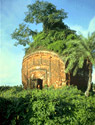
    unesco
  55. 55

    UNESCO World Heritage site inscribed 1981, located in Pakistan. The capital of three successive dynasties and later ruled by the Mughal emperors of Delhi, Thatta was constantly embellished from the 14th to the 18th century. The remains of the city and its necropolis provide a unique view of civilization in Sind.

    unesco
  56. 56

    UNESCO World Heritage site inscribed 1981, located in United Republic of Tanzania. The remains of two great East African ports admired by early European explorers are situated on two small islands near the coast. From the 13th to the 16th century, the merchants of Kilwa dealt in gold, silver, pearls, perfumes, Arabian crockery, Persian earthenware and Chinese porcelain; much of the trade in the Indian Ocean thus passed through their hands.

    unesco
  57. 57

    UNESCO World Heritage site inscribed 1981, located in Jerusalem (Site proposed by Jordan). As a holy city for Judaism, Christianity and Islam, Jerusalem has always been of great symbolic importance. Among its 220 historic monuments, the Dome of the Rock stands out: built in the 7th century, it is decorated with beautiful geometric and floral motifs. It is recognized by all three religions as the site of Abraham's sacrifice. The Wailing Wall delimits the quarters of the different religious communities, while the Resurrection rotunda in the Church of the Holy Sepulchre houses Christ's tomb.

    unesco
  58. 58

    UNESCO World Heritage site inscribed 1981, located in Guatemala. Inhabited since the 2nd century A.D., Quirigua had become during the reign of Cauac Sky (723–84) the capital of an autonomous and prosperous state. The ruins of Quirigua contain some outstanding 8th-century monuments and an impressive series of carved stelae and sculpted calendars that constitute an essential source for the study of Mayan civilization.

    unesco
  59. 59

    UNESCO World Heritage site inscribed 1981, located in Canada. In south-west Alberta, the remains of marked trails and an aboriginal camp, and a tumulus where vast quantities of buffalo (American Bison) skeletons can still be found, are evidence of a custom practised by aboriginal peoples of the North American plains for nearly 6,000 years. Using their excellent knowledge of the topography and of buffalo behaviour, they killed their prey by chasing them over a precipice; the carcasses were later carved up in the camp below.

    unesco
  60. 60

    UNESCO World Heritage site inscribed 1981, located in France. Used by the kings of France from the 12th century, the medieval royal hunting lodge of Fontainebleau, standing at the heart of a vast forest in the Ile-de-France, was transformed, enlarged and embellished in the 16th century by François I, who wanted to make a 'New Rome' of it. Surrounded by an immense park, the Italianate palace combines Renaissance and French artistic traditions.

    unesco
  61. 61

    UNESCO World Heritage site inscribed 1981, located in France. Amiens Cathedral, in the heart of Picardy, is one of the largest 'classic' Gothic churches of the 13th century. It is notable for the coherence of its plan, the beauty of its three-tier interior elevation and the particularly fine display of sculptures on the principal facade and in the south transept.

    unesco
  62. 62

    UNESCO World Heritage site inscribed 1981, located in France. Situated in the Rhone valley, the ancient theatre of Orange, with its 103-m-long facade, is one of the best preserved of all the great Roman theatres. Built between A.D. 10 and 25, the Roman arch is one of the most beautiful and interesting surviving examples of a provincial triumphal arch from the reign of Augustus. It is decorated with low reliefs commemorating the establishment of the Pax Romana.

    unesco
  63. 63

    UNESCO World Heritage site inscribed 1981, located in France. Arles is a good example of the adaptation of an ancient city to medieval European civilization. It has some impressive Roman monuments, of which the earliest – the arena, the Roman theatre and the cryptoporticus (subterranean galleries) – date back to the 1st century B.C. During the 4th century Arles experienced a second golden age, as attested by the baths of Constantine and the necropolis of Alyscamps. In the 11th and 12th centuries, Arles once again became one of the most attractive cities in the Mediterranean. Within the city walls, Saint-Trophime, with its cloister, is one of Provence's major Romanesque monuments.

    unesco
  64. 64

    UNESCO World Heritage site inscribed 1981, located in France. This stark Burgundian monastery was founded by St Bernard in 1119. With its church, cloister, refectory, sleeping quarters, bakery and ironworks, it is an excellent illustration of the ideal of self-sufficiency as practised by the earliest communities of Cistercian monks.

    unesco
  65. 65

    UNESCO World Heritage site inscribed 1981, located in Germany. Speyer Cathedral, a basilica with four towers and two domes, was founded by Conrad II in 1030 and remodelled at the end of the 11th century. It is one of the most important Romanesque monuments from the time of the Holy Roman Empire. The cathedral was the burial place of the German emperors for almost 300 years.

    unesco
  66. 66

    UNESCO World Heritage site inscribed 1981, located in Germany. This magnificent Baroque palace – one of the largest and most beautiful in Germany and surrounded by wonderful gardens – was created under the patronage of the prince-bishops Lothar Franz and Friedrich Carl von Schönborn. It was built and decorated in the 18th century by an international team of architects, painters (including Tiepolo), sculptors and stucco-workers, led by Balthasar Neumann.

    unesco
  67. 67

    UNESCO World Heritage site inscribed 1981, located in Morocco. Founded in the 9th century, Fez reached its height in the 13th–14th centuries under the Marinids, when it replaced Marrakesh as the capital of the kingdom. The urban fabric and the principal monuments in the medina – madrasas, fondouks, palaces, residences, mosques and fountains - date from this period. Although the political capital of Morocco was transferred to Rabat in 1912, Fez has retained its status as the country's cultural and spiritual centre.

    unesco
  68. 68

    UNESCO World Heritage site inscribed 1981, located in Pakistan. These are two masterpieces from the time of the brilliant Mughal civilization, which reached its height during the reign of the Emperor Shah Jahan. The fort contains marble palaces and mosques decorated with mosaics and gilt. The elegance of these splendid gardens, built near the city of Lahore on three terraces with lodges, waterfalls and large ornamental ponds, is unequalled.

    unesco
  69. 69

    UNESCO World Heritage site inscribed 1982, located in Italy. Built on the site of an Etruscan settlement, Florence, the symbol of the Renaissance, rose to economic and cultural pre-eminence under the Medici in the 15th and 16th centuries. Its 600 years of extraordinary artistic activity can be seen above all in the 13th-century cathedral (Santa Maria del Fiore), the Church of Santa Croce, the Uffizi and the Pitti Palace, the work of great masters such as Giotto, Brunelleschi, Botticelli and Michelangelo.

    unesco
  70. 70

    UNESCO World Heritage site inscribed 1982, located in Haiti. These Haitian monuments date from the beginning of the 19th century, when Haiti proclaimed its independence. The Palace of Sans Souci, the buildings at Ramiers and, in particular, the Citadel serve as universal symbols of liberty, being the first monuments to be constructed by black slaves who had gained their freedom.

    unesco
  71. 71

    UNESCO World Heritage site inscribed 1982, located in Libya. Leptis Magna was enlarged and embellished by Septimius Severus, who was born there and later became emperor. It was one of the most beautiful cities of the Roman Empire, with its imposing public monuments, harbour, market-place, storehouses, shops and residential districts.

    unesco
  72. 72

    UNESCO World Heritage site inscribed 1982, located in Libya. A Phoenician trading-post that served as an outlet for the products of the African hinterland, Sabratha was part of the short-lived Numidian Kingdom of Massinissa before being Romanized and rebuilt in the 2nd and 3rd centuries A.D.

    unesco
  73. 73

    UNESCO World Heritage site inscribed 1982, located in Algeria. A traditional human habitat, created in the 10th century by the Ibadites around their five ksour (fortified cities), has been preserved intact in the M’Zab valley. Simple, functional and perfectly adapted to the environment, the architecture of M’Zab was designed for community living, while respecting the structure of the family. It is a source of inspiration for today’s urban planners.

    unesco
  74. 74

    UNESCO World Heritage site inscribed 1982, located in Brazil. Founded in the 16th century by the Portuguese, the town’s history is linked to the sugar-cane industry. Rebuilt after being looted by the Dutch, its basic urban fabric dates from the 18th century. The harmonious balance between the buildings, gardens, 20 Baroque churches, convents and numerous small passos (chapels) all contribute to Olinda’s particular charm.

    unesco
  75. 75

    UNESCO World Heritage site inscribed 1982, located in Libya. A colony of the Greeks of Thera, Cyrene was one of the principal cities in the Hellenic world. It was Romanized and remained a great capital until the earthquake of 365. A thousand years of history is written into its ruins, which have been famous since the 18th century.

    unesco
  76. 76

    UNESCO World Heritage site inscribed 1982, located in Algeria. Situated 900 m above sea-level, Djémila, or Cuicul, with its forum, temples, basilicas, triumphal arches and houses, is an interesting example of Roman town planning adapted to a mountain location.

    unesco
  77. 77

    UNESCO World Heritage site inscribed 1982, located in Yemen. Surrounded by a fortified wall, the 16th-century city of Shibam is one of the oldest and best examples of urban planning based on the principle of vertical construction. Its impressive tower-like structures rise out of the cliff and have given the city the nickname of ‘the Manhattan of the desert’.

    unesco
  78. 78

    UNESCO World Heritage site inscribed 1982, located in Algeria. On the shores of the Mediterranean, Tipasa was an ancient Punic trading-post conquered by Rome and turned into a strategic base for the conquest of the kingdoms of Mauritania. It comprises a unique group of Phoenician, Roman, palaeochristian and Byzantine ruins alongside indigenous monuments such as the Kbor er Roumia, the great royal mausoleum of Mauretania.

    unesco
  79. 79

    UNESCO World Heritage site inscribed 1982, located in Algeria. Timgad lies on the northern slopes of the Aurès mountains and was created ex nihilo as a military colony by the Emperor Trajan in AD 100. With its square enclosure and orthogonal design based on the cardo and decumanus, the two perpendicular routes running through the city, it is an excellent example of Roman town planning.

    unesco
  80. 80

    UNESCO World Heritage site inscribed 1982, located in United States of America. Cahokia Mounds, some 13 km north-east of St Louis, Missouri, is the largest pre-Columbian settlement north of Mexico. It was occupied primarily during the Mississippian period (800–1400), when it covered nearly 1,600 ha and included some 120 mounds. It is a striking example of a complex chiefdom society, with many satellite mound centres and numerous outlying hamlets and villages. This agricultural society may have had a population of 10–20,000 at its peak between 1050 and 1150. Primary features at the site include Monks Mound, the largest prehistoric earthwork in the Americas, covering over 5 ha and standing 30 m high.

    unesco
  81. 81

    UNESCO World Heritage site inscribed 1982, located in Sri Lanka. This sacred city was established around a cutting from the 'tree of enlightenment', the Buddha's fig tree, brought there in the 3rd century B.C. by Sanghamitta, the founder of an order of Buddhist nuns. Anuradhapura, a Ceylonese political and religious capital that flourished for 1,300 years, was abandoned after an invasion in 993. Hidden away in dense jungle for many years, the splendid site, with its palaces, monasteries and monuments, is now accessible once again.

    unesco
  82. 82

    UNESCO World Heritage site inscribed 1982, located in Sri Lanka. Polonnaruwa was the second capital of Sri Lanka after the destruction of Anuradhapura in 993. It comprises, besides the Brahmanic monuments built by the Cholas, the monumental ruins of the fabulous garden-city created by Parakramabahu I in the 12th century.

    unesco
  83. 83

    UNESCO World Heritage site inscribed 1982, located in Sri Lanka. The ruins of the capital built by the parricidal King Kassapa I (477–95) lie on the steep slopes and at the summit of a granite peak standing some 180m high (the 'Lion's Rock', which dominates the jungle from all sides). A series of galleries and staircases emerging from the mouth of a gigantic lion constructed of bricks and plaster provide access to the site.

    unesco
  84. 84

    UNESCO World Heritage site inscribed 1982, located in France. The Royal Saltworks of Arc-et-Senans, near Besançon, was built by Claude Nicolas Ledoux. Its construction, begun in 1775 during the reign of Louis XVI, was the first major achievement of industrial architecture, reflecting the ideal of progress of the Enlightenment. The vast, semicircular complex was designed to permit a rational and hierarchical organization of work and was to have been followed by the building of an ideal city, a project that was never realized. The Great Saltworks of Salins-les-Bains was active for at least 1200 years until stopping activity in 1962. From 1780 to 1895, its salt water travelled through 21 km of wood pipes to the Royal Saltworks of Arc-et-Senans. It was built near the immense Chaux Forest to ensure its supply of wood for fuel. The Saltworks of Salins shelters an underground gallery from the 13th century including a hydraulic pump from the 19th century that still functions. The boiler house demonstrates the difficulty of the saltworkers’ labour to collect the “White Gold”.

    unesco
  85. 85

    UNESCO World Heritage site inscribed 1982, located in Cuba. Havana was founded in 1519 by the Spanish. By the 17th century, it had become one of the Caribbean's main centres for ship-building. Although it is today a sprawling metropolis of 2 million inhabitants, its old centre retains an interesting mix of Baroque and neoclassical monuments, and a homogeneous ensemble of private houses with arcades, balconies, wrought-iron gates and internal courtyards.

    unesco
  86. 86

    UNESCO World Heritage site inscribed 1983, located in Portugal. Situated on one of the islands in the Azores archipelago, this was an obligatory port of call from the 15th century until the advent of the steamship in the 19th century. The 400-year-old San Sebastião and San João Baptista fortifications are unique examples of military architecture. Damaged by an earthquake in 1980, Angra is now being restored.

    unesco
  87. 87

    UNESCO World Heritage site inscribed 1983, located in Bulgaria. Rila Monastery was founded in the 10th century by St John of Rila, a hermit canonized by the Orthodox Church. His ascetic dwelling and tomb became a holy site and were transformed into a monastic complex which played an important role in the spiritual and social life of medieval Bulgaria. Destroyed by fire at the beginning of the 19th century, the complex was rebuilt between 1834 and 1862. A characteristic example of the Bulgarian Renaissance (18th–19th centuries), the monument symbolizes the awareness of a Slavic cultural identity following centuries of occupation.

    unesco
  88. 88

    UNESCO World Heritage site inscribed 1983, located in Bulgaria. Situated on a rocky peninsula on the Black Sea, the more than 3,000-year-old site of Nessebar was originally a Thracian settlement (Menebria). At the beginning of the 6th century BC, the city became a Greek colony. The city’s remains, which date mostly from the Hellenistic period, include the acropolis, a temple of Apollo, an agora and a wall from the Thracian fortifications. Among other monuments, the Stara Mitropolia Basilica and the fortress date from the Middle Ages, when this was one of the most important Byzantine towns on the west coast of the Black Sea. Wooden houses built in the 19th century are typical of the Black Sea architecture of the period.

    unesco
  89. 89

    UNESCO World Heritage site inscribed 1983, located in France. Nancy, the temporary residence of a king without a kingdom – Stanislas Leszczynski, later to become Duke of Lorraine – is paradoxically the oldest and most typical example of a modern capital where an enlightened monarch proved to be sensitive to the needs of the public. Built between 1752 and 1756 by a brilliant team led by the architect Héré, this was a carefully conceived project that succeeded in creating a capital that not only enhanced the sovereign's prestige but was also functional.

    unesco
  90. 90

    UNESCO World Heritage site inscribed 1983, located in France. Known as the 'Romanesque Sistine Chapel', the Abbey-Church of Saint-Savin contains many beautiful 11th- and 12th-century murals which are still in a remarkable state of preservation.

    unesco
  91. 91

    UNESCO World Heritage site inscribed 1983, located in India. The first Buddhist cave monuments at Ajanta date from the 2nd and 1st centuries B.C. During the Gupta period (5th and 6th centuries A.D.), many more richly decorated caves were added to the original group. The paintings and sculptures of Ajanta, considered masterpieces of Buddhist religious art, have had a considerable artistic influence.

    unesco
  92. 92

    UNESCO World Heritage site inscribed 1983, located in India. These 34 monasteries and temples, extending over more than 2 km, were dug side by side in the wall of a high basalt cliff, not far from Aurangabad, in Maharashtra. Ellora, with its uninterrupted sequence of monuments dating from A.D. 600 to 1000, brings the civilization of ancient India to life. Not only is the Ellora complex a unique artistic creation and a technological exploit but, with its sanctuaries devoted to Buddhism, Hinduism and Jainism, it illustrates the spirit of tolerance that was characteristic of ancient India.

    unesco
  93. 93

    UNESCO World Heritage site inscribed 1983, located in India. Near the gardens of the Taj Mahal stands the important 16th-century Mughal monument known as the Red Fort of Agra. This powerful fortress of red sandstone encompasses, within its 2.5-km-long enclosure walls, the imperial city of the Mughal rulers. It comprises many fairy-tale palaces, such as the Jahangir Palace and the Khas Mahal, built by Shah Jahan; audience halls, such as the Diwan-i-Khas; and two very beautiful mosques.

    unesco
  94. 94

    UNESCO World Heritage site inscribed 1983, located in India. An immense mausoleum of white marble, built in Agra between 1631 and 1648 by order of the Mughal emperor Shah Jahan in memory of his favourite wife, the Taj Mahal is the jewel of Muslim art in India and one of the universally admired masterpieces of the world's heritage.

    unesco
  95. 95

    UNESCO World Heritage site inscribed 1983, located in Portugal. Standing at the entrance to Lisbon harbour, the Monastery of the Hieronymites – construction of which began in 1502 – exemplifies Portuguese art at its best. The nearby Tower of Belém, built to commemorate Vasco da Gama's expedition, is a reminder of the great maritime discoveries that laid the foundations of the modern world.

    unesco
  96. 96

    UNESCO World Heritage site inscribed 1983, located in Portugal. The Monastery of the Dominicans of Batalha was built to commemorate the victory of the Portuguese over the Castilians at the battle of Aljubarrota in 1385. It was to be the Portuguese monarchy's main building project for the next two centuries. Here a highly original, national Gothic style evolved, profoundly influenced by Manueline art, as demonstrated by its masterpiece, the Royal Cloister.

    unesco
  97. 97

    UNESCO World Heritage site inscribed 1983, located in Portugal. Originally designed as a monument symbolizing the Reconquest, the Convent of the Knights Templar of Tomar (transferred in 1344 to the Knights of the Order of Christ) came to symbolize just the opposite during the Manueline period – the opening up of Portugal to other civilizations.

    unesco
  98. 98

    UNESCO World Heritage site inscribed 1983, located in United States of America. Between the 16th and 20th centuries, a series of defensive structures was built at this strategic point in the Caribbean Sea to protect the city and the Bay of San Juan. They represent a fine display of European military architecture adapted to harbour sites on the American continent.

    unesco
  99. 99

    UNESCO World Heritage site inscribed 1983, located in Switzerland. Founded in the 12th century on a hill site surrounded by the Aare River, Berne developed over the centuries in line with a an exceptionally coherent planning concept. The buildings in the Old City, dating from a variety of periods, include 15th-century arcades and 16th-century fountains. Most of the medieval town was restored in the 18th century but it has retained its original character.

    unesco
  100. 100

    UNESCO World Heritage site inscribed 1983, located in Switzerland. The Convent of St Gall, a perfect example of a great Carolingian monastery, was, from the 8th century to its secularization in 1805, one of the most important in Europe. Its library is one of the richest and oldest in the world and contains precious manuscripts such as the earliest-known architectural plan drawn on parchment. From 1755 to 1768, the conventual area was rebuilt in Baroque style. The cathedral and the library are the main features of this remarkable architectural complex, reflecting 12 centuries of continuous activity.

    unesco
  101. 101

    UNESCO World Heritage site inscribed 1983, located in Switzerland. The Convent of Müstair, which stands in a valley in the Grisons, is a good example of Christian monastic renovation during the Carolingian period. It has Switzerland's greatest series of figurative murals, painted c. A.D. 800, along with Romanesque frescoes and stuccoes.

    unesco
  102. 102

    UNESCO World Heritage site inscribed 1983, located in Germany. Miraculously preserved in the beautiful setting of an Alpine valley, the Church of Wies (1745–54), the work of architect Dominikus Zimmermann, is a masterpiece of Bavarian Rococo – exuberant, colourful and joyful.

    unesco
  103. 103

    UNESCO World Heritage site inscribed 1983, located in Peru. Situated in the Peruvian Andes, Cuzco developed, under the Inca ruler Pachacutec, into a complex urban centre with distinct religious and administrative functions. It was surrounded by clearly delineated areas for agricultural, artisan and industrial production. When the Spaniards conquered it in the 16th century, they preserved the basic structure but built Baroque churches and palaces over the ruins of the Inca city.

    unesco
  104. 104

    UNESCO World Heritage site inscribed 1984, located in India. On the shores of the Bay of Bengal, bathed in the rays of the rising sun, the temple at Konarak is a monumental representation of the sun god Surya's chariot; its 24 wheels are decorated with symbolic designs and it is led by a team of six horses. Built in the 13th century, it is one of India's most famous Brahman sanctuaries.

    unesco
  105. 105

    UNESCO World Heritage site inscribed 1984, located in India. This group of sanctuaries, founded by the Pallava kings, was carved out of rock along the Coromandel coast in the 7th and 8th centuries. It is known especially for its rathas (temples in the form of chariots), mandapas (cave sanctuaries), giant open-air reliefs such as the famous 'Descent of the Ganges', and the temple of Rivage, with thousands of sculptures to the glory of Shiva.

    unesco
  106. 106

    UNESCO World Heritage site inscribed 1984, located in Colombia. Situated in a bay in the Caribbean Sea, Cartagena has the most extensive fortifications in South America. A system of zones divides the city into three neighbourhoods: San Pedro, with the cathedral and many Andalusian-style palaces; San Diego, where merchants and the middle class lived; and Gethsemani, the 'popular quarter'.

    unesco
  107. 107

    UNESCO World Heritage site inscribed 1984, located in Holy See. The Vatican City, one of the most sacred places in Christendom, attests to a great history and a formidable spiritual venture. A unique collection of artistic and architectural masterpieces lie within the boundaries of this small state. At its centre is St Peter's Basilica, with its double colonnade and a circular piazza in front and bordered by palaces and gardens. The basilica, erected over the tomb of St Peter the Apostle, is the largest religious building in the world, the fruit of the combined genius of Bramante, Raphael, Michelangelo, Bernini and Maderno.

    unesco
  108. 108

    UNESCO World Heritage site inscribed 1984, located in Germany. Set in an idyllic garden landscape, Augustusburg Castle (the sumptuous residence of the prince-archbishops of Cologne) and the Falkenlust hunting lodge (a small rural folly) are among the earliest examples of Rococo architecture in 18th-century Germany.

    unesco
  109. 109

    UNESCO World Heritage site inscribed 1984, located in Lebanon. The city of Anjar was founded by Caliph Walid I at the beginning of the 8th century. The ruins reveal a very regular layout, reminiscent of the palace-cities of ancient times, and are a unique testimony to city planning under the Umayyads.

    unesco
  110. 110

    UNESCO World Heritage site inscribed 1984, located in Lebanon. This Phoenician city, where a triad of deities was worshipped, was known as Heliopolis during the Hellenistic period. It retained its religious function during Roman times, when the sanctuary of the Heliopolitan Jupiter attracted thousands of pilgrims. Baalbek, with its colossal structures, is one of the finest examples of Imperial Roman architecture at its apogee.

    unesco
  111. 111

    UNESCO World Heritage site inscribed 1984, located in Lebanon. The ruins of many successive civilizations are found at Byblos, one of the oldest Phoenician cities. Inhabited since Neolithic times, it has been closely linked to the legends and history of the Mediterranean region for thousands of years. Byblos is also directly associated with the history and diffusion of the Phoenician alphabet.

    unesco
  112. 112
    Tyre 1984

    UNESCO World Heritage site inscribed 1984, located in Lebanon. According to legend, purple dye was invented in Tyre. This great Phoenician city ruled the seas and founded prosperous colonies such as Cadiz and Carthage, but its historical role declined at the end of the Crusades. There are important archaeological remains, mainly from Roman times.

    unesco
  113. 113

    UNESCO World Heritage site inscribed 1984, located in United States of America. Made in Paris by the French sculptor Bartholdi, in collaboration with Gustave Eiffel (who was responsible for the steel framework), this towering monument to liberty was a gift from France on the centenary of American independence. Inaugurated in 1886, the sculpture stands at the entrance to New York Harbour and has welcomed millions of immigrants to the United States ever since.

    unesco
  114. 114

    UNESCO World Heritage site inscribed 1984, located in Spain. Cordoba's period of greatest glory began in the 8th century after the Moorish conquest, when some 300 mosques and innumerable palaces and public buildings were built to rival the splendours of Constantinople, Damascus and Baghdad. In the 13th century, under Ferdinand III, the Saint, Cordoba's Great Mosque was turned into a cathedral and new defensive structures, particularly the Alcázar de los Reyes Cristianos and the Torre Fortaleza de la Calahorra, were erected.

    unesco
  115. 115

    UNESCO World Heritage site inscribed 1984, located in Spain. Rising above the modern lower town, the Alhambra and the Albaycín, situated on two adjacent hills, form the medieval part of Granada. To the east of the Alhambra fortress and residence are the magnificent gardens of the Generalife, the former rural residence of the emirs who ruled this part of Spain in the 13th and 14th centuries. The residential district of the Albaycín is a rich repository of Moorish vernacular architecture, into which the traditional Andalusian architecture blends harmoniously.

    unesco
  116. 116

    UNESCO World Heritage site inscribed 1984, located in Spain. Our Lady of Burgos was begun in the 13th century at the same time as the great cathedrals of the Ile-de-France and was completed in the 15th and 16th centuries. The entire history of Gothic art is summed up in its superb architecture and its unique collection of works of art, including paintings, choir stalls, reredos, tombs and stained-glass windows.

    unesco
  117. 117

    UNESCO World Heritage site inscribed 1984, located in Spain. Built at the end of the 16th century on a plan in the form of a grill, the instrument of the martyrdom of St Lawrence, the Escurial Monastery stands in an exceptionally beautiful site in Castile. Its austere architecture, a break with previous styles, had a considerable influence on Spanish architecture for more than half a century. It was the retreat of a mystic king and became, in the last years of Philip II's reign, the centre of the greatest political power of the time.

    unesco
  118. 118

    UNESCO World Heritage site inscribed 1984, located in Spain. Seven properties built by the architect Antoni Gaudí (1852–1926) in or near Barcelona testify to Gaudí’s exceptional creative contribution to the development of architecture and building technology in the late 19th and early 20th centuries. These monuments represent an eclectic, as well as a very personal, style which was given free reign in the design of gardens, sculpture and all decorative arts, as well as architecture. The seven buildings are: Parque Güell; Palacio Güell; Casa Mila; Casa Vicens; Gaudí’s work on the Nativity façade and Crypt of La Sagrada Familia; Casa Batlló; Crypt in Colonia Güell.

    unesco
  119. 119

    UNESCO World Heritage site inscribed 1985, located in Iraq. A large fortified city under the influence of the Parthian Empire and capital of the first Arab Kingdom, Hatra withstood invasions by the Romans in A.D. 116 and 198 thanks to its high, thick walls reinforced by towers. The remains of the city, especially the temples where Hellenistic and Roman architecture blend with Eastern decorative features, attest to the greatness of its civilization.

    unesco
  120. 120

    UNESCO World Heritage site inscribed 1985, located in Libya. On the borders of Tassili N'Ajjer in Algeria, also a World Heritage site, this rocky massif has thousands of cave paintings in very different styles, dating from 12,000 B.C. to A.D. 100. They reflect marked changes in the fauna and flora, and also the different ways of life of the populations that succeeded one another in this region of the Sahara.

    unesco
  121. 121

    UNESCO World Heritage site inscribed 1985, located in Canada. Québec was founded by the French explorer Champlain in the early 17th century. It is the only North American city to have preserved its ramparts, together with the numerous bastions, gates and defensive works which still surround Old Québec. The Upper Town, built on the cliff, has remained the religious and administrative centre, with its churches, convents and other monuments like the Dauphine Redoubt, the Citadel and Château Frontenac. Together with the Lower Town and its ancient districts, it forms an urban ensemble which is one of the best examples of a fortified colonial city.

    unesco
  122. 122

    UNESCO World Heritage site inscribed 1985, located in Brazil. As the first capital of Brazil, from 1549 to 1763, Salvador de Bahia witnessed the blending of European, African and Amerindian cultures. It was also, from 1558, the first slave market in the New World, with slaves arriving to work on the sugar plantations. The city has managed to preserve many outstanding Renaissance buildings. A special feature of the old town are the brightly coloured houses, often decorated with fine stucco-work.

    unesco
  123. 123

    UNESCO World Heritage site inscribed 1985, located in Spain. Seventeen decorated caves of the Paleolithic age were inscribed as an extension to the Altamira Cave, inscribed in 1985. The property will now appear on the List as Cave of Altamira and Paleolithic Cave Art of Northern Spain. The property represents the apogee of Paleolithic cave art that developed across Europe, from the Urals to the Iberian Peninusula, from 35,000 to 11,000 BC. Because of their deep galleries, isolated from external climatic influences, these caves are particularly well preserved. The caves are inscribed as masterpieces of creative genius and as the humanity’s earliest accomplished art. They are also inscribed as exceptional testimonies to a cultural tradition and as outstanding illustrations of a significant stage in human history.

    unesco
  124. 124

    UNESCO World Heritage site inscribed 1985, located in Spain. The Roman aqueduct of Segovia, probably built c. A.D. 50, is remarkably well preserved. This impressive construction, with its two tiers of arches, forms part of the setting of the magnificent historic city of Segovia. Other important monuments include the Alcázar, begun around the 11th century, and the 16th-century Gothic cathedral.

    unesco
  125. 125

    UNESCO World Heritage site inscribed 1985, located in Bangladesh. Situated in the suburbs of Bagerhat, at the meeting-point of the Ganges and Brahmaputra rivers, this ancient city, formerly known as Khalifatabad, was founded by the Turkish general Ulugh Khan Jahan in the 15th century. The city’s infrastructure reveals considerable technical skill and an exceptional number of mosques and early Islamic monuments, many built of brick, can be seen there.

    unesco
  126. 126

    UNESCO World Heritage site inscribed 1985, located in Bangladesh. Evidence of the rise of Mahayana Buddhism in Bengal from the 7th century onwards, Somapura Mahavira, or the Great Monastery, was a renowned intellectual centre until the 12th century. Its layout perfectly adapted to its religious function, this monastery-city represents a unique artistic achievement. With its simple, harmonious lines and its profusion of carved decoration, it influenced Buddhist architecture as far away as Cambodia.

    unesco
  127. 127

    UNESCO World Heritage site inscribed 1985, located in Benin. From 1625 to 1900, 12 kings succeeded one another at the head of the powerful Kingdom of Abomey. With the exception of King Akaba, who had his own separate enclosure, they all had their palaces built within the same cob-wall area, in keeping with previous palaces as regards the use of space and materials. The royal palaces of Abomey are a unique reminder of this vanished kingdom.

    unesco
  128. 128

    UNESCO World Heritage site inscribed 1985, located in Jordan. Inhabited since prehistoric times, this Nabataean caravan-city, situated between the Red Sea and the Dead Sea, was an important crossroads between Arabia, Egypt and Syria-Phoenicia. Petra is half-built, half-carved into the rock, and is surrounded by mountains riddled with passages and gorges. It is one of the world's most famous archaeological sites, where ancient Eastern traditions blend with Hellenistic architecture.

    unesco
  129. 129

    UNESCO World Heritage site inscribed 1985, located in Jordan. Built in the early 8th century, this exceptionally well-preserved desert castle was both a fortress with a garrison and a residence of the Umayyad caliphs. The most outstanding features of this small pleasure palace are the reception hall and the hammam, both richly decorated with figurative murals that reflect the secular art of the time.

    unesco
  130. 130

    UNESCO World Heritage site inscribed 1985, located in Peru. The archaeological site of Chavin gave its name to the culture that developed between 1500 and 300 B.C. in this high valley of the Peruvian Andes. This former place of worship is one of the earliest and best-known pre-Columbian sites. Its appearance is striking, with the complex of terraces and squares, surrounded by structures of dressed stone, and the mainly zoomorphic ornamentation.

    unesco
  131. 131

    UNESCO World Heritage site inscribed 1985, located in Morocco. Founded in 1070–72 by the Almoravids, Marrakesh remained a political, economic and cultural centre for a long period. Its influence was felt throughout the western Muslim world, from North Africa to Andalusia. It has several impressive monuments dating from that period: the Koutoubiya Mosque, the Kasbah, the battlements, monumental doors, gardens, etc. Later architectural jewels include the Bandiâ Palace, the Ben Youssef Madrasa, the Saadian Tombs, several great residences and Place Jamaâ El Fna, a veritable open-air theatre.

    unesco
  132. 132

    UNESCO World Heritage site inscribed 1985, located in Tunisia. This Phoenician city was probably abandoned during the First Punic War (c. 250 B.C.) and as a result was not rebuilt by the Romans. The remains constitute the only example of a Phoenicio-Punic city to have survived. The houses were built to a standard plan in accordance with a sophisticated notion of town planning.

    unesco
  133. 133

    UNESCO World Heritage site inscribed 1985, located in Brazil. This sanctuary in Minais Gerais, south of Belo Horizonte was built in the second half of the 18th century. It consists of a church with a magnificent Rococo interior of Italian inspiration; an outdoor stairway decorated with statues of the prophets; and seven chapels illustrating the Stations of the Cross, in which the polychrome sculptures by Aleijadinho are masterpieces of a highly original, moving, expressive form of Baroque art.

    unesco
  134. 134

    UNESCO World Heritage site inscribed 1985, located in France. The Pont du Gard was built shortly before the Christian era to allow the aqueduct of Nîmes (which is almost 50 km long) to cross the Gard river. The Roman architects and hydraulic engineers who designed this bridge, which stands almost 50 m high and is on three levels – the longest measuring 275 m – created a technical as well as an artistic masterpiece.

    unesco
  135. 135

    UNESCO World Heritage site inscribed 1985, located in Spain. This famous pilgrimage site in north-west Spain became a symbol in the Spanish Christians' struggle against Islam. Destroyed by the Muslims at the end of the 10th century, it was completely rebuilt in the following century. With its Romanesque, Gothic and Baroque buildings, the Old Town of Santiago is one of the world's most beautiful urban areas. The oldest monuments are grouped around the tomb of St James and the cathedral, which contains the remarkable Pórtico de la Gloria.

    unesco
  136. 136

    UNESCO World Heritage site inscribed 1985, located in Spain. Founded in the 11th century to protect the Spanish territories from the Moors, this 'City of Saints and Stones', the birthplace of St Teresa and the burial place of the Grand Inquisitor Torquemada, has kept its medieval austerity. This purity of form can still be seen in the Gothic cathedral and the fortifications which, with their 82 semicircular towers and nine gates, are the most complete in Spain.

    unesco
  137. 137

    UNESCO World Heritage site inscribed 1985, located in Cyprus. This region is characterized by one of the largest groups of churches and monasteries of the former Byzantine Empire. The complex of 10 monuments included on the World Heritage List, all richly decorated with murals, provides an overview of Byzantine and post-Byzantine painting in Cyprus. They range from small churches whose rural architectural style is in stark contrast to their highly refined decoration, to monasteries such as that of St John Lampadistis.

    unesco
  138. 138

    UNESCO World Heritage site inscribed 1985, located in Norway. This group of petroglyphs in the Alta Fjord, near the Arctic Circle, bears the traces of a settlement dating from c. 4200 to 500 B.C. The thousands of paintings and engravings add to our understanding of the environment and human activities on the fringes of the Far North in prehistoric times.

    unesco
  139. 139

    UNESCO World Heritage site inscribed 1985, located in Türkiye. With its strategic location on the Bosphorus peninsula between the Balkans and Anatolia, the Black Sea and the Mediterranean, Istanbul has been associated with major political, religious and artistic events for more than 2,000 years. Its masterpieces include the ancient Hippodrome of Constantine, the 6th-century Hagia Sophia and the 16th-century Süleymaniye Mosque, all now under threat from population pressure, industrial pollution and uncontrolled urbanization.

    unesco
  140. 140

    UNESCO World Heritage site inscribed 1985, located in Türkiye. This region of Anatolia was conquered by the Turks at the beginning of the 11th century. In 1228–29 Emir Ahmet Shah founded a mosque, with its adjoining hospital, at Divrigi. The mosque has a single prayer room and is crowned by two cupolas. The highly sophisticated technique of vault construction, and a creative, exuberant type of decorative sculpture – particularly on the three doorways, in contrast to the unadorned walls of the interior – are the unique features of this masterpiece of Islamic architecture.

    unesco
  141. 141

    UNESCO World Heritage site inscribed 1985, located in Bulgaria. Discovered in 1982 near the village of Sveshtari, this 3rd-century BC Thracian tomb reflects the fundamental structural principles of Thracian cult buildings. The tomb has a unique architectural decor, with polychrome half-human, half-plant caryatids and painted murals. The 10 female figures carved in high relief on the walls of the central chamber and the decoration of the lunette in its vault are the only examples of this type found so far in the Thracian lands. It is a remarkable reminder of the culture of the Getes, a Thracian people who were in contact with the Hellenistic and Hyperborean worlds, according to ancient geographers.

    unesco
  142. 142

    UNESCO World Heritage site inscribed 1986, located in India. The churches and convents of Goa, the former capital of the Portuguese Indies – particularly the Church of Bom Jesus, which contains the tomb of St Francis-Xavier – illustrate the evangelization of Asia. These monuments were influential in spreading forms of Manueline, Mannerist and Baroque art in all the countries of Asia where missions were established.

    unesco
  143. 143

    UNESCO World Heritage site inscribed 1986, located in India. The temples at Khajuraho were built during the Chandella dynasty, which reached its apogee between 950 and 1050. Only about 20 temples remain; they fall into three distinct groups and belong to two different religions – Hinduism and Jainism. They strike a perfect balance between architecture and sculpture. The Temple of Kandariya is decorated with a profusion of sculptures that are among the greatest masterpieces of Indian art.

    unesco
  144. 144

    UNESCO World Heritage site inscribed 1986, located in India. The austere, grandiose site of Hampi was the last capital of the last great Hindu Kingdom of Vijayanagar. Its fabulously rich princes built Dravidian temples and palaces which won the admiration of travellers between the 14th and 16th centuries. Conquered by the Deccan Muslim confederacy in 1565, the city was pillaged over a period of six months before being abandoned.

    unesco
  145. 145

    UNESCO World Heritage site inscribed 1986, located in India. Built during the second half of the 16th century by the Emperor Akbar, Fatehpur Sikri (the City of Victory) was the capital of the Mughal Empire for only some 10 years. The complex of monuments and temples, all in a uniform architectural style, includes one of the largest mosques in India, the Jama Masjid.

    unesco
  146. 146

    UNESCO World Heritage site inscribed 1986, located in Portugal. This museum-city, whose roots go back to Roman times, reached its golden age in the 15th century, when it became the residence of the Portuguese kings. Its unique quality stems from the whitewashed houses decorated with azulejos and wrought-iron balconies dating from the 16th to the 18th century. Its monuments had a profound influence on Portuguese architecture in Brazil.

    unesco
  147. 147

    UNESCO World Heritage site inscribed 1986, located in Libya. Ghadamès, known as 'the pearl of the desert', stands in an oasis. It is one of the oldest pre-Saharan cities and an outstanding example of a traditional settlement. Its domestic architecture is characterized by a vertical division of functions: the ground floor used to store supplies; then another floor for the family, overhanging covered alleys that create what is almost an underground network of passageways; and, at the top, open-air terraces reserved for the women.

    unesco
  148. 148

    UNESCO World Heritage site inscribed 1986, located in Zimbabwe. The ruins of Great Zimbabwe – the capital of the Queen of Sheba, according to an age-old legend – are a unique testimony to the Bantu civilization of the Shona between the 11th and 15th centuries. The city, which covers an area of nearly 80 ha, was an important trading centre and was renowned from the Middle Ages onwards.

    unesco
  149. 149

    UNESCO World Heritage site inscribed 1986, located in Zimbabwe. Khami, which developed after the capital of Great Zimbabwe had been abandoned in the mid-16th century, is of great archaeological interest. The discovery of objects from Europe and China shows that Khami was a major centre for trade over a long period of time.

    unesco
  150. 150

    UNESCO World Heritage site inscribed 1986, located in Peru. The Chimu Kingdom, with Chan Chan as its capital, reached its apogee in the 15th century, not long before falling to the Incas. The planning of this huge city, the largest in pre-Columbian America, reflects a strict political and social strategy, marked by the city's division into nine 'citadels' or 'palaces' forming autonomous units.

    unesco
  151. 151

    UNESCO World Heritage site inscribed 1986, located in Germany. Trier, which stands on the Moselle River, was a Roman colony from the 1st century AD and then a great trading centre beginning in the next century. It became one of the capitals of the Tetrarchy at the end of the 3rd century, when it was known as the ‘second Rome’. The number and quality of the surviving monuments are an outstanding testimony to Roman civilization.

    unesco
  152. 152

    UNESCO World Heritage site inscribed 1986, located in United Kingdom of Great Britain and Northern Ireland. Durham Cathedral was built in the late 11th and early 12th centuries to house the relics of St Cuthbert (evangelizer of Northumbria) and the Venerable Bede. It attests to the importance of the early Benedictine monastic community and is the largest and finest example of Norman architecture in England. The innovative audacity of its vaulting foreshadowed Gothic architecture. Behind the cathedral stands the castle, an ancient Norman fortress which was the residence of the prince-bishops of Durham.

    unesco
  153. 153

    UNESCO World Heritage site inscribed 1986, located in United Kingdom of Great Britain and Northern Ireland. Ironbridge is known throughout the world as the symbol of the Industrial Revolution. It contains all the elements of progress that contributed to the rapid development of this industrial region in the 18th century, from the mines themselves to the railway lines. Nearby, the blast furnace of Coalbrookdale, built in 1708, is a reminder of the discovery of coke. The bridge at Ironbridge, the world's first bridge constructed of iron, had a considerable influence on developments in the fields of technology and architecture.

    unesco
  154. 154

    UNESCO World Heritage site inscribed 1986, located in United Kingdom of Great Britain and Northern Ireland. In the 18th century a designed landscape of exceptional beauty was created around the ruins of the Cistercian Fountains Abbey, in Yorkshire. The spectacular ruins of the 12th century abbey and water mill, the Jacobean mansion of Fountains Hall, the Victorian masterpiece St Mary’s Church and one of the most magnificent Georgian water gardens ever created, make this a landscape of outstanding merit.

    unesco
  155. 155

    UNESCO World Heritage site inscribed 1986, located in United Kingdom of Great Britain and Northern Ireland. Stonehenge and Avebury, in Wiltshire, are among the most famous groups of megaliths in the world. The two sanctuaries consist of circles of menhirs arranged in a pattern whose astronomical significance is still being explored. These holy places and the nearby Neolithic sites are an incomparable testimony to prehistoric times.

    unesco
  156. 156

    UNESCO World Heritage site inscribed 1986, located in United Kingdom of Great Britain and Northern Ireland. The castles of Beaumaris and Harlech (largely the work of the greatest military engineer of the time, James of St George) and the fortified complexes of Caernarfon and Conwy are located in the former principality of Gwynedd, in north Wales. These extremely well-preserved monuments are examples of the colonization and defence works carried out throughout the reign of Edward I (1272–1307) and the military architecture of the time.

    unesco
  157. 157

    UNESCO World Heritage site inscribed 1986, located in Türkiye. The archaeological site of Hattusha, former capital of the Hittite Empire, is notable for its urban organization, the types of construction that have been preserved (temples, royal residences, fortifications), the rich ornamentation of the Lions' Gate and the Royal Gate, and the ensemble of rock art at Yazilikaya. The city enjoyed considerable influence in Anatolia and northern Syria in the 2nd millennium B.C.

    unesco
  158. 158

    UNESCO World Heritage site inscribed 1986, located in Spain. Successively a Roman municipium, the capital of the Visigothic Kingdom, a fortress of the Emirate of Cordoba, an outpost of the Christian kingdoms fighting the Moors and, in the 16th century, the temporary seat of supreme power under Charles V, Toledo is the repository of more than 2,000 years of history. Its masterpieces are the product of heterogeneous civilizations in an environment where the existence of three major religions – Judaism, Christianity and Islam – was a major factor.

    unesco
  159. 159

    UNESCO World Heritage site inscribed 1986, located in Spain. The city's history of battles between Moors and Christians is reflected in its architecture, which is a blend of Roman, Islamic, Northern Gothic and Italian Renaissance styles. Of the 30 or so towers from the Muslim period, the Torre del Bujaco is the most famous.

    unesco
  160. 160

    UNESCO World Heritage site inscribed 1986, located in Yemen. Situated in a mountain valley at an altitude of 2,200 m, Sana’a has been inhabited for more than 2,500 years. In the 7th and 8th centuries the city became a major centre for the propagation of Islam. This religious and political heritage can be seen in the 103 mosques, 14 hammams and over 6,000 houses, all built before the 11th century. Sana’a’s many-storeyed tower-houses built of rammed earth (pisé) add to the beauty of the site.

    unesco
  161. 161

    UNESCO World Heritage site inscribed 1986, located in Serbia. The Studenica Monastery was established in the late 12th century by Stevan Nemanja, founder of the medieval Serb state, shortly after his abdication. It is the largest and richest of Serbia’s Orthodox monasteries. Its two principal monuments, the Church of the Virgin and the Church of the King, both built of white marble, enshrine priceless collections of 13th- and 14th-century Byzantine painting.

    unesco
  162. 162

    UNESCO World Heritage site inscribed 1986, located in Greece. This famous temple to the god of healing and the sun was built towards the middle of the 5th century B.C. in the lonely heights of the Arcadian mountains. The temple, which has the oldest Corinthian capital yet found, combines the Archaic style and the serenity of the Doric style with some daring architectural features.

    unesco
  163. 163

    UNESCO World Heritage site inscribed 1987, located in India. Pattadakal, in Karnataka, represents the high point of an eclectic art which, in the 7th and 8th centuries under the Chalukya dynasty, achieved a harmonious blend of architectural forms from northern and southern India. An impressive series of nine Hindu temples, as well as a Jain sanctuary, can be seen there. One masterpiece from the group stands out – the Temple of Virupaksha, built c. 740 by Queen Lokamahadevi to commemorate her husband's victory over the kings from the South.

    unesco
  164. 164

    UNESCO World Heritage site inscribed 1987, located in India. The 'City of Caves', on an island in the Sea of Oman close to Mumbai, contains a collection of rock art linked to the cult of Shiva. Here, Indian art has found one of its most perfect expressions, particularly the huge high reliefs in the main cave.

    unesco
  165. 165

    UNESCO World Heritage site inscribed 1987, located in Germany. Lübeck – the former capital and Queen City of the Hanseatic League – was founded in the 12th century and prospered until the 16th century as the major trading centre for northern Europe. It has remained a centre for maritime commerce to this day, particularly with the Nordic countries. Despite the damage it suffered during the Second World War, the basic structure of the old city, consisting mainly of 15th- and 16th-century patrician residences, public monuments (the famous Holstentor brick gate), churches and salt storehouses, remains unaltered.

    unesco
  166. 166

    UNESCO World Heritage site inscribed 1987, located in United States of America. For over 2,000 years, Pueblo peoples occupied a vast region of the south-western United States. Chaco Canyon, a major centre of ancestral Pueblo culture between 850 and 1250, was a focus for ceremonials, trade and political activity for the prehistoric Four Corners area. Chaco is remarkable for its monumental public and ceremonial buildings and its distinctive architecture – it has an ancient urban ceremonial centre that is unlike anything constructed before or since. In addition to the Chaco Culture National Historical Park, the World Heritage property includes the Aztec Ruins National Monument and several smaller Chaco sites managed by the Bureau of Land Management.

    unesco
  167. 167

    UNESCO World Heritage site inscribed 1987, located in Spain. Together these three buildings form a remarkable monumental complex in the heart of Seville. The cathedral and the Alcázar – dating from the Reconquest of 1248 to the 16th century and imbued with Moorish influences – are an exceptional testimony to the civilization of the Almohads as well as that of Christian Andalusia. The Giralda minaret is the masterpiece of Almohad architecture. It stands next to the cathedral with its five naves; the largest Gothic building in Europe, it houses the tomb of Christopher Columbus. The ancient Lonja, which became the Archivo de Indias, contains valuable documents from the archives of the colonies in the Americas.

    unesco
  168. 168

    UNESCO World Heritage site inscribed 1987, located in Greece. The pan-Hellenic sanctuary of Delphi, where the oracle of Apollo spoke, was the site of the omphalos, the 'navel of the world'. Blending harmoniously with the superb landscape and charged with sacred meaning, Delphi in the 6th century B.C. was indeed the religious centre and symbol of unity of the ancient Greek world.

    unesco
  169. 169

    UNESCO World Heritage site inscribed 1987, located in Italy. Founded in the 5th century and spread over 118 small islands, Venice became a major maritime power in the 10th century. The whole city is an extraordinary architectural masterpiece in which even the smallest building contains works by some of the world's greatest artists such as Giorgione, Titian, Tintoretto, Veronese and others.

    unesco
  170. 170

    UNESCO World Heritage site inscribed 1987, located in Italy. Standing in a large green expanse, Piazza del Duomo houses a group of monuments known the world over. These four masterpieces of medieval architecture – the cathedral, the baptistry, the campanile (the 'Leaning Tower') and the cemetery – had a great influence on monumental art in Italy from the 11th to the 14th century.

    unesco
  171. 171

    UNESCO World Heritage site inscribed 1987, located in Hungary. Hollokö is an outstanding example of a deliberately preserved traditional settlement. This village, which developed mainly during the 17th and 18th centuries, is a living example of rural life before the agricultural revolution of the 20th century.

    unesco
  172. 172

    UNESCO World Heritage site inscribed 1987, located in Greece. The Acropolis of Athens and its monuments are universal symbols of the classical spirit and civilization and form the greatest architectural and artistic complex bequeathed by Greek Antiquity to the world. In the second half of the fifth century bc, Athens, following the victory against the Persians and the establishment of democracy, took a leading position amongst the other city-states of the ancient world. In the age that followed, as thought and art flourished, an exceptional group of artists put into effect the ambitious plans of Athenian statesman Pericles and, under the inspired guidance of the sculptor Pheidias, transformed the rocky hill into a unique monument of thought and the arts. The most important monuments were built during that time: the Parthenon, built by Ictinus, the Erechtheon, the Propylaea, the monumental entrance to the Acropolis, designed by Mnesicles and the small temple Athena Nike.

    unesco
  173. 173

    UNESCO World Heritage site inscribed 1987, located in Mexico. A prime example of a Mayan sanctuary of the classical period, Palenque was at its height between AD 500 and 700, when its influence extended throughout the basin of the Usumacinta River. The elegance and craftsmanship of the buildings, as well as the lightness of the sculpted reliefs with their Mayan mythological themes, attest to the creative genius of this civilization.

    unesco
  174. 174

    UNESCO World Heritage site inscribed 1987, located in Mexico. Built in the 16th century by the Spanish on the ruins of Tenochtitlan, the old Aztec capital, Mexico City is now one of the world's largest and most densely populated cities. It has five Aztec temples, the ruins of which have been identified, a cathedral (the largest on the continent) and some fine 19th- and 20th-century public buildings such as the Palacio de las Bellas Artes. Xochimilco lies 28 km south of Mexico City. With its network of canals and artificial islands, it testifies to the efforts of the Aztec people to build a habitat in the midst of an unfavourable environment. Its characteristic urban and rural structures, built since the 16th century and during the colonial period; have been preserved in an exceptional manner.

    unesco
  175. 175

    UNESCO World Heritage site inscribed 1987, located in Mexico. The holy city of Teotihuacan ('the place where the gods were created') is situated some 50 km north-east of Mexico City. Built between the 1st and 7th centuries A.D., it is characterized by the vast size of its monuments – in particular, the Temple of Quetzalcoatl and the Pyramids of the Sun and the Moon, laid out on geometric and symbolic principles. As one of the most powerful cultural centres in Mesoamerica, Teotihuacan extended its cultural and artistic influence throughout the region, and even beyond.

    unesco
  176. 176

    UNESCO World Heritage site inscribed 1987, located in Mexico. Inhabited over a period of 1,500 years by a succession of peoples – Olmecs, Zapotecs and Mixtecs – the terraces, dams, canals, pyramids and artificial mounds of Monte Albán were literally carved out of the mountain and are the symbols of a sacred topography. The nearby city of Oaxaca, which is built on a grid pattern, is a good example of Spanish colonial town planning. The solidity and volume of the city's buildings show that they were adapted to the earthquake-prone region in which these architectural gems were constructed.

    unesco
  177. 177

    UNESCO World Heritage site inscribed 1987, located in Mexico. Puebla, which was founded ex nihilo in 1531, is situated about 100 km east of Mexico City, at the foot of the Popocatepetl volcano. It has preserved its great religious structures such as the 16th–17th-century cathedral and fine buildings like the old archbishop's palace, as well as a host of houses with walls covered in tiles (azulejos). The new aesthetic concepts resulting from the fusion of European and American styles were adopted locally and are peculiar to the Baroque district of Puebla.

    unesco
  178. 178

    UNESCO World Heritage site inscribed 1987, located in Bolivia (Plurinational State of). In the 16th century, this area was regarded as the world’s largest industrial complex. The extraction of silver ore relied on a series of hydraulic mills. The site consists of the industrial monuments of the Cerro Rico, where water is provided by an intricate system of aqueducts and artificial lakes; the colonial town with the Casa de la Moneda; the Church of San Lorenzo; several patrician houses; and the barrios mitayos, the areas where the workers lived.

    unesco
  179. 179

    UNESCO World Heritage site inscribed 1987, located in United Kingdom of Great Britain and Northern Ireland. Blenheim Palace, near Oxford, stands in a romantic park created by the famous landscape gardener 'Capability' Brown. It was presented by the English nation to John Churchill, first Duke of Marlborough, in recognition of his victory in 1704 over French and Bavarian troops. Built between 1705 and 1722 and characterized by an eclectic style and a return to national roots, it is a perfect example of an 18th-century princely dwelling.

    unesco
  180. 180

    UNESCO World Heritage site inscribed 1987, located in United Kingdom of Great Britain and Northern Ireland. Westminster Palace, rebuilt from the year 1840 on the site of important medieval remains, is a fine example of neo-Gothic architecture. The site – which also comprises the small medieval Church of Saint Margaret, built in Perpendicular Gothic style, and Westminster Abbey, where all the sovereigns since the 11th century have been crowned – is of great historic and symbolic significance.

    unesco
  181. 181

    UNESCO World Heritage site inscribed 1987, located in United Kingdom of Great Britain and Northern Ireland. Founded by the Romans as a thermal spa, Bath became an important centre of the wool industry in the Middle Ages. In the 18th century, under George III, it developed into an elegant town with neoclassical Palladian buildings, which blend harmoniously with the Roman baths.

    unesco
  182. 182

    UNESCO World Heritage site inscribed 1987, located in Oman. The oasis of Bahla owes its prosperity to the Banu Nebhan, the dominant tribe in the area from the 12th to the end of the 15th century. The ruins of the immense fort, with its walls and towers of unbaked brick and its stone foundations, is a remarkable example of this type of fortification and attests to the power of the Banu Nebhan.

    unesco
  183. 183

    UNESCO World Heritage site inscribed 1987, located in China. In c. 220 B.C., under Qin Shi Huang, sections of earlier fortifications were joined together to form a united defence system against invasions from the north. Construction continued up to the Ming dynasty (1368–1644), when the Great Wall became the world's largest military structure. Its historic and strategic importance is matched only by its architectural significance.

    unesco
  184. 184

    UNESCO World Heritage site inscribed 1987, located in China. Seat of supreme power for over five centuries (1416-1911), the Forbidden City in Beijing, with its landscaped gardens and many buildings (whose nearly 10,000 rooms contain furniture and works of art), constitutes a priceless testimony to Chinese civilization during the Ming and Qing dynasties. The Imperial Palace of the Qing Dynasty in Shenyang consists of 114 buildings constructed between 1625–26 and 1783. It contains an important library and testifies to the foundation of the last dynasty that ruled China, before it expanded its power to the centre of the country and moved the capital to Beijing. This palace then became auxiliary to the Imperial Palace in Beijing. This remarkable architectural edifice offers important historical testimony to the history of the Qing Dynasty and to the cultural traditions of the Manchu and other tribes in the north of China.

    unesco
  185. 185

    UNESCO World Heritage site inscribed 1987, located in China. Situated at a strategic point along the Silk Route, at the crossroads of trade as well as religious, cultural and intellectual influences, the 492 cells and cave sanctuaries in Mogao are famous for their statues and wall paintings, spanning 1,000 years of Buddhist art.

    unesco
  186. 186

    UNESCO World Heritage site inscribed 1987, located in China. No doubt thousands of statues still remain to be unearthed at this archaeological site, which was not discovered until 1974. Qin (d. 210 B.C.), the first unifier of China, is buried, surrounded by the famous terracotta warriors, at the centre of a complex designed to mirror the urban plan of the capital, Xianyan. The small figures are all different; with their horses, chariots and weapons, they are masterpieces of realism and also of great historical interest.

    unesco
  187. 187

    UNESCO World Heritage site inscribed 1987, located in United States of America. Thomas Jefferson (1743–1826), author of the American Declaration of Independence and third president of the United States, was also a talented architect of neoclassical buildings. He designed Monticello (1769–1809), his plantation home, and his ideal 'academical village' (1817–26), which is still the heart of the University of Virginia. Jefferson's use of an architectural vocabulary based upon classical antiquity symbolizes both the aspirations of the new American republic as the inheritor of European tradition and the cultural experimentation that could be expected as the country matured.

    unesco
  188. 188

    UNESCO World Heritage site inscribed 1987, located in Morocco. The ksar, a group of earthen buildings surrounded by high walls, is a traditional pre-Saharan habitat. The houses crowd together within the defensive walls, which are reinforced by corner towers. Ait-Ben-Haddou, in Ouarzazate province, is a striking example of the architecture of southern Morocco.

    unesco
  189. 189

    UNESCO World Heritage site inscribed 1987, located in Brazil. Brasilia, a capital created ex nihilo in the centre of the country in 1956, was a landmark in the history of town planning. Urban planner Lucio Costa and architect Oscar Niemeyer intended that every element – from the layout of the residential and administrative districts (often compared to the shape of a bird in flight) to the symmetry of the buildings themselves – should be in harmony with the city’s overall design. The official buildings, in particular, are innovative and imaginative.

    unesco
  190. 190

    UNESCO World Heritage site inscribed 1987, located in Türkiye. The mausoleum of Antiochus I (69–34 B.C.), who reigned over Commagene, a kingdom founded north of Syria and the Euphrates after the breakup of Alexander's empire, is one of the most ambitious constructions of the Hellenistic period. The syncretism of its pantheon, and the lineage of its kings, which can be traced back through two sets of legends, Greek and Persian, is evidence of the dual origin of this kingdom's culture.

    unesco
  191. 191

    UNESCO World Heritage site inscribed 1987, located in China. Scientific work at the site, which lies 42 km south-west of Beijing, is still underway. So far, it has led to the discovery of the remains of Sinanthropus pekinensis, who lived in the Middle Pleistocene, along with various objects, and remains of Homo sapiens sapiens dating as far back as 18,000–11,000 B.C. The site is not only an exceptional reminder of the prehistorical human societies of the Asian continent, but also illustrates the process of evolution.

    unesco
  192. 192

    UNESCO World Heritage site inscribed 1988, located in Mali. Inhabited since 250 B.C., Djenné became a market centre and an important link in the trans-Saharan gold trade. In the 15th and 16th centuries, it was one of the centres for the propagation of Islam. Its traditional houses, of which nearly 2,000 have survived, are built on hillocks (toguere) as protection from the seasonal floods.

    unesco
  193. 193

    UNESCO World Heritage site inscribed 1988, located in Mali. Home of the prestigious Koranic Sankore University and other madrasas, Timbuktu was an intellectual and spiritual capital and a centre for the propagation of Islam throughout Africa in the 15th and 16th centuries. Its three great mosques, Djingareyber, Sankore and Sidi Yahia, recall Timbuktu's golden age. Although continuously restored, these monuments are today under threat from desertification.

    unesco
  194. 194

    UNESCO World Heritage site inscribed 1988, located in Spain. This ancient university town north-west of Madrid was first conquered by the Carthaginians in the 3rd century B.C. It then became a Roman settlement before being ruled by the Moors until the 11th century. The university, one of the oldest in Europe, reached its high point during Salamanca's golden age. The city's historic centre has important Romanesque, Gothic, Moorish, Renaissance and Baroque monuments. The Plaza Mayor, with its galleries and arcades, is particularly impressive.

    unesco
  195. 195

    UNESCO World Heritage site inscribed 1988, located in Oman. The protohistoric site of Bat lies near a palm grove in the interior of the Sultanate of Oman. Together with the neighbouring sites, it forms the most complete collection of settlements and necropolises from the 3rd millennium B.C. in the world.

    unesco
  196. 196

    UNESCO World Heritage site inscribed 1988, located in Sri Lanka. This sacred Buddhist site, popularly known as the city of Senkadagalapura, was the last capital of the Sinhala kings whose patronage enabled the Dinahala culture to flourish for more than 2,500 years until the occupation of Sri Lanka by the British in 1815. It is also the site of the Temple of the Tooth Relic (the sacred tooth of the Buddha), which is a famous pilgrimage site.

    unesco
  197. 197

    UNESCO World Heritage site inscribed 1988, located in Sri Lanka. Founded in the 16th century by the Portuguese, Galle reached the height of its development in the 18th century, before the arrival of the British. It is the best example of a fortified city built by Europeans in South and South-East Asia, showing the interaction between European architectural styles and South Asian traditions.

    unesco
  198. 198

    UNESCO World Heritage site inscribed 1988, located in Greece. Founded in 315 B.C., the provincial capital and sea port of Thessalonika was one of the first bases for the spread of Christianity. Among its Christian monuments are fine churches, some built on the Greek cross plan and others on the three-nave basilica plan. Constructed over a long period, from the 4th to the 15th century, they constitute a diachronic typological series, which had considerable influence in the Byzantine world. The mosaics of the rotunda, St Demetrius and St David are among the great masterpieces of early Christian art.

    unesco
  199. 199

    UNESCO World Heritage site inscribed 1988, located in Cuba. Founded in the early 16th century in honour of the Holy Trinity, the city was a bridgehead for the conquest of the American continent. Its 18th- and 19th-century buildings, such as the Palacio Brunet and the Palacio Cantero, were built in its days of prosperity from the sugar trade.

    unesco
  200. 200

    UNESCO World Heritage site inscribed 1988, located in Mexico. Founded by the Spanish in the early 16th century, Guanajuato became the world's leading silver-extraction centre in the 18th century. This past can be seen in its 'subterranean streets' and the 'Boca del Inferno', a mineshaft that plunges a breathtaking 600 m. The town's fine Baroque and neoclassical buildings, resulting from the prosperity of the mines, have influenced buildings throughout central Mexico. The churches of La Compañía and La Valenciana are considered to be among the most beautiful examples of Baroque architecture in Central and South America. Guanajuato was also witness to events which changed the history of the country.

    unesco
  201. 201

    UNESCO World Heritage site inscribed 1988, located in Mexico. This sacred site was one of the greatest Mayan centres of the Yucatán peninsula. Throughout its nearly 1,000-year history, different peoples have left their mark on the city. The Maya and Toltec vision of the world and the universe is revealed in their stone monuments and artistic works. The fusion of Mayan construction techniques with new elements from central Mexico make Chichen-Itza one of the most important examples of the Mayan-Toltec civilization in Yucatán. Several buildings have survived, such as the Warriors’ Temple, El Castillo and the circular observatory known as El Caracol.

    unesco
  202. 202

    UNESCO World Heritage site inscribed 1988, located in Türkiye. This site, which was the capital of Lycia, illustrates the blending of Lycian traditions and Hellenic influence, especially in its funerary art. The epigraphic inscriptions are crucial for our understanding of the history of the Lycian people and their Indo-European language.

    unesco
  203. 203

    UNESCO World Heritage site inscribed 1988, located in United Kingdom of Great Britain and Northern Ireland. The massive White Tower is a typical example of Norman military architecture, whose influence was felt throughout the kingdom. It was built on the Thames by William the Conqueror to protect London and assert his power. The Tower of London – an imposing fortress with many layers of history, which has become one of the symbols of royalty – was built around the White Tower.

    unesco
  204. 204

    UNESCO World Heritage site inscribed 1988, located in Greece. In a small valley in the Peloponnesus, the shrine of Asklepios, the god of medicine, developed out of a much earlier cult of Apollo (Maleatas), during the 6th century BC at the latest, as the official cult of the city state of Epidaurus. Its principal monuments, particularly the temple of Asklepios, the Tholos and the Theatre - considered one of the purest masterpieces of Greek architecture – date from the 4th century. The vast site, with its temples and hospital buildings devoted to its healing gods, provides valuable insight into the healing cults of Greek and Roman times.

    unesco
  205. 205

    UNESCO World Heritage site inscribed 1988, located in Greece. The Order of St John of Jerusalem occupied Rhodes from 1309 to 1523 and set about transforming the city into a stronghold. It subsequently came under Turkish and Italian rule. With the Palace of the Grand Masters, the Great Hospital and the Street of the Knights, the Upper Town is one of the most beautiful urban ensembles of the Gothic period. In the Lower Town, Gothic architecture coexists with mosques, public baths and other buildings dating from the Ottoman period.

    unesco
  206. 206

    UNESCO World Heritage site inscribed 1988, located in France. The initial property, inscribed in 1988 on the World Heritage List, was formed by the Grande-Île, the historic centre of Strasbourg, structured around the cathedral. The extension concerns the Neustadt, new town, designed and built under the German administration (1871-1918). The Neustadt draws the inspiration for its urban layout partially from the Haussmannian model, while adopting an architectural idiom of Germanic inspiration. This dual influence has enabled the creation of an urban space that is specific to Strasbourg, where the perspectives created around the cathedral open to a unified landscape around the rivers and canals.

    unesco
  207. 207

    UNESCO World Heritage site inscribed 1988, located in United Kingdom of Great Britain and Northern Ireland. Canterbury, in Kent, has been the seat of the spiritual head of the Church of England for nearly five centuries. Canterbury's other important monuments are the modest Church of St Martin, the oldest church in England; the ruins of the Abbey of St Augustine, a reminder of the saint's evangelizing role in the Heptarchy from 597; and Christ Church Cathedral, a breathtaking mixture of Romanesque and Perpendicular Gothic, where Archbishop Thomas Becket was murdered in 1170.

    unesco
  208. 208

    UNESCO World Heritage site inscribed 1988, located in Tunisia. Sousse was an important commercial and military port during the Aghlabid period (800–909) and is a typical example of a town dating from the first centuries of Islam. With its kasbah, ramparts, medina (with the Great Mosque), Bu Ftata Mosque and typical ribat (both a fort and a religious building), Sousse was part of a coastal defence system.

    unesco
  209. 209

    UNESCO World Heritage site inscribed 1988, located in Tunisia. Founded in 670, Kairouan flourished under the Aghlabid dynasty in the 9th century. Despite the transfer of the political capital to Tunis in the 12th century, Kairouan remained the Maghreb's principal holy city. Its rich architectural heritage includes the Great Mosque, with its marble and porphyry columns, and the 9th-century Mosque of the Three Gates.

    unesco
  210. 210

    UNESCO World Heritage site inscribed 1988, located in Peru. Although severely damaged by earthquakes, this 'City of the Kings' was, until the middle of the 18th century, the capital and most important city of the Spanish dominions in South America. Many of its buildings, such as the Convent of San Francisco (the largest of its type in this part of the world), are the result of collaboration between local craftspeople and others from the Old World.

    unesco
  211. 211

    UNESCO World Heritage site inscribed 1989, located in Portugal. The Monastery of Santa Maria d'Alcobaça, north of Lisbon, was founded in the 12th century by King Alfonso I. Its size, the purity of its architectural style, the beauty of the materials and the care with which it was built make this a masterpiece of Cistercian Gothic art.

    unesco
  212. 212

    UNESCO World Heritage site inscribed 1989, located in Greece. Mystras, the 'wonder of the Morea', was built as an amphitheatre around the fortress erected in 1249 by the prince of Achaia, William of Villehardouin. Reconquered by the Byzantines, then occupied by the Turks and the Venetians, the city was abandoned in 1832, leaving only the breathtaking medieval ruins, standing in a beautiful landscape.

    unesco
  213. 213

    UNESCO World Heritage site inscribed 1989, located in Greece. The site of Olympia, in a valley in the Peloponnesus, has been inhabited since prehistoric times. In the 10th century B.C., Olympia became a centre for the worship of Zeus. The Altis – the sanctuary to the gods – has one of the highest concentrations of masterpieces from the ancient Greek world. In addition to temples, there are the remains of all the sports structures erected for the Olympic Games, which were held in Olympia every four years beginning in 776 B.C.

    unesco
  214. 214

    UNESCO World Heritage site inscribed 1989, located in India. On a hill overlooking the plain and about 40 km from Bhopal, the site of Sanchi comprises a group of Buddhist monuments (monolithic pillars, palaces, temples and monasteries) all in different states of conservation most of which date back to the 2nd and 1st centuries B.C. It is the oldest Buddhist sanctuary in existence and was a major Buddhist centre in India until the 12th century A.D.

    unesco
  215. 215

    UNESCO World Heritage site inscribed 1990, located in Dominican Republic. After Christopher Columbus's arrival on the island in 1492, Santo Domingo became the site of the first cathedral, hospital, customs house and university in the Americas. This colonial town, founded in 1498, was laid out on a grid pattern that became the model for almost all town planners in the New World.

    unesco
  216. 216

    UNESCO World Heritage site inscribed 1990, located in Ukraine. Designed to rival Hagia Sophia in Constantinople, Kyiv's Saint-Sophia Cathedral symbolizes the 'new Constantinople', capital of the Christian principality of Kyiv, which was created in the 11th century in a region evangelized after the baptism of St Vladimir in 988. The spiritual and intellectual influence of Kyiv-Pechersk Lavra contributed to the spread of Orthodox thought and the Orthodox faith in the Russian world from the 17th to the 19th century.

    unesco
  217. 217

    UNESCO World Heritage site inscribed 1990, located in Bolivia (Plurinational State of). Between 1696 and 1760, six ensembles of reducciones (settlements of Christianized Indians) inspired by the ‘ideal cities’ of the 16th-century philosophers were founded by the Jesuits in a style that married Catholic architecture with local traditions. The six that remain – San Francisco Javier, Concepción, Santa Ana, San Miguel, San Rafael and San José – make up a living heritage on the former territory of the Chiquitos.

    unesco
  218. 218

    UNESCO World Heritage site inscribed 1990, located in Greece. According to Greek mythology, Apollo was born on this tiny island in the Cyclades archipelago. Apollo's sanctuary attracted pilgrims from all over Greece and Delos was a prosperous trading port. The island bears traces of the succeeding civilizations in the Aegean world, from the 3rd millennium B.C. to the palaeochristian era. The archaeological site is exceptionally extensive and rich and conveys the image of a great cosmopolitan Mediterranean port.

    unesco
  219. 219

    UNESCO World Heritage site inscribed 1990, located in Uzbekistan. Itchan Kala is the inner town (protected by brick walls some 10 m high) of the old Khiva oasis, which was the last resting-place of caravans before crossing the desert to Iran. Although few very old monuments still remain, it is a coherent and well-preserved example of the Muslim architecture of Central Asia. There are several outstanding structures such as the Djuma Mosque, the mausoleums and the madrasas and the two magnificent palaces built at the beginning of the 19th century by Alla-Kulli-Khan.

    unesco
  220. 220

    UNESCO World Heritage site inscribed 1990, located in Russian Federation. The pogost of Kizhi (i.e. the Kizhi enclosure) is located on one of the many islands in Lake Onega, in Karelia. Two 18th-century wooden churches, and an octagonal clock tower, also in wood and built in 1862, can be seen there. These unusual constructions, in which carpenters created a bold visionary architecture, perpetuate an ancient model of parish space and are in harmony with the surrounding landscape.

    unesco
  221. 221

    UNESCO World Heritage site inscribed 1990, located in Russian Federation. Inextricably linked to all the most important historical and political events in Russia since the 13th century, the Kremlin (built between the 14th and 17th centuries by outstanding Russian and foreign architects) was the residence of the Great Prince and also a religious centre. At the foot of its ramparts, on Red Square, St Basil's Basilica is one of the most beautiful Russian Orthodox monuments.

    unesco
  222. 222

    UNESCO World Heritage site inscribed 1990, located in Italy. 'San Gimignano delle belle Torri' is in Tuscany, 56 km south of Florence. It served as an important relay point for pilgrims travelling to or from Rome on the Via Francigena. The patrician families who controlled the town built around 72 tower-houses (some as high as 50 m) as symbols of their wealth and power. Although only 14 have survived, San Gimignano has retained its feudal atmosphere and appearance. The town also has several masterpieces of 14th- and 15th-century Italian art.

    unesco
  223. 223

    UNESCO World Heritage site inscribed 1991, located in Germany. The abbey, together with its monumental entrance, the famous 'Torhall', are rare architectural vestiges of the Carolingian era. The sculptures and paintings from this period are still in remarkably good condition.

    unesco
  224. 224

    UNESCO World Heritage site inscribed 1991, located in Spain. This Cistercian abbey in Catalonia is one of the largest in Spain. At its centre is a 12th-century church. The austere, majestic monastery, which has a fortified royal residence and contains the pantheon of the kings of Catalonia and Aragon, is an impressive sight.

    unesco
  225. 225

    UNESCO World Heritage site inscribed 1991, located in Sweden. The Royal Domain of Drottningholm stands on an island in Lake Mälar in a suburb of Stockholm. With its castle, perfectly preserved theatre (built in 1766), Chinese pavilion and gardens, it is the finest example of an 18th-century north European royal residence inspired by the Palace of Versailles.

    unesco
  226. 226

    UNESCO World Heritage site inscribed 1991, located in Sri Lanka. A sacred pilgrimage site for 22 centuries, this cave monastery, with its five sanctuaries, is the largest, best-preserved cave-temple complex in Sri Lanka. The Buddhist mural paintings (covering an area of 2,100 m2 ) are of particular importance, as are the 157 statues.

    unesco
  227. 227

    UNESCO World Heritage site inscribed 1991, located in Bolivia (Plurinational State of). Sucre, the first capital of Bolivia, was founded by the Spanish in the first half of the 16th century. Its many well-preserved 16th-century religious buildings, such as San Lázaro, San Francisco and Santo Domingo, illustrate the blending of local architectural traditions with styles imported from Europe.

    unesco
  228. 228

    UNESCO World Heritage site inscribed 1991, located in Thailand. Sukhothai was the capital of the first Kingdom of Siam in the 13th and 14th centuries. It has a number of fine monuments, illustrating the beginnings of Thai architecture. The great civilization which evolved in the Kingdom of Sukhothai absorbed numerous influences and ancient local traditions; the rapid assimilation of all these elements forged what is known as the 'Sukhothai style'.

    unesco
  229. 229

    UNESCO World Heritage site inscribed 1991, located in Thailand. Founded c. 1350, Ayutthaya became the second Siamese capital after Sukhothai. It was destroyed by the Burmese in the 18th century. Its remains, characterized by the prang (reliquary towers) and gigantic monasteries, give an idea of its past splendour.

    unesco
  230. 230

    UNESCO World Heritage site inscribed 1991, located in Finland. Situated on the Gulf of Botnia, Rauma is one of the oldest harbours in Finland. Built around a Franciscan monastery, where the mid-15th-century Holy Cross Church still stands, it is an outstanding example of an old Nordic city constructed in wood. Although ravaged by fire in the late 17th century, it has preserved its ancient vernacular architectural heritage.

    unesco
  231. 231

    UNESCO World Heritage site inscribed 1991, located in Finland. Built in the second half of the 18th century by Sweden on a group of islands located at the entrance of Helsinki's harbour, this fortress is an especially interesting example of European military architecture of the time.

    unesco
  232. 232

    UNESCO World Heritage site inscribed 1991, located in Mexico. Built in the 16th century, Morelia is an outstanding example of urban planning which combines the ideas of the Spanish Renaissance with the Mesoamerican experience. Well-adapted to the slopes of the hill site, its streets still follow the original layout. More than 200 historic buildings, all in the region's characteristic pink stone, reflect the town's architectural history, revealing a masterly and eclectic blend of the medieval spirit with Renaissance, Baroque and neoclassical elements. Morelia was the birthplace of several important personalities of independent Mexico and has played a major role in the country's history.

    unesco
  233. 233

    UNESCO World Heritage site inscribed 1991, located in Indonesia. This famous Buddhist temple, dating from the 8th and 9th centuries, is located in central Java. It was built in three tiers: a pyramidal base with five concentric square terraces, the trunk of a cone with three circular platforms and, at the top, a monumental stupa. The walls and balustrades are decorated with fine low reliefs, covering a total surface area of 2,500 m2. Around the circular platforms are 72 openwork stupas, each containing a statue of the Buddha. The monument was restored with UNESCO's help in the 1970s.

    unesco
  234. 234

    UNESCO World Heritage site inscribed 1991, located in France. From the Louvre to the Eiffel Tower, from the Place de la Concorde to the Grand and Petit Palais, the evolution of Paris and its history can be seen from the River Seine. The Cathedral of Notre-Dame and the Sainte Chapelle are architectural masterpieces while Haussmann's wide squares and boulevards influenced late 19th- and 20th-century town planning the world over.

    unesco
  235. 235

    UNESCO World Heritage site inscribed 1991, located in France. The outstanding handling of new architectural techniques in the 13th century, and the harmonious marriage of sculptural decoration with architecture, has made Notre-Dame in Reims one of the masterpieces of Gothic art. The former abbey still has its beautiful 9th-century nave, in which lie the remains of Archbishop St Rémi (440–533), who instituted the Holy Anointing of the kings of France. The former archiepiscopal palace known as the Tau Palace, which played an important role in religious ceremonies, was almost entirely rebuilt in the 17th century.

    unesco
  236. 236

    UNESCO World Heritage site inscribed 1991, located in Brazil. Many of the numerous rock shelters in the Serra da Capivara National Park are decorated with cave paintings, some more than 25,000 years old. They are an outstanding testimony to one of the oldest human communities of South America.

    unesco
  237. 237

    UNESCO World Heritage site inscribed 1991, located in Indonesia. Built in the 10th century, this is the largest temple compound dedicated to Shiva in Indonesia. Rising above the centre of the last of these concentric squares are three temples decorated with reliefs illustrating the epic of the Ramayana, dedicated to the three great Hindu divinities (Shiva, Vishnu and Brahma) and three temples dedicated to the animals who serve them.

    unesco
  238. 238

    UNESCO World Heritage site inscribed 1992, located in United States of America. Situated in the valley of a small tributary of the Rio Grande, this adobe settlement – consisting of dwellings and ceremonial buildings – represents the culture of the Pueblo Indians of Arizona and New Mexico.

    unesco
  239. 239

    UNESCO World Heritage site inscribed 1992, located in Poland. Zamosc was founded in the 16th century by the chancellor Jan Zamoysky on the trade route linking western and northern Europe with the Black Sea. Modelled on Italian theories of the 'ideal city' and built by the architect Bernando Morando, a native of Padua, Zamosc is a perfect example of a late-16th-century Renaissance town. It has retained its original layout and fortifications and a large number of buildings that combine Italian and central European architectural traditions.

    unesco
  240. 240

    UNESCO World Heritage site inscribed 1992, located in Algeria. The Kasbah is a unique kind of medina, or Islamic city. It stands in one of the finest coastal sites on the Mediterranean, overlooking the islands where a Carthaginian trading-post was established in the 4th century BC. There are the remains of the citadel, old mosques and Ottoman-style palaces as well as the remains of a traditional urban structure associated with a deep-rooted sense of community.

    unesco
  241. 241

    UNESCO World Heritage site inscribed 1992, located in Albania. Inhabited since prehistoric times, Butrint has been the site of a Greek colony, a Roman city and a bishopric. Following a period of prosperity under Byzantine administration, then a brief occupation by the Venetians, the city was abandoned in the late Middle Ages after marshes formed in the area. The present archaeological site is a repository of ruins representing each period in the city’s development.

    unesco
  242. 242

    UNESCO World Heritage site inscribed 1992, located in Thailand. Ban Chiang is considered the most important prehistoric settlement so far discovered in South-East Asia. It marks an important stage in human cultural, social and technological evolution. The site presents the earliest evidence of farming in the region and of the manufacture and use of metals.

    unesco
  243. 243

    UNESCO World Heritage site inscribed 1992, located in Greece. Many civilizations have inhabited this small Aegean island, near Asia Minor, since the 3rd millennium B.C. The remains of Pythagoreion, an ancient fortified port with Greek and Roman monuments and a spectacular tunnel-aqueduct, as well as the Heraion, temple of the Samian Hera, can still be seen.

    unesco
  244. 244

    UNESCO World Heritage site inscribed 1992, located in Czechia. Built between the 11th and 18th centuries, the Old Town, the Lesser Town and the New Town speak of the great architectural and cultural influence enjoyed by this city since the Middle Ages. The many magnificent monuments, such as Hradcany Castle, St Vitus Cathedral, Charles Bridge and numerous churches and palaces, built mostly in the 14th century under the Holy Roman Emperor, Charles IV.

    unesco
  245. 245

    UNESCO World Heritage site inscribed 1992, located in Czechia. Situated on the banks of the Vltava river, the town was built around a 13th-century castle with Gothic, Renaissance and Baroque elements. It is an outstanding example of a small central European medieval town whose architectural heritage has remained intact thanks to its peaceful evolution over more than five centuries.

    unesco
  246. 246

    UNESCO World Heritage site inscribed 1992, located in Czechia. The houses in Telc, which stands on a hilltop, were originally built of wood. After a fire in the late 14th century, the town was rebuilt in stone, surrounded by walls and further strengthened by a network of artificial ponds. The town's Gothic castle was reconstructed in High Gothic style in the late 15th century.

    unesco
  247. 247

    UNESCO World Heritage site inscribed 1992, located in Germany. The Upper Harz mining water management system, which lies south of the Rammelsberg mines and the town of Goslar, has been developed over a period of some 800 years to assist in the process of extracting ore for the production of non-ferrous metals. Its construction was first undertaken in the Middle Ages by Cistercian monks, and it was then developed on a vast scale from the end of the 16th century until the 19th century. It is made up of an extremely complex but perfectly coherent system of artificial ponds, small channels, tunnels and underground drains. It enabled the development of water power for use in mining and metallurgical processes. It is a major site for mining innovation in the western world.

    unesco
  248. 248

    UNESCO World Heritage site inscribed 1992, located in Mexico. Located in the state of Veracruz, El Tajin was at its height from the early 9th to the early 13th century. It became the most important centre in north-east Mesoamerica after the fall of the Teotihuacan Empire. Its cultural influence extended all along the Gulf and penetrated into the Maya region and the high plateaux of central Mexico. Its architecture, which is unique in Mesoamerica, is characterized by elaborate carved reliefs on the columns and frieze. The 'Pyramid of the Niches', a masterpiece of ancient Mexican and American architecture, reveals the astronomical and symbolic significance of the buildings. El Tajin has survived as an outstanding example of the grandeur and importance of the pre-Hispanic cultures of Mexico.

    unesco
  249. 249

    UNESCO World Heritage site inscribed 1992, located in Russian Federation. The Solovetsky archipelago comprises six islands in the western part of the White Sea, covering about 300 km2 . They have been inhabited since the 5th century B.C. and important traces of a human presence from as far back as the 5th millennium B.C. can be found there. The archipelago has been the site of fervent monastic activity since the 15th century, and there are several churches dating from the 16th to the 19th century.

    unesco
  250. 250

    UNESCO World Heritage site inscribed 1992, located in France. The Cathedral of St Etienne of Bourges, built between the late 12th and late 13th centuries, is one of the great masterpieces of Gothic art and is admired for its proportions and the unity of its design. The tympanum, sculptures and stained-glass windows are particularly striking. Apart from the beauty of the architecture, it attests to the power of Christianity in medieval France.

    unesco
  251. 251

    UNESCO World Heritage site inscribed 1992, located in Cambodia. Angkor is one of the most important archaeological sites in South-East Asia. Stretching over some 400 km2, including forested area, Angkor Archaeological Park contains the magnificent remains of the different capitals of the Khmer Empire, from the 9th to the 15th century. They include the famous Temple of Angkor Wat and, at Angkor Thom, the Bayon Temple with its countless sculptural decorations. UNESCO has set up a wide-ranging programme to safeguard this symbolic site and its surroundings.

    unesco
  252. 252

    UNESCO World Heritage site inscribed 1993, located in India. This tomb, built in 1570, is of particular cultural significance as it was the first garden-tomb on the Indian subcontinent. It inspired several major architectural innovations, culminating in the construction of the Taj Mahal.

    unesco
  253. 253

    UNESCO World Heritage site inscribed 1993, located in India. Built in the early 13th century a few kilometres south of Delhi, the red sandstone tower of Qutb Minar is 72.5 m high, tapering from 2.75 m in diameter at its peak to 14.32 m at its base, and alternating angular and rounded flutings. The surrounding archaeological area contains funerary buildings, notably the magnificent Alai-Darwaza Gate, the masterpiece of Indo-Muslim art (built in 1311), and two mosques, including the Quwwatu'l-Islam, the oldest in northern India, built of materials reused from some 20 Brahman temples.

    unesco
  254. 254

    UNESCO World Heritage site inscribed 1993, located in Germany. Founded in 1147, the Cistercian Maulbronn Monastery is considered the most complete and best-preserved medieval monastic complex north of the Alps. Surrounded by fortified walls, the main buildings were constructed between the 12th and 16th centuries. The monastery's church, mainly in Transitional Gothic style, had a major influence in the spread of Gothic architecture over much of northern and central Europe. The water-management system at Maulbronn, with its elaborate network of drains, irrigation canals and reservoirs, is of exceptional interest.

    unesco
  255. 255

    UNESCO World Heritage site inscribed 1993, located in Sweden. Sweden's production of superior grades of iron made it a leader in this field in the 17th and 18th centuries. This site is the best-preserved and most complete example of this type of Swedish ironworks.

    unesco
  256. 256

    UNESCO World Heritage site inscribed 1993, located in Romania. These Transylvanian villages with their fortified churches provide a vivid picture of the cultural landscape of southern Transylvania. The seven villages inscribed, founded by the Transylvanian Saxons, are characterized by a specific land-use system, settlement pattern and organization of the family farmstead that have been preserved since the late Middle Ages. They are dominated by their fortified churches, which illustrate building styles from the 13th to the 16th century.

    unesco
  257. 257

    UNESCO World Heritage site inscribed 1993, located in Romania. Founded in 1690 by Prince Constantine Brancovan, the monastery of Horezu, in Walachia, is a masterpiece of the 'Brancovan' style. It is known for its architectural purity and balance, the richness of its sculptural detail, the treatment of its religious compositions, its votive portraits and its painted decorative works. The school of mural and icon painting established at the monastery in the 18th century was famous throughout the Balkan region.

    unesco
  258. 258

    UNESCO World Heritage site inscribed 1993, located in Romania. These eight churches of northern Moldavia, built from the late 15th century to the late 16th century, their external walls covered in fresco paintings, are masterpieces inspired by Byzantine art. They are authentic and particularly well preserved. Far from being mere wall decorations, the paintings form a systematic covering on all the facades and represent complete cycles of religious themes.Their exceptional composition, the elegance of the characters, and the harmony of the colors blend perfectly with the surrounding countryside. The interior and exterior walls of the Church of the Suceviţa Monastery are entirely decorated with mural paintings of the 16th century, and this church is the only one to show a representation of the ladder of St John Climacus.

    unesco
  259. 259

    UNESCO World Heritage site inscribed 1993, located in Uzbekistan. Bukhara, which is situated on the Silk Route, is more than 2,000 years old. It is the most complete example of a medieval city in Central Asia, with an urban fabric that has remained largely intact. Monuments of particular interest include the famous tomb of Ismail Samani, a masterpiece of 10th-century Muslim architecture, and a large number of 17th-century madrasas.

    unesco
  260. 260

    UNESCO World Heritage site inscribed 1993, located in Yemen. Zabid's domestic and military architecture and its urban plan make it an outstanding archaeological and historical site. Besides being the capital of Yemen from the 13th to the 15th century, the city played an important role in the Arab and Muslim world for many centuries because of its Islamic university.

    unesco
  261. 261

    UNESCO World Heritage site inscribed 1993, located in Slovakia. Over the centuries, the town of Banská Štiavnica was visited by many outstanding engineers and scientists who contributed to its fame. The old medieval mining centre grew into a town with Renaissance palaces, 16th-century churches, elegant squares and castles. The urban centre blends into the surrounding landscape, which contains vital relics of the mining and metallurgical activities of the past.

    unesco
  262. 262

    UNESCO World Heritage site inscribed 1993, located in Slovakia. Spišský Hrad has one of the largest ensembles of 13th and 14th century military, political and religious buildings in eastern Europe, and its Romanesque and Gothic architecture has remained remarkably intact. The extended site features the addition of the historic town-centre of Levoča founded in the 13th and 14th centuries within fortifications. Most of the site has been preserved and it includes the 14th century church of St James with its ten alters of the 15th and 16th centuries, a remarkable collection of polychrome works in the Late Gothic style, including an 18.6 metre high alterpiece by completed around 1510 by Master Paul.

    unesco
  263. 263

    UNESCO World Heritage site inscribed 1993, located in Slovakia. Vlkolínec, situated in the centre of Slovakia, is a remarkably intact settlement of 45 buildings with the traditional features of a central European village. It is the region’s most complete group of these kinds of traditional log houses, often found in mountainous areas.

    unesco
  264. 264

    UNESCO World Heritage site inscribed 1993, located in Germany. From the 10th century onwards, this town became an important link with the Slav peoples, especially those of Poland and Pomerania. During its period of greatest prosperity, from the 12th century onwards, the architecture of Bamberg strongly influenced northern Germany and Hungary. In the late 18th century it was the centre of the Enlightenment in southern Germany, with eminent philosophers and writers such as Hegel and Hoffmann living there.

    unesco
  265. 265

    UNESCO World Heritage site inscribed 1993, located in Paraguay. In addition to their artistic interest, these missions are a reminder of the Jesuits' Christianization of the Río de la Plata basin in the 17th and 18th centuries, with the accompanying social and economic initiatives.

    unesco
  266. 266

    UNESCO World Heritage site inscribed 1993, located in Russian Federation. This is a fine example of a working Orthodox monastery, with military features that are typical of the 15th to the 18th century, the period during which it developed. The main church of the Lavra, the Cathedral of the Assumption (echoing the Kremlin Cathedral of the same name), contains the tomb of Boris Godunov. Among the treasures of the Lavra is the famous icon, The Trinity , by Andrei Rublev.

    unesco
  267. 267

    UNESCO World Heritage site inscribed 1993, located in Venezuela (Bolivarian Republic of). With its earthen constructions unique to the Caribbean, Coro is the only surviving example of a rich fusion of local traditions with Spanish Mudéjar and Dutch architectural techniques. One of the first colonial towns (founded in 1527), it has some 602 historic buildings.

    unesco
  268. 268

    UNESCO World Heritage site inscribed 1993, located in Ireland. The three main prehistoric sites of the Brú na Bóinne Complex, Newgrange, Knowth and Dowth, are situated on the north bank of the River Boyne 50 km north of Dublin. This is Europe's largest and most important concentration of prehistoric megalithic art. The monuments there had social, economic, religious and funerary functions.

    unesco
  269. 269

    UNESCO World Heritage site inscribed 1993, located in Japan. Himeji-jo is the finest surviving example of early 17th-century Japanese castle architecture, comprising 83 buildings with highly developed systems of defence and ingenious protection devices dating from the beginning of the Shogun period. It is a masterpiece of construction in wood, combining function with aesthetic appeal, both in its elegant appearance unified by the white plastered earthen walls and in the subtlety of the relationships between the building masses and the multiple roof layers.

    unesco
  270. 270

    UNESCO World Heritage site inscribed 1993, located in Spain. The colony of Augusta Emerita, which became present-day Mérida in Estremadura, was founded in 25 B.C. at the end of the Spanish Campaign and was the capital of Lusitania. The well-preserved remains of the old city include, in particular, a large bridge over the Guadiana, an amphitheatre, a theatre, a vast circus and an exceptional water-supply system. It is an excellent example of a provincial Roman capital during the empire and in the years afterwards.

    unesco
  271. 271

    UNESCO World Heritage site inscribed 1993, located in Spain. The monastery is an outstanding repository of four centuries of Spanish religious architecture. It symbolizes two significant events in world history that occurred in 1492: the Reconquest of the Iberian peninsula by the Catholic Kings and Christopher Columbus' arrival in the Americas. Its famous statue of the Virgin became a powerful symbol of the Christianization of much of the New World.

    unesco
  272. 272

    UNESCO World Heritage site inscribed 1993, located in Italy. This is the most outstanding, intact example of a troglodyte settlement in the Mediterranean region, perfectly adapted to its terrain and ecosystem. The first inhabited zone dates from the Palaeolithic, while later settlements illustrate a number of significant stages in human history. Matera is in the southern region of Basilicata.

    unesco
  273. 273

    UNESCO World Heritage site inscribed 1993, located in El Salvador. Joya de Cerén was a pre-Hispanic farming community that, like Pompeii and Herculaneum in Italy, was buried under an eruption of the Laguna Caldera volcano c. AD 600. Because of the exceptional condition of the remains, they provide an insight into the daily lives of the Central American populations who worked the land at that time.

    unesco
  274. 274

    UNESCO World Heritage site inscribed 1993, located in Mexico. Founded in 1546 after the discovery of a rich silver lode, Zacatecas reached the height of its prosperity in the 16th and 17th centuries. Built on the steep slopes of a narrow valley, the town has breathtaking views and there are many old buildings, both religious and civil. The cathedral, built between 1730 and 1760, dominates the centre of the town. It is notable for its harmonious design and the Baroque profusion of its façades, where European and indigenous decorative elements are found side by side.

    unesco
  275. 275

    UNESCO World Heritage site inscribed 1993, located in Viet Nam. Established as the capital of unified Viet Nam in 1802, Hué was not only the political but also the cultural and religious centre under the Nguyen dynasty until 1945. The Perfume River winds its way through the Capital City, the Imperial City, the Forbidden Purple City and the Inner City, giving this unique feudal capital a setting of great natural beauty.

    unesco
  276. 276

    UNESCO World Heritage site inscribed 1993, located in Mexico. From c. 100 B.C. to A.D. 1300, the Sierra de San Francisco (in the El Vizcaino reserve, in Baja California) was home to a people who have now disappeared but who left one of the most outstanding collections of rock paintings in the world. They are remarkably well-preserved because of the dry climate and the inaccessibility of the site. Showing human figures and many animal species and illustrating the relationship between humans and their environment, the paintings reveal a highly sophisticated culture. Their composition and size, as well as the precision of the outlines and the variety of colours, but especially the number of sites, make this an impressive testimony to a unique artistic tradition.

    unesco
  277. 277

    UNESCO World Heritage site inscribed 1994, located in Lithuania. Political centre of the Grand Duchy of Lithuania from the 13th to the end of the 18th century, Vilnius has had a profound influence on the cultural and architectural development of much of eastern Europe. Despite invasions and partial destruction, it has preserved an impressive complex of Gothic, Renaissance, Baroque and classical buildings as well as its medieval layout and natural setting.

    unesco
  278. 278

    UNESCO World Heritage site inscribed 1994, located in Sweden. The rock carvings in Tanum, in the north of Bohuslän, are a unique artistic achievement not only for their rich and varied motifs (depictions of humans and animals, weapons, boats and other subjects) but also for their cultural and chronological unity. They reveal the life and beliefs of people in Europe during the Bronze Age and are remarkable for their large numbers and outstanding quality.

    unesco
  279. 279

    UNESCO World Heritage site inscribed 1994, located in Sweden. This Stockholm cemetery was created between 1917 and 1920 by two young architects, Asplund and Lewerentz, on the site of former gravel pits overgrown with pine trees. The design blends vegetation and architectural elements, taking advantage of irregularities in the site to create a landscape that is finely adapted to its function. It has had a profound influence in many countries of the world.

    unesco
  280. 280

    UNESCO World Heritage site inscribed 1994, located in Finland. Petäjävesi Old Church, in central Finland, was built of logs between 1763 and 1765. This Lutheran country church is a typical example of an architectural tradition that is unique to eastern Scandinavia. It combines the Renaissance conception of a centrally planned church with older forms deriving from Gothic groin vaults.

    unesco
  281. 281

    UNESCO World Heritage site inscribed 1994, located in Türkiye. From the 13th century to the advent of the railway in the early 20th century, Safranbolu was an important caravan station on the main East–West trade route. The Old Mosque, Old Bath and Süleyman Pasha Medrese were built in 1322. During its apogee in the 17th century, Safranbolu's architecture influenced urban development throughout much of the Ottoman Empire.

    unesco
  282. 282

    UNESCO World Heritage site inscribed 1994, located in Russian Federation. The Church of the Ascension was built in 1532 on the imperial estate of Kolomenskoye, near Moscow, to celebrate the birth of the prince who was to become Tsar Ivan IV ('the Terrible'). One of the earliest examples of a traditional wooden tent-roofed church on a stone and brick substructure, it had a great influence on the development of Russian ecclesiastical architecture.

    unesco
  283. 283

    UNESCO World Heritage site inscribed 1994, located in Germany. The ironworks, which cover some 6 ha, dominate the city of Völklingen. Although they have recently gone out of production, they are the only intact example, in the whole of western Europe and North America, of an integrated ironworks that was built and equipped in the 19th and 20th centuries and has remained intact.

    unesco
  284. 284

    UNESCO World Heritage site inscribed 1994, located in Czechia. This pilgrimage church, built in honour of St John of Nepomuk, stands at Zelená Hora, not far from Ždár nad Sázavou in Moravia. Constructed at the beginning of the 18th century on a star-shaped plan, it is the most unusual work by the great architect Jan Blazej Santini, whose highly original style falls between neo-Gothic and Baroque.

    unesco
  285. 285

    UNESCO World Heritage site inscribed 1994, located in Denmark. The Jelling burial mounds and one of the runic stones are striking examples of pagan Nordic culture, while the other runic stone and the church illustrate the Christianization of the Danish people towards the middle of the 10th century.

    unesco
  286. 286

    UNESCO World Heritage site inscribed 1994, located in Luxembourg. Because of its strategic position, Luxembourg was, from the 16th century until 1867, when its walls were dismantled, one of Europe's greatest fortified sites. It was repeatedly reinforced as it passed from one great European power to another: the Holy Roman Emperors, the House of Burgundy, the Habsburgs, the French and Spanish kings, and finally the Prussians. Until their partial demolition, the fortifications were a fine example of military architecture spanning several centuries.

    unesco
  287. 287

    UNESCO World Heritage site inscribed 1994, located in Peru. Located in the arid Peruvian coastal plain, some 400 km south of Lima, the geoglyphs of Nasca and the pampas of Jumana cover about 450 km2 . These lines, which were scratched on the surface of the ground between 500 B.C. and A.D. 500, are among archaeology's greatest enigmas because of their quantity, nature, size and continuity. The geoglyphs depict living creatures, stylized plants and imaginary beings, as well as geometric figures several kilometres long. They are believed to have had ritual astronomical functions.

    unesco
  288. 288

    UNESCO World Heritage site inscribed 1994, located in Mexico. The Earliest 16th-Century Monasteries on the Slopes of Popocatepetl is a serial property with 15 component parts located in the states of Morelos, Puebla and Tlaxcala in Mexico, built as part of the evangelisation and colonisation of the northern territories of Mexico. They are in an excellent state of conservation and are good examples of the architectural style adopted by the first missionaries – Franciscans, Dominicans and Augustinians – who converted the indigenous populations to Christianity in the early 16th century. They also represent an example of a new architectural concept in which open spaces, including wide atria and posa chapels, are of renewed importance. The influence of this style is felt throughout the Mexican territory and even beyond its borders.

    unesco
  289. 289

    UNESCO World Heritage site inscribed 1994, located in China. The Mountain Resort (the Qing dynasty's summer palace), in Hebei Province, was built between 1703 and 1792. It is a vast complex of palaces and administrative and ceremonial buildings. Temples of various architectural styles and imperial gardens blend harmoniously into a landscape of lakes, pastureland and forests. In addition to its aesthetic interest, the Mountain Resort is a rare historic vestige of the final development of feudal society in China.

    unesco
  290. 290

    UNESCO World Heritage site inscribed 1994, located in China. The temple, cemetery and family mansion of Confucius, the great philosopher, politician and educator of the 6th–5th centuries B.C., are located at Qufu, in Shandong Province. Built to commemorate him in 478 B.C., the temple has been destroyed and reconstructed over the centuries; today it comprises more than 100 buildings. The cemetery contains Confucius' tomb and the remains of more than 100,000 of his descendants. The small house of the Kong family developed into a gigantic aristocratic residence, of which 152 buildings remain. The Qufu complex of monuments has retained its outstanding artistic and historic character due to the devotion of successive Chinese emperors over more than 2,000 years.

    unesco
  291. 291

    UNESCO World Heritage site inscribed 1994, located in China. The palaces and temples which form the nucleus of this group of secular and religious buildings exemplify the architectural and artistic achievements of China's Yuan, Ming and Qing dynasties. Situated in the scenic valleys and on the slopes of the Wudang mountains in Hubei Province, the site, which was built as an organized complex during the Ming dynasty (14th–17th centuries), contains Taoist buildings from as early as the 7th century. It represents the highest standards of Chinese art and architecture over a period of nearly 1,000 years.

    unesco
  292. 292

    UNESCO World Heritage site inscribed 1994, located in China. The Potala Palace, winter palace of the Dalai Lama since the 7th century, symbolizes Tibetan Buddhism and its central role in the traditional administration of Tibet. The complex, comprising the White and Red Palaces with their ancillary buildings, is built on Red Mountain in the centre of Lhasa Valley, at an altitude of 3,700m. Also founded in the 7th century, the Jokhang Temple Monastery is an exceptional Buddhist religious complex. Norbulingka, the Dalai Lama's former summer palace, constructed in the 18th century, is a masterpiece of Tibetan art. The beauty and originality of the architecture of these three sites, their rich ornamentation and harmonious integration in a striking landscape, add to their historic and religious interest.

    unesco
  293. 293

    UNESCO World Heritage site inscribed 1994, located in Georgia. The historic churches of Mtskheta, former capital of Georgia, are outstanding examples of medieval religious architecture in the Caucasus. They show the high artistic and cultural level attained by this ancient kingdom.

    unesco
  294. 294

    UNESCO World Heritage site inscribed 1994, located in Georgia. Founded in 1106 in the west of Georgia, the Monastery of Gelati is a masterpiece of the Golden Age of medieval Georgia, a period of political strength and economic growth between the 11th and 13th centuries. It is characterized by the facades of smoothly hewn large blocks, balanced proportions and blind arches for exterior decoration. The Gelati monastery, one of the largest medieval Orthodox monasteries, was also a centre of science and education and the Academy it housed was one of the most important centres of culture in ancient Georgia.

    unesco
  295. 295

    UNESCO World Heritage site inscribed 1995, located in France. In the 14th century, this city in the South of France was the seat of the papacy. The Palais des Papes, an austere-looking fortress lavishly decorated by Simone Martini and Matteo Giovanetti, dominates the city, the surrounding ramparts and the remains of a 12th-century bridge over the Rhone. Beneath this outstanding example of Gothic architecture, the Petit Palais and the Romanesque Cathedral of Notre-Dame-des-Doms complete an exceptional group of monuments that testify to the leading role played by Avignon in 14th-century Christian Europe.

    unesco
  296. 296

    UNESCO World Heritage site inscribed 1995, located in Lao People's Democratic Republic. Luang Prabang is an outstanding example of the fusion of traditional architecture and Lao urban structures with those built by the European colonial authorities in the 19th and 20th centuries. Its unique, remarkably well-preserved townscape illustrates a key stage in the blending of these two distinct cultural traditions.

    unesco
  297. 297

    UNESCO World Heritage site inscribed 1995, located in Denmark. Built in the 12th and 13th centuries, this was Scandinavia's first Gothic cathedral to be built of brick and it encouraged the spread of this style throughout northern Europe. It has been the mausoleum of the Danish royal family since the 15th century. Porches and side chapels were added up to the end of the 19th century. Thus it provides a clear overview of the development of European religious architecture.

    unesco
  298. 298

    UNESCO World Heritage site inscribed 1995, located in Chile. Rapa Nui, the indigenous name of Easter Island, bears witness to a unique cultural phenomenon. A society of Polynesian origin that settled there c. A.D. 300 established a powerful, imaginative and original tradition of monumental sculpture and architecture, free from any external influence. From the 10th to the 16th century this society built shrines and erected enormous stone figures known as moai , which created an unrivalled cultural landscape that continues to fascinate people throughout the world.

    unesco
  299. 299

    UNESCO World Heritage site inscribed 1995, located in Philippines. For 2,000 years, the high rice fields of the Ifugao have followed the contours of the mountains. The fruit of knowledge handed down from one generation to the next, and the expression of sacred traditions and a delicate social balance, they have helped to create a landscape of great beauty that expresses the harmony between humankind and the environment.

    unesco
  300. 300

    UNESCO World Heritage site inscribed 1995, located in Portugal. In the 19th century Sintra became the first centre of European Romantic architecture. Ferdinand II turned a ruined monastery into a castle where this new sensitivity was displayed in the use of Gothic, Egyptian, Moorish and Renaissance elements and in the creation of a park blending local and exotic species of trees. Other fine dwellings, built along the same lines in the surrounding serra , created a unique combination of parks and gardens which influenced the development of landscape architecture throughout Europe.

    unesco
  301. 301

    UNESCO World Heritage site inscribed 1995, located in United Kingdom of Great Britain and Northern Ireland. Edinburgh has been the Scottish capital since the 15th century. It has two distinct areas: the Old Town, dominated by a medieval fortress; and the neoclassical New Town, whose development from the 18th century onwards had a far-reaching influence on European urban planning. The harmonious juxtaposition of these two contrasting historic areas, each with many important buildings, is what gives the city its unique character.

    unesco
  302. 302

    UNESCO World Heritage site inscribed 1995, located in Italy. Crespi d'Adda in Capriate San Gervasio in Lombardy is an outstanding example of the 19th- and early 20th-century 'company towns' built in Europe and North America by enlightened industrialists to meet the workers' needs. The site is still remarkably intact and is partly used for industrial purposes, although changing economic and social conditions now threaten its survival.

    unesco
  303. 303

    UNESCO World Heritage site inscribed 1995, located in Sweden. A former Viking site on the island of Gotland, Visby was the main centre of the Hanseatic League in the Baltic from the 12th to the 14th century. Its 13th-century ramparts and more than 200 warehouses and wealthy merchants' dwellings from the same period make it the best-preserved fortified commercial city in northern Europe.

    unesco
  304. 304

    UNESCO World Heritage site inscribed 1995, located in Italy. Ferrara, which grew up around a ford over the River Po, became an intellectual and artistic centre that attracted the greatest minds of the Italian Renaissance in the 15th and 16th centuries. Here, Piero della Francesca, Jacopo Bellini and Andrea Mantegna decorated the palaces of the House of Este. The humanist concept of the 'ideal city' came to life here in the neighbourhoods built from 1492 onwards by Biagio Rossetti according to the new principles of perspective. The completion of this project marked the birth of modern town planning and influenced its subsequent development.

    unesco
  305. 305

    UNESCO World Heritage site inscribed 1995, located in Japan. Located in a mountainous region that was cut off from the rest of the world for a long period of time, these villages with their Gassho-style houses subsisted on the cultivation of mulberry trees and the rearing of silkworms. The large houses with their steeply pitched thatched roofs are the only examples of their kind in Japan. Despite economic upheavals, the villages of Ogimachi, Ainokura and Suganuma are outstanding examples of a traditional way of life perfectly adapted to the environment and people's social and economic circumstances.

    unesco
  306. 306

    UNESCO World Heritage site inscribed 1995, located in Republic of Korea. Established in the 8th century on the slopes of Mount Toham, the Seokguram Grotto contains a monumental statue of the Buddha looking at the sea in the bhumisparsha mudra position. With the surrounding portrayals of gods, Bodhisattvas and disciples, all realistically and delicately sculpted in high and low relief, it is considered a masterpiece of Buddhist art in the Far East. The Temple of Bulguksa (built in 774) and the Seokguram Grotto form a religious architectural complex of exceptional significance.

    unesco
  307. 307

    UNESCO World Heritage site inscribed 1995, located in Republic of Korea. The Temple of Haeinsa, on Mount Gaya, is home to the Tripitaka Koreana , the most complete collection of Buddhist texts, engraved on 80,000 woodblocks between 1237 and 1248. The buildings of Janggyeong Panjeon, which date from the 15th century, were constructed to house the woodblocks, which are also revered as exceptional works of art. As the oldest depository of the Tripitaka , they reveal an astonishing mastery of the invention and implementation of the conservation techniques used to preserve these woodblocks.

    unesco
  308. 308

    UNESCO World Heritage site inscribed 1995, located in Republic of Korea. Jongmyo is the oldest and most authentic of the Confucian royal shrines to have been preserved. Dedicated to the forefathers of the Joseon dynasty (1392–1910), the shrine has existed in its present form since the 16th century and houses tablets bearing the teachings of members of the former royal family. Ritual ceremonies linking music, song and dance still take place there, perpetuating a tradition that goes back to the 14th century.

    unesco
  309. 309

    UNESCO World Heritage site inscribed 1995, located in Netherlands (Kingdom of the). Schokland was a peninsula that by the 15th century had become an island. Occupied and then abandoned as the sea encroached, it had to be evacuated in 1859. But following the draining of the Zuider Zee, it has, since the 1940s, formed part of the land reclaimed from the sea. Schokland has vestiges of human habitation going back to prehistoric times. It symbolizes the heroic, age-old struggle of the people of the Netherlands against the encroachment of the waters.

    unesco
  310. 310

    UNESCO World Heritage site inscribed 1995, located in Canada. Lunenburg is the best surviving example of a planned British colonial settlement in North America. Established in 1753, it has retained its original layout and overall appearance, based on a rectangular grid pattern drawn up in the home country. The inhabitants have managed to safeguard the city's identity throughout the centuries by preserving the wooden architecture of the houses, some of which date from the 18th century.

    unesco
  311. 311

    UNESCO World Heritage site inscribed 1995, located in Colombia. Founded in 1540 on the banks of the River Magdalena, Mompox played a key role in the Spanish colonization of northern South America. From the 16th to the 19th century the city developed parallel to the river, with the main street acting as a dyke. The historic centre has preserved the harmony and unity of the urban landscape. Most of the buildings are still used for their original purposes, providing an exceptional picture of what a Spanish colonial city was like.

    unesco
  312. 312

    UNESCO World Heritage site inscribed 1995, located in Colombia. Several monumental statues of human figures can be seen in the park, which also contains many hypogea dating from the 6th to the 10th century. These huge underground tombs (some burial chambers are up to 12 m wide) are decorated with motifs that reproduce the internal decor of homes of the period. They reveal the social complexity and cultural wealth of a pre-Hispanic society in the northern Andes.

    unesco
  313. 313

    UNESCO World Heritage site inscribed 1995, located in Colombia. The largest group of religious monuments and megalithic sculptures in South America stands in a wild, spectacular landscape. Gods and mythical animals are skilfully represented in styles ranging from abstract to realist. These works of art display the creativity and imagination of a northern Andean culture that flourished from the 1st to the 8th century.

    unesco
  314. 314

    UNESCO World Heritage site inscribed 1995, located in Uruguay. Founded by the Portuguese in 1680 on the Río de la Plata, the city was of strategic importance in resisting the Spanish. After being disputed for a century, it was finally lost by its founders. The well-preserved urban landscape illustrates the successful fusion of the Portuguese, Spanish and post-colonial styles.

    unesco
  315. 315

    UNESCO World Heritage site inscribed 1996, located in Germany. Begun in 1248, the construction of this Gothic masterpiece took place in several stages and was not completed until 1880. Over seven centuries, successive builders were inspired by the same faith and a spirit of absolute fidelity to the original plans. Apart from its exceptional intrinsic value and the artistic masterpieces it contains, Cologne Cathedral testifies to the enduring strength of European Christianity.

    unesco
  316. 316

    UNESCO World Heritage site inscribed 1996, located in Italy. When the Emperor Frederick II built this castle near Bari in the 13th century, he imbued it with symbolic significance, as reflected in the location, the mathematical and astronomical precision of the layout and the perfectly regular shape. A unique piece of medieval military architecture, Castel del Monte is a successful blend of elements from classical antiquity, the Islamic Orient and north European Cistercian Gothic.

    unesco
  317. 317

    UNESCO World Heritage site inscribed 1996, located in Indonesia. Excavations here from 1936 to 1941 led to the discovery of the first hominid fossil at this site. Later, 50 fossils of Meganthropus palaeo and Pithecanthropus erectus/Homo erectus were found – half of all the world's known hominid fossils. Inhabited for the past one and a half million years, Sangiran is one of the key sites for the understanding of human evolution.

    unesco
  318. 318

    UNESCO World Heritage site inscribed 1996, located in Georgia. Preserved by its long isolation, the Upper Svaneti region of the Caucasus is an exceptional example of mountain scenery with medieval-type villages and tower-houses. The village of Chazhashi still has more than 200 of these very unusual houses, which were used both as dwellings and as defence posts against the invaders who plagued the region.

    unesco
  319. 319

    UNESCO World Heritage site inscribed 1996, located in Germany. Between 1919 and 1933 the Bauhaus movement revolutionized architectural and aesthetic thinking and practice in the 20th century. The Bauhaus buildings in Weimar, Dessau and Bernau are fundamental representatives of Classical Modernism, directed towards a radical renewal of architecture and design. This property, which was inscribed on the World Heritage List in 1996, originally comprised buildings located in Weimar (Former Art School, the Applied Art School and the Haus Am Horn) and Dessau (Bauhaus Building, the group of seven Masters' Houses). The 2017 extension includes the Houses with Balcony Access in Dessau and the ADGB Trade Union School in Bernau as important contributions to the Bauhaus ideas of austere design, functionalism and social reform.

    unesco
  320. 320

    UNESCO World Heritage site inscribed 1996, located in Mauritania. Founded in the 11th and 12th centuries to serve the caravans crossing the Sahara, these trading and religious centres became focal points of Islamic culture. They have managed to preserve an urban fabric that evolved between the 12th and 16th centuries. Typically, houses with patios crowd along narrow streets around a mosque with a square minaret. They illustrate a traditional way of life centred on the nomadic culture of the people of the western Sahara.

    unesco
  321. 321

    UNESCO World Heritage site inscribed 1996, located in Finland. The Verla groundwood and board mill and its associated residential area is an outstanding, remarkably well-preserved example of the small-scale rural industrial settlements associated with pulp, paper and board production that flourished in northern Europe and North America in the 19th and early 20th centuries. Only a handful of such settlements survive to the present day.

    unesco
  322. 322

    UNESCO World Heritage site inscribed 1996, located in Portugal. The city of Oporto, built along the hillsides overlooking the mouth of the Douro river, is an outstanding urban landscape with a 2,000-year history. Its continuous growth, linked to the sea (the Romans gave it the name Portus, or port), can be seen in the many and varied monuments, from the cathedral with its Romanesque choir, to the neoclassical Stock Exchange and the typically Portuguese Manueline-style Church of Santa Clara.

    unesco
  323. 323

    UNESCO World Heritage site inscribed 1996, located in Ireland. Sceilg Mhichíl is an outstanding, and in many respects unique, example of an early religious settlement deliberately sited on a pyramidal rock in the ocean, preserved because of a remarkable environment. It illustrates, as no other property can, the extremes of a Christian monasticism characterizing much of North Africa, the Near East, and Europe.

    unesco
  324. 324

    UNESCO World Heritage site inscribed 1996, located in Hungary. The first Benedictine monks settled here in 996. They went on to convert the Hungarians, to found the country's first school and, in 1055, to write the first document in Hungarian. From the time of its founding, this monastic community has promoted culture throughout central Europe. Its 1,000-year history can be seen in the succession of architectural styles of the monastic buildings (the oldest dating from 1224), which still today house a school and the monastic community.

    unesco
  325. 325

    UNESCO World Heritage site inscribed 1996, located in Netherlands (Kingdom of the). The Dutch Water Defence Lines represents a defence system extending over 200 km along the edge of the administrative and economic heartland of Holland. It is comprised of the New Dutch Waterline and the Defence Line of Amsterdam. Built between 1815 and 1940, the system consists of a network of forts, dikes, sluices, pumping stations, canals and inundation polders, working in concert to protect the Netherlands by applying the principle of temporary flooding of the land. It has been developed thanks to the special knowledge of hydraulic engineering for defence purposes held and applied by the people of the Netherlands since the 16th century. Each of the polders along the line of fortifications has its own inundation facilities.

    unesco
  326. 326

    UNESCO World Heritage site inscribed 1996, located in Sweden. Gammelstad, at the head of the Gulf of Bothnia, is the best-preserved example of a 'church village', a unique kind of village formerly found throughout northern Scandinavia. The 404 wooden houses, huddled round the early 15th-century stone church, were used only on Sundays and at religious festivals to house worshippers from the surrounding countryside who could not return home the same day because of the distance and difficult travelling conditions.

    unesco
  327. 327

    UNESCO World Heritage site inscribed 1996, located in Czechia. Between the 17th and 20th centuries, the ruling dukes of Liechtenstein transformed their domains in southern Moravia into a striking landscape. It married Baroque architecture (mainly the work of Johann Bernhard Fischer von Erlach) and the classical and neo-Gothic style of the castles of Lednice and Valtice with countryside fashioned according to English romantic principles of landscape architecture. At 200 km2 , it is one of the largest artificial landscapes in Europe.

    unesco
  328. 328

    UNESCO World Heritage site inscribed 1996, located in France. This 360-km network of navigable waterways linking the Mediterranean and the Atlantic through 328 structures (locks, aqueducts, bridges, tunnels, etc.) is one of the most remarkable feats of civil engineering in modern times. Built between 1667 and 1694, it paved the way for the Industrial Revolution. The care that its creator, Pierre-Paul Riquet, took in the design and the way it blends with its surroundings turned a technical achievement into a work of art.

    unesco
  329. 329

    UNESCO World Heritage site inscribed 1996, located in Japan. The Hiroshima Peace Memorial (Genbaku Dome) was the only structure left standing in the area where the first atomic bomb exploded on 6 August 1945. Through the efforts of many people, including those of the city of Hiroshima, it has been preserved in the same state as immediately after the bombing. Not only is it a stark and powerful symbol of the most destructive force ever created by humankind; it also expresses the hope for world peace and the ultimate elimination of all nuclear weapons.

    unesco
  330. 330

    UNESCO World Heritage site inscribed 1996, located in Japan. The island of Itsukushima, in the Seto inland sea, has been a holy place of Shintoism since the earliest times. The first shrine buildings here were probably erected in the 6th century. The present shrine dates from the 12th century and the harmoniously arranged buildings reveal great artistic and technical skill. The shrine plays on the contrasts in colour and form between mountains and sea and illustrates the Japanese concept of scenic beauty, which combines nature and human creativity.

    unesco
  331. 331

    UNESCO World Heritage site inscribed 1996, located in Armenia. These two Byzantine monasteries in the Tumanian region from the period of prosperity during the Kiurikian dynasty (10th to 13th century) were important centres of learning. Sanahin was renown for its school of illuminators and calligraphers. The two monastic complexes represent the highest flowering of Armenian religious architecture, whose unique style developed from a blending of elements of Byzantine ecclesiastical architecture and the traditional vernacular architecture of the Caucasian region.

    unesco
  332. 332

    UNESCO World Heritage site inscribed 1996, located in China. Mount Lushan, in Jiangxi, is one of the spiritual centres of Chinese civilization. Buddhist and Taoist temples, along with landmarks of Confucianism, where the most eminent masters taught, blend effortlessly into a strikingly beautiful landscape which has inspired countless artists who developed the aesthetic approach to nature found in Chinese culture.

    unesco
  333. 333

    UNESCO World Heritage site inscribed 1996, located in Greece. The city of Aigai, the ancient first capital of the Kingdom of Macedonia, was discovered in the 19th century near Vergina, in northern Greece. The most important remains are the monumental palace, lavishly decorated with mosaics and painted stuccoes, and the burial ground with more than 300 tumuli, some of which date from the 11th century B.C. One of the royal tombs in the Great Tumulus is identified as that of Philip II, who conquered all the Greek cities, paving the way for his son Alexander and the expansion of the Hellenistic world.

    unesco
  334. 334

    UNESCO World Heritage site inscribed 1996, located in Spain. Built by the Moors in a defensive position at the heart of the Caliphate of Cordoba, Cuenca is an unusually well-preserved medieval fortified city. Conquered by the Castilians in the 12th century, it became a royal town and bishopric endowed with important buildings, such as Spain's first Gothic cathedral, and the famous casas colgadas (hanging houses), suspended from sheer cliffs overlooking the Huécar river. Taking full advantage of its location, the city towers above the magnificent countryside.

    unesco
  335. 335

    UNESCO World Heritage site inscribed 1996, located in Spain. Built between 1482 and 1533, this group of buildings was originally used for trading in silk (hence its name, the Silk Exchange) and it has always been a centre for commerce. It is a masterpiece of late Gothic architecture. The grandiose Sala de Contratación (Contract or Trading Hall), in particular, illustrates the power and wealth of a major Mediterranean mercantile city in the 15th and 16th centuries.

    unesco
  336. 336

    UNESCO World Heritage site inscribed 1996, located in Germany. These places in Saxony-Anhalt are all associated with the lives of Martin Luther and his fellow-reformer Melanchthon. They include Melanchthon's house in Wittenberg, the houses in Eisleben where Luther was born in 1483 and died in 1546, his room in Wittenberg, the local church and the castle church where, on 31 October 1517, Luther posted his famous '95 Theses', which launched the Reformation and a new era in the religious and political history of the Western world.

    unesco
  337. 337

    UNESCO World Heritage site inscribed 1996, located in Austria. Salzburg has managed to preserve an extraordinarily rich urban fabric, developed over the period from the Middle Ages to the 19th century when it was a city-state ruled by a prince-archbishop. Its Flamboyant Gothic art attracted many craftsmen and artists before the city became even better known through the work of the Italian architects Vincenzo Scamozzi and Santini Solari, to whom the centre of Salzburg owes much of its Baroque appearance. This meeting-point of northern and southern Europe perhaps sparked the genius of Salzburg’s most famous son, Wolfgang Amadeus Mozart, whose name has been associated with the city ever since.

    unesco
  338. 338

    UNESCO World Heritage site inscribed 1996, located in Italy. The trulli , limestone dwellings found in the southern region of Puglia, are remarkable examples of drywall (mortarless) construction, a prehistoric building technique still in use in this region. The trulli are made of roughly worked limestone boulders collected from neighbouring fields. Characteristically, they feature pyramidal, domed or conical roofs built up of corbelled limestone slabs.

    unesco
  339. 339

    UNESCO World Heritage site inscribed 1996, located in Mexico. The Mayan town of Uxmal, in Yucatán, was founded c. A.D. 700 and had some 25,000 inhabitants. The layout of the buildings, which date from between 700 and 1000, reveals a knowledge of astronomy. The Pyramid of the Soothsayer, as the Spaniards called it, dominates the ceremonial centre, which has well-designed buildings decorated with a profusion of symbolic motifs and sculptures depicting Chaac, the god of rain. The ceremonial sites of Uxmal, Kabah, Labna and Sayil are considered the high points of Mayan art and architecture.

    unesco
  340. 340

    UNESCO World Heritage site inscribed 1996, located in Mexico. The old colonial town of Querétaro is unusual in having retained the geometric street plan of the Spanish conquerors side by side with the twisting alleys of the Indian quarters. The Otomi, the Tarasco, the Chichimeca and the Spanish lived together peacefully in the town, which is notable for the many ornate civil and religious Baroque monuments from its golden age in the 17th and 18th centuries.

    unesco
  341. 341

    UNESCO World Heritage site inscribed 1996, located in Morocco. Founded in the 11th century by the Almoravids as a military settlement, Meknes became a capital under Sultan Moulay Ismaïl (1672–1727), the founder of the Alawite dynasty. The sultan turned it into a impressive city in Spanish-Moorish style, surrounded by high walls with great doors, where the harmonious blending of the Islamic and European styles of the 17th century Maghreb are still evident today.

    unesco
  342. 342

    UNESCO World Heritage site inscribed 1997, located in France. Since the pre-Roman period, a fortified settlement has existed on the hill where Carcassonne now stands. In its present form it is an outstanding example of a medieval fortified town, with its massive defences encircling the castle and the surrounding buildings, its streets and its fine Gothic cathedral. Carcassonne is also of exceptional importance because of the lengthy restoration campaign undertaken by Viollet-le-Duc, one of the founders of the modern science of conservation.

    unesco
  343. 343

    UNESCO World Heritage site inscribed 1997, located in Italy. The monumental complex at Caserta, created by the Bourbon king Charles III in the mid-18th century to rival Versailles and the Royal Palace in Madrid, is exceptional for the way in which it brings together a magnificent palace with its park and gardens, as well as natural woodland, hunting lodges and a silk factory. It is an eloquent expression of the Enlightenment in material form, integrated into, rather than imposed on, its natural setting.

    unesco
  344. 344

    UNESCO World Heritage site inscribed 1997, located in Pakistan. Following his defeat of the Mughal emperor Humayun in 1541, Sher Shah Suri built a strong fortified complex at Rohtas, a strategic site in the north of what is now Pakistan. It was never taken by storm and has survived intact to the present day. The main fortifications consist of the massive walls, which extend for more than 4 km; they are lined with bastions and pierced by monumental gateways. Rohtas Fort, also called Qila Rohtas, is an exceptional example of early Muslim military architecture in Central and South Asia.

    unesco
  345. 345

    UNESCO World Heritage site inscribed 1997, located in Nepal. Siddhartha Gautama, the Lord Buddha, was born in 623 B.C. in the famous gardens of Lumbini, which soon became a place of pilgrimage. Among the pilgrims was the Indian emperor Ashoka, who erected one of his commemorative pillars there. The site is now being developed as a Buddhist pilgrimage centre, where the archaeological remains associated with the birth of the Lord Buddha form a central feature.

    unesco
  346. 346

    UNESCO World Heritage site inscribed 1997, located in Tunisia. Before the Roman annexation of Numidia, the town of Thugga, built on an elevated site overlooking a fertile plain, was the capital of an important Libyco-Punic state. It flourished under Roman and Byzantine rule, but declined in the Islamic period. The impressive ruins that are visible today give some idea of the resources of a small Roman town on the fringes of the empire.

    unesco
  347. 347

    UNESCO World Heritage site inscribed 1997, located in United Kingdom of Great Britain and Northern Ireland. The ensemble of buildings at Greenwich, an outlying district of London, and the park in which they are set, symbolize English artistic and scientific endeavour in the 17th and 18th centuries. The Queen's House (by Inigo Jones) was the first Palladian building in England, while the complex that was until recently the Royal Naval College was designed by Christopher Wren. The park, laid out on the basis of an original design by André Le Nôtre, contains the Old Royal Observatory, the work of Wren and the scientist Robert Hooke.

    unesco
  348. 348

    UNESCO World Heritage site inscribed 1997, located in Spain. In the 1st century A.D. the Roman Imperial authorities began to exploit the gold deposits of this region in north-west Spain, using a technique based on hydraulic power. After two centuries of working the deposits, the Romans withdrew, leaving a devastated landscape. Since there was no subsequent industrial activity, the dramatic traces of this remarkable ancient technology are visible everywhere as sheer faces in the mountainsides and the vast areas of tailings, now used for agriculture.

    unesco
  349. 349

    UNESCO World Heritage site inscribed 1997, located in Spain. These are two of the finest contributions to Barcelona's architecture by the Catalan art nouveau architect Lluís Domènech i Montaner. The Palau de la Música Catalana is an exuberant steel-framed structure full of light and space, and decorated by many of the leading designers of the day. The Hospital de Sant Pau is equally bold in its design and decoration, while at the same time perfectly adapted to the needs of the sick.

    unesco
  350. 350

    UNESCO World Heritage site inscribed 1997, located in Spain. The monastic community founded by St Millán in the mid-6th century became a place of pilgrimage. A fine Romanesque church built in honour of the holy man still stands at the site of Suso. It was here that the first literature was produced in Castilian, from which one of the most widely spoken languages in the world today is derived. In the early 16th century the community was housed in the fine new monastery of Yuso, below the older complex; it is still a thriving community today.

    unesco
  351. 351

    UNESCO World Heritage site inscribed 1997, located in Croatia. The group of religious monuments in Porec, where Christianity was established as early as the 4th century, constitutes the most complete surviving complex of its type. The basilica, atrium, baptistery and episcopal palace are outstanding examples of religious architecture, while the basilica itself combines classical and Byzantine elements in an exceptional manner.

    unesco
  352. 352

    UNESCO World Heritage site inscribed 1997, located in Croatia. Trogir is a remarkable example of urban continuity. The orthogonal street plan of this island settlement dates back to the Hellenistic period and it was embellished by successive rulers with many fine public and domestic buildings and fortifications. Its beautiful Romanesque churches are complemented by the outstanding Renaissance and Baroque buildings from the Venetian period.

    unesco
  353. 353

    UNESCO World Heritage site inscribed 1997, located in China. The Old Town of Lijiang, which is perfectly adapted to the uneven topography of this key commercial and strategic site, has retained a historic townscape of high quality and authenticity. Its architecture is noteworthy for the blending of elements from several cultures that have come together over many centuries. Lijiang also possesses an ancient water-supply system of great complexity and ingenuity that still functions effectively today.

    unesco
  354. 354

    UNESCO World Heritage site inscribed 1997, located in China. Ping Yao is an exceptionally well-preserved example of a traditional Han Chinese city, founded in the 14th century. Its urban fabric shows the evolution of architectural styles and town planning in Imperial China over five centuries. Of special interest are the imposing buildings associated with banking, for which Ping Yao was the major centre for the whole of China in the 19th and early 20th centuries.

    unesco
  355. 355

    UNESCO World Heritage site inscribed 1997, located in China. Classical Chinese garden design, which seeks to recreate natural landscapes in miniature, is nowhere better illustrated than in the nine gardens in the historic city of Suzhou. They are generally acknowledged to be masterpieces of the genre. Dating from the 11th-19th century, the gardens reflect the profound metaphysical importance of natural beauty in Chinese culture in their meticulous design.

    unesco
  356. 356

    UNESCO World Heritage site inscribed 1997, located in Mexico. The Hospicio Cabañas was built at the beginning of the 19th century to provide care and shelter for the disadvantaged – orphans, old people, the handicapped and chronic invalids. This remarkable complex, which incorporates several unusual features designed specifically to meet the needs of its occupants, was unique for its time. It is also notable for the harmonious relationship between the open and built spaces, the simplicity of its design, and its size. In the early 20th century, the chapel was decorated with a superb series of murals, now considered some of the masterpieces of Mexican art. They are the work of José Clemente Orozco, one of the greatest Mexican muralists of the period.

    unesco
  357. 357

    UNESCO World Heritage site inscribed 1997, located in Republic of Korea. In the early 15th century, the King Taejong ordered the construction of a new palace at an auspicious site. A Bureau of Palace Construction was set up to create the complex, consisting of a number of official and residential buildings set in a garden that was cleverly adapted to the uneven topography of the 58-ha site. The result is an exceptional example of Far Eastern palace architecture and design, blending harmoniously with the surrounding landscape.

    unesco
  358. 358

    UNESCO World Heritage site inscribed 1997, located in Republic of Korea. When the Joseon King Jeongjo moved his father's tomb to Suwon at the end of the 18th century, he surrounded it with strong defensive works, laid out according to the precepts of an influential military architect of the period, who brought together the latest developments in the field from both East and West. The massive walls, extending for nearly 6 km, still survive; they are pierced by four gates and equipped with bastions, artillery towers and other features.

    unesco
  359. 359

    UNESCO World Heritage site inscribed 1997, located in Netherlands (Kingdom of the). The outstanding contribution made by the people of the Netherlands to the technology of handling water is admirably demonstrated by the installations in the Kinderdijk-Elshout area. Construction of hydraulic works for the drainage of land for agriculture and settlement began in the Middle Ages and have continued uninterruptedly to the present day. The site illustrates all the typical features associated with this technology – dykes, reservoirs, pumping stations, administrative buildings and a series of beautifully preserved windmills.

    unesco
  360. 360

    UNESCO World Heritage site inscribed 1997, located in Netherlands (Kingdom of the). The people of the Netherlands established a trading settlement at a fine natural harbour on the Caribbean island of Curaçao in 1634. The town developed continuously over the following centuries. The modern town consists of several distinct historic districts whose architecture reflects not only European urban-planning concepts but also styles from the Netherlands and from the Spanish and Portuguese colonial towns with which Willemstad engaged in trade.

    unesco
  361. 361

    UNESCO World Heritage site inscribed 1997, located in Brazil. The late 17th-century core of this historic town, founded by the French and occupied by the Dutch before coming under Portuguese rule, has preserved the original rectangular street plan in its entirety. Thanks to a period of economic stagnation in the early 20th century, an exceptional number of fine historic buildings have survived, making this an outstanding example of an Iberian colonial town.

    unesco
  362. 362

    UNESCO World Heritage site inscribed 1997, located in Estonia. The origins of Tallinn date back to the 13th century, when a castle was built there by the crusading knights of the Teutonic Order. It developed as a major centre of the Hanseatic League, and its wealth is demonstrated by the opulence of the public buildings (the churches in particular) and the domestic architecture of the merchants' houses, which have survived to a remarkable degree despite the ravages of fire and war in the intervening centuries.

    unesco
  363. 363

    UNESCO World Heritage site inscribed 1997, located in Italy. The world's first botanical garden was created in Padua in 1545. It still preserves its original layout – a circular central plot, symbolizing the world, surrounded by a ring of water. Other elements were added later, some architectural (ornamental entrances and balustrades) and some practical (pumping installations and greenhouses). It continues to serve its original purpose as a centre for scientific research.

    unesco
  364. 364

    UNESCO World Heritage site inscribed 1997, located in Italy. The Ligurian coast between Cinque Terre and Portovenere is a cultural landscape of great scenic and cultural value. The layout and disposition of the small towns and the shaping of the surrounding landscape, overcoming the disadvantages of a steep, uneven terrain, encapsulate the continuous history of human settlement in this region over the past millennium.

    unesco
  365. 365

    UNESCO World Heritage site inscribed 1997, located in Italy. The magnificent 12th-century cathedral at Modena, the work of two great artists (Lanfranco and Wiligelmus), is a supreme example of early Romanesque art. With its piazza and soaring tower, it testifies to the faith of its builders and the power of the Canossa dynasty who commissioned it.

    unesco
  366. 366

    UNESCO World Heritage site inscribed 1997, located in Italy. When Vesuvius erupted on 24 August AD 79, it engulfed the two flourishing Roman towns of Pompei and Herculaneum, as well as the many wealthy villas in the area. These have been progressively excavated and made accessible to the public since the mid-18th century. The vast expanse of the commercial town of Pompei contrasts with the smaller but better-preserved remains of the holiday resort of Herculaneum, while the superb wall paintings of the Villa Oplontis at Torre Annunziata give a vivid impression of the opulent lifestyle enjoyed by the wealthier citizens of the Early Roman Empire.

    unesco
  367. 367

    UNESCO World Heritage site inscribed 1997, located in Italy. The Amalfi coast is an area of great physical beauty and natural diversity. It has been intensively settled by human communities since the early Middle Ages. There are a number of towns such as Amalfi and Ravello with architectural and artistic works of great significance. The rural areas show the versatility of the inhabitants in adapting their use of the land to the diverse nature of the terrain, which ranges from terraced vineyards and orchards on the lower slopes to wide upland pastures.

    unesco
  368. 368

    UNESCO World Heritage site inscribed 1997, located in Italy. Founded as a Greek colony in the 6th century B.C., Agrigento became one of the leading cities in the Mediterranean world. Its supremacy and pride are demonstrated by the remains of the magnificent Doric temples that dominate the ancient town, much of which still lies intact under today's fields and orchards. Selected excavated areas throw light on the later Hellenistic and Roman town and the burial practices of its early Christian inhabitants.

    unesco
  369. 369

    UNESCO World Heritage site inscribed 1997, located in Italy. Roman exploitation of the countryside is symbolized by the Villa Romana del Casale (in Sicily), the centre of the large estate upon which the rural economy of the Western Empire was based. The villa is one of the most luxurious of its kind. It is especially noteworthy for the richness and quality of the mosaics which decorate almost every room; they are the finest mosaics in situ anywhere in the Roman world.

    unesco
  370. 370

    UNESCO World Heritage site inscribed 1997, located in Italy. During the late 2nd millennium B.C. in the Bronze Age, a special type of defensive structure known as nuraghi (for which no parallel exists anywhere else in the world) developed on the island of Sardinia. The complex consists of circular defensive towers in the form of truncated cones built of dressed stone, with corbel-vaulted internal chambers. The complex at Barumini, which was extended and reinforced in the first half of the 1st millennium under Carthaginian pressure, is the finest and most complete example of this remarkable form of prehistoric architecture.

    unesco
  371. 371

    UNESCO World Heritage site inscribed 1997, located in Poland. Torun owes its origins to the Teutonic Order, which built a castle there in the mid-13th century as a base for the conquest and evangelization of Prussia. It soon developed a commercial role as part of the Hanseatic League. In the Old and New Town, the many imposing public and private buildings from the 14th and 15th centuries (among them the house of Copernicus) are striking evidence of Torun's importance.

    unesco
  372. 372

    UNESCO World Heritage site inscribed 1997, located in Morocco. The Mauritanian capital, founded in the 3rd century B.C., became an important outpost of the Roman Empire and was graced with many fine buildings. Extensive remains of these survive in the archaeological site, located in a fertile agricultural area. Volubilis was later briefly to become the capital of Idris I, founder of the Idrisid dynasty, who is buried at nearby Moulay Idris.

    unesco
  373. 373

    UNESCO World Heritage site inscribed 1997, located in Morocco. Tétouan was of particular importance in the Islamic period, from the 8th century onwards, since it served as the main point of contact between Morocco and Andalusia. After the Reconquest, the town was rebuilt by Andalusian refugees who had been expelled by the Spanish. This is well illustrated by its art and architecture, which reveal clear Andalusian influence. Although one of the smallest of the Moroccan medinas, Tétouan is unquestionably the most complete and it has been largely untouched by subsequent outside influences.

    unesco
  374. 374

    UNESCO World Heritage site inscribed 1997, located in Cuba. Commercial and political rivalries in the Caribbean region in the 17th century resulted in the construction of this massive series of fortifications on a rocky promontory, built to protect the important port of Santiago. This intricate complex of forts, magazines, bastions and batteries is the most complete, best-preserved example of Spanish-American military architecture, based on Italian and Renaissance design principles.

    unesco
  375. 375

    UNESCO World Heritage site inscribed 1997, located in Poland. This 13th-century fortified monastery belonging to the Teutonic Order was substantially enlarged and embellished after 1309, when the seat of the Grand Master moved here from Venice. A particularly fine example of a medieval brick castle, it later fell into decay, but was meticulously restored in the 19th and early 20th centuries. Many of the conservation techniques now accepted as standard were evolved here. Following severe damage in the Second World War it was once again restored, using the detailed documentation prepared by earlier conservators.

    unesco
  376. 376

    UNESCO World Heritage site inscribed 1997, located in Latvia. Riga was a major centre of the Hanseatic League, deriving its prosperity in the 13th–15th centuries from the trade with central and eastern Europe. The urban fabric of its medieval centre reflects this prosperity, though most of the earliest buildings were destroyed by fire or war. Riga became an important economic centre in the 19th century, when the suburbs surrounding the medieval town were laid out, first with imposing wooden buildings in neoclassical style and then in Jugendstil . It is generally recognized that Riga has the finest collection of art nouveau buildings in Europe.

    unesco
  377. 377

    UNESCO World Heritage site inscribed 1998, located in Mexico. Paquimé, Casas Grandes, which reached its apogee in the 14th and 15th centuries, played a key role in trade and cultural contacts between the Pueblo culture of the south-western United States and northern Mexico and the more advanced civilizations of Mesoamerica. The extensive remains, only part of which have been excavated, are clear evidence of the vitality of a culture which was perfectly adapted to its physical and economic environment, but which suddenly vanished at the time of the Spanish Conquest.

    unesco
  378. 378

    UNESCO World Heritage site inscribed 1998, located in Austria. The Semmering Railway, built over 41 km of high mountains between 1848 and 1854, is one of the greatest feats of civil engineering from this pioneering phase of railway building. The high standard of the tunnels, viaducts and other works has ensured the continuous use of the line up to the present day. It runs through a spectacular mountain landscape and there are many fine buildings designed for leisure activities along the way, built when the area was opened up due to the advent of the railway.

    unesco
  379. 379

    UNESCO World Heritage site inscribed 1998, located in Italy. Aquileia (in Friuli-Venezia Giulia), one of the largest and wealthiest cities of the Early Roman Empire, was destroyed by Attila in the mid-5th century. Most of it still lies unexcavated beneath the fields, and as such it constitutes the greatest archaeological reserve of its kind. The patriarchal basilica, an outstanding building with an exceptional mosaic pavement, played a key role in the evangelization of a large region of central Europe.

    unesco
  380. 380

    UNESCO World Heritage site inscribed 1998, located in Italy. The small hill town of Urbino, in the Marche, experienced a great cultural flowering in the 15th century, attracting artists and scholars from all over Italy and beyond, and influencing cultural developments elsewhere in Europe. Owing to its economic and cultural stagnation from the 16th century onwards, it has preserved its Renaissance appearance to a remarkable extent.

    unesco
  381. 381

    UNESCO World Heritage site inscribed 1998, located in Italy. The Cilento is an outstanding cultural landscape. The dramatic groups of sanctuaries and settlements along its three east–west mountain ridges vividly portray the area's historical evolution: it was a major route not only for trade, but also for cultural and political interaction during the prehistoric and medieval periods. The Cilento was also the boundary between the Greek colonies of Magna Graecia and the indigenous Etruscan and Lucanian peoples. The remains of two major cities from classical times, Paestum and Velia, are found there.

    unesco
  382. 382

    UNESCO World Heritage site inscribed 1998, located in Germany. In the late 18th and early 19th centuries the small Thuringian town of Weimar witnessed a remarkable cultural flowering, attracting many writers and scholars, notably Goethe and Schiller. This development is reflected in the high quality of many of the buildings and of the parks in the surrounding area.

    unesco
  383. 383

    UNESCO World Heritage site inscribed 1998, located in Cyprus. The Neolithic settlement of Choirokoitia, occupied from the 7th to the 4th millennium B.C., is one of the most important prehistoric sites in the eastern Mediterranean. Its remains and the finds from the excavations there have thrown much light on the evolution of human society in this key region. Since only part of the site has been excavated, it forms an exceptional archaeological reserve for future study.

    unesco
  384. 384

    UNESCO World Heritage site inscribed 1998, located in Türkiye. Troy, with its 4,000 years of history, is one of the most famous archaeological sites in the world. The first excavations at the site were undertaken by the famous archaeologist Heinrich Schliemann in 1870. In scientific terms, its extensive remains are the most significant demonstration of the first contact between the civilizations of Anatolia and the Mediterranean world. Moreover, the siege of Troy by Spartan and Achaean warriors from Greece in the 13th or 12th century B.C., immortalized by Homer in the Iliad, has inspired great creative artists throughout the world ever since.

    unesco
  385. 385

    UNESCO World Heritage site inscribed 1998, located in Belgium. The Béguines were women who dedicated their lives to God without retiring from the world. In the 13th century they founded the béguinages , enclosed communities designed to meet their spiritual and material needs. The Flemish béguinages are architectural ensembles composed of houses, churches, ancillary buildings and green spaces, with a layout of either urban or rural origin and built in styles specific to the Flemish cultural region. They are a fascinating reminder of the tradition of the Béguines that developed in north-western Europe in the Middle Ages.

    unesco
  386. 386

    UNESCO World Heritage site inscribed 1998, located in Belgium. The four hydraulic boat-lifts on this short stretch of the historic Canal du Centre are industrial monuments of the highest quality. Together with the canal itself and its associated structures, they constitute a remarkably well-preserved and complete example of a late-19th-century industrial landscape. Of the eight hydraulic boat-lifts built at the end of the 19th and beginning of the 20th century, the only ones in the world which still exist in their original working condition are these four lifts on the Canal du Centre.

    unesco
  387. 387

    UNESCO World Heritage site inscribed 1998, located in Belgium. La Grand-Place in Brussels is a remarkably homogeneous body of public and private buildings, dating mainly from the late 17th century. The architecture provides a vivid illustration of the level of social and cultural life of the period in this important political and commercial centre.

    unesco
  388. 388

    UNESCO World Heritage site inscribed 1998, located in Czechia. Kroměříž stands on the site of an earlier ford across the River Morava, at the foot of the Chriby mountain range which dominates the central part of Moravia. The gardens and castle of Kroměříž are an exceptionally complete and well-preserved example of a European Baroque princely residence and its gardens.

    unesco
  389. 389

    UNESCO World Heritage site inscribed 1998, located in Czechia. Holašovice is an exceptionally complete and well-preserved example of a traditional central European village. It has a large number of outstanding 18th- and 19th-century vernacular buildings in a style known as 'South Bohemian folk Baroque', and preserves a ground plan dating from the Middle Ages.

    unesco
  390. 390

    UNESCO World Heritage site inscribed 1998, located in Mexico. Tlacotalpan, a Spanish colonial river port on the Gulf coast of Mexico, was founded in the mid-16th century. It has preserved its original urban fabric to a remarkable degree, with wide streets, colonnaded houses in a profusion of styles and colours, and many mature trees in the public open spaces and private gardens.

    unesco
  391. 391

    UNESCO World Heritage site inscribed 1998, located in Ukraine. The city of L''viv, founded in the late Middle Ages, was a flourishing administrative, religious and commercial centre for several centuries. The medieval urban topography has been preserved virtually intact (in particular, there is evidence of the different ethnic communities who lived there), along with many fine Baroque and later buildings.

    unesco
  392. 392

    UNESCO World Heritage site inscribed 1998, transnational across Portugal,Spain. The two Prehistoric Rock Art Sites in the Côa Valley (Portugal) and Siega Verde (Spain) are located on the banks of the rivers Agueda and Côa, tributaries of the river Douro, documenting continuous human occupation from the end of the Paleolithic Age. Hundreds of panels with thousands of animal figures (5,000 in Foz Côa and around 440 in Siega Verde) were carved over several millennia, representing the most remarkable open-air ensemble of Paleolithic art on the Iberian Peninsula. Côa Valley and Siega Verde provide the best illustration of the iconographic themes and organization of Paleolithic rock art, using the same modes of expression in caves and in the open air, thus contributing to a greater understanding of this artistic phenomenon. Together they form a unique site of the prehistoric era, rich in material evidence of Upper Paleolithic occupation.

    unesco
  393. 393

    UNESCO World Heritage site inscribed 1998, located in Netherlands (Kingdom of the). The Wouda Pumping Station at Lemmer in the province of Friesland opened in 1920. It is the largest steam-pumping station ever built and is still in operation. It represents the high point of the contribution made by Netherlands engineers and architects in protecting their people and land against the natural forces of water.

    unesco
  394. 394

    UNESCO World Heritage site inscribed 1998, located in Japan. Nara was the capital of Japan from 710 to 784. During this period the framework of national government was consolidated and Nara enjoyed great prosperity, emerging as the fountainhead of Japanese culture. The city's historic monuments – Buddhist temples, Shinto shrines and the excavated remains of the great Imperial Palace – provide a vivid picture of life in the Japanese capital in the 8th century, a period of profound political and cultural change.

    unesco
  395. 395

    UNESCO World Heritage site inscribed 1998, located in Sweden. Karlskrona is an outstanding example of a late-17th-century European planned naval city. The original plan and many of the buildings have survived intact, along with installations that illustrate its subsequent development up to the present day.

    unesco
  396. 396

    UNESCO World Heritage site inscribed 1998, located in France. The long history of Lyon, which was founded by the Romans in the 1st century B.C. as the capital of the Three Gauls and has continued to play a major role in Europe's political, cultural and economic development ever since, is vividly illustrated by its urban fabric and the many fine historic buildings from all periods.

    unesco
  397. 397

    UNESCO World Heritage site inscribed 1998, located in Spain. Founded by Cardinal Jiménez de Cisneros in the early 16th century, Alcalá de Henares was the world's first planned university city. It was the original model for the Civitas Dei (City of God), the ideal urban community which Spanish missionaries brought to the Americas. It also served as a model for universities in Europe and elsewhere.

    unesco
  398. 398

    UNESCO World Heritage site inscribed 1998, located in China. The Summer Palace in Beijing – first built in 1750, largely destroyed in the war of 1860 and restored on its original foundations in 1886 – is a masterpiece of Chinese landscape garden design. The natural landscape of hills and open water is combined with artificial features such as pavilions, halls, palaces, temples and bridges to form a harmonious ensemble of outstanding aesthetic value.

    unesco
  399. 399

    UNESCO World Heritage site inscribed 1998, located in China. The Temple of Heaven, founded in the first half of the 15th century, is a dignified complex of fine cult buildings set in gardens and surrounded by historic pine woods. In its overall layout and that of its individual buildings, it symbolizes the relationship between earth and heaven – the human world and God's world – which stands at the heart of Chinese cosmogony, and also the special role played by the emperors within that relationship.

    unesco
  400. 400

    UNESCO World Heritage site inscribed 1998, located in Bolivia (Plurinational State of). The archaeological site of Samaipata consists of two parts: the hill with its many carvings, believed to have been the ceremonial centre of the old town (14th–16th centuries), and the area to the south of the hill, which formed the administrative and residential district. The huge sculptured rock, dominating the town below, is a unique testimony to pre-Hispanic traditions and beliefs, and has no parallel anywhere in the Americas.

    unesco
  401. 401

    UNESCO World Heritage site inscribed 1999, located in Hungary. The cultural landscape of the Hortobágy Puszta consists of a vast area of plains and wetlands in eastern Hungary. Traditional forms of land use, such as the grazing of domestic animals, have been present in this pastoral society for more than two millennia.

    unesco
  402. 402

    UNESCO World Heritage site inscribed 1999, located in Philippines. Established in the 16th century, Vigan is the best-preserved example of a planned Spanish colonial town in Asia. Its architecture reflects the coming together of cultural elements from elsewhere in the Philippines, from China and from Europe, resulting in a culture and townscape that have no parallel anywhere in East and South-East Asia.

    unesco
  403. 403

    UNESCO World Heritage site inscribed 1999, located in United Kingdom of Great Britain and Northern Ireland. The group of Neolithic monuments on Orkney consists of a large chambered tomb (Maes Howe), two ceremonial stone circles (the Stones of Stenness and the Ring of Brodgar) and a settlement (Skara Brae), together with a number of unexcavated burial, ceremonial and settlement sites. The group constitutes a major prehistoric cultural landscape which gives a graphic depiction of life in this remote archipelago in the far north of Scotland some 5,000 years ago.

    unesco
  404. 404

    UNESCO World Heritage site inscribed 1999, located in Finland. This Bronze Age burial site features more than 30 granite burial cairns, providing a unique insight into the funerary practices and social and religious structures of northern Europe more than three millennia ago.

    unesco
  405. 405

    UNESCO World Heritage site inscribed 1999, located in Cuba. The Viñales valley is encircled by mountains and its landscape is interspersed with dramatic rocky outcrops. Traditional techniques are still in use for agricultural production, particularly of tobacco. The quality of this cultural landscape is enhanced by the vernacular architecture of its farms and villages, where a rich multi-ethnic society survives, illustrating the cultural development of the islands of the Caribbean, and of Cuba.

    unesco
  406. 406

    UNESCO World Heritage site inscribed 1999, located in Ecuador. Santa Ana de los Ríos de Cuenca is set in a valley surrounded by the Andean mountains in the south of Ecuador. This inland colonial town (entroterra ), now the country's third city, was founded in 1557 on the rigorous planning guidelines issued 30 years earlier by the Spanish king Charles V. Cuenca still observes the formal orthogonal town plan that it has respected for 400 years. One of the region's agricultural and administrative centres, it has been a melting pot for local and immigrant populations. Cuenca's architecture, much of which dates from the 18th century, was 'modernized' in the economic prosperity of the 19th century as the city became a major exporter of quinine, straw hats and other products.

    unesco
  407. 407

    UNESCO World Heritage site inscribed 1999, located in Turkmenistan. Merv is the oldest and best-preserved of the oasis-cities along the Silk Route in Central Asia. The remains in this vast oasis span 4,000 years of human history. A number of monuments are still visible, particularly from the last two millennia.

    unesco
  408. 408

    UNESCO World Heritage site inscribed 1999, located in Brazil. Diamantina, a colonial village set like a jewel in a necklace of inhospitable rocky mountains, recalls the exploits of diamond prospectors in the 18th century and testifies to the triumph of human cultural and artistic endeavour over the environment.

    unesco
  409. 409

    UNESCO World Heritage site inscribed 1999, located in Mexico. Campeche is a typical example of a harbour town from the Spanish colonial period in the New World. The historic centre has kept its outer walls and system of fortifications, designed to defend this Caribbean port against attacks from the sea.

    unesco
  410. 410

    UNESCO World Heritage site inscribed 1999, located in Germany. The museum as a social phenomenon owes its origins to the Age of Enlightenment in the 18th century. The five museums on the Museumsinsel in Berlin, built between 1824 and 1930, are the realization of a visionary project and show the evolution of approaches to museum design over the course of the 20th century. Each museum was designed so as to establish an organic connection with the art it houses. The importance of the museum's collections – which trace the development of civilizations throughout the ages – is enhanced by the urban and architectural quality of the buildings.

    unesco
  411. 411

    UNESCO World Heritage site inscribed 1999, located in Germany. Wartburg Castle blends superbly into its forest surroundings and is in many ways 'the ideal castle'. Although it has retained some original sections from the feudal period, the form it acquired during the 19th-century reconstitution gives a good idea of what this fortress might have been at the height of its military and seigneurial power. It was during his exile at Wartburg Castle that Martin Luther translated the New Testament into German.

    unesco
  412. 412

    UNESCO World Heritage site inscribed 1999, located in Netherlands (Kingdom of the). The Beemster Polder, dating from the early 17th century, is is an exceptional example of reclaimed land in the Netherlands. It has preserved intact its well-ordered landscape of fields, roads, canals, dykes and settlements, laid out in accordance with classical and Renaissance planning principles.

    unesco
  413. 413

    UNESCO World Heritage site inscribed 1999, located in Czechia. Litomyšl Castle was originally a Renaissance arcade-castle of the type first developed in Italy and then adopted and greatly developed in central Europe in the 16th century. Its design and decoration are particularly fine, including the later High-Baroque features added in the 18th century. It preserves intact the range of ancillary buildings associated with an aristocratic residence of this type.

    unesco
  414. 414

    UNESCO World Heritage site inscribed 1999, located in Romania. Founded by German craftsmen and merchants known as the Saxons of Transylvania, Sighişoara is a fine example of a small, fortified medieval town which played an important strategic and commercial role on the fringes of central Europe for several centuries.

    unesco
  415. 415

    UNESCO World Heritage site inscribed 1999, located in Romania. These eight churches are outstanding examples of a range of architectural solutions from different periods and areas. They show the variety of designs and craftsmanship adopted in these narrow, high, timber constructions with their characteristic tall, slim clock towers at the western end of the building, either single- or double-roofed and covered by shingles. As such, they are a particular vernacular expression of the cultural landscape of this mountainous area of northern Romania.

    unesco
  416. 416

    UNESCO World Heritage site inscribed 1999, located in Poland. Kalwaria Zebrzydowska is a breathtaking cultural landscape of great spiritual significance. Its natural setting – in which a series of symbolic places of worship relating to the Passion of Jesus Christ and the life of the Virgin Mary was laid out at the beginning of the 17th century – has remained virtually unchanged. It is still today a place of pilgrimage.

    unesco
  417. 417

    UNESCO World Heritage site inscribed 1999, located in Romania. Built in the 1st centuries B.C. and A.D. under Dacian rule, these fortresses show an unusual fusion of military and religious architectural techniques and concepts from the classical world and the late European Iron Age. The six defensive works, the nucleus of the Dacian Kingdom, were conquered by the Romans at the beginning of the 2nd century A.D.; their extensive and well-preserved remains stand in spectacular natural surroundings and give a dramatic picture of a vigorous and innovative civilization.

    unesco
  418. 418

    UNESCO World Heritage site inscribed 1999, located in Italy. The Villa Adriana (at Tivoli, near Rome) is an exceptional complex of classical buildings created in the 2nd century A.D. by the Roman emperor Hadrian. It combines the best elements of the architectural heritage of Egypt, Greece and Rome in the form of an 'ideal city'.

    unesco
  419. 419

    UNESCO World Heritage site inscribed 1999, located in Saint Kitts and Nevis. Brimstone Hill Fortress National Park is an outstanding, well-preserved example of 17th- and 18th-century military architecture in a Caribbean context. Designed by the British and built by African slave labour, the fortress is testimony to European colonial expansion, the African slave trade and the emergence of new societies in the Caribbean.

    unesco
  420. 420

    UNESCO World Heritage site inscribed 1999, located in China. The steep hillsides of the Dazu area contain an exceptional series of rock carvings dating from the 9th to the 13th century. They are remarkable for their aesthetic quality, their rich diversity of subject matter, both secular and religious, and the light that they shed on everyday life in China during this period. They provide outstanding evidence of the harmonious synthesis of Buddhism, Taoism and Confucianism.

    unesco
  421. 421

    UNESCO World Heritage site inscribed 1999, located in South Africa. The Taung Skull Fossil Site, part of the extension to the site inscribed in 1999, is the place where in 1924 the celebrated Taung Skull – a specimen of the species Australopithecus africanus – was found. Makapan Valley, also in the site, features in its many archaeological caves traces of human occupation and evolution dating back some 3.3 million years. The area contains essential elements that define the origin and evolution of humanity. Fossils found there have enabled the identification of several specimens of early hominids, more particularly of Paranthropus, dating back between 4.5 million and 2.5 million years, as well as evidence of the domestication of fire 1.8 million to 1 million years ago.

    unesco
  422. 422

    UNESCO World Heritage site inscribed 1999, located in South Africa. Robben Island was used at various times between the 17th and 20th centuries as a prison, a hospital for socially unacceptable groups and a military base. Its buildings, particularly those of the late 20th century such as the maximum security prison for political prisoners, witness the triumph of democracy and freedom over oppression and racism.

    unesco
  423. 423

    UNESCO World Heritage site inscribed 1999, located in Spain. San Cristóbal de La Laguna, in the Canary Islands, has two nuclei: the original, unplanned Upper Town; and the Lower Town, the first ideal 'city-territory' laid out according to philosophical principles. Its wide streets and open spaces have a number of fine churches and public and private buildings dating from the 16th to the 18th century.

    unesco
  424. 424

    UNESCO World Heritage site inscribed 1999, located in Austria. The City of Graz – Historic Centre and Schloss Eggenberg bear witness to an exemplary model of the living heritage of a central European urban complex influenced by the secular presence of the Habsburgs and the cultural and artistic role played by the main aristocratic families. They are a harmonious blend of the architectural styles and artistic movements that have succeeded each other from the Middle Ages until the 18th century, from the many neighbouring regions of Central and Mediterranean Europe. They embody a diversified and highly comprehensive ensemble of architectural, decorative and landscape examples of these interchanges of influence.

    unesco
  425. 425

    UNESCO World Heritage site inscribed 1999, located in France. Viticulture was introduced to this fertile region of Aquitaine by the Romans, and intensified in the Middle Ages. The Saint-Emilion area benefited from its location on the pilgrimage route to Santiago de Compostela and many churches, monasteries and hospices were built there from the 11th century onwards. It was granted the special status of a 'jurisdiction' during the period of English rule in the 12th century. It is an exceptional landscape devoted entirely to wine-growing, with many fine historic monuments in its towns and villages.

    unesco
  426. 426

    UNESCO World Heritage site inscribed 1999, located in Argentina. The Cueva de las Manos, Río Pinturas, contains an exceptional assemblage of cave art, executed between 13,000 and 9,500 years ago. It takes its name (Cave of the Hands) from the stencilled outlines of human hands in the cave, but there are also many depictions of animals, such as guanacos (Lama guanicoe ), still commonly found in the region, as well as hunting scenes. The people responsible for the paintings may have been the ancestors of the historic hunter-gatherer communities of Patagonia found by European settlers in the 19th century.

    unesco
  427. 427

    UNESCO World Heritage site inscribed 1999, located in Nigeria. The Sukur Cultural Landscape, with the Palace of the Hidi (Chief) on a hill dominating the villages below, the terraced fields and their sacred symbols, and the extensive remains of a former flourishing iron industry, is a remarkably intact physical expression of a society and its spiritual and material culture.

    unesco
  428. 428

    UNESCO World Heritage site inscribed 1999, located in Greece. The archaeological sites of Mycenae and Tiryns are the imposing ruins of the two greatest cities of the Mycenaean civilization, which dominated the eastern Mediterranean world from the 15th to the 12th century B.C. and played a vital role in the development of classical Greek culture. These two cities are indissolubly linked to the Homeric epics, the Iliad and the Odyssey , which have influenced European art and literature for more than three millennia.

    unesco
  429. 429

    UNESCO World Heritage site inscribed 1999, located in Greece. The small island of Pátmos in the Dodecanese is reputed to be where St John the Theologian wrote both his Gospel and the Apocalypse. A monastery dedicated to the ‘beloved disciple’ was founded there in the late 10th century and it has been a place of pilgrimage and Greek Orthodox learning ever since. The fine monastic complex dominates the island. The old settlement of Chorá, associated with it, contains many religious and secular buildings.

    unesco
  430. 430

    UNESCO World Heritage site inscribed 1999, transnational across Belgium,France. Twenty-three belfries in the north of France and the belfry of Gembloux in Belgium were inscribed in 2005, as an extension to the 32 Belgian belfries inscribed in 1999 as Belfries of Flanders and Wallonia. Built between the 11th and 17th centuries, they showcase the Roman, Gothic, Renaissance and Baroque styles of architecture. They are highly significant tokens of the winning of civil liberties. While Italian, German and English towns mainly opted to build town halls, in part of north-western Europe, greater emphasis was placed on building belfries. Compared with the keep (symbol of the seigneurs) and the bell-tower (symbol of the Church), the belfry, the third tower in the urban landscape, symbolizes the power of the aldermen. Over the centuries, they came to represent the influence and wealth of the towns.

    unesco
  431. 431

    UNESCO World Heritage site inscribed 1999, located in India. This site includes three railways. The Darjeeling Himalayan Railway was the first, and is still the most outstanding, example of a hill passenger railway. Opened in 1881, its design applies bold and ingenious engineering solutions to the problem of establishing an effective rail link across a mountainous terrain of great beauty. The construction of the Nilgiri Mountain Railway, a 46-km long metre-gauge single-track railway in Tamil Nadu State was first proposed in 1854, but due to the difficulty of the mountainous location the work only started in 1891 and was completed in 1908. This railway, scaling an elevation of 326 m to 2,203 m, represented the latest technology of the time. The Kalka Shimla Railway, a 96-km long, single track working rail link built in the mid-19th century to provide a service to the highland town of Shimla is emblematic of the technical and material efforts to disenclave mountain populations through the railway. All three railways are still fully operational.

    unesco
  432. 432

    UNESCO World Heritage site inscribed 1999, located in Viet Nam. Hoi An Ancient Town is an exceptionally well-preserved example of a South-East Asian trading port dating from the 15th to the 19th century. Its buildings and its street plan reflect the influences, both indigenous and foreign, that have combined to produce this unique heritage site.

    unesco
  433. 433

    UNESCO World Heritage site inscribed 1999, located in Viet Nam. Between the 4th and 13th centuries a unique culture which owed its spiritual origins to Indian Hinduism developed on the coast of contemporary Viet Nam. This is graphically illustrated by the remains of a series of impressive tower-temples located in a dramatic site that was the religious and political capital of the Champa Kingdom for most of its existence.

    unesco
  434. 434

    UNESCO World Heritage site inscribed 2000, located in United Republic of Tanzania. The Stone Town of Zanzibar is a fine example of the Swahili coastal trading towns of East Africa. It retains its urban fabric and townscape virtually intact and contains many fine buildings that reflect its particular culture, which has brought together and homogenized disparate elements of the cultures of Africa, the Arab region, India, and Europe over more than a millennium.

    unesco
  435. 435

    UNESCO World Heritage site inscribed 2000, located in Germany. The Garden Kingdom of Dessau-Wörlitz is an exceptional example of landscape design and planning of the Age of the Enlightenment, the 18th century. Its diverse components - outstanding buildings, landscaped parks and gardens in the English style, and subtly modified expanses of agricultural land - serve aesthetic, educational, and economic purposes in an exemplary manner.

    unesco
  436. 436

    UNESCO World Heritage site inscribed 2000, located in Bolivia (Plurinational State of). The city of Tiwanaku, capital of a powerful pre-Hispanic empire that dominated a large area of the southern Andes and beyond, reached its apogee between 500 and 900 AD. Its monumental remains testify to the cultural and political significance of this civilisation, which is distinct from any of the other pre-Hispanic empires of the Americas.

    unesco
  437. 437

    UNESCO World Heritage site inscribed 2000, located in Nicaragua. León Viejo is one of the oldest Spanish colonial settlements in the Americas. It did not develop and so its ruins are outstanding testimony to the social and economic structures of the Spanish Empire in the 16th century. Moreover, the site has immense archaeological potential.

    unesco
  438. 438

    UNESCO World Heritage site inscribed 2000, located in Belarus. The construction of this castle began at the end of the 15th century, in Gothic style. It was subsequently extended and reconstructed, first in the Renaissance and then in the Baroque style. After being abandoned for nearly a century and suffering severe damage during the Napoleonic period, the castle was restored at the end of the 19th century, with the addition of a number of other elements and the landscaping of the surrounding area as a park. Its present form is graphic testimony to its often turbulent history.

    unesco
  439. 439

    UNESCO World Heritage site inscribed 2000, located in Denmark. Located on a strategically important site commanding the Sund, the stretch of water between Denmark and Sweden, the Royal castle of Kronborg at Helsingør (Elsinore) is of immense symbolic value to the Danish people and played a key role in the history of northern Europe in the 16th-18th centuries. Work began on the construction of this outstanding Renaissance castle in 1574, and its defences were reinforced according to the canons of the period's military architecture in the late 17th century. It has remained intact to the present day. It is world-renowned as Elsinore, the setting of Shakespeare's Hamlet.

    unesco
  440. 440

    UNESCO World Heritage site inscribed 2000, located in Italy. The historic city of Verona was founded in the 1st century B.C. It particularly flourished under the rule of the Scaliger family in the 13th and 14th centuries and as part of the Republic of Venice from the 15th to 18th centuries. Verona has preserved a remarkable number of monuments from antiquity, the medieval and Renaissance periods, and represents an outstanding example of a military stronghold.

    unesco
  441. 441

    UNESCO World Heritage site inscribed 2000, located in Hungary. In the 4th century, a remarkable series of decorated tombs were constructed in the cemetery of the Roman provincial town of Sopianae (modern Pécs). These are important both structurally and architecturally, since they were built as underground burial chambers with memorial chapels above the ground. The tombs are important also in artistic terms, since they are richly decorated with murals of outstanding quality depicting Christian themes.

    unesco
  442. 442

    UNESCO World Heritage site inscribed 2000, located in Czechia. This memorial column, erected in the early years of the 18th century, is the most outstanding example of a type of monument specific to central Europe. In the characteristic regional style known as Olomouc Baroque and rising to a height of 35 m, it is decorated with many fine religious sculptures, the work of the distinguished Moravian artist Ondrej Zahner.

    unesco
  443. 443

    UNESCO World Heritage site inscribed 2000, located in Spain. Tarraco (modern-day Tarragona) was a major administrative and mercantile city in Roman Spain and the centre of the Imperial cult for all the Iberian provinces. It was endowed with many fine buildings, and parts of these have been revealed in a series of exceptional excavations. Although most of the remains are fragmentary, many preserved beneath more recent buildings, they present a vivid picture of the grandeur of this Roman provincial capital.

    unesco
  444. 444

    UNESCO World Heritage site inscribed 2000, located in Uzbekistan. The historic centre of Shakhrisyabz contains a collection of exceptional monuments and ancient quarters which bear witness to the city's secular development, and particularly to the period of its apogee, under the rule of Amir Temur and the Temurids, in the 15th-16th century.

    unesco
  445. 445

    UNESCO World Heritage site inscribed 2000, located in Spain. The Palmeral of Elche, a landscape of groves of date palms, was formally laid out, with elaborate irrigation systems, at the time the Muslim city of Elche was erected, towards the end of the tenth century A.C., when much of the Iberian peninsula was Arab. The Palmeral is an oasis, a system for agrarian production in arid areas. It is also a unique example of Arab agricultural practices on the European continent. Cultivation of date palms in Elche is known at least since the Iberian times, dating around the fifth century B.C.

    unesco
  446. 446

    UNESCO World Heritage site inscribed 2000, located in France. The Loire Valley is an outstanding cultural landscape of great beauty, containing historic towns and villages, great architectural monuments (the châteaux), and cultivated lands formed by many centuries of interaction between their population and the physical environment, primarily the river Loire itself.

    unesco
  447. 447

    UNESCO World Heritage site inscribed 2000, located in Senegal. Founded as a French colonial settlement in the 17th century, Saint-Louis was urbanised in the mid-19th century. It was the capital of Senegal from 1872 to 1957 and played an important cultural and economic role in the whole of West Africa. The location of the town on an island at the mouth of the Senegal River, its regular town plan, the system of quays, and the characteristic colonial architecture give Saint-Louis its distinctive appearance and identity.

    unesco
  448. 448

    UNESCO World Heritage site inscribed 2000, located in Azerbaijan. Built on a site inhabited since the Palaeolithic period, the Walled City of Baku reveals evidence of Zoroastrian, Sasanian, Arabic, Persian, Shirvani, Ottoman, and Russian presence in cultural continuity. The Inner City (Icheri Sheher) has preserved much of its 12th-century defensive walls. The 12th-century Maiden Tower (Giz Galasy) is built over earlier structures dating from the 7th to 6th centuries BC, and the 15th-century Shirvanshahs' Palace is one of the pearls of Azerbaijan's architecture.

    unesco
  449. 449

    UNESCO World Heritage site inscribed 2000, located in Armenia. The monastery of Geghard contains a number of churches and tombs, most of them cut into the rock, which illustrate the very peak of Armenian medieval architecture. The complex of medieval buildings is set into a landscape of great natural beauty, surrounded by towering cliffs at the entrance to the Azat Valley.

    unesco
  450. 450

    UNESCO World Heritage site inscribed 2000, located in Croatia. The Cathedral of St James in Šibenik (1431-1535), on the Dalmatian coast, bears witness to the considerable exchanges in the field of monumental arts between Northern Italy, Dalmatia and Tuscany in the 15th and 16th centuries. The three architects who succeeded one another in the construction of the Cathedral - Francesco di Giacomo, Georgius Mathei Dalmaticus and Niccolò di Giovanni Fiorentino - developed a structure built entirely from stone and using unique construction techniques for the vaulting and the dome of the Cathedral. The form and the decorative elements of the Cathedral, such as a remarkable frieze decorated with 71 sculptured faces of men, women, and children, also illustrate the successful fusion of Gothic and Renaissance art.

    unesco
  451. 451

    UNESCO World Heritage site inscribed 2000, located in Netherlands (Kingdom of the). The Rietveld Schröder House in Utrecht was commissioned by Ms Truus Schröder-Schräder, designed by the architect Gerrit Thomas Rietveld, and built in 1924. This small family house, with its interior, the flexible spatial arrangement, and the visual and formal qualities, was a manifesto of the ideals of the De Stijl group of artists and architects in the Netherlands in the 1920s, and has since been considered one of the icons of the Modern Movement in architecture.

    unesco
  452. 452

    UNESCO World Heritage site inscribed 2000, located in Sweden. The southern part of the island of Öland in the Baltic Sea is dominated by a vast limestone plateau. Human beings have lived here for some five thousand years and adapted their way of life to the physical constraints of the island. As a consequence, the landscape is unique, with abundant evidence of continuous human settlement from prehistoric times to the present day.

    unesco
  453. 453

    UNESCO World Heritage site inscribed 2000, located in Austria. The Wachau is a stretch of the Danube Valley between Melk and Krems, a landscape of high visual quality. It preserves in an intact and visible form many traces - in terms of architecture, (monasteries, castles, ruins), urban design, (towns and villages), and agricultural use, principally for the cultivation of vines - of its evolution since prehistoric times.

    unesco
  454. 454

    UNESCO World Heritage site inscribed 2000, located in Chile. The Churches of Chiloé represent a unique example in Latin America of an outstanding form of ecclesiastical wooden architecture. They represent a tradition initiated by the Jesuit Peripatetic Mission in the 17th and 18th centuries, continued and enriched by the Franciscans during the 19th century and still prevailing today. These churches embody the intangible richness of the Chiloé Archipelago, and bear witness to a successful fusion of indigenous and European culture, the full integration of its architecture in the landscape and environment, as well as to the spiritual values of the communities.

    unesco
  455. 455

    UNESCO World Heritage site inscribed 2000, located in Japan. Five hundred years of Ryukyuan history (12th-17th century) are represented by this group of sites and monuments. The ruins of the castles, on imposing elevated sites, are evidence for the social structure over much of that period, while the sacred sites provide mute testimony to the rare survival of an ancient form of religion into the modern age. The wide- ranging economic and cultural contacts of the Ryukyu Islands over that period gave rise to a unique culture.

    unesco
  456. 456

    UNESCO World Heritage site inscribed 2000, located in Slovakia. Bardejov is a small but exceptionally complete and well-preserved example of a fortified medieval town, which typifies the urbanisation in this region. Among other remarkable features, it also contains a small Jewish quarter around a fine 18th-century synagogue.

    unesco
  457. 457

    UNESCO World Heritage site inscribed 2000, located in Germany. The island of Reichenau on Lake Constance preserves the traces of the Benedictine monastery, founded in 724, which exercised remarkable spiritual, intellectual and artistic influence. The churches of St Mary and Marcus, St Peter and St Paul, and St George, mainly built between the 9th and 11th centuries, provide a panorama of early medieval monastic architecture in central Europe. Their wall paintings bear witness to impressive artistic activity.

    unesco
  458. 458

    UNESCO World Heritage site inscribed 2000, located in Republic of Korea. The Gyeongju Historic Areas contain a remarkable concentration of outstanding examples of Korean Buddhist art, in the form of sculptures, reliefs, pagodas, and the remains of temples and palaces from the flowering, in particular between the 7th and 10th centuries, of this form of unique artistic expression.

    unesco
  459. 459

    UNESCO World Heritage site inscribed 2000, located in Republic of Korea. The prehistoric cemeteries at Gochang, Hwasun, and Ganghwa contain many hundreds of examples of dolmens - tombs from the 1st millennium BC constructed of large stone slabs. They form part of the Megalithic culture, found in many parts of the world, but nowhere in such a concentrated form.

    unesco
  460. 460

    UNESCO World Heritage site inscribed 2000, located in Russian Federation. Built on an ancient site, the Kazan Kremlin dates from the Muslim period of the Golden Horde and the Kazan Khanate. It was conquered by Ivan the Terrible in 1552 and became the Christian See of the Volga Land. The only surviving Tatar fortress in Russia and an important place of pilgrimage, the Kazan Kremlin consists of an outstanding group of historic buildings dating from the 16th to 19th centuries, integrating remains of earlier structures of the 10th to 16th centuries.

    unesco
  461. 461

    UNESCO World Heritage site inscribed 2000, located in Russian Federation. The Ferapontov Monastery, in the Vologda region in northern Russia, is an exceptionally well-preserved and complete example of a Russian Orthodox monastic complex of the 15th-17th centuries, a period of great significance in the development of the unified Russian state and its culture. The architecture of the monastery is outstanding in its inventiveness and purity. The interior is graced by the magnificent wall paintings of Dionisy, the greatest Russian artist of the end of the 15th century.

    unesco
  462. 462

    UNESCO World Heritage site inscribed 2000, located in United Kingdom of Great Britain and Northern Ireland. The Town of St George, founded in 1612, is an outstanding example of the earliest English urban settlement in the New World. Its associated fortifications graphically illustrate the development of English military engineering from the 17th to the 20th century, being adapted to take account of the development of artillery over this period.

    unesco
  463. 463

    UNESCO World Heritage site inscribed 2000, located in United Kingdom of Great Britain and Northern Ireland. The area around Blaenavon is evidence of the pre-eminence of South Wales as the world's major producer of iron and coal in the 19th century. All the necessary elements can still be seen - coal and ore mines, quarries, a primitive railway system, furnaces, workers' homes, and the social infrastructure of their community.

    unesco
  464. 464

    UNESCO World Heritage site inscribed 2000, located in Venezuela (Bolivarian Republic of). The Ciudad Universitaria de Caracas, built to the design of the architect Carlos Raúl Villanueva, between 1940 and 1960, is an outstanding example of the Modern Movement in architecture. The university campus integrates the large number of buildings and functions into a clearly articulated ensemble, including masterpieces of modern architecture and visual arts, such as the Aula Magna with the "Clouds" of Alexander Calder, the Olympic Stadium, and the Covered Plaza.

    unesco
  465. 465

    UNESCO World Heritage site inscribed 2000, located in Spain. The walls of Lugo were built in the later part of the 3rd century to defend the Roman town of Lucus. The entire circuit survives intact and is the finest example of late Roman fortifications in western Europe.

    unesco
  466. 466

    UNESCO World Heritage site inscribed 2000, located in Spain. The narrow Vall de Boí is situated in the high Pyrénées, in the Alta Ribagorça region and is surrounded by steep mountains. Each village in the valley contains a Romanesque church, and is surrounded by a pattern of enclosed fields. There are extensive seasonally-used grazing lands on the higher slopes.

    unesco
  467. 467

    UNESCO World Heritage site inscribed 2000, located in Spain. The caves of the Sierra de Atapuerca contain a rich fossil record of the earliest human beings in Europe, from nearly one million years ago and extending up to the Common Era. They represent an exceptional reserve of data, the scientific study of which provides priceless information about the appearance and the way of life of these remote human ancestors.

    unesco
  468. 468

    UNESCO World Heritage site inscribed 2000, located in Italy. Assisi, a medieval city built on a hill, is the birthplace of Saint Francis, closely associated with the work of the Franciscan Order. Its medieval art masterpieces, such as the Basilica of San Francesco and paintings by Cimabue, Pietro Lorenzetti, Simone Martini and Giotto, have made Assisi a fundamental reference point for the development of Italian and European art and architecture.

    unesco
  469. 469

    UNESCO World Heritage site inscribed 2000, transnational across Lithuania,Russian Federation. Human habitation of this elongated sand dune peninsula, 98 km long and 0.4-4 km wide, dates back to prehistoric times. Throughout this period it has been threatened by the natural forces of wind and waves. Its survival to the present day has been made possible only as a result of ceaseless human efforts to combat the erosion of the Spit, dramatically illustrated by continuing stabilisation and reforestation projects.

    unesco
  470. 470

    UNESCO World Heritage site inscribed 2000, located in Argentina. The Jesuit Block in Córdoba, heart of the former Jesuit Province of Paraguay, contains the core buildings of the Jesuit system: the university, the church and residence of the Society of Jesus, and the college. Along with the five estancias, or farming estates, they contain religious and secular buildings, which illustrate the unique religious, social, and economic experiment carried out in the world for a period of over 150 years in the 17th and 18th centuries.

    unesco
  471. 471

    UNESCO World Heritage site inscribed 2000, located in Belgium. Brugge is an outstanding example of a medieval historic settlement, which has maintained its historic fabric as this has evolved over the centuries, and where original Gothic constructions form part of the town's identity. As one of the commercial and cultural capitals of Europe, Brugge developed cultural links to different parts of the world. It is closely associated with the school of Flemish Primitive painting.

    unesco
  472. 472

    UNESCO World Heritage site inscribed 2000, located in China. Construction of the Dujiangyan irrigation system began in the 3rd century B.C. This system still controls the waters of the Minjiang River and distributes it to the fertile farmland of the Chengdu plains. Mount Qingcheng was the birthplace of Taoism, which is celebrated in a series of ancient temples.

    unesco
  473. 473

    UNESCO World Heritage site inscribed 2000, located in China. The two traditional villages of Xidi and Hongcun preserve to a remarkable extent the appearance of non-urban settlements of a type that largely disappeared or was transformed during the last century. Their street plan, their architecture and decoration, and the integration of houses with comprehensive water systems are unique surviving examples.

    unesco
  474. 474

    UNESCO World Heritage site inscribed 2000, located in China. The grottoes and niches of Longmen contain the largest and most impressive collection of Chinese art of the late Northern Wei and Tang Dynasties (316-907). These works, entirely devoted to the Buddhist religion, represent the high point of Chinese stone carving.

    unesco
  475. 475

    UNESCO World Heritage site inscribed 2000, located in China. It represents the addition of three Imperial Tombs of the Qing Dynasty in Liaoning to the Ming tombs inscribed in 2000 and 2003. The Three Imperial Tombs of the Qing Dynasty in Liaoning Province include the Yongling Tomb, the Fuling Tomb, and the Zhaoling Tomb, all built in the 17th century. Constructed for the founding emperors of the Qing Dynasty and their ancestors, the tombs follow the precepts of traditional Chinese geomancy and fengshui theory. They feature rich decoration of stone statues and carvings and tiles with dragon motifs, illustrating the development of the funerary architecture of the Qing Dynasty. The three tomb complexes, and their numerous edifices, combine traditions inherited from previous dynasties and new features of Manchu civilization.

    unesco
  476. 476

    UNESCO World Heritage site inscribed 2000, located in Belgium. The Neolithic flint mines at Spiennes, covering more than 100 ha, are the largest and earliest concentration of ancient mines in Europe. They are also remarkable for the diversity of technological solutions used for extraction and for the fact that they are directly linked to a settlement of the same period.

    unesco
  477. 477

    UNESCO World Heritage site inscribed 2000, located in Cuba. The remains of the 19th-century coffee plantations in the foothills of the Sierra Maestra are unique evidence of a pioneer form of agriculture in a difficult terrain. They throw considerable light on the economic, social, and technological history of the Caribbean and Latin American region.

    unesco
  478. 478

    UNESCO World Heritage site inscribed 2000, located in Belgium. The Cathedral of Notre-Dame in Tournai was built in the first half of the 12th century. It is especially distinguished by a Romanesque nave of extraordinary dimensions, a wealth of sculpture on its capitals and a transept topped by five towers, all precursors of the Gothic style. The choir, rebuilt in the 13th century, is in the pure Gothic style.

    unesco
  479. 479

    UNESCO World Heritage site inscribed 2000, located in Oman. The frankincense trees of Wadi Dawkah and the remains of the caravan oasis of Shisr/Wubar and the affiliated ports of Khor Rori and Al-Baleed vividly illustrate the trade in frankincense that flourished in this region for many centuries, as one of the most important trading activities of the ancient and medieval world.

    unesco
  480. 480

    UNESCO World Heritage site inscribed 2000, located in Armenia. The cathedral and churches of Echmiatsin and the archaeological remains at Zvartnots graphically illustrate the evolution and development of the Armenian central-domed cross-hall type of church, which exerted a profound influence on architectural and artistic development in the region.

    unesco
  481. 481

    UNESCO World Heritage site inscribed 2000, located in Peru. The historic centre of Arequipa, built in volcanic sillar rock, represents an integration of European and native building techniques and characteristics, expressed in the admirable work of colonial masters and Criollo and Indian masons. This combination of influences is illustrated by the city's robust walls, archways and vaults, courtyards and open spaces, and the intricate Baroque decoration of its facades.

    unesco
  482. 482

    UNESCO World Heritage site inscribed 2001, located in United Kingdom of Great Britain and Northern Ireland. New Lanark is a small 18th- century village set in a sublime Scottish landscape where the philanthropist and Utopian idealist Robert Owen moulded a model industrial community in the early 19th century. The imposing cotton mill buildings, the spacious and well-designed workers' housing, and the dignified educational institute and school still testify to Owen's humanism.

    unesco
  483. 483

    UNESCO World Heritage site inscribed 2001, located in Lao People's Democratic Republic. The Champasak cultural landscape, including the Vat Phou Temple complex, is a remarkably well-preserved planned landscape more than 1,000 years old. It was shaped to express the Hindu vision of the relationship between nature and humanity, using an axis from mountain top to river bank to lay out a geometric pattern of temples, shrines and waterworks extending over some 10 km. Two planned cities on the banks of the Mekong River are also part of the site, as well as Phou Kao mountain. The whole represents a development ranging from the 5th to 15th centuries, mainly associated with the Khmer Empire.

    unesco
  484. 484

    UNESCO World Heritage site inscribed 2001, located in Morocco. Essaouira is an exceptional example of a late-18th-century fortified town, built according to the principles of contemporary European military architecture in a North African context. Since its foundation, it has been a major international trading seaport, linking Morocco and its Saharan hinterland with Europe and the rest of the world.

    unesco
  485. 485

    UNESCO World Heritage site inscribed 2001, transnational across Austria,Hungary. The Fertö/Neusiedler Lake area has been the meeting place of different cultures for eight millennia. This is graphically demonstrated by its varied landscape, the result of an evolutionary symbiosis between human activity and the physical environment. The remarkable rural architecture of the villages surrounding the lake and several 18th- and 19th-century palaces adds to the area’s considerable cultural interest.

    unesco
  486. 486

    UNESCO World Heritage site inscribed 2001, located in France. The fortified medieval town of Provins is situated in the former territory of the powerful Counts of Champagne. It bears witness to early developments in the organization of international trading fairs and the wool industry. The urban structure of Provins, which was built specifically to host the fairs and related activities, has been well preserved.

    unesco
  487. 487

    UNESCO World Heritage site inscribed 2001, located in Madagascar. The Royal Hill of Ambohimanga consists of a royal city and burial site, and an ensemble of sacred places. It is associated with strong feelings of national identity, and has maintained its spiritual and sacred character both in ritual practice and the popular imagination for the past 500 years. It remains a place of worship to which pilgrims come from Madagascar and elsewhere.

    unesco
  488. 488

    UNESCO World Heritage site inscribed 2001, located in Germany. The Zollverein industrial complex in Land Nordrhein-Westfalen consists of the complete infrastructure of a historical coal-mining site, with some 20th-century buildings of outstanding architectural merit. It constitutes remarkable material evidence of the evolution and decline of an essential industry over the past 150 years.

    unesco
  489. 489

    UNESCO World Heritage site inscribed 2001, located in Brazil. Goiás testifies to the occupation and colonization of the lands of central Brazil in the 18th and 19th centuries. The urban layout is an example of the organic development of a mining town, adapted to the conditions of the site. Although modest, both public and private architecture form a harmonious whole, thanks to the coherent use of local materials and vernacular techniques.

    unesco
  490. 490

    UNESCO World Heritage site inscribed 2001, located in Botswana. With one of the highest concentrations of rock art in the world, Tsodilo has been called the ''Louvre of the Desert''. Over 4,500 paintings are preserved in an area of only 10 km2 of the Kalahari Desert. The archaeological record of the area gives a chronological account of human activities and environmental changes over at least 100,000 years. Local communities in this hostile environment respect Tsodilo as a place of worship frequented by ancestral spirits.

    unesco
  491. 491

    UNESCO World Heritage site inscribed 2001, located in Uganda. The Tombs of Buganda Kings at Kasubi constitute a site embracing almost 30 ha of hillside within Kampala district. Most of the site is agricultural, farmed by traditional methods. At its core on the hilltop is the former palace of the Kabakas of Buganda, built in 1882 and converted into the royal burial ground in 1884. Four royal tombs now lie within the Muzibu Azaala Mpanga, the main building, which is circular and surmounted by a dome. It is a major example of an architectural achievement in organic materials, principally wood, thatch, reed, wattle and daub. The site's main significance lies, however, in its intangible values of belief, spirituality, continuity and identity.

    unesco
  492. 492

    UNESCO World Heritage site inscribed 2001, located in Italy. The Villa d'Este in Tivoli, with its palace and garden, is one of the most remarkable and comprehensive illustrations of Renaissance culture at its most refined. Its innovative design along with the architectural components in the garden (fountains, ornamental basins, etc.) make this a unique example of an Italian 16th-century garden. The Villa d'Este, one of the first giardini delle meraviglie , was an early model for the development of European gardens.

    unesco
  493. 493

    UNESCO World Heritage site inscribed 2001, located in Sweden. The enormous mining excavation known as the Great Pit at Falun is the most striking feature of a landscape that illustrates the activity of copper production in this region since at least the 13th century. The 17th-century planned town of Falun with its many fine historic buildings, together with the industrial and domestic remains of a number of settlements spread over a wide area of the Dalarna region, provide a vivid picture of what was for centuries one of the world's most important mining areas.

    unesco
  494. 494

    UNESCO World Heritage site inscribed 2001, located in United Kingdom of Great Britain and Northern Ireland. Saltaire, West Yorkshire, is a complete and well-preserved industrial village of the second half of the 19th century. Its textile mills, public buildings and workers' housing are built in a harmonious style of high architectural standards and the urban plan survives intact, giving a vivid impression of Victorian philanthropic paternalism.

    unesco
  495. 495

    UNESCO World Heritage site inscribed 2001, located in United Kingdom of Great Britain and Northern Ireland. The Derwent Valley in central England contains a series of 18th- and 19th- century cotton mills and an industrial landscape of high historical and technological interest. The modern factory owes its origins to the mills at Cromford, where Richard Arkwright's inventions were first put into industrial-scale production. The workers' housing associated with this and the other mills remains intact and illustrate the socio-economic development of the area.

    unesco
  496. 496

    UNESCO World Heritage site inscribed 2001, located in Portugal. The historic town of Guimarães is associated with the emergence of the Portuguese national identity in the 12th century. An exceptionally well-preserved and authentic example of the evolution of a medieval settlement into a modern town, its rich building typology exemplifies the specific development of Portuguese architecture from the 15th to 19th century through the consistent use of traditional building materials and techniques. The property includes two monastic complexes and an industrial area, the Couros Zone, which, like the local river, was named after the traditional craft of leather tanning. Evidence of the craft, though no longer practiced, persists in the form of tanneries, workers' houses and urban spaces from the 19th and early 20th centuries. The property bears witness to a thousand years of Portuguese urban, architectural and societal developments.

    unesco
  497. 497

    UNESCO World Heritage site inscribed 2001, located in China. The Yungang Grottoes, in Datong city, Shanxi Province, with their 252 caves and 51,000 statues, represent the outstanding achievement of Buddhist cave art in China in the 5th and 6th centuries. The Five Caves created by Tan Yao, with their strict unity of layout and design, constitute a classical masterpiece of the first peak of Chinese Buddhist art.

    unesco
  498. 498

    UNESCO World Heritage site inscribed 2001, located in Israel. Masada is a rugged natural fortress, of majestic beauty, in the Judaean Desert overlooking the Dead Sea. It is a symbol of the ancient kingdom of Israel, its violent destruction and the last stand of Jewish patriots in the face of the Roman army, in 73 A.D. It was built as a palace complex, in the classic style of the early Roman Empire, by Herod the Great, King of Judaea, (reigned 37 – 4 B.C.). The camps, fortifications and attack ramp that encircle the monument constitute the most complete Roman siege works surviving to the present day.

    unesco
  499. 499

    UNESCO World Heritage site inscribed 2001, located in Israel. Acre is a historic walled port-city with continuous settlement from the Phoenician period. The present city is characteristic of a fortified town dating from the Ottoman 18th and 19th centuries, with typical urban components such as the citadel, mosques, khans and baths. The remains of the Crusader town, dating from 1104 to 1291, lie almost intact, both above and below today's street level, providing an exceptional picture of the layout and structures of the capital of the medieval Crusader kingdom of Jerusalem.

    unesco
  500. 500

    UNESCO World Heritage site inscribed 2001, located in Spain. The Aranjuez cultural landscape is an entity of complex relationships: between nature and human activity, between sinuous watercourses and geometric landscape design, between the rural and the urban, between forest landscape and the delicately modulated architecture of its palatial buildings. Three hundred years of royal attention to the development and care of this landscape have seen it express an evolution of concepts from humanism and political centralization, to characteristics such as those found in its 18th century French-style Baroque garden, to the urban lifestyle which developed alongside the sciences of plant acclimatization and stock-breeding during the Age of Enlightenment.

    unesco
  501. 501

    UNESCO World Heritage site inscribed 2001, located in Portugal. Wine has been produced by traditional landholders in the Alto Douro region for some 2,000 years. Since the 18th century, its main product, port wine, has been world famous for its quality. This long tradition of viticulture has produced a cultural landscape of outstanding beauty that reflects its technological, social and economic evolution.

    unesco
  502. 502

    UNESCO World Heritage site inscribed 2001, located in Czechia. The Tugendhat Villa in Brno, designed by the architect Mies van der Rohe, is an outstanding example of the international style in the modern movement in architecture as it developed in Europe in the 1920s. Its particular value lies in the application of innovative spatial and aesthetic concepts that aim to satisfy new lifestyle needs by taking advantage of the opportunities afforded by modern industrial production.

    unesco
  503. 503

    UNESCO World Heritage site inscribed 2001, located in Poland. The Churches of Peace in Jawor and Świdnica, the largest timber-framed religious buildings in Europe, were built in the former Silesia in the mid-17th century, amid the religious strife that followed the Peace of Westphalia. Constrained by the physical and political conditions, the Churches of Peace bear testimony to the quest for religious freedom and are a rare expression of Lutheran ideology in an idiom generally associated with the Catholic Church.

    unesco
  504. 504

    UNESCO World Heritage site inscribed 2001, located in Kenya. Lamu Old Town is the oldest and best-preserved Swahili settlement in East Africa, retaining its traditional functions. Built in coral stone and mangrove timber, the town is characterized by the simplicity of structural forms enriched by such features as inner courtyards, verandas, and elaborately carved wooden doors. Lamu has hosted major Muslim religious festivals since the 19th century, and has become a significant centre for the study of Islamic and Swahili cultures.

    unesco
  505. 505

    UNESCO World Heritage site inscribed 2002, located in Afghanistan. The 65m-tall Minaret of Jam is a graceful, soaring structure, dating back to the 12th century. Covered in elaborate brickwork with a blue tile inscription at the top, it is noteworthy for the quality of its architecture and decoration, which represent the culmination of an architectural and artistic tradition in this region. Its impact is heightened by its dramatic setting, a deep river valley between towering mountains in the heart of the Ghur province.

    unesco
  506. 506

    UNESCO World Heritage site inscribed 2002, located in Suriname. Paramaribo is a former Dutch colonial town from the 17th and 18th centuries planted on the northern coast of tropical South America. The original and highly characteristic street plan of the historic centre remains intact. Its buildings illustrate the gradual fusion of Dutch architectural influence with traditional local techniques and materials.

    unesco
  507. 507

    UNESCO World Heritage site inscribed 2002, located in Egypt. The Orthodox Monastery of St Catherine stands at the foot of Mount Horeb where, the Old Testament records, Moses received the Tablets of the Law. The mountain is known and revered by Muslims as Jebel Musa. The entire area is sacred to three world religions: Christianity, Islam, and Judaism. The Monastery, founded in the 6th century, is the oldest Christian monastery still in use for its initial function. Its walls and buildings of great significance to studies of Byzantine architecture and the Monastery houses outstanding collections of early Christian manuscripts and icons. The rugged mountainous landscape, containing numerous archaeological and religious sites and monuments, forms a perfect backdrop to the Monastery.

    unesco
  508. 508

    UNESCO World Heritage site inscribed 2002, located in Italy. The eight towns in south-eastern Sicily: Caltagirone, Militello Val di Catania, Catania, Modica, Noto, Palazzolo, Ragusa and Scicli, were all rebuilt after 1693 on or beside towns existing at the time of the earthquake which took place in that year. They represent a considerable collective undertaking, successfully carried out at a high level of architectural and artistic achievement. Keeping within the late Baroque style of the day, they also depict distinctive innovations in town planning and urban building.

    unesco
  509. 509

    UNESCO World Heritage site inscribed 2002, located in India. The Mahabodhi Temple Complex is one of the four holy sites related to the life of the Lord Buddha, and particularly to the attainment of Enlightenment. The first temple was built by Emperor Asoka in the 3rd century B.C., and the present temple dates from the 5th or 6th centuries. It is one of the earliest Buddhist temples built entirely in brick, still standing in India, from the late Gupta period.

    unesco
  510. 510

    UNESCO World Heritage site inscribed 2002, located in Hungary. The cultural landscape of Tokaj graphically demonstrates the long tradition of wine production in this region of low hills and river valleys. The intricate pattern of vineyards, farms, villages and small towns, with their historic networks of deep wine cellars, illustrates every facet of the production of the famous Tokaj wines, the quality and management of which have been strictly regulated for nearly three centuries.

    unesco
  511. 511

    UNESCO World Heritage site inscribed 2002, located in Germany. The 65km-stretch of the Middle Rhine Valley, with its castles, historic towns and vineyards, graphically illustrates the long history of human involvement with a dramatic and varied natural landscape. It is intimately associated with history and legend and for centuries has exercised a powerful influence on writers, artists and composers.

    unesco
  512. 512

    UNESCO World Heritage site inscribed 2002, located in Germany. The medieval towns of Wismar and Stralsund, on the Baltic coast of northern Germany, were major trading centres of the Hanseatic League in the 14th and 15th centuries. In the 17th and 18th centuries they became Swedish administrative and defensive centres for the German territories. They contributed to the development of the characteristic building types and techniques of Brick Gothic in the Baltic region, as exemplified in several important brick cathedrals, the Town Hall of Stralsund, and the series of houses for residential, commercial and crafts use, representing its evolution over several centuries.

    unesco
  513. 513

    UNESCO World Heritage site inscribed 2003, located in Afghanistan. The cultural landscape and archaeological remains of the Bamiyan Valley represent the artistic and religious developments which from the 1st to the 13th centuries characterized ancient Bakhtria, integrating various cultural influences into the Gandhara school of Buddhist art. The area contains numerous Buddhist monastic ensembles and sanctuaries, as well as fortified edifices from the Islamic period. The site is also testimony to the tragic destruction by the Taliban of the two standing Buddha statues, which shook the world in March 2001.

    unesco
  514. 514

    UNESCO World Heritage site inscribed 2003, located in Zimbabwe. The area exhibits a profusion of distinctive rock landforms rising above the granite shield that covers much of Zimbabwe. The large boulders provide abundant natural shelters and have been associated with human occupation from the early Stone Age right through to early historical times, and intermittently since. They also feature an outstanding collection of rock paintings. The Matobo Hills continue to provide a strong focus for the local community, which still uses shrines and sacred places closely linked to traditional, social and economic activities.

    unesco
  515. 515

    UNESCO World Heritage site inscribed 2003, located in Spain. The urban morphology of the two small cities of Úbeda and Baeza in southern Spain dates back to the Moorish 9th century and to the Reconquista in the 13th century. An important development took place in the 16th century, when the cities were subject to renovation along the lines of the emerging Renaissance. This planning intervention was part of the introduction into Spain of new humanistic ideas from Italy, which went on to have a great influence on the architecture of Latin America.

    unesco
  516. 516

    UNESCO World Heritage site inscribed 2003, located in Gambia. James Island and Related Sites present a testimony to the main periods and facets of the encounter between Africa and Europe along the River Gambia, a continuum stretching from pre-colonial and pre-slavery times to independence. The site is particularly significant for its relation to the beginning of the slave trade and its abolition. It also documents early access to the interior of Africa.

    unesco
  517. 517

    UNESCO World Heritage site inscribed 2003, located in India. The Rock Shelters of Bhimbetka are in the foothills of the Vindhyan Mountains on the southern edge of the central Indian plateau. Within massive sandstone outcrops, above comparatively dense forest, are five clusters of natural rock shelters, displaying paintings that appear to date from the Mesolithic Period right through to the historical period. The cultural traditions of the inhabitants of the twenty-one villages adjacent to the site bear a strong resemblance to those represented in the rock paintings.

    unesco
  518. 518

    UNESCO World Heritage site inscribed 2003, located in Chile. The colonial city of Valparaíso presents an excellent example of late 19th-century urban and architectural development in Latin America. In its natural amphitheatre-like setting, the city is characterized by a vernacular urban fabric adapted to the hillsides that are dotted with a great variety of church spires. It contrasts with the geometrical layout utilized in the plain. The city has well preserved its interesting early industrial infrastructures, such as the numerous ‘elevators’ on the steep hillsides.

    unesco
  519. 519

    UNESCO World Heritage site inscribed 2003, located in Poland. The wooden churches of southern Little Poland represent outstanding examples of the different aspects of medieval church-building traditions in Roman Catholic culture. Built using the horizontal log technique, common in eastern and northern Europe since the Middle Ages, these churches were sponsored by noble families and became status symbols. They offered an alternative to the stone structures erected in urban centres.

    unesco
  520. 520

    UNESCO World Heritage site inscribed 2003, located in Italy. The nine Sacri Monti (Sacred Mountains) of northern Italy are groups of chapels and other architectural features created in the late 16th and 17th centuries and dedicated to different aspects of the Christian faith. In addition to their symbolic spiritual meaning, they are of great beauty by virtue of the skill with which they have been integrated into the surrounding natural landscape of hills, forests and lakes. They also house much important artistic material in the form of wall paintings and statuary.

    unesco
  521. 521

    UNESCO World Heritage site inscribed 2003, located in Russian Federation. The Citadel, Ancient City and Fortress Buildings of Derbent were part of the northern lines of the Sasanian Persian Empire, which extended east and west of the Caspian Sea. The fortification was built in stone. It consisted of two parallel walls that formed a barrier from the seashore up to the mountain. The town of Derbent was built between these two walls, and has retained part of its medieval fabric. The site continued to be of great strategic importance until the 19th century.

    unesco
  522. 522

    UNESCO World Heritage site inscribed 2003, located in Sudan. These five archaeological sites, stretching over more than 60 km in the Nile valley, are testimony to the Napatan (900 to 270 BC) and Meroitic (270 BC to 350 AD) cultures, of the second kingdom of Kush. Tombs, with and without pyramids, temples, living complexes and palaces, are to be found on the site. Since Antiquity, the hill of Gebel Barkal has been strongly associated with religious traditions and folklore. The largest temples are still considered by the local people as sacred places.

    unesco
  523. 523

    UNESCO World Heritage site inscribed 2003, located in Iran (Islamic Republic of). The archaeological site of Takht-e Soleyman, in north-western Iran, is situated in a valley set in a volcanic mountain region. The site includes the principal Zoroastrian sanctuary partly rebuilt in the Ilkhanid (Mongol) period (13th century) as well as a temple of the Sasanian period (6th and 7th centuries) dedicated to Anahita. The site has important symbolic significance. The designs of the fire temple, the palace and the general layout have strongly influenced the development of Islamic architecture.

    unesco
  524. 524

    UNESCO World Heritage site inscribed 2003, located in Czechia. The ensemble of the Jewish Quarter, the old Jewish cemetery and the Basilica of St Procopius in Třebíč are reminders of the co-existence of Jewish and Christian cultures from the Middle Ages to the 20th century. The Jewish Quarter bears outstanding testimony to the different aspects of the life of this community. St Procopius' Basilica, built as part of the Benedictine monastery in the early 13th century, is a remarkable example of the influence of Western European architectural heritage in this region.

    unesco
  525. 525

    UNESCO World Heritage site inscribed 2003, located in Mexico. The five Franciscan missions of Sierra Gorda were built during the last phase of the conversion to Christianity of the interior of Mexico in the mid-18th century and became an important reference for the continuation of the evangelization of California, Arizona and Texas. The richly decorated church façades are of special interest as they represent an example of the joint creative efforts of the missionaries and the Indios. The rural settlements that grew around the missions have retained their vernacular character.

    unesco
  526. 526

    UNESCO World Heritage site inscribed 2003, located in United Kingdom of Great Britain and Northern Ireland. This historic landscape garden features elements that illustrate significant periods of the art of gardens from the 18th to the 20th centuries. The gardens house botanic collections (conserved plants, living plants and documents) that have been considerably enriched through the centuries. Since their creation in 1759, the gardens have made a significant and uninterrupted contribution to the study of plant diversity and economic botany.

    unesco
  527. 527

    UNESCO World Heritage site inscribed 2003, located in Israel. Tel Aviv was founded in 1909 and developed as a metropolitan city under the British Mandate in Palestine. The White City was constructed from the early 1930s until the 1950s, based on the urban plan by Sir Patrick Geddes, reflecting modern organic planning principles. The buildings were designed by architects who were trained in Europe where they practised their profession before immigrating. They created an outstanding architectural ensemble of the Modern Movement in a new cultural context.

    unesco
  528. 528

    UNESCO World Heritage site inscribed 2003, located in South Africa. Mapungubwe is set hard against the northern border of South Africa, joining Zimbabwe and Botswana. It is an open, expansive savannah landscape at the confluence of the Limpopo and Shashe rivers. Mapungubwe developed into the largest kingdom in the sub-continent before it was abandoned in the 14th century. What survives are the almost untouched remains of the palace sites and also the entire settlement area dependent upon them, as well as two earlier capital sites, the whole presenting an unrivalled picture of the development of social and political structures over some 400 years.

    unesco
  529. 529

    UNESCO World Heritage site inscribed 2003, located in Kazakhstan. The Mausoleum of Khoja Ahmed Yasawi, in the town of Yasi, now Turkestan, was built at the time of Timur (Tamerlane), from 1389 to 1405. In this partly unfinished building, Persian master builders experimented with architectural and structural solutions later used in the construction of Samarkand, the capital of the Timurid Empire. Today, it is one of the largest and best-preserved constructions of the Timurid period.

    unesco
  530. 530

    UNESCO World Heritage site inscribed 2003, located in Argentina. Quebrada de Humahuaca follows the line of a major cultural route, the Camino Inca, along the spectacular valley of the Rio Grande, from its source in the cold high desert plateau of the High Andean lands to its confluence with the Rio Leone some 150 km to the south. The valley shows substantial evidence of its use as a major trade route over the past 10,000 years. It features visible traces of prehistoric hunter-gatherer communities, of the Inca Empire (15th to 16th centuries) and of the fight for independence in the 19th and 20th centuries.

    unesco
  531. 531

    UNESCO World Heritage site inscribed 2003, located in Iraq. The ancient city of Ashur is located on the Tigris River in northern Mesopotamia in a specific geo-ecological zone, at the borderline between rain-fed and irrigation agriculture. The city dates back to the 3rd millennium BC. From the 14th to the 9th centuries BC it was the first capital of the Assyrian Empire, a city-state and trading platform of international importance. It also served as the religious capital of the Assyrians, associated with the god Ashur. The city was destroyed by the Babylonians, but revived during the Parthian period in the 1st and 2nd centuries AD.

    unesco
  532. 532

    UNESCO World Heritage site inscribed 2004, located in India. The Chhatrapati Shivaji Terminus, formerly known as Victoria Terminus Station, in Mumbai, is an outstanding example of Victorian Gothic Revival architecture in India, blended with themes deriving from Indian traditional architecture. The building, designed by the British architect F. W. Stevens, became the symbol of Bombay as the ‘Gothic City’ and the major international mercantile port of India. The terminal was built over 10 years, starting in 1878, according to a High Victorian Gothic design based on late medieval Italian models. Its remarkable stone dome, turrets, pointed arches and eccentric ground plan are close to traditional Indian palace architecture. It is an outstanding example of the meeting of two cultures, as British architects worked with Indian craftsmen to include Indian architectural tradition and idioms thus forging a new style unique to Bombay.

    unesco
  533. 533

    UNESCO World Heritage site inscribed 2004, located in Morocco. The Portuguese fortification of Mazagan, now part of the city of El Jadida, 90-km southwest of Casablanca, was built as a fortified colony on the Atlantic coast in the early 16th century. It was taken over by the Moroccans in 1769. The fortification with its bastions and ramparts is an early example of Renaissance military design. The surviving Portuguese buildings include the cistern and the Church of the Assumption, built in the Manueline style of late Gothic architecture. The Portuguese City of Mazagan - one of the early settlements of the Portuguese explorers in West Africa on the route to India - is an outstanding example of the interchange of influences between European and Moroccan cultures, well reflected in architecture, technology, and town planning.

    unesco
  534. 534

    UNESCO World Heritage site inscribed 2004, located in Mongolia. The 121,967-ha Orkhon Valley Cultural Landscape encompasses an extensive area of pastureland on both banks of the Orkhon River and includes numerous archaeological remains dating back to the 6th century. The site also includes Kharkhorum, the 13th- and 14th-century capital of Chingis (Genghis) Khan’s vast Empire. Collectively the remains in the site reflect the symbiotic links between nomadic, pastoral societies and their administrative and religious centres, and the importance of the Orkhon valley in the history of central Asia. The grassland is still grazed by Mongolian nomadic pastoralists.

    unesco
  535. 535

    UNESCO World Heritage site inscribed 2004, located in Germany. The Town Hall and the statue of Roland on the marketplace of Bremen in north-west Germany are outstanding representations of civic autonomy and sovereignty, as these developed in the Holy Roman Empire in Europe. The old town hall was built in the Gothic style in the early 15th century, after Bremen joined the Hanseatic League. The building was renovated in the so-called Weser Renaissance style in the early 17th century. A new town hall was built next to the old one in the early 20th century as part of an ensemble that survived bombardment during the Second World War. The statue stands 5.5 m tall and dates back to 1404.

    unesco
  536. 536

    UNESCO World Heritage site inscribed 2004, located in Democratic People's Republic of Korea. The property includes several group and individual tombs - totalling about 30 individual tombs - from the later period of the Koguryo Kingdom, one of the strongest kingdoms in nowadays northeast China and half of the Korean peninsula between the 3rd century BC to 7th century AD. The tombs, many with beautiful wall paintings, are almost the only remains of this culture. Only about 90 out of more than 10,000 Koguryo tombs discovered in China and Korea so far, have wall paintings. Almost half of these tombs are located on this site and they are thought to have been made for the burial of kings, members of the royal family and the aristocracy. These paintings offer a unique testimony to daily life of this period.

    unesco
  537. 537

    UNESCO World Heritage site inscribed 2004, located in Jordan. Most of this archaeological site, which started as a Roman military camp and grew to become a town from the 5th century, has not been excavated. It contains remains from the Roman, Byzantine and Early Muslim periods (end of 3rd to 9th centuries AD) and a fortified Roman military camp. The site also has 16 churches, some with well-preserved mosaic floors. Particularly noteworthy is the mosaic floor of the Church of Saint Stephen with its representation of towns in the region. Two square towers are probably the only remains of the practice, well known in this part of the world, of the stylites (ascetic monks who spent time in isolation atop a column or tower). Um er-Rasas is surrounded by, and dotted with, remains of ancient agricultural cultivation in an arid area.

    unesco
  538. 538

    UNESCO World Heritage site inscribed 2004, located in Russian Federation. The Novodevichy Convent, in south-western Moscow, built in the 16th and 17th centuries in the so-called Moscow Baroque style, was part of a chain of monastic ensembles that were integrated into the defence system of the city. The convent was directly associated with the political, cultural and religious history of Russia, and closely linked to the Moscow Kremlin. It was used by women of the Tsar’s family and the aristocracy. Members of the Tsar’s family and entourage were also buried in its cemetery. The convent provides an example of the highest accomplishments of Russian architecture with rich interiors and an important collection of paintings and artefacts.

    unesco
  539. 539

    UNESCO World Heritage site inscribed 2004, located in India. A concentration of largely unexcavated archaeological, historic and living cultural heritage properties cradled in an impressive landscape which includes prehistoric (chalcolithic) sites, a hill fortress of an early Hindu capital, and remains of the 16th-century capital of the state of Gujarat. The site also includes, among other vestiges, fortifications, palaces, religious buildings, residential precincts, agricultural structures and water installations, from the 8th to 14th centuries. The Kalikamata Temple on top of Pavagadh Hill is considered to be an important shrine, attracting large numbers of pilgrims throughout the year. The site is the only complete and unchanged Islamic pre-Mughal city.

    unesco
  540. 540

    UNESCO World Heritage site inscribed 2004, located in Iran (Islamic Republic of). Pasargadae was the first dynastic capital of the Achaemenid Empire, founded by Cyrus II the Great, in Pars, homeland of the Persians, in the 6th century BC. Its palaces, gardens and the mausoleum of Cyrus are outstanding examples of the first phase of royal Achaemenid art and architecture and exceptional testimonies of Persian civilization. Particularly noteworthy vestiges in the 160-ha site include: the Mausoleum of Cyrus II; Tall-e Takht, a fortified terrace; and a royal ensemble of gatehouse, audience hall, residential palace and gardens. Pasargadae was the capital of the first great multicultural empire in Western Asia. Spanning the Eastern Mediterranean and Egypt to the Hindus River, it is considered to be the first empire that respected the cultural diversity of its different peoples. This was reflected in Achaemenid architecture, a synthetic representation of different cultures.

    unesco
  541. 541

    UNESCO World Heritage site inscribed 2004, located in Portugal. The 987-ha site on the volcanic island of Pico, the second largest in the Azores archipelago, consists of a remarkable pattern of spaced-out, long linear walls running inland from, and parallel to, the rocky shore. The walls were built to protect the thousands of small, contiguous, rectangular plots (currais) from wind and seawater. Evidence of this viniculture, whose origins date back to the 15th century, is manifest in the extraordinary assembly of the fields, in houses and early 19th-century manor houses, in wine-cellars, churches and ports. The extraordinarily beautiful man-made landscape of the site is the best remaining area of a once much more widespread practice.

    unesco
  542. 542

    UNESCO World Heritage site inscribed 2004, transnational across Germany,Poland. A landscaped park of 559.9 ha astride the Neisse River and the border between Poland and Germany, it was created by Prince Hermann von Puckler-Muskau from 1815 to 1844. Blending seamlessly with the surrounding farmed landscape, the park pioneered new approaches to landscape design and influenced the development of landscape architecture in Europe and America. Designed as a ‘painting with plants’, it did not seek to evoke classical landscapes, paradise, or some lost perfection, instead using local plants to enhance the inherent qualities of the existing landscape. This integrated landscape extends into the town of Muskau with green passages that formed urban parks framing areas for development. The town thus became a design component in a utopian landscape. The site also features a reconstructed castle, bridges and an arboretum.

    unesco
  543. 543

    UNESCO World Heritage site inscribed 2004, located in Australia. The Royal Exhibition Building and its surrounding Carlton Gardens were designed for the great international exhibitions of 1880 and 1888 in Melbourne. The building and grounds were designed by Joseph Reed. The building is constructed of brick and timber, steel and slate. It combines elements from the Byzantine, Romanesque, Lombardic and Italian Renaissance styles. The property is typical of the international exhibition movement which saw over 50 exhibitions staged between 1851 and 1915 in venues including Paris, New York, Vienna, Calcutta, Kingston (Jamaica) and Santiago (Chile). All shared a common theme and aims: to chart material and moral progress through displays of industry from all nations.

    unesco
  544. 544

    UNESCO World Heritage site inscribed 2004, located in Sweden. The Varberg Radio Station at Grimeton in southern Sweden (built 1922–24) is an exceptionally well-preserved monument to early wireless transatlantic communication. It consists of the transmitter equipment, including the aerial system of six 127-m high steel towers. Although no longer in regular use, the equipment has been maintained in operating condition. The 109.9-ha site comprises buildings housing the original Alexanderson transmitter, including the towers with their antennae, short-wave transmitters with their antennae, and a residential area with staff housing. The architect Carl Åkerblad designed the main buildings in the neoclassical style and the structural engineer Henrik Kreüger was responsible for the antenna towers, the tallest built structures in Sweden at that time. The site is an outstanding example of the development of telecommunications and is the only surviving example of a major transmitting station based on pre-electronic technology.

    unesco
  545. 545

    UNESCO World Heritage site inscribed 2004, located in China. The site includes archaeological remains of three cities and 40 tombs: Wunu Mountain City, Guonei City and Wandu Mountain City, 14 tombs are imperial, 26 of nobles. All belong to the Koguryo culture, named after the dynasty that ruled over parts of northern China and the northern half of the Korean Peninsula from 277 BC to AD 668. Wunu Mountain City is only partly excavated. Guonei City, within the modern city of Ji’an, played the role of a ‘supporting capital’ after the main Koguryo capital moved to Pyongyang. Wandu Mountain City, one of the capitals of the Koguryo Kingdom, contains many vestiges including a large palace and 37 tombs. Some of the tombs show great ingenuity in their elaborate ceilings, designed to roof wide spaces without columns and carry the heavy load of a stone or earth tumulus (mound), which was placed above them.

    unesco
  546. 546

    UNESCO World Heritage site inscribed 2004, located in Mexico. Built in 1948, the House and Studio of architect Luis Barragán in the suburbs of Mexico City represents an outstanding example of the architect’s creative work in the post-Second World War period. The concrete building, totalling 1,161 m2, consists of a ground floor and two upper storeys, as well as a small private garden. Barragán’s work integrated modern and traditional artistic and vernacular currents and elements into a new synthesis, which has been greatly influential, especially in the contemporary design of gardens, plazas and landscapes.

    unesco
  547. 547

    UNESCO World Heritage site inscribed 2004, located in Lithuania. The Kernavė Archaeological site, about 35 km north-west of Vilnius in eastern Lithuania, represents an exceptional testimony to some 10 millennia of human settlements in this region. Situated in the valley of the River Neris, the site is a complex ensemble of archaeological properties, encompassing the town of Kernavė, forts, some unfortified settlements, burial sites and other archaeological, historical and cultural monuments from the late Palaeolithic Period to the Middle Ages. The site of 194,4 ha has preserved the traces of ancient land-use, as well as remains of five impressive hill forts, part of an exceptionally large defence system. Kernavė was an important feudal town in the Middle Ages. The town was destroyed by the Teutonic Order in the late 14th century, however the site remained in use until modern times.

    unesco
  548. 548

    UNESCO World Heritage site inscribed 2004, located in Mali. The dramatic 17-m pyramidal structure of the Tomb of Askia was built by Askia Mohamed, the Emperor of Songhai, in 1495 in his capital Gao. It bears testimony to the power and riches of the empire that flourished in the 15th and 16th centuries through its control of the trans-Saharan trade, notably in salt and gold. It is also a fine example of the monumental mud-building traditions of the West African Sahel. The complex, including the pyramidal tomb, two flat-roofed mosque buildings, the mosque cemetery and the open-air assembly ground, was built when Gao became the capital of the Songhai Empire and after Askia Mohamed had returned from Mecca and made Islam the official religion of the empire.

    unesco
  549. 549

    UNESCO World Heritage site inscribed 2004, transnational across Benin,Togo. The Koutammakou landscape in north-eastern Togo and neighbouring Benin is home to the Batammariba, whose remarkable mud tower-houses are known as takienta (sikien in the plural). Nature is strongly associated with the rituals and beliefs of society here. The landscape is exceptional due to the architecture of the tower-houses which reflect the social structure; its farmland and forest; and the associations between people and landscape. The buildings are grouped in villages, which also include ceremonial spaces, springs, sacred rocks and sites reserved for initiation ceremonies.

    unesco
  550. 550

    UNESCO World Heritage site inscribed 2004, located in Norway. A cluster of dozens of islands centred on Vega, just south of the Arctic Circle, forms a cultural landscape of 107,294 ha, of which 6,881 ha is land. The islands bear testimony to a distinctive frugal way of life based on fishing and the harvesting of the down of eider ducks, in an inhospitable environment. There are fishing villages, quays, warehouses, eider houses (built for eider ducks to nest in), farming landscapes, lighthouses and beacons. There is evidence of human settlement from the Stone Age onwards. By the 9th century, the islands had become an important centre for the supply of down, which appears to have accounted for around a third of the islanders’ income. The Vega Archipelago reflects the way fishermen/farmers have, over the past 1,500 years, maintained a sustainable living and the contribution of women to eiderdown harvesting.

    unesco
  551. 551

    UNESCO World Heritage site inscribed 2004, located in Iceland. Þingvellir (Thingvellir) is the National Park where the Althing, an open-air assembly representing the whole of Iceland, was established in 930 and continued to meet until 1798. Over two weeks a year, the assembly set laws - seen as a covenant between free men - and settled disputes. The Althing has deep historical and symbolic associations for the people of Iceland. The property includes the Þingvellir National Park and the remains of the Althing itself: fragments of around 50 booths built from turf and stone. Remains from the 10th century are thought to be buried underground. The site also includes remains of agricultural use from the 18th and 19th centuries. The park shows evidence of the way the landscape was husbanded over 1,000 years.

    unesco
  552. 552

    UNESCO World Heritage site inscribed 2004, located in Italy. These two large Etruscan cemeteries reflect different types of burial practices from the 9th to the 1st century BC, and bear witness to the achievements of Etruscan culture. Which over nine centuries developed the earliest urban civilization in the northern Mediterranean. Some of the tombs are monumental, cut in rock and topped by impressive tumuli (burial mounds). Many feature carvings on their walls, others have wall paintings of outstanding quality. The necropolis near Cerveteri, known as Banditaccia, contains thousands of tombs organized in a city-like plan, with streets, small squares and neighbourhoods. The site contains very different types of tombs: trenches cut in rock; tumuli; and some, also carved in rock, in the shape of huts or houses with a wealth of structural details. These provide the only surviving evidence of Etruscan residential architecture. The necropolis of Tarquinia, also known as Monterozzi, contains 6,000 graves cut in the rock. It is famous for its 200 painted tombs, the earliest of which date from the 7th century BC.

    unesco
  553. 553

    UNESCO World Heritage site inscribed 2004, located in Andorra. The cultural landscape of Madriu-Perafita-Claror Valley offers a microcosmic perspective of the way people have harvested the resources of the high Pyrenees over millennia. Its dramatic glacial landscapes of craggy cliffs and glaciers, with high open pastures and steep wooded valleys, covers an area of 4,247 ha, 9% of the total area of the principality. It reflects past changes in climate, economic fortune and social systems, as well as the persistence of pastoralism and a strong mountain culture, notably the survival of a communal land-ownership system dating back to the 13th century. The site features houses, notably summer settlements, terraced fields, stone tracks and evidence of iron smelting.

    unesco
  554. 554

    UNESCO World Heritage site inscribed 2004, located in Iran (Islamic Republic of). Bam is situated in a desert environment on the southern edge of the Iranian high plateau. The origins of Bam can be traced back to the Achaemenid period (6th to 4th centuries BC). Its heyday was from the 7th to 11th centuries, being at the crossroads of important trade routes and known for the production of silk and cotton garments. The existence of life in the oasis was based on the underground irrigation canals, the qanāts, of which Bam has preserved some of the earliest evidence in Iran. Arg-e Bam is the most representative example of a fortified medieval town built in vernacular technique using mud layers (Chineh ).

    unesco
  555. 555

    UNESCO World Heritage site inscribed 2005, located in Albania. Berat and Gjirokastra are inscribed as rare examples of an architectural character typical of the Ottoman period. Located in central Albania, Berat bears witness to the coexistence of various religious and cultural communities down the centuries. It features a castle, locally known as the Kala, most of which was built in the 13th century, although its origins date back to the 4th century BC. The citadel area numbers many Byzantine churches, mainly from the 13th century, as well as several mosques built under the Ottoman era which began in 1417. Gjirokastra, in the Drinos river valley in southern Albania, features a series of outstanding two-story houses which were developed in the 17th century. The town also retains a bazaar, an 18th-century mosque and two churches of the same period.

    unesco
  556. 556

    UNESCO World Heritage site inscribed 2005, located in Bosnia and Herzegovina. The historic town of Mostar, spanning a deep valley of the Neretva River, developed in the 15th and 16th centuries as an Ottoman frontier town and during the Austro-Hungarian period in the 19th and 20th centuries. Mostar has long been known for its old Turkish houses and Old Bridge, Stari Most, after which it is named. In the 1990s conflict, however, most of the historic town and the Old Bridge, designed by the renowned architect Sinan, was destroyed. The Old Bridge was recently rebuilt and many of the edifices in the Old Town have been restored or rebuilt with the contribution of an international scientific committee established by UNESCO. The Old Bridge area, with its pre-Ottoman, eastern Ottoman, Mediterranean and western European architectural features, is an outstanding example of a multicultural urban settlement. The reconstructed Old Bridge and Old City of Mostar is a symbol of reconciliation, international co-operation and of the coexistence of diverse cultural, ethnic and religious communities.

    unesco
  557. 557

    UNESCO World Heritage site inscribed 2005, located in Israel. The four Nabatean towns of Haluza, Mamshit, Avdat and Shivta, along with associated fortresses and agricultural landscapes in the Negev Desert, are spread along routes linking them to the Mediterranean end of the incense and spice route. Together they reflect the hugely profitable trade in frankincense and myrrh from south Arabia to the Mediterranean, which flourished from the 3rd century BC until the 2nd century AD. With the vestiges of their sophisticated irrigation systems, urban constructions, forts and caravanserai, they bear witness to the way in which the harsh desert was settled for trade and agriculture.

    unesco
  558. 558

    UNESCO World Heritage site inscribed 2005, located in Israel. Tels (prehistoric settlement mounds), are characteristic of the flatter lands of the eastern Mediterranean, particularly Lebanon, Syria, Israel and eastern Turkey. Of more than 200 tels in Israel, Megiddo, Hazor and Beer Sheba are representative of those that contain substantial remains of cities with biblical connections. The three tels also present some of the best examples in the Levant of elaborate Iron Age, underground water-collecting systems, created to serve dense urban communities. Their traces of construction over the millennia reflect the existence of centralized authority, prosperous agricultural activity and the control of important trade routes.

    unesco
  559. 559

    UNESCO World Heritage site inscribed 2005, located in China. Macao, a lucrative port of strategic importance in the development of international trade, was under Portuguese administration from the mid-16th century until 1999, when it came under Chinese sovereignty. With its historic street, residential, religious and public Portuguese and Chinese buildings, the historic centre of Macao provides a unique testimony to the meeting of aesthetic, cultural, architectural and technological influences from East and West. The site also contains a fortress and a lighthouse, the oldest in China. It bears witness to one of the earliest and longest-lasting encounters between China and the West, based on the vibrancy of international trade.

    unesco
  560. 560

    UNESCO World Heritage site inscribed 2005, located in Nigeria. The dense forest of the Osun Sacred Grove, on the outskirts of the city of Osogbo, is one of the last remnants of primary high forest in southern Nigeria. Regarded as the abode of the goddess of fertility Osun, one of the pantheon of Yoruba gods, the landscape of the grove and its meandering river is dotted with sanctuaries and shrines, sculptures and art works in honour of Osun and other deities. The sacred grove, which is now seen as a symbol of identity for all Yoruba people, is probably the last in Yoruba culture. It testifies to the once widespread practice of establishing sacred groves outside all settlements.

    unesco
  561. 561

    UNESCO World Heritage site inscribed 2005, located in Russian Federation. Situated at the confluence of the Volga and Kotorosl Rivers some 250 km north-east of Moscow, the historic city of Yaroslavl developed into a major commercial centre from the 11th century. It is renowned for its numerous 17th-century churches and is an outstanding example of the urban planning reform Empress Catherine the Great ordered for the whole of Russia in 1763. While keeping some of its significant historic structures, the town was renovated in the neoclassical style on a radial urban master plan. It has also kept elements from the 16th century in the Spassky Monastery, one of the oldest in the Upper Volga region, built on the site of a pagan temple in the late 12th century but reconstructed over time.

    unesco
  562. 562

    UNESCO World Heritage site inscribed 2005, located in Chile. Humberstone and Santa Laura works contain over 200 former saltpeter works where workers from Chile, Peru and Bolivia lived in company towns and forged a distinctive communal pampinos culture. That culture is manifest in their rich language, creativity, and solidarity, and, above all, in their pioneering struggle for social justice, which had a profound impact on social history. Situated in the remote Pampas, one of the driest deserts on Earth, thousands of pampinos lived and worked in this hostile environment for over 60 years, from 1880, to process the largest deposit of saltpeter in the world, producing the fertilizer sodium nitrate that was to transform agricultural lands in North and South America, and in Europe, and produce great wealth for Chile. Because of the vulnerability of the structures and the impact of a recent earthquake, the site was also placed on the List of World Heritage in Danger to help mobilize resources for its conservation.

    unesco
  563. 563

    UNESCO World Heritage site inscribed 2005, located in France. The city of Le Havre, on the English Channel in Normandy, was severely bombed during the Second World War. The destroyed area was rebuilt according to the plan of a team headed by Auguste Perret, from 1945 to 1964. The site forms the administrative, commercial and cultural centre of Le Havre. Le Havre is exceptional among many reconstructed cities for its unity and integrity. It combines a reflection of the earlier pattern of the town and its extant historic structures with the new ideas of town planning and construction technology. It is an outstanding post-war example of urban planning and architecture based on the unity of methodology and the use of prefabrication, the systematic utilization of a modular grid, and the innovative exploitation of the potential of concrete.

    unesco
  564. 564

    UNESCO World Heritage site inscribed 2005, located in Belgium. The Plantin-Moretus Museum is a printing plant and publishing house dating from the Renaissance and Baroque periods. Situated in Antwerp, one of the three leading cities of early European printing along with Paris and Venice, it is associated with the history of the invention and spread of typography. Its name refers to the greatest printer-publisher of the second half of the 16th century: Christophe Plantin (c. 1520–89). The monument is of outstanding architectural value. It contains exhaustive evidence of the life and work of what was the most prolific printing and publishing house in Europe in the late 16th century. The building of the company, which remained in activity until 1867, contains a large collection of old printing equipment, an extensive library, invaluable archives and works of art, among them a painting by Rubens.

    unesco
  565. 565

    UNESCO World Heritage site inscribed 2005, located in Iran (Islamic Republic of). The mausoleum of Oljaytu was constructed in 1302–12 in the city of Soltaniyeh, the capital of the Ilkhanid dynasty, which was founded by the Mongols. Situated in the province of Zanjan, Soltaniyeh is one of the outstanding examples of the achievements of Persian architecture and a key monument in the development of its Islamic architecture. The octagonal building is crowned with a 50 m tall dome covered in turquoise-blue faience and surrounded by eight slender minarets. It is the earliest existing example of the double-shelled dome in Iran. The mausoleum’s interior decoration is also outstanding and scholars such as A.U. Pope have described the building as ‘anticipating the Taj Mahal’.

    unesco
  566. 566

    UNESCO World Heritage site inscribed 2005, located in Bahrain. Qal’at al-Bahrain is a typical tell – an artificial mound created by many successive layers of human occupation. The strata of the 300 × 600 m tell testify to continuous human presence from about 2300 BC to the 16th century AD. About 25% of the site has been excavated, revealing structures of different types: residential, public, commercial, religious and military. They testify to the importance of the site, a trading port, over the centuries. On the top of the 12 m mound there is the impressive Portuguese fort, which gave the whole site its name, qal’a (fort). The site was the capital of the Dilmun, one of the most important ancient civilizations of the region. It contains the richest remains inventoried of this civilization, which was hitherto only known from written Sumerian references.

    unesco
  567. 567

    UNESCO World Heritage site inscribed 2005, located in Belarus. The Architectural, Residential and Cultural Complex of the Radziwill Family at Nesvizh is located in central Belarus. The Radziwill dynasty, who built and kept the ensemble from the 16th century until 1939, gave birth to some of the most important personalities in European history and culture. Due to their efforts, the town of Nesvizh came to exercise great influence in the sciences, arts, crafts and architecture. The complex consists of the residential castle and the mausoleum Church of Corpus Christi with their setting. The castle has ten interconnected buildings, which developed as an architectural whole around a six-sided courtyard. The palaces and church became important prototypes marking the development of architecture throughout Central Europe and Russia.

    unesco
  568. 568

    UNESCO World Heritage site inscribed 2005, located in Turkmenistan. Kunya-Urgench is situated in north-western Turkmenistan, on the left bank of the Amu Daria River. Urgench was the capital of the Khorezm region, part of the Achaemenid Empire. The old town contains a series of monuments mainly from the 11th to 16th centuries, including a mosque, the gates of a caravanserai, fortresses, mausoleums and a 60-m high minaret. The monuments testify to outstanding achievements in architecture and craftsmanship whose influence reached Iran and Afghanistan, and later the architecture of the Mogul Empire of 16th-century India.

    unesco
  569. 569

    UNESCO World Heritage site inscribed 2005, located in Italy. The site consists of two separate elements, containing outstanding vestiges dating back to Greek and Roman times: The Necropolis of Pantalica contains over 5,000 tombs cut into the rock near open stone quarries, most of them dating from the 13th to 7th centuries BC. Vestiges of the Byzantine era also remain in the area, notably the foundations of the Anaktoron (Prince’s Palace). The other part of the property, Ancient Syracuse, includes the nucleus of the city’s foundation as Ortygia by Greeks from Corinth in the 8th century BC. The site of the city, which Cicero described as ‘the greatest Greek city and the most beautiful of all’, retains vestiges such as the Temple of Athena (5th century BC, later transformed to serve as a cathedral), a Greek theatre, a Roman amphitheatre, a fort and more. Many remains bear witness to the troubled history of Sicily, from the Byzantines to the Bourbons, interspersed with the Arabo-Muslims, the Normans, Frederick II of the Hohenstaufen dynasty (1197–1250), the Aragons and the Kingdom of the Two Sicilies. Historic Syracuse offers a unique testimony to the development of Mediterranean civilization over three millennia.

    unesco
  570. 570

    UNESCO World Heritage site inscribed 2005, located in Cuba. The colonial town of Cienfuegos was founded in 1819 in the Spanish territory but was initially settled by immigrants of French origin. It became a trading place for sugar cane, tobacco and coffee. Situated on the Caribbean coast of southern-central Cuba at the heart of the country’s sugar cane, mango, tobacco and coffee production area, the town first developed in the neoclassical style. It later became more eclectic but retained a harmonious overall townscape. Among buildings of particular interest are the Government Palace (City Hall), San Lorenzo School, the Bishopric, the Ferrer Palace, the former lyceum, and some residential houses. Cienfuegos is the first, and an outstanding example of an architectural ensemble representing the new ideas of modernity, hygiene and order in urban planning as developed in Latin America from the 19th century.

    unesco
  571. 571

    UNESCO World Heritage site inscribed 2006, located in Malawi. Situated within a cluster of forested granite hills and covering an area of 126.4 km2, high up the plateau of central Malawi, the 127 sites of this area feature the richest concentration of rock art in Central Africa. They reflect the comparatively scarce tradition of farmer rock art, as well as paintings by BaTwa hunter-gatherers who inhabited the area from the late Stone Age. The Chewa agriculturalists, whose ancestors lived there from the late Iron Age, practised rock painting until well into the 20th century. The symbols in the rock art, which are strongly associated with women, still have cultural relevance amongst the Chewa, and the sites are actively associated with ceremonies and rituals.

    unesco
  572. 572

    UNESCO World Heritage site inscribed 2006, located in China. The archaeological site of Yin Xu, close to Anyang City, some 500 km south of Beijing, is an ancient capital city of the late Shang Dynasty (1300 - 1046 BC). It testifies to the golden age of early Chinese culture, crafts and sciences, a time of great prosperity of the Chinese Bronze Age. A number of royal tombs and palaces, prototypes of later Chinese architecture, have been unearthed on the site, including the Palace and Royal Ancestral Shrines Area, with more than 80 house foundations, and the only tomb of a member of the royal family of the Shang Dynasty to have remained intact, the Tomb of Fu Hao. The large number and superb craftsmanship of the burial accessories found there bear testimony to the advanced level of Shang crafts industry. Inscriptions on oracle bones found in Yin Xu bear invaluable testimony to the development of one of the world’s oldest writing systems, ancient beliefs and social systems.

    unesco
  573. 573

    UNESCO World Heritage site inscribed 2006, located in Germany. Located on the Danube River in Bavaria, this medieval town contains many buildings of exceptional quality that testify to its history as a trading centre and to its influence on the region from the 9th century. A notable number of historic structures span some two millennia and include ancient Roman, Romanesque and Gothic buildings. Regensburg’s 11th- to 13th-century architecture – including the market, city hall and cathedral – still defines the character of the town marked by tall buildings, dark and narrow lanes, and strong fortifications. The buildings include medieval patrician houses and towers, a large number of churches and monastic ensembles as well as the 12th-century Old Bridge. The town is also remarkable for the vestiges testifing to its rich history as one of the centres of the Holy Roman Empire that turned to Protestantism.

    unesco
  574. 574

    UNESCO World Heritage site inscribed 2006, located in Poland. The Centennial Hall, a landmark in the history of reinforced concrete architecture, was erected in 1911-1913 by the architect Max Berg as a multi-purpose recreational building, situated in the Exhibition Grounds. In form it is a symmetrical quatrefoil with a vast circular central space that can seat some 6,000 persons. The 23m-high dome is topped with a lantern in steel and glass. The Centennial Hall is a pioneering work of modern engineering and architecture, which exhibits an important interchange of influences in the early 20th century, becoming a key reference in the later development of reinforced concrete structures.

    unesco
  575. 575

    UNESCO World Heritage site inscribed 2006, located in United Republic of Tanzania. On the eastern slopes of the Masai escarpment bordering the Great Rift Valley are natural rock shelters, overhanging slabs of sedimentary rocks fragmented by rift faults, whose vertical planes have been used for rock paintings for at least two millennia. The spectacular collection of images from over 150 shelters over 2,336 km2 , many with high artistic value, displays sequences that provide a unique testimony to the changing socio-economic base of the area from hunter-gatherer to agro-pastoralist, and the beliefs and ideas associated with the different societies. Some of the shelters are still considered to have ritual associations with the people who live nearby, reflecting their beliefs, rituals and cosmological traditions.

    unesco
  576. 576

    UNESCO World Heritage site inscribed 2006, located in Ethiopia. The fortified historic town of Harar is located in the eastern part of the country on a plateau with deep gorges surrounded by deserts and savannah. The walls surrounding this sacred Muslim city were built between the 13th and 16th centuries. Harar Jugol, said to be the fourth holiest city of Islam, numbers 82 mosques, three of which date from the 10th century, and 102 shrines, but the townhouses with their exceptional interior design constitute the most spectacular part of Harar's cultural heritage. The impact of African and Islamic traditions on the development of the town's building types and urban layout make for its particular character and uniqueness.

    unesco
  577. 577

    UNESCO World Heritage site inscribed 2006, located in Mexico. The 34,658 ha site, between the foothills of the Tequila Volcano and the deep valley of the Rio Grande River, is part of an expansive landscape of blue agave, shaped by the culture of the plant used since the 16th century to produce tequila spirit and for at least 2,000 years to make fermented drinks and cloth. Within the landscape are working distilleries reflecting the growth in the international consumption of tequila in the 19th and 20th centuries. Today, the agave culture is seen as part of national identity. The area encloses a living, working landscape of blue agave fields and the urban settlements of Tequila, Arenal, and Amatitan with large distilleries where the agave ‘pineapple' is fermented and distilled. The property is also a testimony to the Teuchitlan cultures which shaped the Tequila area from AD 200-900, notably through the creation of terraces for agriculture, housing, temples, ceremonial mounds and ball courts.

    unesco
  578. 578

    UNESCO World Heritage site inscribed 2006, located in Italy. The Strade Nuove and the system of the Palazzi dei Rolli in Genoa’s historic centre date from the late 16th and early 17th centuries when the Republic of Genoa was at the height of its financial and seafaring power. The site represents the first example in Europe of an urban development project parcelled out by a public authority within a unitary framework and associated to a particular system of ‘public lodging’ in private residences, as decreed by the Senate in 1576. The site includes an ensemble of Renaissance and Baroque palaces along the so-called ‘new streets’ (Strade Nuove). The Palazzi dei Rolli offer an extraordinary variety of different solutions, achieving universal value in adapting to the particular characteristics of the site and to the requirements of a specific social and economic organization. They also offer an original example of a public network of private residences designated to host state visits.

    unesco
  579. 579

    UNESCO World Heritage site inscribed 2006, located in Chile. Situated at 2,000 m in the Andes, 60 km to the east of Rancagua, in an environment marked by extremes of climate, Sewell Mining Town was built by the Braden Copper company in 1905 to house workers at what was to become the world’s largest underground copper mine, El Teniente. It is an outstanding example of the company towns that were born in many remote parts of the world from the fusion of local labour and resources from an industrialized nation, to mine and process high-value natural resources. The town was built on a terrain too steep for wheeled vehicles around a large central staircase rising from the railway station. Along its route formal squares of irregular shape with ornamental trees and plants constituted the main public spaces or squares of the town. The buildings lining the streets are timber, often painted in vivid green, yellow, red and blue. At its peak Sewell numbered 15,000 inhabitants, but was largely abandoned in the 1970s.

    unesco
  580. 580

    UNESCO World Heritage site inscribed 2006, located in United Kingdom of Great Britain and Northern Ireland. Much of the landscape of Cornwall and West Devon was transformed in the 18th and early 19th centuries as a result of the rapid growth of pioneering copper and tin mining. Its deep underground mines, engine houses, foundries, new towns, smallholdings, ports and harbours, and their ancillary industries together reflect prolific innovation which, in the early 19th century, enabled the region to produce two-thirds of the world’s supply of copper. The substantial remains are a testimony to the contribution Cornwall and West Devon made to the Industrial Revolution in the rest of Britain and to the fundamental influence the area had on the mining world at large. Cornish technology embodied in engines, engine houses and mining equipment was exported around the world. Cornwall and West Devon were the heartland from which mining technology rapidly spread.

    unesco
  581. 581

    UNESCO World Heritage site inscribed 2006, located in Spain. Vizcaya Bridge straddles the mouth of the Ibaizabal estuary, west of Bilbao. It was designed by the Basque architect Alberto de Palacio and completed in 1893. The 45-m-high bridge with its span of 160 m, merges 19th-century ironworking traditions with the then new lightweight technology of twisted steel ropes. It was the first bridge in the world to carry people and traffic on a high suspended gondola and was used as a model for many similar bridges in Europe, Africa and the America only a few of which survive. With its innovative use of lightweight twisted steel cables, it is regarded as one of the outstanding architectural iron constructions of the Industrial Revolution.

    unesco
  582. 582

    UNESCO World Heritage site inscribed 2006, located in Iran (Islamic Republic of). Bisotun is located along the ancient trade route linking the Iranian high plateau with Mesopotamia and features remains from the prehistoric times to the Median, Achaemenid, Sassanian, and Ilkhanid periods. The principal monument of this archaeological site is the bas-relief and cuneiform inscription ordered by Darius I, The Great, when he rose to the throne of the Persian Empire, 521 BC. The bas-relief portrays Darius holding a bow, as a sign of sovereignty, and treading on the chest of a figure who lies on his back before him. According to legend, the figure represents Gaumata, the Median Magus and pretender to the throne whose assassination led to Darius’s rise to power. Below and around the bas-reliefs, there are ca. 1,200 lines of inscriptions telling the story of the battles Darius waged in 521-520 BC against the governors who attempted to take apart the Empire founded by Cyrus. The inscription is written in three languages. The oldest is an Elamite text referring to legends describing the king and the rebellions. This is followed by a Babylonian version of similar legends. The last phase of the inscription is particularly important, as it is here that Darius introduced for the first time the Old Persian version of his res gestae (things done). This is the only known monumental text of the Achaemenids to document the re-establishment of the Empire by Darius I. It also bears witness to the interchange of influences in the development of monumental art and writing in the region of the Persian Empire. There are also remains from the Median period (8th to 7th centuries B.C.) as well as from the Achaemenid (6th to 4th centuries B.C.) and post-Achaemenid periods.

    unesco
  583. 583

    UNESCO World Heritage site inscribed 2006, transnational across Gambia,Senegal. The site consists of four large groups of stone circles that represent an extraordinary concentration of over 1,000 monuments in a band 100 km wide along some 350 km of the River Gambia. The four groups, Sine Ngayène, Wanar, Wassu and Kerbatch, cover 93 stone circles and numerous tumuli, burial mounds, some of which have been excavated to reveal material that suggest dates between 3rd century BC and 16th century AD. Together the stone circles of laterite pillars and their associated burial mounds present a vast sacred landscape created over more than 1,500 years. It reflects a prosperous, highly organized and lasting society.

    unesco
  584. 584

    UNESCO World Heritage site inscribed 2006, located in Mauritius. In the district of Port Louis, lies the 1,640 m2 site where the modern indentured labour diaspora began. In 1834, the British Government selected the island of Mauritius to be the first site for what it called ‘the great experiment’ in the use of ‘free’ labour to replace slaves. Between 1834 and 1920, almost half a million indentured labourers arrived from India at Aapravasi Ghat to work in the sugar plantations of Mauritius, or to be transferred to Reunion Island, Australia, southern and eastern Africa or the Caribbean. The buildings of Aapravasi Ghat are among the earliest explicit manifestations of what was to become a global economic system and one of the greatest migrations in history.

    unesco
  585. 585

    UNESCO World Heritage site inscribed 2006, located in Syrian Arab Republic. These two castles represent the most significant examples illustrating the exchange of influences and documenting the evolution of fortified architecture in the Near East during the time of the Crusades (11th - 13th centuries). The Crac des Chevaliers was built by the Hospitaller Order of Saint John of Jerusalem from 1142 to 1271. With further construction by the Mamluks in the late 13th century, it ranks among the best-preserved examples of the Crusader castles. The Qal’at Salah El-Din (Fortress of Saladin), even though partly in ruins, represents an outstanding example of this type of fortification, both in terms of the quality of construction and the survival of historical stratigraphy. It retains features from its Byzantine beginnings in the 10th century, the Frankish transformations in the late 12th century and fortifications added by the Ayyubid dynasty (late 12th to mid-13th century).

    unesco
  586. 586

    UNESCO World Heritage site inscribed 2007, located in Australia. Inaugurated in 1973, the Sydney Opera House is a great architectural work of the 20th century that brings together multiple strands of creativity and innovation in both architectural form and structural design. A great urban sculpture set in a remarkable waterscape, at the tip of a peninsula projecting into Sydney Harbour, the building has had an enduring influence on architecture. The Sydney Opera House comprises three groups of interlocking vaulted ‘shells’ which roof two main performance halls and a restaurant. These shell-structures are set upon a vast platform and are surrounded by terrace areas that function as pedestrian concourses. In 1957, when the project of the Sydney Opera House was awarded by an international jury to Danish architect Jørn Utzon, it marked a radically new approach to construction.

    unesco
  587. 587

    UNESCO World Heritage site inscribed 2007, located in India. The Red Fort Complex was built as the palace fort of Shahjahanabad – the new capital of the fifth Mughal Emperor of India, Shah Jahan. Named for its massive enclosing walls of red sandstone, it is adjacent to an older fort, the Salimgarh, built by Islam Shah Suri in 1546, with which it forms the Red Fort Complex. The private apartments consist of a row of pavilions connected by a continuous water channel, known as the Nahr-i-Behisht (Stream of Paradise). The Red Fort is considered to represent the zenith of Mughal creativity which, under the Shah Jahan, was brought to a new level of refinement. The planning of the palace is based on Islamic prototypes, but each pavilion reveals architectural elements typical of Mughal building, reflecting a fusion of Persian, Timurid and Hindu traditions The Red Fort’s innovative planning and architectural style, including the garden design, strongly influenced later buildings and gardens in Rajasthan, Delhi, Agra and further afield.

    unesco
  588. 588

    UNESCO World Heritage site inscribed 2007, located in Iraq. Samarra Archaeological City is the site of a powerful Islamic capital city that ruled over the provinces of the Abbasid Empire extending from Tunisia to Central Asia for a century. Located on both sides of the River Tigris 130 km north of Baghdad, the length of the site from north to south is 41.5 km; its width varying from 8 km to 4 km. It testifies to the architectural and artistic innovations that developed there and spread to the other regions of the Islamic world and beyond. The 9th-century Great Mosque and its spiral minaret are among the numerous remarkable architectural monuments of the site, 80% of which remain to be excavated.

    unesco
  589. 589

    UNESCO World Heritage site inscribed 2007, located in Greece. The Old Town of Corfu, on the Island of Corfu off the western coasts of Albania and Greece, is located in a strategic position at the entrance of the Adriatic Sea, and has its roots in the 8th century BC. The three forts of the town, designed by renowned Venetian engineers, were used for four centuries to defend the maritime trading interests of the Republic of Venice against the Ottoman Empire. In the course of time, the forts were repaired and partly rebuilt several times, more recently under British rule in the 19th century. The mainly neoclassical housing stock of the Old Town is partly from the Venetian period, partly of later construction, notably the 19th century. As a fortified Mediterranean port, Corfu’s urban and port ensemble is notable for its high level of integrity and authenticity.

    unesco
  590. 590

    UNESCO World Heritage site inscribed 2007, located in Azerbaijan. Gobustan Rock Art Cultural Landscape covers three areas of a plateau of rocky boulders rising out of the semi-desert of central Azerbaijan, with an outstanding collection of more than 6,000 rock engravings bearing testimony to 40,000 years of rock art. The site also features the remains of inhabited caves, settlements and burials, all reflecting an intensive human use by the inhabitants of the area during the wet period that followed the last Ice Age, from the Upper Paleolithic to the Middle Ages. The site, which covers an area of 537 ha, is part of the larger protected Gobustan Reservation.

    unesco
  591. 591

    UNESCO World Heritage site inscribed 2007, located in China. Kaiping Diaolou and Villages feature the Diaolou, multi-storeyed defensive village houses in Kaiping, which display a complex and flamboyant fusion of Chinese and Western structural and decorative forms. They reflect the significant role of émigré Kaiping people in the development of several countries in South Asia, Australasia and North America, during the late 19th and early 20th centuries. There are four groups of Diaolou and twenty of the most symbolic ones are inscribed on the List. These buildings take three forms: communal towers built by several families and used as temporary refuge, residential towers built by individual rich families and used as fortified residences, and watch towers. Built of stone, pise , brick or concrete, these buildings represent a complex and confident fusion between Chinese and Western architectural styles. Retaining a harmonious relationship with the surrounding landscape, the Diaolou testify to the final flowering of local building traditions that started in the Ming period in response to local banditry.

    unesco
  592. 592

    UNESCO World Heritage site inscribed 2007, located in Canada. The Rideau Canal, a monumental early 19th-century construction covering 202 km of the Rideau and Cataraqui rivers from Ottawa south to Kingston Harbour on Lake Ontario, was built primarily for strategic military purposes at a time when Great Britain and the United States vied for control of the region. The site, one of the first canals to be designed specifically for steam-powered vessels, also features an ensemble of fortifications. It is the best-preserved example of a slackwater canal in North America, demonstrating the use of this European technology on a large scale. It is the only canal dating from the great North American canal-building era of the early 19th century to remain operational along its original line with most of its structures intact.

    unesco
  593. 593

    UNESCO World Heritage site inscribed 2007, located in Turkmenistan. The Parthian Fortresses of Nisa consist of two tells of Old and New Nisa, indicating the site of one of the earliest and most important cities of the Parthian Empire, a major power from the mid 3rd century BC to the 3rd century AD. They conserve the unexcavated remains of an ancient civilization which skilfully combined its own traditional cultural elements with those of the Hellenistic and Roman west. Archaeological excavations in two parts of the site have revealed richly decorated architecture, illustrative of domestic, state and religious functions. Situated at the crossroads of important commercial and strategic axes, this powerful empire formed a barrier to Roman expansion while serving as an important communication and trading centre between east and west, north and south.

    unesco
  594. 594

    UNESCO World Heritage site inscribed 2007, located in Switzerland. The Lavaux Vineyard Terraces, stretching for about 30 km along the south-facing northern shores of Lake Geneva from the Chateau de Chillon to the eastern outskirts of Lausanne in the Vaud region, cover the lower slopes of the mountainside between the villages and the lake. Although there is some evidence that vines were grown in the area in Roman times, the present vine terraces can be traced back to the 11th century, when Benedictine and Cistercian monasteries controlled the area. It is an outstanding example of a centuries-long interaction between people and their environment, developed to optimize local resources so as to produce a highly valued wine that has always been important to the economy.

    unesco
  595. 595

    UNESCO World Heritage site inscribed 2007, located in Japan. The Iwami Ginzan Silver Mine in the south-west of Honshu Island is a cluster of mountains, rising to 600 m and interspersed by deep river valleys featuring the archaeological remains of large-scale mines, smelting and refining sites and mining settlements worked between the 16th and 20th centuries. The site also features routes used to transport silver ore to the coast, and port towns from where it was shipped to Korea and China. The mines contributed substantially to the overall economic development of Japan and south-east Asia in the 16th and 17th centuries, prompting the mass production of silver and gold in Japan. The mining area is now heavily wooded. Included in the site are fortresses, shrines, parts of Kaidô transport routes to the coast, and three port towns, Tomogaura, Okidomari and Yunotsu, from where the ore was shipped.

    unesco
  596. 596

    UNESCO World Heritage site inscribed 2007, located in Serbia. The Late Roman fortified palace compound and memorial complex of Gamzigrad-Romuliana, Palace of Galerius, in the east of Serbia, was commissioned by Emperor Caius Valerius Galerius Maximianus, in the late 3rd and early 4th centuries. It was known as Felix Romuliana, named after the emperor’s mother. The site consists of fortifications, the palace in the north-western part of the complex, basilicas, temples, hot baths, memorial complex, and a tetrapylon. The group of buildings is also unique in its intertwining of ceremonial and memorial functions.

    unesco
  597. 597

    UNESCO World Heritage site inscribed 2007, located in Namibia. Twyfelfontein or /Ui-//aes has one of the largest concentrations of [...] petroglyphs, i.e. rock engravings in Africa. Most of these well-preserved engravings represent rhinoceros, . The site also includes six painteelephant, ostrich and giraffe, as well as drawings of human and animal footprintsd rock shelters with motifs of human figures in red ochre. The objects excavated from two sections, date from the Late Stone Age. The site forms a coherent, extensive and high-quality record of ritual practices relating to hunter-gatherer communities in this part of southern Africa over at least 2,000 years, and eloquently illustrates the links between the ritual and economic practices of hunter-gatherers.

    unesco
  598. 598

    UNESCO World Heritage site inscribed 2007, located in France. The Port of the Moon, port city of Bordeaux in south-west France, is inscribed as an inhabited historic city, an outstanding urban and architectural ensemble, created in the age of the Enlightenment, whose values continued up to the first half of the 20th century, with more protected buildings than any other French city except Paris. It is also recognized for its historic role as a place of exchange of cultural values over more than 2,000 years, particularly since the 12th century due to commercial links with Britain and the Low Lands. Urban plans and architectural ensembles of the early 18th century onwards place the city as an outstanding example of innovative classical and neoclassical trends and give it an exceptional urban and architectural unity and coherence. Its urban form represents the success of philosophers who wanted to make towns into melting pots of humanism, universality and culture.

    unesco
  599. 599

    UNESCO World Heritage site inscribed 2007, located in Bosnia and Herzegovina. The Mehmed Paša Sokolović Bridge of Višegrad across the Drina River in the east of Bosnia and Herzegovina was built at the end of the 16th century by the court architect Mimar Koca Sinan on the orders of Grand Vizier Mehmed Paša Sokolović. Characteristic of the apogee of Ottoman monumental architecture and civil engineering, the bridge has 11 masonry arches with spans of 11 m to 15 m, and an access ramp at right angles with four arches on the left bank of the river. The 179.5 m long bridge is a representative masterpiece of Sinan, one of the greatest architects and engineers of the classical Ottoman period and a contemporary of the Italian Renaissance, with which his work may be compared. The unique elegance of proportion and monumental nobility of the whole site bear witness to the greatness of this style of architecture.

    unesco
  600. 600

    UNESCO World Heritage site inscribed 2007, located in South Africa. The 160,000 ha Richtersveld Cultural and Botanical Landscape of dramatic mountainous desert in north-western South Africa constitutes a cultural landscape communally owned and managed. This site sustains the semi-nomadic pastoral livelihood of the Nama people, reflecting seasonal patterns that may have persisted for as much as two millennia in southern Africa. It is the only area where the Nama still construct portable rush-mat houses (haru om ) and includes seasonal migrations and grazing grounds, together with stock posts. The pastoralists collect medicinal and other plants and have a strong oral tradition associated with different places and attributes of the landscape.

    unesco
  601. 601

    UNESCO World Heritage site inscribed 2008, located in Papua New Guinea. Kuk Early Agricultural Site consists of 116 ha of swamps in the western highlands of New Guinea 1,500 metres above sea-level. Archaeological excavation has revealed the landscape to be one of wetland reclamation worked almost continuously for 7,000, and possibly for 10,000 years. It contains well-preserved archaeological remains demonstrating the technological leap which transformed plant exploitation to agriculture around 6,500 years ago. It is an excellent example of transformation of agricultural practices over time, from cultivation mounds to draining the wetlands through the digging of ditches with wooden tools. Kuk is one of the few places in the world where archaeological evidence suggests independent agricultural development and changes in agricultural practice over such a long period of time.

    unesco
  602. 602

    UNESCO World Heritage site inscribed 2008, located in China. Fujian Tulou is a property of 46 buildings constructed between the 15th and 20th centuries over 120 km in south-west of Fujian province, inland from the Taiwan Strait. Set amongst rice, tea and tobacco fields the Tulou are earthen houses. Several storeys high, they are built along an inward-looking, circular or square floor plan as housing for up to 800 people each. They were built for defence purposes around a central open courtyard with only one entrance and windows to the outside only above the first floor. Housing a whole clan, the houses functioned as village units and were known as “a little kingdom for the family” or “bustling small city.” They feature tall fortified mud walls capped by tiled roofs with wide over-hanging eaves. The most elaborate structures date back to the 17th and 18th centuries. The buildings were divided vertically between families with each disposing of two or three rooms on each floor. In contrast with their plain exterior, the inside of the tulou were built for comfort and were often highly decorated. They are inscribed as exceptional examples of a building tradition and function exemplifying a particular type of communal living and defensive organization, and, in terms of their harmonious relationship with their environment, an outstanding example of human settlement.

    unesco
  603. 603

    UNESCO World Heritage site inscribed 2008, located in Israel. The Bahá’i Holy Places in Haifa and Western Galilee are inscribed for their profound spiritual meaning and the testimony they bear to the strong tradition of pilgrimage in the Bahá’i faith. The property includes the two most holy places in the Bahá’í religion associated with the founders, the Shrine of Bahá’u’lláh in Acre and the Shrine of the Báb in Haifa, together with their surrounding gardens, associated buildings and monuments. These two shrines are part of a larger complex of buildings, monuments and sites at seven distinct locations in Haifa and Western Galilee that are visited as part of the Bahá’i pilgrimage.

    unesco
  604. 604

    UNESCO World Heritage site inscribed 2008, located in Cambodia. Situated on the edge of a plateau that dominates the plain of Cambodia, the Temple of Preah Vihear is dedicated to Shiva. The Temple is composed of a series of sanctuaries linked by a system of pavements and staircases over an 800 metre long axis and dates back to the first half of the 11th century AD. Nevertheless, its complex history can be traced to the 9th century, when the hermitage was founded. This site is particularly well preserved, mainly due to its remote location. The site is exceptional for the quality of its architecture, which is adapted to the natural environment and the religious function of the temple, as well as for the exceptional quality of its carved stone ornamentation.

    unesco
  605. 605

    UNESCO World Heritage site inscribed 2008, located in Kenya. The Mijikenda Kaya Forests consist of 10 separate forest sites spread over some 200 km along the coast containing the remains of numerous fortified villages, known as kayas, of the Mijikenda people. The kayas, created as of the 16th century but abandoned by the 1940s, are now regarded as the abodes of ancestors and are revered as sacred sites and, as such, are maintained as by councils of elders. The site is inscribed as bearing unique testimony to a cultural tradition and for its direct link to a living tradition.

    unesco
  606. 606

    UNESCO World Heritage site inscribed 2008, located in Croatia. Stari Grad Plain on the Adriatic island of Hvar is a cultural landscape that has remained practically intact since it was first colonized by Ionian Greeks from Paros in the 4th century BC. The original agricultural activity of this fertile plain, mainly centring on grapes and olives, has been maintained since Greek times to the present. The site is also a natural reserve. The landscape features ancient stone walls and trims, or small stone shelters, and bears testimony to the ancient geometrical system of land division used by the ancient Greeks, the chora which has remained virtually intact over 24 centuries.

    unesco
  607. 607

    UNESCO World Heritage site inscribed 2008, located in San Marino. San Marino Historic Centre and Mount Titano covers 55 ha, including Mount Titano and the historic centre of the city which dates back to the foundation of the republic as a city-state in the 13th century. San Marino is inscribed as a testimony to the continuity of a free republic since the Middle Ages. The inscribed city centre includes fortification towers, walls, gates and bastions, as well as a neo-classical basilica of the 19th century, 14th and 16th century convents, and the Palazzo Publico of the 19th century, as well as the 18th century Titano Theatre. The property represents an historical centre still inhabited and preserving all its institutional functions. Thanks to its position on top of Mount Titano, it was not affected by the urban transformations that have occurred from the advent of the industrial era to today.

    unesco
  608. 608

    UNESCO World Heritage site inscribed 2008, located in Mauritius. Le Morne Cultural Landscape, a rugged mountain that juts into the Indian Ocean in the southwest of Mauritius was used as a shelter by runaway slaves, maroons, through the 18th and early years of the 19th centuries. Protected by the mountain’s isolated, wooded and almost inaccessible cliffs, the escaped slaves formed small settlements in the caves and on the summit of Le Morne. The oral traditions associated with the maroons, have made Le Morne a symbol of the slaves’ fight for freedom, their suffering, and their sacrifice, all of which have relevance to the countries from which the slaves came - the African mainland, Madagascar, India, and South-east Asia. Indeed, Mauritius, an important stopover in the eastern slave trade, also came to be known as the “Maroon republic” because of the large number of escaped slaves who lived on Le Morne Mountain.

    unesco
  609. 609

    UNESCO World Heritage site inscribed 2008, located in Iran (Islamic Republic of). The Armenian Monastic Ensembles of Iran, in the north-west of the country, consists of three monastic ensembles of the Armenian Christian faith: St Thaddeus and St Stepanos and the Chapel of Dzordzor. These edifices - the oldest of which, St Thaddeus, dates back to the 7th century – are examples of outstanding universal value of the Armenian architectural and decorative traditions. They bear testimony to very important interchanges with the other regional cultures, in particular the Byzantine, Orthodox and Persian. Situated on the south-eastern fringe of the main zone of the Armenian cultural space, the monasteries constituted a major centre for the dissemination of that culture in the region. They are the last regional remains of this culture that are still in a satisfactory state of integrity and authenticity. Furthermore, as places of pilgrimage, the monastic ensembles are living witnesses of Armenian religious traditions through the centuries.

    unesco
  610. 610

    UNESCO World Heritage site inscribed 2008, located in Cuba. One of the first seven villages founded by the Spaniards in Cuba, Camagüey played a prominent role as the urban centre of an inland territory dedicated to cattle breeding and the sugar industry. Settled in its current location in 1528, the town developed on the basis of an irregular urban pattern that contains a system of large and minor squares, serpentine streets, alleys and irregular urban blocks, highly exceptional for Latin American colonial towns located in plain territories. The 54 ha Historic Centre of Camagüey constitutes an exceptional example of a traditional urban settlement relatively isolated from main trade routes. The Spanish colonizers followed medieval European influences in terms of urban layout and traditional construction techniques brought to the Americas by their masons and construction masters. The property reflects the influence of numerous styles through the ages: neoclassical, eclectic, Art Deco, Neo-colonial as well as some Art Nouveau and rationalism.

    unesco
  611. 611

    UNESCO World Heritage site inscribed 2008, located in Slovakia. The Wooden Churches of the Slovak part of Carpathian Mountain Area inscribed on the World Heritage List consist of two Roman Catholic, three Protestant and three Greek Orthodox churches built between the 16th and 18th centuries. The property presents good examples of a rich local tradition of religious architecture, marked by the meeting of Latin and Byzantine cultures. The edifices exhibit some typological variations in their floor plans, interior spaces and external appearance due to their respective religious practices. They bear testimony to the development of major architectural and artistic trends during the period of construction and to their interpretation and adaptation to a specific geographical and cultural context. Interiors are decorated with paintings on the walls and ceilings and other works of art that enrich the cultural significance of the properties.

    unesco
  612. 612

    UNESCO World Heritage site inscribed 2008, located in Mexico. The fortified town, first established in the 16th century to protect the Royal Route inland, reached its apogee in the 18th century when many of its outstanding religious and civic buildings were built in the style of the Mexican Baroque. Some of these buildings are masterpieces of the style that evolved in the transition from Baroque to neoclassical. Situated 14 km from the town, the Jesuit sanctuary, also dating from the 18th century, is one of the finest examples of Baroque art and architecture in the New Spain. It consists of a large church, and several smaller chapels, all decorated with oil paintings by Rodriguez Juárez and mural paintings by Miguel Antonio Martínez de Pocasangre. Because of its location, San Miguel de Allende acted as a melting pot where Spaniards, Creoles and Amerindians exchanged cultural influences while the Sanctuary of Jesús Nazareno de Atotonilco constitutes an exceptional example of the exchange between European and Latin American cultures. Its architecture and interior decoration testify to the influence of Saint Ignacio de Loyola’s doctrine.

    unesco
  613. 613

    UNESCO World Heritage site inscribed 2008, located in Vanuatu. Chief Roi Mata’s Domain is the first site to be inscribed in Vanuatu. It consists of three early 17th century AD sites on the islands of Efate, Lelepa and Artok associated with the life and death of the last paramount chief, or Roi Mata, of what is now Central Vanuatu. The property includes Roi Mata’s residence, the site of his death and Roi Mata’s mass burial site. It is closely associated with the oral traditions surrounding the chief and the moral values he espoused. The site reflects the convergence between oral tradition and archaeology and bears witness to the persistence of Roi Mata’s social reforms and conflict resolution, still relevant to the people of the region.

    unesco
  614. 614

    UNESCO World Heritage site inscribed 2008, located in Italy. Mantua and Sabbioneta represent two aspects of Renaissance town planning: Mantua shows the renewal and extension of an existing city, while some 30 km away, Sabbioneta represents the implementation of the period’s theories about planning the ideal city. Typically, Mantua’s layout is irregular with regular parts showing different stages of its growth since the Roman period and includes many historical buildings, among them an 11th century rotunda and a Baroque theatre. Sabbioneta, created in the second half of the 16th century under the rule of Vespasiano Gonzaga Colonna, can be described as a single-period city and has a right-angle grid layout. Both cities offer exceptional testimonies to the urban, architectural and artistic realizations of the Renaissance, linked through the visions and actions of the ruling Gonzaga family. The two towns are important for the value of their architecture and for their prominent role in the dissemination of Renaissance culture. The ideals of the Renaissance, fostered by the Gonzaga family, are present in the towns’ morphology and architecture.

    unesco
  615. 615

    UNESCO World Heritage site inscribed 2008, located in Saudi Arabia. The Hegra Archaeological Site (al-Hijr / Madā ͐ in Ṣāliḥ) is the first World Heritage property to be inscribed in Saudi Arabia. Formerly known as Hegra it is the largest conserved site of the civilization of the Nabataeans south of Petra in Jordan. It features well-preserved monumental tombs with decorated facades dating from the 1st century BC to the 1st century AD. The site also features some 50 inscriptions of the pre-Nabataean period and some cave drawings. Al-Hijr bears a unique testimony to Nabataean civilization. With its 111 monumental tombs, 94 of which are decorated, and water wells, the site is an outstanding example of the Nabataeans’ architectural accomplishment and hydraulic expertise.

    unesco
  616. 616

    UNESCO World Heritage site inscribed 2009, located in Burkina Faso. The 11,130m2 property, the first to be inscribed in the country, with its imposing stone walls is the best preserved of ten fortresses in the Lobi area and is part of a larger group of 100 stone enclosures that bear testimony to the power of the trans-Saharan gold trade. Situated near the borders of Côte d’Ivoire, Ghana and Togo, the ruins have recently been shown to be at least 1,000 years old. The settlement was occupied by the Lohron or Koulango peoples, who controlled the extraction and transformation of gold in the region when it reached its apogee from the 14th to the 17th century. Much mystery surrounds this site large parts of which have yet to be excavated. The settlement seems to have been abandoned during some periods during its long history. The property which was finally deserted in the early 19th century is expected to yield much more information.

    unesco
  617. 617

    UNESCO World Heritage site inscribed 2009, located in Kyrgyzstan. Sulaiman-Too Sacred Mountain Kyrgyzstan dominates the Fergana Valley and forms the backdrop to the city of Osh, at the crossroads of important routes on the Central Asian Silk Roads. For more than one and a half millennia, Sulaiman was a beacon for travellers revered as a sacred mountain. Its five peaks and slopes contain numerous ancient places of worship and caves with petroglyphs as well as two largely reconstructed 16th century mosques. One hundred and one sites with petroglyphs representing humans and animals as well as geometrical forms have been indexed in the property so far. The site numbers 17 places of worship, which are still in use, and many that are not. Dispersed around the mountain peaks they are connected by footpaths. The cult sites are believed to provide cures for barrenness, headaches, and back pain and give the blessing of longevity. Veneration for the mountain blends pre-Islamic and Islamic beliefs. The site is believed to represent the most complete example of a sacred mountain anywhere in Central Asia, worshipped over several millennia.

    unesco
  618. 618

    UNESCO World Heritage site inscribed 2009, located in Peru. The 5000-year-old 626-hectare archaeological site of The Sacred City of Caral-Supe is situated on a dry desert terrace overlooking the green valley of the Supe river. It dates back to the Late Archaic Period of the Central Andes and is the oldest centre of civilization in the Americas. Exceptionally well-preserved, the site is impressive in terms of its design and the complexity of its architectural, especially its monumental stone and earthen platform mounts and sunken circular courts. One of 18 urban settlements situated in the same area, Caral features complex and monumental architecture, including six large pyramidal structures. A quipu (the knot system used in Andean civilizations to record information) found on the site testifies to the development and complexity of Caral society. The city’s plan and some of its components, including pyramidal structures and residence of the elite, show clear evidence of ceremonial functions, signifying a powerful religious ideology.

    unesco
  619. 619

    UNESCO World Heritage site inscribed 2009, located in China. With its five flat peaks, Mount Wutai is a sacred Buddhist mountain. The cultural landscape is home to forty-one monasteries and includes the East Main Hall of Foguang Temple, the highest surviving timber building of the Tang dynasty, with life-size clay sculptures. It also features the Ming dynasty Shuxiang Temple with a huge complex of 500 statues representing Buddhist stories woven into three-dimensional pictures of mountains and water. Overall, the buildings on the site catalogue the way in which Buddhist architecture developed and influenced palace building in China for over a millennium. Mount Wutai, literally, 'the five terrace mountain', is the highest in Northern China and is remarkable for its morphology of precipitous slopes with five open treeless peaks. Temples have been built on this site from the 1st century AD to the early 20th century.

    unesco
  620. 620

    UNESCO World Heritage site inscribed 2009, located in Belgium. When banker and art collector Adolphe Stoclet commissioned this house from one of the leading architects of the Vienna Secession movement, Josef Hoffmann, in 1905, he imposed neither aesthetic nor financial restrictions on the project. The house and garden were completed in 1911 and their austere geometry marked a turning point in Art Nouveau, foreshadowing Art Deco and the Modern Movement in architecture. Stoclet House is one of the most accomplished and homogenous buildings of the Vienna Secession, and features works by Koloman Moser and Gustav Klimt, embodying the aspiration of creating a ‘total work of art' (Gesamtkunstwerk). Bearing testimony to artistic renewal in European architecture, the house retains a high level of integrity, both externally and internally as it retains most of its original fixtures and furnishings.

    unesco
  621. 621

    UNESCO World Heritage site inscribed 2009, located in Switzerland. The site of La Chaux-de-Fonds / Le Locle watchmaking town-planning consists of two towns situated close to one another in a remote environment in the Swiss Jura mountains, on land ill-suited to farming. Their planning and buildings reflect watchmakers’ need of rational organization. Planned in the early 19th century, after extensive fires, the towns owed their existence to this single industry. Their layout along an open-ended scheme of parallel strips on which residential housing and workshops are intermingled reflects the needs of the local watchmaking culture that dates to the 17th century and is still alive today. The site presents outstanding examples of mono-industrial manufacturing-towns which are well preserved and still active. The urban planning of both towns has accommodated the transition from the artisanal production of a cottage industry to the more concentrated factory production of the late 19th and 20th centuries. The town of La Chaux-de-Fonds was described by Karl Marx as a “huge factory-town” in Das Kapital where he analyzed the division of labour in the watchmaking industry of the Jura.

    unesco
  622. 622

    UNESCO World Heritage site inscribed 2009, located in United Kingdom of Great Britain and Northern Ireland. Situated in north-eastern Wales, the 18 kilometre long Pontcysyllte Aqueduct and Canal is a feat of civil engineering of the Industrial Revolution, completed in the early years of the 19th century. Covering a difficult geographical setting, the building of the canal required substantial, bold civil engineering solutions, especially as it was built without using locks. The aqueduct is a pioneering masterpiece of engineering and monumental metal architecture, conceived by the celebrated civil engineer Thomas Telford. The use of both cast and wrought iron in the aqueduct enabled the construction of arches that were light and d strong, producing an overall effect that is both monumental and elegant. The property is inscribed as a masterpiece of creative genius, and as a remarkable synthesis of expertise already acquired in Europe. It is also recognized as an innovative ensemble that inspired many projects all over the world.

    unesco
  623. 623

    UNESCO World Heritage site inscribed 2009, located in Cabo Verde. The town of Ribeira Grande, renamed Cidade Velha in the late 18th century, was the first European colonial outpost in the tropics. Located in the south of the island of Santiago, the town features some of the original street layout impressive remains including two churches, a royal fortress and Pillory Square with its ornate 16th century marble pillar.

    unesco
  624. 624

    UNESCO World Heritage site inscribed 2009, located in Spain. The Tower of Hercules has served as a lighthouse and landmark at the entrance of La Coruña harbour in north-western Spain since the late 1st century A.D. when the Romans built the Farum Brigantium. The Tower, built on a 57 metre high rock, rises a further 55 metres, of which 34 metres correspond to the Roman masonry and 21 meters to the restoration directed by architect Eustaquio Giannini in the 18th century, who augmented the Roman core with two octagonal forms. Immediately adjacent to the base of the Tower, is a small rectangular Roman building. The site also features a sculpture park, the Monte dos Bicos rock carvings from the Iron Age and a Muslim cemetery. The Roman foundations of the building were revealed in excavations conducted in the 1990s. Many legends from the Middle Ages to the 19th century surround the Tower of Hercules, which is unique as it is the only lighthouse of Greco-Roman antiquity to have retained a measure of structural integrity and functional continuity.

    unesco
  625. 625

    UNESCO World Heritage site inscribed 2009, located in Iran (Islamic Republic of). Shushtar, Historical Hydraulic System, inscribed as a masterpiece of creative genius, can be traced back to Darius the Great in the 5th century B.C. It involved the creation of two main diversion canals on the river Kârun one of which, Gargar canal, is still in use providing water to the city of Shushtar via a series of tunnels that supply water to mills. It forms a spectacular cliff from which water cascades into a downstream basin. It then enters the plain situated south of the city where it has enabled the planting of orchards and farming over an area of 40,000 ha. known as Mianâb (Paradise). The property has an ensemble of remarkable sites including the Salâsel Castel, the operation centre of the entire hydraulic system, the tower where the water level is measured, dams, bridges, basins and mills. It bears witness to the know-how of the Elamites and Mesopotamians as well as more recent Nabatean expertise and Roman building influence.

    unesco
  626. 626

    UNESCO World Heritage site inscribed 2010, located in Tajikistan. Sarazm, which means “where the land begins”, is an archaeological site bearing testimony to the development of human settlements in Central Asia, from the 4th millennium BCE to the end of the 3rd millennium BCE. The ruins demonstrate the early development of proto-urbanization in this region. This centre of settlement, one of the oldest in Central Asia, is situated between a mountainous region suitable for cattle rearing by nomadic pastoralists, and a large valley conducive to the development of agriculture and irrigation by the first settled populations in the region. Sarazm also demonstrates the existence of commercial and cultural exchanges and trade relations with peoples over an extensive geographical area, extending from the steppes of Central Asia and Turkmenistan, to the Iranian plateau, the Indus valley and as far as the Indian Ocean.

    unesco
  627. 627

    UNESCO World Heritage site inscribed 2010, located in Brazil. São Francisco Square, in the town of São Cristovão, is a quadrilateral open space surrounded by substantial early buildings such as São Francisco Church and convent, the Church and Santa Casa da Misericórdia, the Provincial Palace and the associated houses of different historical periods surrounding the Square. This monumental ensemble, together with the surrounding 18th- and 19th- century houses, creates an urban landscape which reflects the history of the town since its origin. The Franciscan complex is an example of the typical architecture of the religious order developed in north-eastern Brazil.

    unesco
  628. 628

    UNESCO World Heritage site inscribed 2010, located in China. Mount Songshang is considered to be the central sacred mountain of China. At the foot of this 1500 metre high mountain, close to the city of Dengfeng in Henan province and spread over a 40 square-kilometre circle, stand eight clusters of buildings and sites, including three Han Que gates - remains of the oldest religious edifices in China -, temples, the Zhougong Sundial Platform and the Dengfeng Observatory. Constructed over the course of nine dynasties, these buildings are reflections of different ways of perceiving the centre of heaven and earth and the power of the mountain as a centre for religious devotion. The historical monuments of Dengfeng include some of the best examples of ancient Chinese buildings devoted to ritual, science, technology and education.

    unesco
  629. 629

    UNESCO World Heritage site inscribed 2010, located in Republic of Korea. Founded in the 14th-15th centuries, Hahoe and Yangdong are seen as the two most representative historic clan villages in the Republic of Korea. Their layout and location - sheltered by forested mountains and facing out onto a river and open agricultural fields – reflect the distinctive aristocratic Confucian culture of the early part of the Joseon Dynasty (1392-1910). The villages were located to provide both physical and spiritual nourishment from their surrounding landscapes. They include residences of the head families, together with substantial timber framed houses of other clan members, also pavilions, study halls, Confucian academies for learning, and clusters of one story mud-walled, thatched-roofed houses, formerly for commoners. The landscapes of mountains, trees and water around the village, framed in views from pavilions and retreats, were celebrated for their beauty by 17th and 18th century poets.

    unesco
  630. 630

    UNESCO World Heritage site inscribed 2010, located in Viet Nam. The Thang Long Imperial Citadel was built in the 11th century by the Ly Viet Dynasty, marking the independence of the Dai Viet. It was constructed on the remains of a Chinese fortress dating from the 7th century, on drained land reclaimed from the Red River Delta in Hanoi. It was the centre of regional political power for almost 13 centuries without interruption. The Imperial Citadel buildings and the remains in the 18 Hoang Dieu Archaeological Site reflect a unique South-East Asian culture specific to the lower Red River Valley, at the crossroads between influences coming from China in the north and the ancient Kingdom of Champa in the south.

    unesco
  631. 631

    UNESCO World Heritage site inscribed 2010, located in Saudi Arabia. This property was the first capital of the Saudi Dynasty, in the heart of the Arabian Peninsula, north-west of Riyadh. Founded in the 15th century, it bears witness to the Najdi architectural style, which is specific to the centre of the Arabian peninsula. In the 18th and early 19th century, its political and religious role increased, and the citadel at at-Turaif became the centre of the temporal power of the House of Saud and the spread of the Salafiyya reform inside the Muslim religion. The property includes the remains of many palaces and an urban ensemble built on the edge of the ad-Dir’iyah oasis.

    unesco
  632. 632

    UNESCO World Heritage site inscribed 2010, located in France. On the banks of the Tarn river in south-west France, the old city of Albi reflects the culmination of a medieval architectural and urban ensemble. Today the Old Bridge (Pont-Vieux), the Saint-Salvi quarter and its church are testimony to its initial development (10th -11th centuries). Following the Albigensian Crusade against the Cathar heretics (13th century) it became a powerful episcopal city. Built in a unique southern French Gothic style from local brick in characteristic red and orange colours, the lofty fortified Cathedral (late 13th century) dominates the city, demonstrating the power regained by the Roman Catholic clergy. Alongside the Cathedral is the vast bishop’s Palais de la Berbie, overlooking the river and surrounded by residential quarters that date back to the Middle Ages. The Episcopal City of Albi forms a coherent and homogeneous ensemble of monuments and quarters that has remained largely unchanged over the centuries.

    unesco
  633. 633

    UNESCO World Heritage site inscribed 2010, located in India. The Jantar Mantar, in Jaipur, is an astronomical observation site built in the early 18th century. It includes a set of some 20 main fixed instruments. They are monumental examples in masonry of known instruments but which in many cases have specific characteristics of their own. Designed for the observation of astronomical positions with the naked eye, they embody several architectural and instrumental innovations. This is the most significant, most comprehensive, and the best preserved of India's historic observatories. It is an expression of the astronomical skills and cosmological concepts of the court of a scholarly prince at the end of the Mughal period.

    unesco
  634. 634

    UNESCO World Heritage site inscribed 2010, located in Marshall Islands. In the wake of World War II, in a move closely related to the beginnings of the Cold War, the United States of America decided to resume nuclear testing in the Pacific Ocean, on Bikini Atoll in the Marshall archipelago. After the displacement of the local inhabitants, 67 nuclear tests were carried out from 1946 to 1958, including the explosion of the first H-bomb (1952). Bikini Atoll has conserved direct tangible evidence that is highly significant in conveying the power of the nuclear tests, i.e. the sunken ships sent to the bottom of the lagoon by the tests in 1946 and the gigantic Bravo crater. Equivalent to 7,000 times the force of the Hiroshima bomb, the tests had major consequences on the geology and natural environment of Bikini Atoll and on the health of those who were exposed to radiation. Through its history, the atoll symbolises the dawn of the nuclear age, despite its paradoxical image of peace and of earthly paradise. This is the first site from the Marshall Islands to be inscribed on the World Heritage List.

    unesco
  635. 635

    UNESCO World Heritage site inscribed 2010, located in Iran (Islamic Republic of). Built between the beginning of the 16th century and the end of the 18th century, this place of spiritual retreat in the Sufi tradition uses Iranian traditional architectural forms to maximize use of available space to accommodate a variety of functions (including a library, a mosque, a school, mausolea, a cistern, a hospital, kitchens, a bakery, and some offices). It incorporates a route to reach the shrine of the Sheikh divided into seven segments, which mirror the seven stages of Sufi mysticism, separated by eight gates, which represent the eight attitudes of Sufism. The ensemble includes well-preserved and richly ornamented facades and interiors, with a remarkable collection of antique artefacts. It constitutes a rare ensemble of elements of medieval Islamic architecture.

    unesco
  636. 636

    UNESCO World Heritage site inscribed 2010, located in Iran (Islamic Republic of). Tabriz has been a place of cultural exchange since antiquity and its historic bazaar complex is one of the most important commercial centres on the Silk Road. Tabriz Historic Bazaar Complex consists of a series of interconnected, covered, brick structures, buildings, and enclosed spaces for different functions. Tabriz and its Bazaar were already prosperous and famous in the 13th century, when the town, in the province of Eastern Azerbaijan, became the capital city of the Safavid kingdom. The city lost its status as capital in the 16th century, but remained important as a commercial hub until the end of the 18th century, with the expansion of Ottoman power. It is one of the most complete examples of the traditional commercial and cultural system of Iran.

    unesco
  637. 637

    UNESCO World Heritage site inscribed 2010, located in Netherlands (Kingdom of the). The historic urban ensemble of the canal district of Amsterdam was a project for a new ‘port city’ built at the end of the 16th and beginning of the 17th centuries. It comprises a network of canals to the west and south of the historic old town and the medieval port that encircled the old town and was accompanied by the repositioning inland of the city’s fortified boundaries, the Singelgracht. This was a long-term programme that involved extending the city by draining the swampland, using a system of canals in concentric arcs and filling in the intermediate spaces. These spaces allowed the development of a homogeneous urban ensemble including gabled houses and numerous monuments. This urban extension was the largest and most homogeneous of its time. It was a model of large-scale town planning, and served as a reference throughout the world until the 19th century.

    unesco
  638. 638

    UNESCO World Heritage site inscribed 2010, located in Mexico. Camino Real de Tierra Adentro was the Royal Inland Road, also known as the Silver Route. The inscribed property consists of 55 sites and five existing World Heritage sites lying along a 1400 km section of this 2600 km route, that extends north from Mexico City to Texas and New Mexico, United States of America. The route was actively used as a trade route for 300 years, from the mid-16th to the 19th centuries, mainly for transporting silver extracted from the mines of Zacatecas, Guanajuato and San Luis Potosí, and mercury imported from Europe. Although it is a route that was motivated and consolidated by the mining industry, it also fostered the creation of social, cultural and religious links in particular between Spanish and Amerindian cultures.

    unesco
  639. 639

    UNESCO World Heritage site inscribed 2010, located in Mexico. This property lies on the northern slopes of the Tlacolula valley in subtropical central Oaxaca and consists of two pre-Hispanic archaeological complexes and a series of pre-historic caves and rock shelters. Some of these shelters provide archaeological and rock-art evidence for the progress of nomadic hunter-gathers to incipient farmers. Ten thousand-year-old Cucurbitaceae seeds in one cave, Guilá Naquitz, are considered to be the earliest known evidence of domesticated plants in the continent, while corn cob fragments from the same cave are said to be the earliest documented evidence for the domestication of maize. The cultural landscape of the Prehistoric Caves of Yagul and Mitla demonstrates the link between man and nature that gave origin to the domestication of plants in North America, thus allowing the rise of Mesoamerican civilizations.

    unesco
  640. 640

    UNESCO World Heritage site inscribed 2011, located in Colombia. An exceptional example of a sustainable and productive cultural landscape that is unique and representative of a tradition that is a strong symbol for coffee growing areas worldwide - encompasses six farming landscapes, which include 18 urban centres on the foothills of the western and central ranges of the Cordillera de los Andes in the west of the country. It reflects a centennial tradition of coffee growing in small plots in the high forest and the way farmers have adapted cultivation to difficult mountain conditions. The urban areas, mainly situated on the relatively flat tops of hills above sloping coffee fields, are characterized by the architecture of the Antioquian colonization with Spanish influence. Building materials were, and remain in some areas, cob and pleated cane for the walls with clay tiles for the roofs.

    unesco
  641. 641

    UNESCO World Heritage site inscribed 2011, located in France. This 302,319 ha property, in the southern part of central France, is a mountain landscape interspersed by deep valleys that is representative of the relationship between agro-pastoral systems and their biophysical environment, notably through drailles or drove roads. Villages and substantial stone farmhouses on deep terraces of the Causses reflect the organization of large abbeys from the 11th century. Mont Lozère, inside the property, is one of the last places where summer transhumance is still practiced in the traditional way, using the drailles.

    unesco
  642. 642

    UNESCO World Heritage site inscribed 2011, located in Nicaragua. Built between 1747 and the early 19th century to the design of Guatemalan architect Diego José de Porres Esquivel, the monument expresses the transition from Baroque to Neoclassical architecture and its style can be considered to be eclectic. The Cathedral is characterized by the sobriety of its interior decoration and the abundance of natural light. The vault of the Sanctuary, however, presents rich ornamentation. The Cathedral houses important works of art including a wooden Flemish altarpiece, and paintings of the 14 stations of the Way of the Cross by Nicaraguan artist Antonio Sarria (late 19th and early 20th centuries).

    unesco
  643. 643

    UNESCO World Heritage site inscribed 2011, located in Japan. Hiraizumi - Temples, Gardens and Archaeological Sites Representing the Buddhist Pure Land comprises five sites, including the sacred Mount Kinkeisan. It features vestiges of government offices dating from the 11th and 12th centuries when Hiraizumi was the administrative centre of the northern realm of Japan and rivalled Kyoto. The realm was based on the cosmology of Pure Land Buddhism, which spread to Japan in the 8th century. It represented the pure land of Buddha that people aspire to after death, as well as peace of mind in this life. In combination with indigenous Japanese nature worship and Shintoism, Pure Land Buddhism developed a concept of planning and garden design that was unique to Japan.

    unesco
  644. 644

    UNESCO World Heritage site inscribed 2011, located in Kenya. The Fort, built by the Portuguese in 1593-1596 to the designs of Giovanni Battista Cairati to protect the port of Mombasa, is one of the most outstanding and well preserved examples of 16th Portuguese military fortification and a landmark in the history of this type of construction. The Fort's layout and form reflected the Renaissance ideal that perfect proportions and geometric harmony are to be found in the human body. The property covers an area of 2.36 hectares and includes the fort's moat and immediate surroundings.

    unesco
  645. 645

    UNESCO World Heritage site inscribed 2011, located in Italy. The Longobards in Italy, Places of Power, 568 - 774 A.D. comprises seven groups of important buildings (including fortresses, churches, and monasteries) throughout the Italian Peninsula. They testify to the high achievement of the Lombards, who migrated from northern Europe and developed their own specific culture in Italy where they ruled over vast territories in the 6th to 8th centuries. The Lombards synthesis of architectural styles marked the transition from Antiquity to the European Middle Ages, drawing on the heritage of Ancient Rome, Christian spirituality, Byzantine influence and Germanic northern Europe. The serial property testifies to the Lombards' major role in the spiritual and cultural development of Medieval European Christianity, notably by bolstering the monastic movement.

    unesco
  646. 646

    UNESCO World Heritage site inscribed 2011, located in Ukraine. The Residence of Bukovinian and Dalmatian Metropolitans represents a masterful synergy of architectural styles built by Czech architect Josef Hlavka from 1864 to 1882. The property, an outstanding example of 19th-century historicist architecture, also includes a seminary and monastery and is dominated by the domed, cruciform Seminary Church with a garden and park. The complex expresses architectural and cultural influences from the Byzantine period onward and embodies the powerful presence of the Orthodox Church during Habsburg rule, reflecting the Austro-Hungarian Empire policy of religious tolerance.

    unesco
  647. 647

    UNESCO World Heritage site inscribed 2011, located in Ethiopia. Konso Cultural Landscape is an arid property of stone walled terraces and fortified settlements in the Konso highlands of Ethiopia. It constitutes a spectacular example of a living cultural tradition stretching back 21 generations (more than 400 years) adapted to its dry hostile environment. The landscape demonstrates the shared values, social cohesion and engineering knowledge of its communities. The site also features anthropomorphic wooden statues - grouped to represent respected members of their communities and particularly heroic events - which are an exceptional living testimony to funerary traditions that are on the verge of disappearing. Stone steles in the towns express a complex system of marking the passing of generations of leaders.

    unesco
  648. 648

    UNESCO World Heritage site inscribed 2011, located in China. The West Lake Cultural Landscape of Hangzhou, comprising the West Lake and the hills surrounding its three sides, has inspired famous poets, scholars and artists since the 9th century. It comprises numerous temples, pagodas, pavilions, gardens and ornamental trees, as well as causeways and artificial islands. These additions have been made to improve the landscape west of the city of Hangzhou to the south of the Yangtze river. The West Lake has influenced garden design in the rest of China as well as Japan and Korea over the centuries and bears an exceptional testimony to the cultural tradition of improving landscapes to create a series of vistas reflecting an idealised fusion between humans and nature.

    unesco
  649. 649

    UNESCO World Heritage site inscribed 2011, located in Sudan. The Archaeological Sites of the Island of Meroe, a semi-desert landscape between the Nile and Atbara rivers, was the heartland of the Kingdom of Kush, a major power from the 8th century B.C. to the 4th century A.D. The property consists of the royal city of the Kushite kings at Meroe, near the River Nile, the nearby religious site of Naqa and Musawwarat es Sufra. It was the seat of the rulers who occupied Egypt for close to a century and features, among other vestiges, pyramids, temples and domestic buildings as well as major installations connected to water management. Their vast empire extended from the Mediterranean to the heart of Africa, and the property testifies to the exchange between the art, architectures, religions and languages of both regions.

    unesco
  650. 650

    UNESCO World Heritage site inscribed 2011, located in United Arab Emirates. The Cultural Sites of Al Ain (Hafit, Hili, Bidaa Bint Saud and Oases Areas) constitute a serial property that testifies to sedentary human occupation of a desert region since the Neolithic period with vestiges of many prehistoric cultures. Remarkable vestiges in the property include circular stone tombs (ca 2500 B.C.), wells and a wide range of adobe constructions: residential buildings, towers, palaces and administrative buildings. Hili moreover features one of the oldest examples of the sophisticated aflaj irrigation system which dates back to the Iron Age. The property provides important testimony to the transition of cultures in the region from hunting and gathering to sedentarization.

    unesco
  651. 651

    UNESCO World Heritage site inscribed 2011, located in Viet Nam. The 14th -century Ho Dynasty citadel, built according to the feng shui principles, testifies to the flowering of neo-Confucianism in late 14th century Viet Nam and its spread to other parts of east Asia. According to these principles it was sited in a landscape of great scenic beauty on an axis joining the Tuong Son and Don Son mountains in a plain between the Ma and Buoi rivers. The citadel buildings represent an outstanding example of a new style of south-east Asian imperial city.

    unesco
  652. 652

    UNESCO World Heritage site inscribed 2011, located in Senegal. Fishing and shellfish gathering have sustained human life in the 5,000 km2 property, which is formed by the arms of three rivers. The site comprises brackish channels encompassing over 200 islands and islets, mangrove forest, an Atlantic marine environment, and dry forest. The site is marked by 218 shellfish mounds, some of them several hundreds metres long, produced by its human inhabitants over the ages. Burial sites on 28 of the mounds take the form of tumuli where remarkable artefacts have been found. They are important for our understanding of cultures from the various periods of the delta's occupation and testify to the history of human settlement along the coast of West Africa.

    unesco
  653. 653

    UNESCO World Heritage site inscribed 2011, located in Türkiye. The square Mosque with its single great dome and four slender minarets, dominates the skyline of the former Ottoman capital of Edirne. Sinan, the most famous of Ottoman architects in the 16th century, considered the complex, which includes madrasas (Islamic schools), a covered market, clock house, outer courtyard and library, to be his best work. The interior decoration using Iznik tiles from the peak period of their production testifies to an art form that remains unsurpassed in this material. The complex is considered to be the most harmonious expression ever achieved of the Ottoman külliye, a group of buildings constructed around a mosque and managed as a single institution.

    unesco
  654. 654

    UNESCO World Heritage site inscribed 2011, located in Germany. Fagus Factory in Alfeld is a 10-building complex - began around 1910 to the design of Walter Gropius, which is a landmark in the development of modern architecture and industrial design. Serving all stages of manufacture, storage and dispatch of lasts used by the shoe industry, the complex, which is still operational today, is situated in Alfeld an der Leine in Lower Saxony. With its groundbreaking vast expanses of glass panels and functionalist aesthetics, the complex foreshadowed the work of the Bauhaus school and is a landmark in the development of architecture in Europe and North America.

    unesco
  655. 655

    UNESCO World Heritage site inscribed 2011, located in Spain. The Cultural Landscape of the Serra de Tramuntana located on a sheer-sided mountain range parallel to the north-western coast of the island of Mallorca. Millennia of agriculture in an environment with scarce resources has transformed the terrain and displays an articulated network of devices for the management of water revolving around farming units of feudal origins. The landscape is marked by agricultural terraces and inter-connected water works - including water mills - as well as dry stone constructions and farms.

    unesco
  656. 656

    UNESCO World Heritage site inscribed 2011, located in Barbados. Historic Bridgetown and its Garrison, an outstanding example of British colonial architecture consisting of a well-preserved old town built in the 17th, 18th and 19th centuries, which testifies to the spread of Great Britain's Atlantic colonial empire. The property also includes a nearby military garrison which consists of numerous historic buildings. With its serpentine urban lay-out the property testifies to a different approach to colonial town-planning compared to the Spanish and Dutch colonial cities of the region which were built along a grid plan.

    unesco
  657. 657

    UNESCO World Heritage site inscribed 2012, located in Brazil. The site consists of an exceptional urban setting encompassing the key natural elements that have shaped and inspired the development of the city: from the highest points of the Tijuca National Park’s mountains down to the sea. They also include the Botanical Gardens, established in 1808, Corcovado Mountain with its celebrated statue of Christ, and the hills around Guanabara Bay, including the extensive designed landscapes along Copacabana Bay which have contributed to the outdoor living culture of this spectacular city. Rio de Janeiro is also recognized for the artistic inspiration it has provided to musicians, landscapers and urbanists.

    unesco
  658. 658

    UNESCO World Heritage site inscribed 2012, located in Sweden. Seven timber houses are listed in this site located in the east of Sweden, representing the zenith of a regional timber building tradition that dates back to the Middle Ages. They reflect the prosperity of independent farmers who in the 19th century used their wealth to build substantial new homes with elaborately decorated ancillary houses or suites of rooms reserved for festivities. The paintings represent a fusion of folk art with the styles favoured by the landed gentry of the time, including Baroque and Rococo. Decorated by painters, including known and unknown itinerant artists, the listed properties represent the final flowering of a long cultural tradition.

    unesco
  659. 659

    UNESCO World Heritage site inscribed 2012, located in Côte d'Ivoire. The first capital of Côte d’Ivoire, the Historic Town of Grand-Bassam, is an example of a late 19th- and early 20th-century colonial town planned with quarters specializing in commerce, administration, housing for Europeans and for Africans. The site includes the N’zima African fishing village alongside colonial architecture marked by functional houses with galleries, verandas and gardens. Grand-Bassam was the most important port, economic and judicial centre of Côte d’Ivoire. It bears witness to the complex social relations between Europeans and Africans, and to the subsequent independence movement. As a vibrant centre of the territory of French trading posts in the Gulf of Guinea, which preceded modern Côte d’Ivoire, it attracted populations from all parts of Africa, Europe and the Mediterranean Levant.

    unesco
  660. 660

    UNESCO World Heritage site inscribed 2012, located in France. Remarkable as a landscape shaped over three centuries of coal extraction from the 1700s to the 1900s, the site consists of 109 separate components over 120,000 ha. It features mining pits (the oldest of which dates from 1850) and lift infrastructure, slag heaps (some of which cover 90 ha and exceed 140 m in height), coal transport infrastructure, railway stations, workers’ estates and mining villages including social habitat, schools, religious buildings, health and community facilities, company premises, owners and managers’ houses, town halls and more. The site bears testimony to the quest to create model workers’ cities from the mid 19th century to the 1960s and further illustrates a significant period in the history of industrial Europe. It documents the living conditions of workers and the solidarity to which it gave rise.

    unesco
  661. 661

    UNESCO World Heritage site inscribed 2012, located in Bahrain. The site consists of seventeen buildings in Muharraq City, three offshore oyster beds, part of the seashore and the Qal’at Bu Mahir fortress on the southern tip of Muharraq Island, from where boats used to set off for the oyster beds. The listed buildings include residences of wealthy merchants, shops, storehouses and a mosque. The site is the last remaining complete example of the cultural tradition of pearling and the wealth it generated at a time when the trade dominated the Gulf economy (2nd century to the 1930s, when Japan developed cultured pearls). It also constitutes an outstanding example of traditional utilization of the sea’s resources and human interaction with the environment, which shaped both the economy and the cultural identity of the island’s society.

    unesco
  662. 662

    UNESCO World Heritage site inscribed 2012, located in Portugal. The site, extensively fortified from the 17th to 19th centuries, represents the largest bulwarked dry-ditch system in the world. Within its walls, the town contains barracks and other military buildings as well as churches and monasteries. While Elvas contains remains dating back to the 10th century ad, its fortification began when Portugal regained independence in 1640. The fortifications designed by Dutch Jesuit padre Cosmander represent the best surviving example of the Dutch school of fortifications anywhere. The site also contains the Amoreira aqueduct, built to enable the stronghold to withstand lengthy sieges.

    unesco
  663. 663

    UNESCO World Heritage site inscribed 2012, located in Germany. A masterpiece of Baroque theatre architecture, built between 1745 and 1750, the Opera House is the only entirely preserved example of its type where an audience of 500 can experience Baroque court opera culture and acoustics authentically, as its auditorium retains its original materials, i.e. wood and canvas. Commissioned by Margravine Wilhelmine, wife of Frederick, Margrave of Brandenburg–Bayreuth, it was designed by the renowned theatre architect Giuseppe Galli Bibiena. As a court opera house in a public space, it foreshadowed the large public theatres of the 19th century. The highly decorated theatre’s tiered loge structure of wood with illusionistic painted canvas represents the ephemeral ceremonial architectural tradition that was employed in pageants and celebrations for princely self-representation.

    unesco
  664. 664

    UNESCO World Heritage site inscribed 2012, located in China. North of the Great Wall, the Site of Xanadu encompasses the remains of Kublai Khan’s legendary capital city, designed by the Mongol ruler’s Chinese advisor Liu Bingzhdong in 1256. Over a surface area of 25,000 ha, the site was a unique attempt to assimilate the nomadic Mongolian and Han Chinese cultures. From this base, Kublai Khan established the Yuan dynasty that ruled China over a century, extending its boundaries across Asia. The religious debate that took place here resulted in the dissemination of Tibetan Buddhism over north-east Asia, a cultural and religious tradition still practised in many areas today. The site was planned according to traditional Chinese feng shui in relation to the nearby mountains and river. It features the remains of the city, including temples, palaces, tombs, nomadic encampments and the Tiefan’gang Canal, along with other waterworks.

    unesco
  665. 665

    UNESCO World Heritage site inscribed 2012, located in Israel. Situated on the western slopes of the Mount Carmel range, the site includes the caves of Tabun, Jamal, el-Wad and Skhul. Ninety years of archaeological research have revealed a cultural sequence of unparalleled duration, providing an archive of early human life in south-west Asia. This 54 ha property contains cultural deposits representing at least 500,000 years of human evolution demonstrating the unique existence of both Neanderthals andEarly Anatomically Modern Humans within the same Middle Palaeolithic cultural framework, the Mousterian. Evidence from numerous Natufian burials and early stone architecture represents the transition from a hunter-gathering lifestyle to agriculture and animal husbandry. As a result, the caves have become a key site of the chrono-stratigraphic framework for human evolution in general, and the prehistory of the Levant in particular.

    unesco
  666. 666

    UNESCO World Heritage site inscribed 2012, located in Malaysia. Situated in the lush Lenggong Valley, the property includes four archaeological sites in two clusters which span close to 2 million years, one of the longest records of early man in a single locality, and the oldest outside the African continent. It features open-air and cave sites with Palaeolithic tool workshops, evidence of early technology. The number of sites found in the relatively contained area suggests the presence of a fairly large, semi-sedentary population with cultural remains from the Palaeolithic, Neolithic and Metal ages.

    unesco
  667. 667

    UNESCO World Heritage site inscribed 2012, located in Iran (Islamic Republic of). Located in the historic centre of Isfahan, the Masjed-e Jāmé (‘Friday mosque’) can be seen as a stunning illustration of the evolution of mosque architecture over twelve centuries, starting in ad 841. It is the oldest preserved edifice of its type in Iran and a prototype for later mosque designs throughout Central Asia. The complex, covering more than 20,000 m2, is also the first Islamic building that adapted the four-courtyard layout of Sassanid palaces to Islamic religious architecture. Its double-shelled ribbed domes represent an architectural innovation that inspired builders throughout the region. The site also features remarkable decorative details representative of stylistic developments over more than a thousand years of Islamic art.

    unesco
  668. 668

    UNESCO World Heritage site inscribed 2012, located in Iran (Islamic Republic of). The 53 m high tomb built in ad 1006 for Qābus Ibn Voshmgir, Ziyarid ruler and literati, near the ruins of the ancient city of Jorjan in north-east Iran, bears testimony to the cultural exchange between Central Asian nomads and the ancient civilization of Iran. The tower is the only remaining evidence of Jorjan, a former centre of arts and science that was destroyed during the Mongols’ invasion in the 14th and 15th centuries. It is an outstanding and technologically innovative example of Islamic architecture that influenced sacral building in Iran, Anatolia and Central Asia. Built of unglazed fired bricks, the monument’s intricate geometric forms constitute a tapering cylinder with a diameter of 17–15.5 m, topped by a conical brick roof. It illustrates the development of mathematics and science in the Muslim world at the turn of the first millennium AD.

    unesco
  669. 669

    UNESCO World Heritage site inscribed 2012, located in Morocco. Located on the Atlantic coast in the north-west of Morocco, the site is the product of a fertile exchange between the Arabo-Muslim past and Western modernism. The inscribed city encompasses the new town conceived and built under the French Protectorate from 1912 to the 1930s, including royal and administrative areas, residential and commercial developments and the Jardins d’Essais botanical and pleasure gardens. It also encompasses older parts of the city dating back to the 12thcentury. The new town is one of the largest and most ambitious modern urban projects built in Africa in the 20th century and probably the most complete. The older parts include Hassan Mosque (begun in 1184) and the Almohad ramparts and gates, the only surviving parts of the project for a great capital city of the Almohad caliphate as well as remains from the Moorish, or Andalusian, principality of the 17thcentury.

    unesco
  670. 670

    UNESCO World Heritage site inscribed 2012, located in Canada. Situated in the southern Minas Basin of Nova Scotia, the Grand Pré marshland and archaeological sites constitute a cultural landscape bearing testimony to the development of agricultural farmland using dykes and the aboiteau wooden sluice system, started by the Acadians in the 17th century and further developed and maintained by the Planters and present-day inhabitants. Over 1,300 ha, the cultural landscape encompasses a large expanse of polder farmland and archaeological elements of the towns of Grand Pré and Hortonville, which were built by the Acadians and their successors. The landscape is an exceptional example of the adaptation of the first European settlers to the conditions of the North American Atlantic coast. The site – marked by one of the most extreme tidal ranges in the world, averaging 11.6 m – is also inscribed as a memorial to Acadian way of life and deportation, which started in 1755, known as the Grand Dérangement.

    unesco
  671. 671

    UNESCO World Heritage site inscribed 2012, located in Türkiye. Two hills form the 37 ha site on the Southern Anatolian Plateau. The taller eastern mound contains eighteen levels of Neolithic occupation between 7400 bc and 6200 bc, including wall paintings, reliefs, sculptures and other symbolic and artistic features. Together they testify to the evolution of social organization and cultural practices as humans adapted to a sedentary life. The western mound shows the evolution of cultural practices in the Chalcolithic period, from 6200 bc to 5200 bc. Çatalhöyük provides important evidence of the transition from settled villages to urban agglomeration, which was maintained in the same location for over 2,000 years. It features a unique streetless settlement of houses clustered back to back with roof access into the buildings.

    unesco
  672. 672

    UNESCO World Heritage site inscribed 2012, located in Senegal. The site, located in south-east Senegal, includes three geographical areas: the Bassari–Salémata area, the Bedik–Bandafassi area and the Fula–Dindéfello area, each with its specific morphological traits. The Bassari, Fula and Bedik peoples settled from the 11th to the 19th centuries and developed specific cultures and habitats symbiotic with their surrounding natural environment. The Bassari landscape is marked by terraces and rice paddies, interspersed with villages, hamlets and archaeological sites. The Bedik villages are formed by dense groups of huts with steep thatched roofs. Their inhabitants’ cultural expressions are characterized by original traits of agro-pastoral, social, ritual and spiritual practices, which represent an original response to environmental constraints and human pressures. The site is a well-preserved multicultural landscape housing original and still vibrant local cultures.

    unesco
  673. 673

    UNESCO World Heritage site inscribed 2012, located in State of Palestine. The inscribed property is situated 10 km south of Jerusalem on the site identified by Christian tradition as the birthplace of Jesus since the 2nd century. A church was first completed there in ad 339 and the edifice that replaced it after a fire in the 6th century retains elaborate floor mosaics from the original building. The site also includes Latin, Greek Orthodox, Franciscan and Armenian convents and churches, as well as bell towers, terraced gardens and a pilgrimage route.

    unesco
  674. 674

    UNESCO World Heritage site inscribed 2013, located in Italy. Twelve villas and two gardens spread across the Tuscan landscape make up this site which bears testimony to the influence the Medici family exerted over modern European culture through its patronage of the arts. Built between the 15th and 17th centuries, they represent an innovative system of construction in harmony with nature and dedicated to leisure, the arts and knowledge. The villas embody an innovative form and function, a new type of princely residence that differed from both the farms owned by rich Florentines of the period and from the military might of baronial castles. The Medici villas form the first example of the connection between architecture, gardens, and the environment and became an enduring reference for princely residences throughout Italy and Europe. Their gardens and integration into the natural environment helped develop the appreciation of landscape characteristic Humanism and the Renaissance.

    unesco
  675. 675

    UNESCO World Heritage site inscribed 2013, located in China. The Cultural Landscape of Honghe Hani Rice Terraces, China covers 16,603-hectares in Southern Yunnan. It is marked by spectacular terraces that cascade down the slopes of the towering Ailao Mountains to the banks of the Hong River. Over the past 1,300 years, the Hani people have developed a complex system of channels to bring water from the forested mountaintops to the terraces. They have also created an integrated farming system that involves buffalos, cattle, ducks, fish and eel and supports the production of red rice, the area’s primary crop. The inhabitants worship the sun, moon, mountains, rivers, forests and other natural phenomena including fire. They live in 82 villages situated between the mountaintop forests and the terraces. The villages feature traditional thatched “mushroom” houses. The resilient land management system of the rice terraces demonstrates extraordinary harmony between people and their environment, both visually and ecologically, based on exceptional and long-standing social and religious structures.

    unesco
  676. 676

    UNESCO World Heritage site inscribed 2013, located in Niger. Known as the gateway to the desert, Agadez, on the southern edge of the Sahara desert, developed in the 15th and 16th centuries when the Sultanate of Aïr was established and Touareg tribes were sedentarized in the city, respecting the boundaries of old encampments, which gave rise to a street pattern still in place today. The historic centre of the city, an important crossroads of the caravan trade, is divided into 11 quarters with irregular shapes. They contain numerous earthen dwellings and a well-preserved group of palatial and religious buildings including a 27m high minaret made entirely of mud brick, the highest such structure in the world. The site is marked by ancestral cultural, commercial and handicraft traditions still practiced today and presents exceptional and sophisticated examples of earthen architecture.

    unesco
  677. 677

    UNESCO World Heritage site inscribed 2013, located in Democratic People's Republic of Korea. Situated in Kaesong city, in the south of the country, the site consists of 12 separate components, which together testify to the history and culture of the Koryo Dynasty from the 10th to 14th centuries. The geomantic layout of the former capital city of Kaesong, its palaces, institutions and tomb complex, defensive walls and gates embody the political, cultural, philosophical and spiritual values of a crucial era in the region’s history. The monuments inscribed also include an astronomical and meteorological observatory, two schools (including one dedicated to educating national officials) and commemorative steles. The site testifies to the transition from Buddhism to neo-Confucianism in East Asia and to the assimilation of the cultural spiritual and political values of the states that existed prior to Korea’s unification under the Koryo Dynasty. The integration of Buddhist, Confucian, Taoist and geomantic concepts is manifest in the planning of the site and the architecture of its monuments.

    unesco
  678. 678

    UNESCO World Heritage site inscribed 2013, located in Portugal. Situated on a hill overlooking the city, the University of Coimbra with its colleges grew and evolved over more than seven centuries within the old town. Notable university buildings include the 12th century Cathedral of Santa Cruz and a number of 16th century colleges, the Royal Palace of Alcáçova, which has housed the University since 1537, the Joanine Library with its rich baroque decor, the 18th century Botanical Garden and University Press, as well as the large “University City” created during the 1940s. The University’s edifices became a reference in the development of other institutions of higher education in the Portuguese-speaking world where it also exerted a major influence on learning and literature. Coimbra offers an outstanding example of an integrated university city with a specific urban typology as well as its own ceremonial and cultural traditions that have been kept alive through the ages.

    unesco
  679. 679

    UNESCO World Heritage site inscribed 2013, located in Fiji. The town and its low line of buildings set among coconut and mango trees along the beach front was the first colonial capital of Fiji, ceded to the British in 1874. It developed from the early 19th century as a centre of commercial activity by Americans and Europeans who built warehouses, stores, port facilities, residences, and religious, educational and social institutions around the villages of the South Pacific island’s indigenous population. It is a rare example of a late colonial port town that was influenced in its development by the indigenous community which continued to outnumber the European settlers. Thus the town, an outstanding example of late 19th century Pacific port settlements, reflects the integration of local building traditions by a supreme naval power, leading to the emergence of a unique landscape.

    unesco
  680. 680

    UNESCO World Heritage site inscribed 2013, located in Qatar. The walled coastal town of Al Zubarah in the Persian Gulf flourished as a pearling and trading centre in the late 18th century and early 19th centuries, before it was destroyed in 1811 and abandoned in the early 1900s. Founded by merchants from Kuwait, Al Zubarah had trading links across the Indian Ocean, Arabia and Western Asia. A layer of sand blown from the desert has protected the remains of the site’s palaces, mosques, streets, courtyard houses, and fishermen’s huts; its harbour and double defensive walls, a canal, walls, and cemeteries. Excavation has only taken place over a small part of the site, which offers an outstanding testimony to an urban trading and pearl-diving tradition which sustained the region’s major coastal towns and led to the development of small independent states that flourished outside the control of the Ottoman, European, and Persian empires and eventually led to the emergence of modern day Gulf States.

    unesco
  681. 681

    UNESCO World Heritage site inscribed 2013, located in Ukraine. The site features the remains of a city founded by Dorian Greeks in the 5th century BC on the northern shores of the Black Sea. It encompasses six component sites with urban remains and agricultural lands divided into several hundreds of chora, rectangular plots of equal size. The plots supported vineyards whose production was exported by the city which thrived until the 15th century. The site features several public building complexes and residential neighbourhoods, as well as early Christian monuments alongside remains from Stone and Bronze Age settlements; Roman and medieval tower fortifications and water supply systems; and exceptionally well-preserved examples of vineyard planting and dividing walls. In the 3rd century AD, the site was known as the most productive wine centre of the Black Sea and remained a hub of exchange between the Greek, Roman and Byzantine Empires and populations north of the Black Sea. It is an outstanding example of democratic land organization linked to an ancient polis, reflecting the city’s social organization.

    unesco
  682. 682

    UNESCO World Heritage site inscribed 2013, located in Canada. Red Bay, established by Basque mariners in the 16th century at the north-eastern tip of Canada on the shore of the Strait of Belle Isle is an archaeological site that provides the earliest, most complete and best preserved testimony of the European whaling tradition. Gran Baya, as it was called by those who founded the station in 1530s, was used as a base for coastal hunting, butchering, rendering of whale fat by heading to produce oil and storage. It became a major source of whale oil which was shipped to Europe where it was used for lighting. The site, which was used in the summer months, includes remains of rendering ovens, cooperages, wharves, temporary living quarters and a cemetery, together with underwater remains of vessels and whale bone deposits. The station was used for some 70 years, before the local whale population was depleted.

    unesco
  683. 683

    UNESCO World Heritage site inscribed 2013, located in Germany. Descending a long hill dominated by a giant statue of Hercules, the monumental water displays of Wilhelmshöhe were begun by Landgrave Carl of Hesse-Kassel in 1689 around an east-west axis and were developed further into the 19th century. Reservoirs and channels behind the Hercules Monument supply water to a complex system of hydro-pneumatic devices that supply the site’s large Baroque water theatre, grotto, fountains and 350-metre long Grand Cascade. Beyond this, channels and waterways wind across the axis, feeding a series of dramatic waterfalls and wild rapids, the geyser-like Grand Fountain which leaps 50m high, the lake and secluded ponds that enliven the Romantic garden created in the 18th century by Carl’s great-grandson, Elector Wilhelm I. The great size of the park and its waterworks along with the towering Hercules statue constitute an expression of the ideals of absolutist Monarchy while the ensemble is a remarkable testimony to the aesthetics of the Baroque and Romantic periods.

    unesco
  684. 684

    UNESCO World Heritage site inscribed 2013, located in Iran (Islamic Republic of). The lavish Golestan Palace is a masterpiece of the Qajar era, embodying the successful integration of earlier Persian crafts and architecture with Western influences. The walled Palace, one of the oldest groups of buildings in Teheran, became the seat of government of the Qajar family, which came into power in 1779 and made Teheran the capital of the country. Built around a garden featuring pools as well as planted areas, the Palace’s most characteristic features and rich ornaments date from the 19th century. It became a centre of Qajari arts and architecture of which it is an outstanding example and has remained a source of inspiration for Iranian artists and architects to this day. It represents a new style incorporating traditional Persian arts and crafts and elements of 18th century architecture and technology.

    unesco
  685. 685

    UNESCO World Heritage site inscribed 2014, located in India. Rani-ki-Vav, on the banks of the Saraswati River, was initially built as a memorial to a king in the 11th century AD. Stepwells are a distinctive form of subterranean water resource and storage systems on the Indian subcontinent, and have been constructed since the 3rd millennium BC. They evolved over time from what was basically a pit in sandy soil towards elaborate multi-storey works of art and architecture. Rani-ki-Vav was built at the height of craftsmens’ ability in stepwell construction and the Maru-Gurjara architectural style, reflecting mastery of this complex technique and great beauty of detail and proportions. Designed as an inverted temple highlighting the sanctity of water, it is divided into seven levels of stairs with sculptural panels of high artistic quality; more than 500 principle sculptures and over a thousand minor ones combine religious, mythological and secular imagery, often referencing literary works. The fourth level is the deepest and leads into a rectangular tank 9.5 m by 9.4 m, at a depth of 23 m. The well is located at the westernmost end of the property and consists of a shaft 10 m in diameter and 30 m deep.

    unesco
  686. 686

    UNESCO World Heritage site inscribed 2014, located in Russian Federation. This property lies on the shores of the Volga River, south of its confluence with the River Kama, and south of the capital of Tatarstan, Kazan. It contains evidence of the medieval city of Bolgar, an early settlement of the civilization of Volga-Bolgars, which existed between the 7th and 15th centuries AD, and was the first capital of the Golden Horde in the 13th century. Bolgar represents the historical cultural exchanges and transformations of Eurasia over several centuries that played a pivotal role in the formation of civilizations, customs and cultural traditions. The property provides remarkable evidence of historic continuity and cultural diversity. It is a symbolic reminder of the acceptance of Islam by the Volga-Bolgars in AD 922 and remains a sacred pilgrimage destination to the Tatar Muslims.

    unesco
  687. 687

    UNESCO World Heritage site inscribed 2014, located in Israel. The archaeological site contains some 3,500 underground chambers distributed among distinct complexes carved in the thick and homogenous soft chalk of Lower Judea under the former towns of Maresha and Bet Guvrin. Situated on the crossroads of trade routes to Mesopotamia and Egypt, the site bears witness to the region’s tapestry of cultures and their evolution over more than 2,000 years from the 8th century BCE—when Maresha, the older of the two towns was built—to the time of the Crusaders. These quarried caves served as cisterns, oil presses, baths, columbaria (dovecotes), stables, places of religious worship, hideaways and, on the outskirts of the towns, burial areas. Some of the larger chambers feature vaulted arches and supporting pillars.

    unesco
  688. 688

    UNESCO World Heritage site inscribed 2014, located in Italy. This landscape covers five distinct wine-growing areas with outstanding landscapes and the Castle of Cavour, an emblematic name both in the development of vineyards and in Italian history. It is located in the southern part of Piedmont, between the Po River and the Ligurian Apennines, and encompasses the whole range of technical and economic processes relating to the winegrowing and winemaking that has characterized the region for centuries. Vine pollen has been found in the area dating from the 5th century BC, when Piedmont was a place of contact and trade between the Etruscans and the Celts; Etruscan and Celtic words, particularly wine-related ones, are still found in the local dialect. During the Roman Empire, Pliny the Elder mentions the Piedmont region as being one of the most favourable for growing vines in ancient Italy; Strabo mentions its barrels.

    unesco
  689. 689

    UNESCO World Heritage site inscribed 2014, located in France. Located in a limestone plateau of the Ardèche River in southern France, the property contains the earliest-known and best-preserved figurative drawings in the world, dating back as early as the Aurignacian period (30,000–32,000 BP), making it an exceptional testimony of prehistoric art. The cave was closed off by a rock fall approximately 20,000 years BP and remained sealed until its discovery in 1994, which helped to keep it in pristine condition. Over 1,000 images have so far been inventoried on its walls, combining a variety of anthropomorphic and animal motifs. Of exceptional aesthetic quality, they demonstrate a range of techniques including the skilful use of shading, combinations of paint and engraving, anatomical precision, three-dimensionality and movement. They include several dangerous animal species difficult to observe at that time, such as mammoth, bear, cave lion, rhino, bison and auroch, as well as 4,000 inventoried remains of prehistoric fauna and a variety of human footprints.

    unesco
  690. 690

    UNESCO World Heritage site inscribed 2014, located in United States of America. Monumental Earthworks of Poverty Point owes its name to a 19th-century plantation close to the site, which is in the Lower Mississippi Valley on a slightly elevated and narrow landform. The complex comprises five mounds, six concentric semi-elliptical ridges separated by shallow depressions and a central plaza. It was created and used for residential and ceremonial purposes by a society of hunter fisher-gatherers between 3700 and 3100 BP. It is a remarkable achievement in earthen construction in North America that was unsurpassed for at least 2,000 years.

    unesco
  691. 691

    UNESCO World Heritage site inscribed 2014, located in Iraq. Erbil Citadel is a fortified settlement on top of an imposing ovoid-shaped tell (a hill created by many generations of people living and rebuilding on the same spot) in the Kurdistan region, Erbil Governorate. A continuous wall of tall 19th-century façades still conveys the visual impression of an impregnable fortress, dominating the city of Erbil. The citadel features a peculiar fan-like pattern dating back to Erbil’s late Ottoman phase. Written and iconographic historical records document the antiquity of settlement on the site – Erbil corresponds to ancient Arbela, an important Assyrian political and religious centre – while archaeological finds and investigations suggest that the mound conceals the levels and remains of previous settlements.

    unesco
  692. 692

    UNESCO World Heritage site inscribed 2014, located in Republic of Korea. Namhansanseong was designed as an emergency capital for the Joseon dynasty (1392–1910), in a mountainous site 25 km south-east of Seoul. Built and defended by Buddhist monk-soldiers, it could accommodate 4,000 people and fulfilled important administrative and military functions. Its earliest remains date from the 7th century, but it was rebuilt several times, notably in the early 17th century in anticipation of an attack from the Sino-Manchu Qing dynasty. The city embodies a synthesis of the defensive military engineering concepts of the period, based on Chinese and Japanese influences, and changes in the art of fortification following the introduction from the West of weapons using gunpowder. A city that has always been inhabited, and which was the provincial capital over a long period, it contains evidence of a variety of military, civil and religious buildings and has become a symbol of Korean sovereignty.

    unesco
  693. 693

    UNESCO World Heritage site inscribed 2014, located in Netherlands (Kingdom of the). Van Nellefabriek was designed and built in the 1920s on the banks of a canal in the Spaanse Polder industrial zone north-west of Rotterdam. The site is one of the icons of 20th-century industrial architecture, comprising a complex of factories, with façades consisting essentially of steel and glass, making large-scale use of the curtain wall principle. It was conceived as an ‘ideal factory’, open to the outside world, whose interior working spaces evolved according to need, and in which daylight was used to provide pleasant working conditions. It embodies the new kind of factory that became a symbol of the modernist and functionalist culture of the inter-war period and bears witness to the long commercial and industrial history of the Netherlands in the field of importation and processing of food products from tropical countries, and their industrial processing for marketing in Europe.

    unesco
  694. 694

    UNESCO World Heritage site inscribed 2014, transnational across China,Kazakhstan,Kyrgyzstan. This property is a 5,000 km section of the extensive Silk Roads network, stretching from Chang’an/Luoyang, the central capital of China in the Han and Tang dynasties, to the Zhetysu region of Central Asia. It took shape between the 2nd century BC and 1st century AD and remained in use until the 16th century, linking multiple civilizations and facilitating far-reaching exchanges of activities in trade, religious beliefs, scientific knowledge, technological innovation, cultural practices and the arts. The thirty-three components included in the routes network include capital cities and palace complexes of various empires and Khan kingdoms, trading settlements, Buddhist cave temples, ancient paths, posthouses, passes, beacon towers, sections of The Great Wall, fortifications, tombs and religious buildings.

    unesco
  695. 695

    UNESCO World Heritage site inscribed 2014, located in China. The Grand Canal is a vast waterway system in the north-eastern and central-eastern plains of China, running from Beijing in the north to Zhejiang province in the south. Constructed in sections from the 5th century BC onwards, it was conceived as a unified means of communication for the Empire for the first time in the 7th century AD (Sui dynasty). This led to a series of gigantic construction sites, creating the world’s largest and most extensive civil engineering project prior to the Industrial Revolution. It formed the backbone of the Empire’s inland communication system, transporting grain and strategic raw materials, and supplying rice to feed the population. By the 13th century it consisted of more than 2,000 km of artificial waterways, linking five of China’s main river basins. It has played an important role in ensuring the country’s economic prosperity and stability and is still in use today as a major means of communication.

    unesco
  696. 696

    UNESCO World Heritage site inscribed 2014, located in Myanmar. Pyu Ancient Cities includes the remains of three brick, walled and moated cities of Halin, Beikthano and Sri Ksetra located in vast irrigated landscapes in the dry zone of the Ayeyarwady (Irrawaddy) River basin. They reflect the Pyu Kingdoms that flourished for over 1,000 years between 200 BC and AD 900. The three cities are partly excavated archaeological sites. Remains include excavated palace citadels, burial grounds and manufacture sites, as well as monumental brick Buddhist stupas, partly standing walls and water management features – some still in use – that underpinned the organized intensive agriculture.

    unesco
  697. 697

    UNESCO World Heritage site inscribed 2014, located in Germany. The site is located along the Weser River on the outskirts of Höxter where the Carolingian Westwork and Civitas Corvey were erected between AD 822 and 885 in a largely preserved rural setting. The Westwork is the only standing structure that dates back to the Carolingian era, while the original imperial abbey complex is preserved as archaeological remains that are only partially excavated. The Westwork of Corvey uniquely illustrates one of the most important Carolingian architectural expressions. It is a genuine creation of this period, and its architectural articulation and decoration clearly illustrate the role played within the Frankish empire by imperial monasteries in securing territorial control and administration, as well as the propagation of Christianity and the Carolingian cultural and political order throughout Europe.

    unesco
  698. 698

    UNESCO World Heritage site inscribed 2014, located in Japan. This property is a historic sericulture and silk mill complex established in the late 19th and early 20th century in the Gunma prefecture, north-west of Tokyo. It consists of four sites that correspond to the different stages in the production of raw silk: a large raw silk reeling plant whose machinery and industrial expertise were imported from France; an experimental farm for production of cocoons; a school for the dissemination of sericulture knowledge; and a cold-storage facility for silkworm eggs. The site illustrates Japan’s desire to rapidly access the best mass production techniques, and became a decisive element in the renewal of sericulture and the Japanese silk industry in the last quarter of the 19th century. Tomioka Silk Mill and its related sites became the centre of innovation for the production of raw silk and marked Japan’s entry into the modern, industrialized era, making it the world’s leading exporter of raw silk, notably to Europe and the United States.

    unesco
  699. 699

    UNESCO World Heritage site inscribed 2014, located in Iran (Islamic Republic of). Shahr-i Sokhta, meaning ‘Burnt City’, is located at the junction of Bronze Age trade routes crossing the Iranian plateau. The remains of the mudbrick city represent the emergence of the first complex societies in eastern Iran. Founded around 3200 BC, it was populated during four main periods up to 1800 BC, during which time there developed several distinct areas within the city: those where monuments were built, and separate quarters for housing, burial and manufacture. Diversions in water courses and climate change led to the eventual abandonment of the city in the early second millennium. The structures, burial grounds and large number of significant artefacts unearthed there, and their well-preserved state due to the dry desert climate, make this site a rich source of information regarding the emergence of complex societies and contacts between them in the third millennium BC.

    unesco
  700. 700

    UNESCO World Heritage site inscribed 2015, located in Türkiye. Located within what was once the estuary of the River Kaystros, Ephesus comprises successive Hellenistic and Roman settlements founded on new locations, which followed the coastline as it retreated westward. Excavations have revealed grand monuments of the Roman Imperial period including the Library of Celsus and the Great Theatre. Little remains of the famous Temple of Artemis, one of the “Seven Wonders of the World,” which drew pilgrims from all around the Mediterranean. Since the 5th century, the House of the Virgin Mary, a domed cruciform chapel seven kilometres from Ephesus, became a major place of Christian pilgrimage. The Ancient City of Ephesus is an outstanding example of a Roman port city, with sea channel and harbour basin.

    unesco
  701. 701

    UNESCO World Heritage site inscribed 2015, located in Mongolia. The site is situated in the north-east of the country in the central part of the Khentii mountain chain where the vast Central Asian steppe meets the coniferous forests of the Siberian taiga. Burkhan Khaldun is associated with the worship of sacred mountains, rivers and ovoo-s (shamanic rock cairns), in which ceremonies have been shaped by a fusion of ancient shamanic and Buddhist practices. The site is also believed to be the place of Genghis Khan’s birth and burial. It testifies to his efforts to establish mountain worship as an important part of the unification of the Mongol people.

    unesco
  702. 702

    UNESCO World Heritage site inscribed 2015, located in Jordan. Situated on the eastern bank of the River Jordan, nine kilometres north of the Dead Sea, the archaeological site consists of two distinct areas: Tell Al-Kharrar, also known as Jabal Mar-Elias (Elijah’s Hill) and the area of the churches of Saint John the Baptist near the river. Situated in a pristine natural environment the site is believed to be the location where Jesus of Nazareth was baptized by John the Baptist. It features Roman and Byzantine remains including churches and chapels, a monastery, caves that have been used by hermits and pools in which baptisms were celebrated, testifying to the religious character of the place. The site is a Christian place of pilgrimage.

    unesco
  703. 703
    Susa 2015

    UNESCO World Heritage site inscribed 2015, located in Iran (Islamic Republic of). Located in the south-west of Iran, in the lower Zagros Mountains, the property encompasses a group of archaeological mounds rising on the eastern side of the Shavur River, as well as Ardeshir’s palace, on the opposite bank of the river. The excavated architectural monuments include administrative, residential and palatial structures. Susa contains several layers of superimposed urban settlements in a continuous succession from the late 5th millennium BCE until the 13th century CE. The site bears exceptional testimony to the Elamite, Persian and Parthian cultural traditions, which have largely disappeared.

    unesco
  704. 704

    UNESCO World Heritage site inscribed 2015, located in Mexico. This 16th century aqueduct is located between the states of Mexico and Hidalgo, on the Central Mexican Plateau. This heritage canal system encompasses a water catchment area, springs, canals, distribution tanks and arcaded aqueduct bridges. The site incorporates the highest single-level arcade ever built in an aqueduct. Initiated by the Franciscan friar, Padre Tembleque, and built with support from the local indigenous communities, this hydraulic system is an example of the exchange of influences between the European tradition of Roman hydraulics and traditional Mesoamerican construction techniques, including the use of adobe.

    unesco
  705. 705

    UNESCO World Heritage site inscribed 2015, located in Uruguay. Located on land projecting into the Uruguay River west of the town of Fray Bentos, the industrial complex was built following the development of a factory founded in 1859 to process meat produced on the vast prairies nearby. The site illustrates the whole process of meat sourcing, processing, packing and dispatching. It includes buildings and equipment of the Liebig Extract of Meat Company, which exported meat extract and corned-beef to the European market from 1865 and the Anglo Meat Packing Plant, which exported frozen meat from 1924. Through its physical location, industrial and residential buildings as well as social institutions, the site presents an illustration of the entire process of meat production on a global scale.

    unesco
  706. 706

    UNESCO World Heritage site inscribed 2015, located in United States of America. The site encompasses a group of five frontier mission complexes situated along a stretch of the San Antonio River basin in southern Texas, as well as a ranch located 37 kilometres to the south. It includes architectural and archaeological structures, farmlands, residencies, churches and granaries, as well as water distribution systems. The complexes were built by Franciscan missionaries in the 18th century and illustrate the Spanish Crown’s efforts to colonize, evangelize and defend the northern frontier of New Spain. The San Antonio Missions are also an example of the interweaving of Spanish and Coahuiltecan cultures, illustrated by a variety of features, including the decorative elements of churches, which combine Catholic symbols with indigenous designs inspired by nature.

    unesco
  707. 707

    UNESCO World Heritage site inscribed 2015, located in Germany. Speicherstadt and the adjacent Kontorhaus district are two densely built urban areas in the centre of the port city of Hamburg. Speicherstadt, originally developed on a group of narrow islands in the Elbe River between 1885 and 1927, was partly rebuilt from 1949 to 1967. It is one of the largest coherent historic ensembles of port warehouses in the world (300,000 m2). It includes 15 very large warehouse blocks as well as six ancillary buildings and a connecting network of short canals. Adjacent to the modernist Chilehaus office building, the Kontorhaus district is an area of over five hectares featuring six very large office complexes built from the 1920s to the 1940s to house port-related businesses. The complex exemplifies the effects of the rapid growth in international trade in the late 19th and early 20th centuries.

    unesco
  708. 708

    UNESCO World Heritage site inscribed 2015, transnational across Denmark,Germany,United Kingdom of Great Britain and Northern Ireland,United States of America. This transnational serial property comprises four congregational settlements in four countries representing the transnational scope and consistency of the international Moravian community as a global network of the Moravian Church: Christiansfeld (Denmark), Herrnhut (Germany), Gracehill (United Kingdom of Great Britain and Northern Ireland) and Bethlehem (United States of America). These settlements were established according to overarching planning principles that reflected the ideals of the Moravian Church, as expressed in their plans and democratic organisation. Each architectural ensemble bears witness to the Moravian Church’s vision of a unified, coherent urban design, inspired by the concept of an “ideal city” developed by the Church during its formative phase in the 18th and beginning of the 19th enturies. Distinctive Moravian buildings include a particular type of Gemeinhaus (congregation building), church, choir houses, as well as a nearby God’s Acre (cemetery). Each settlement has its own architectural character based on an original Moravian Church Civic Baroque style but adapted to local conditions. Present today in each component part is an active congregation whose continuation of traditions forms a living Moravian heritage.

    unesco
  709. 709

    UNESCO World Heritage site inscribed 2015, located in Israel. Consisting of a series of catacombs, the necropolis developed from the 2nd century AD as the primary Jewish burial place outside Jerusalem following the failure of the second Jewish revolt against Roman rule. Located southeast of the city of Haifa, these catacombs are a treasury of artworks and inscriptions in Greek, Aramaic, Hebrew and Palmyrene. Bet She’arim bears unique testimony to ancient Judaism under the leadership of Rabbi Judah the Patriarch, who is credited with Jewish renewal after 135 AD.

    unesco
  710. 710

    UNESCO World Heritage site inscribed 2015, located in Saudi Arabia. This property includes two components situated in a desert landscape: Jabel Umm Sinman at Jubbah and the Jabal al-Manjor and Raat at Shuwaymis. A lake once situated at the foot of the Umm Sinman hill range that has now disappeared used to be a source of fresh water for people and animals in the southern part of the Great Narfoud Desert. The ancestors of today’s Arab populations have left traces of their passages in numerous petroglyphs and inscriptions on the rock face. Jabal al-Manjor and Raat form the rocky escarpment of a wadi now covered in sand. They show numerous representations of human and animal figures covering 10,000 years of history.

    unesco
  711. 711

    UNESCO World Heritage site inscribed 2015, located in China. Located in the mountainous areas of south-west China, this property encompasses remains of several tribal domains whose chiefs were appointed by the central government as ‘Tusi’, hereditary rulers from the 13th to the early 20thcentury. The Tusi system arose from the ethnic minorities’ dynastic systems of government dating back to the 3rd century BCE. Its purpose was to unify national administration, while allowing ethnic minorities to retain their customs and way of life. The sites of Laosicheng, Tangya and Hailongtun Fortress that make up the site bear exceptional testimony to this form of governance, which derived from the Chinese civilization of the Yuan and Ming periods.

    unesco
  712. 712

    UNESCO World Heritage site inscribed 2015, located in Republic of Korea. Located in the mountainous mid-western region of the Republic of Korea, this property comprises eight archaeological sites dating from 475 to 660 CE, including the Gongsanseong fortress and royal tombs at Songsan-ri related to the capital, Ungjin (present day Gongju), the Busosanseong Fortress and Gwanbuk-ri administrative buildings, the Jeongnimsa Temple, the royal tombs in Neungsan-ri and the Naseong city wall related to the capital, Sabi (now Buyeo), the royal palace at Wanggung-ri and the Mireuksa Temple in Iksan related to the secondary Sabi capital. Together, these sites represent the later period of the Baekje Kingdom – one of the three earliest kingdoms on the Korean peninsula (18 BCE to 660 CE) - during which time they were at the crossroads of considerable technological, religious (Buddhist), cultural and artistic exchanges between the ancient East Asian kingdoms in Korea, China and Japan.

    unesco
  713. 713

    UNESCO World Heritage site inscribed 2015, located in Singapore. Situated at the heart of the city of Singapore, the site demonstrates the evolution of a British tropical colonial botanic garden that has become a modern world-class scientific institution used for both conservation and education. The cultural landscape includes a rich variety of historic features, plantings and buildings that demonstrate the development of the garden since its creation in 1859. It has been an important centre for science, research and plant conservation, notably in connection with the cultivation of rubber plantations, in Southeast Asia since 1875.

    unesco
  714. 714

    UNESCO World Heritage site inscribed 2015, located in Japan. The site encompasses a series of twenty three component parts, mainly located in the southwest of Japan. It bears testimony to the rapid industrialization of the country from the middle of the 19th century to the early 20th century, through the development of the iron and steel industry, shipbuilding and coal mining. The site illustrates the process by which feudal Japan sought technology transfer from Europe and America from the middle of the 19th century and how this technology was adapted to the country’s needs and social traditions. The site testifies to what is considered to be the first successful transfer of Western industrialization to a non-Western nation.

    unesco
  715. 715

    UNESCO World Heritage site inscribed 2015, located in United Kingdom of Great Britain and Northern Ireland. This railway bridge, crossing the Forth estuary in Scotland, had the world’s longest spans (541 m) when it opened in 1890. It remains one of the greatest cantilever trussed bridges and continues to carry passengers and freight. Its distinctive industrial aesthetic is the result of a forthright and unadorned display of its structural components. Innovative in style, materials and scale, the Forth Bridge marks an important milestone in bridge design and construction during the period when railways came to dominate long-distance land travel.

    unesco
  716. 716

    UNESCO World Heritage site inscribed 2015, located in Norway. Located in a dramatic landscape of mountains, waterfalls and river valleys, the site comprises hydroelectric power plants, transmission lines, factories, transport systems and towns. The complex was established by the Norsk-Hydro Company to manufacture artificial fertilizer from nitrogen in the air. It was built to meet the Western world’s growing demand for agricultural production in the early 20th century. The company towns of Rjukan and Notodden show workers’ accommodation and social institutions linked by rail and ferry to ports where the fertilizer was loaded. The Rjukan-Notodden site manifests an exceptional combination of industrial assets and themes associated to the natural landscape. It stands out as an example of a new global industry in the early 20th century.

    unesco
  717. 717

    UNESCO World Heritage site inscribed 2015, located in Italy. Located on the northern coast of Sicily, Arab-Norman Palermo includes a series of nine civil and religious structures dating from the era of the Norman kingdom of Sicily (1130-1194): two palaces, three churches, a cathedral, a bridge, as well as the cathedrals of Cefalú and Monreale. Collectively, they are an example of a social-cultural syncretism between Western, Islamic and Byzantine cultures on the island which gave rise to new concepts of space, structure and decoration. They also bear testimony to the fruitful coexistence of people of different origins and religions (Muslim, Byzantine, Latin, Jewish, Lombard and French).

    unesco
  718. 718

    UNESCO World Heritage site inscribed 2015, located in Türkiye. Located on an escarpment of the Upper Tigris River Basin that is part of the so-called Fertile Crescent, the fortified city of Diyarbakır and the landscape around has been an important centre since the Hellenistic period, through the Roman, Sassanid, Byzantine, Islamic and Ottoman times to the present. The site encompasses the Inner castle, known as İçkale and including the Amida Mound, and the 5.8 km-long city walls of Diyarbakır with their numerous towers, gates, buttresses, and 63 inscriptions. The site also includes the Hevsel Gardens, a green link between the city and the Tigris that supplied the city with food and water, the Anzele water source and the Ten-Eyed Bridge.

    unesco
  719. 719

    UNESCO World Heritage site inscribed 2016, transnational across Argentina,Belgium,France,Germany,India,Japan,Switzerland. Chosen from the work of Le Corbusier, the 17 sites comprising this transnational serial property are spread over seven countries and are a testimonial to the invention of a new architectural language that made a break with the past. They were built over a period of a half-century, in the course of what Le Corbusier described as “patient research”. The Complexe du Capitole in Chandigarh (India), the National Museum of Western Art, Tokyo (Japan), the House of Dr Curutchet in La Plata (Argentina) and the Unité d’habitation in Marseille (France) reflect the solutions that the Modern Movement sought to apply during the 20th century to the challenges of inventing new architectural techniques to respond to the needs of society. These masterpieces of creative genius also attest to the internationalization of architectural practice across the planet.

    unesco
  720. 720

    UNESCO World Heritage site inscribed 2016, located in Brazil. The Pampulha Modern Ensemble was the centre of a visionary garden city project created in 1940 at Belo Horizonte, the capital of Minas Gerais State. Designed around an artificial lake, this cultural and leisure centre included a casino, a ballroom, the Golf Yacht Club and the São Francisco de Assis church. The buildings were designed by architect Oscar Niemeyer, in collaboration with innovative artists. The Ensemble comprises bold forms that exploit the plastic potential of concrete, while fusing architecture, landscape design, sculpture and painting into a harmonious whole. It reflects the influence of local traditions, the Brazilian climate and natural surroundings on the principles of modern architecture.

    unesco
  721. 721

    UNESCO World Heritage site inscribed 2016, located in Antigua and Barbuda. The site consists of a group of Georgian-style naval buildings and structures, set within a walled enclosure. The natural environment of this side of the island of Antigua, with its deep, narrow bays surrounded by highlands, offered shelter from hurricanes and was ideal for repairing ships. The construction of the Dockyard by the British navy would not have been possible without the labour of generations of enslaved Africans since the end of the 18th century. Its aim was to protect the interests of sugar cane planters at a time when European powers were competing for control of the Eastern Caribbean.

    unesco
  722. 722

    UNESCO World Heritage site inscribed 2016, located in United Kingdom of Great Britain and Northern Ireland. The steep limestone cliffs on the eastern side of the Rock of Gibraltar contain four caves with archaeological and paleontological deposits that provide evidence of Neanderthal occupation over a span of more than 100,000 years. This exceptional testimony to the cultural traditions of the Neanderthals is seen notably in evidence of the hunting of birds and marine animals for food, the use of feathers for ornamentation and the presence of abstract rock engravings. Scientific research on these sites has already contributed substantially to debates about Neanderthal and human evolution.

    unesco
  723. 723

    UNESCO World Heritage site inscribed 2016, located in Spain. Located at the heart of Andalusia in southern Spain, the site comprises three megalithic monuments: the Menga and Viera dolmens and the Tholos of El Romeral, and two natural monuments: La Peña de los Enamorados and El Torcal mountainous formations, which are landmarks within the property. Built during the Neolithic and Bronze Age out of large stone blocks, these monuments form chambers with lintelled roofs or false cupolas. These three tombs, buried beneath their original earth tumuli, are one of the most remarkable architectural works of European prehistory and one of the most important examples of European Megalithism.

    unesco
  724. 724

    UNESCO World Heritage site inscribed 2016, located in India. The Nalanda Mahavihara site is in the State of Bihar, in north-eastern India. It comprises the archaeological remains of a monastic and scholastic institution dating from the 3rd century BCE to the 13th century CE. It includes stupas, shrines, viharas (residential and educational buildings) and important art works in stucco, stone and metal. Nalanda stands out as the most ancient university of the Indian Subcontinent. It engaged in the organized transmission of knowledge over an uninterrupted period of 800 years. The historical development of the site testifies to the development of Buddhism into a religion and the flourishing of monastic and educational traditions.

    unesco
  725. 725

    UNESCO World Heritage site inscribed 2016, transnational across Bosnia and Herzegovina,Croatia,Montenegro,Serbia. This serial property combines 28 sites, located in Bosnia and Herzegovina, western Serbia, western Montenegro and central and southern Croatia, representing these cemeteries and regionally distinctive medieval tombstones, or stećci. The cemeteries, which date from the 12th to 16th centuries CE, are laid out in rows, as was the common custom in Europe from the Middle Ages. The stećci are mostly carved from limestone. They feature a wide range of decorative motifs and inscriptions that represent iconographic continuities within medieval Europe as well as locally distinctive traditions.

    unesco
  726. 726

    UNESCO World Heritage site inscribed 2016, located in Iran (Islamic Republic of). Throughout the arid regions of Iran, agricultural and permanent settlements are supported by the ancient qanat system of tapping alluvial aquifers at the heads of valleys and conducting the water along underground tunnels by gravity, often over many kilometres. The eleven qanats representing this system include rest areas for workers, water reservoirs and watermills. The traditional communal management system still in place allows equitable and sustainable water sharing and distribution. The qanats provide exceptional testimony to cultural traditions and civilizations in desert areas with an arid climate.

    unesco
  727. 727

    UNESCO World Heritage site inscribed 2016, located in China. Located on the steep cliffs in the border regions of southwest China, these 38 sites of rock art illustrate the life and rituals of the Luoyue people. They date from the period around the 5th century BCE to the 2nd century CE. In a surrounding landscape of karst, rivers and plateaux, they depict ceremonies that have been interpreted as portraying the bronze drum culture once prevalent across southern China. This cultural landscape is the only remains of this culture today.

    unesco
  728. 728

    UNESCO World Heritage site inscribed 2016, located in Greece. The remains of this walled city lie at the foot of an acropolis in north-eastern Greece, on the ancient route linking Europe and Asia, the Via Egnatia. Founded in 356 BC by the Macedonian King Philip II, the city developed as a “small Rome” with the establishment of the Roman Empire in the decades following the Battle of Philippi, in 42 BCE. The vibrant Hellenistic city of Philip II, of which the walls and their gates, the theatre and the funerary heroon (temple) are to be seen, was supplemented with Roman public buildings such as the Forum and a monumental terrace with temples to its north. Later the city became a centre of the Christian faith following the visit of the Apostle Paul in 49-50 CE. The remains of its basilicas constitute an exceptional testimony to the early establishment of Christianity.

    unesco
  729. 729

    UNESCO World Heritage site inscribed 2016, located in Türkiye. This site is located on a secluded plateau of northeast Turkey overlooking a ravine that forms a natural border with Armenia. This medieval city combines residential, religious and military structures, characteristic of a medieval urbanism built up over the centuries by Christian and then Muslim dynasties. The city flourished in the 10th and 11th centuries CE when it became the capital of the medieval Armenian kingdom of the Bagratides and profited from control of one branch of the Silk Road. Later, under Byzantine, Seljuk and Georgian sovereignty, it maintained its status as an important crossroads for merchant caravans. The Mongol invasion and a devastating earthquake in 1319 marked the beginning of the city’s decline. The site presents a comprehensive overview of the evolution of medieval architecture through examples of almost all the different architectural innovations of the region between the 7th and 13th centuries CE.

    unesco
  730. 730

    UNESCO World Heritage site inscribed 2017, located in United Kingdom of Great Britain and Northern Ireland. Located in northwest England, the English Lake District is a mountainous area, whose valleys have been modelled by glaciers in the Ice Age and subsequently shaped by an agro-pastoral land-use system characterized by fields enclosed by walls. The combined work of nature and human activity has produced a harmonious landscape in which the mountains are mirrored in the lakes. Grand houses, gardens and parks have been purposely created to enhance the landscape’s beauty. This landscape was greatly appreciated from the 18th century onwards by the Picturesque and later Romantic movements, which celebrated it in paintings, drawings and words. It also inspired an awareness of the importance of beautiful landscapes and triggered early efforts to preserve them.

    unesco
  731. 731

    UNESCO World Heritage site inscribed 2017, located in Angola. The town of Mbanza Kongo, located on a plateau at an altitude of 570 m, was the political and spiritual capital of the Kingdom of Kongo, one of the largest constituted states in Southern Africa from the 14th to 19th centuries. The historical area grew around the royal residence, the customary court and the holy tree, as well as the royal funeral places. When the Portuguese arrived in the 15th century they added stone buildings constructed in accordance with European methods to the existing urban conurbation built in local materials. Mbanza Kongo illustrates, more than anywhere in sub-Saharan Africa, the profound changes caused by the introduction of Christianity and the arrival of the Portuguese into Central Africa.

    unesco
  732. 732

    UNESCO World Heritage site inscribed 2017, located in Türkiye. Located in southwestern Turkey, in the upper valley of the Morsynus River, the site consists of two components: the archaeological site of Aphrodisias and the marble quarries northeast of the city. The temple of Aphrodite dates from the 3rd century BC and the city was built one century later. The wealth of Aphrodisias came from the marble quarries and the art produced by its sculptors. The city streets are arranged around several large civic structures, which include temples, a theatre, an agora and two bath complexes.

    unesco
  733. 733

    UNESCO World Heritage site inscribed 2017, located in Germany. Modern humans first arrived in Europe 43,000 years ago during the last ice age. One of the areas where they took up residence was the Swabian Jura in southern Germany. Excavated from the 1860s, six caves have revealed items dating from 43,000 to 33,000 years ago. Among them are carved figurines of animals (including cave lions, mammoths, horses and bovids), musical instruments and items of personal adornment. Other figurines depict creatures that are half animal, half human and there is one statuette of a woman. These archaeological sites feature some of the oldest figurative art worldwide and help shed light on the origins of human artistic development.

    unesco
  734. 734

    UNESCO World Heritage site inscribed 2017, located in France. Taputapuātea on Ra’iātea Island is at the centre of the ‘Polynesian Triangle’, a vast portion of the Pacific Ocean, dotted with islands, and the last part of the globe to be settled by humans. The property includes two forested valleys, a portion of lagoon and coral reef and a strip of open ocean. At the heart of the property is the Taputapuātea marae complex, a political, ceremonial and funerary centre. It is characterized by several marae, with different functions. Widespread in Polynesia, the marae were places where the world of the living intersected the world of the ancestors and the gods. Taputapuātea is an exceptional testimony to 1,000 years of mā'ohi civilization.

    unesco
  735. 735

    UNESCO World Heritage site inscribed 2017, located in Japan. Located 60 km off the western coast of Kyushu island, the island of Okinoshima is an exceptional example of the tradition of worship of a sacred island. The archaeological sites that have been preserved on the island are virtually intact, and provide a chronological record of how the rituals performed there changed from the 4th to the 9th centuries AD. In these rituals, votive objects were deposited as offerings at different sites on the island. Many of them are of exquisite workmanship and had been brought from overseas, providing evidence of intense exchanges between the Japanese archipelago, the Korean Peninsula and the Asian continent. Integrated within the Grand Shrine of Munakata, the island of Okinoshima is considered sacred to this day.

    unesco
  736. 736

    UNESCO World Heritage site inscribed 2017, located in Denmark. Kujataa is a subarctic farming landscape located in the southern region of Greenland. It bears witness to the cultural histories of the Norse farmer-hunters who started arriving from Iceland in the 10th century and of the Inuit hunters and Inuit farming communities that developed from the end of the 18th century. Despite their differences, the two cultures, European Norse and Inuit, created a cultural landscape based on farming, grazing and marine mammal hunting. The landscape represents the earliest introduction of farming to the Arctic, and the Norse expansion of settlement beyond Europe.

    unesco
  737. 737

    UNESCO World Heritage site inscribed 2017, located in Poland. Located in Upper Silesia, in southern Poland, one of the main mining areas of central Europe, the property includes the entire underground mine with adits, shafts, galleries and other features of the water management system. Most of the property is situated underground while the surface mining topography features relics of shafts and waste heaps, as well as the remains of the 19th century steam water pumping station. The elements of the water management system, located underground and on the surface, testify to continuous efforts over three centuries to drain the underground extraction zone and to use undesirable water from the mines to supply towns and industry. Tarnowskie Góry represents a significant contribution to the global production of lead and zinc.

    unesco
  738. 738

    UNESCO World Heritage site inscribed 2017, located in China. Kulangsu is a tiny island located on the estuary of the Chiu-lung River, facing the city of Xiamen. With the opening of a commercial port at Xiamen in 1843, and the establishment of the island as an international settlement in 1903, this island off the southern coast of the Chinese empire suddenly became an important window for Sino-foreign exchanges. Kulangsu is an exceptional example of the cultural fusion that emerged from these exchanges, which remain legible in its urban fabric. There is a mixture of different architectural styles including Traditional Southern Fujian Style, Western Classical Revival Style and Veranda Colonial Style. The most exceptional testimony of the fusion of various stylistic influences is a new architectural movement, the Amoy Deco Style, which is a synthesis of the Modernist style of the early 20th century and Art Deco.

    unesco
  739. 739

    UNESCO World Heritage site inscribed 2017, located in Iran (Islamic Republic of). The City of Yazd is located in the middle of the Iranian plateau, 270 km southeast of Isfahan, close to the Spice and Silk Roads. It bears living testimony to the use of limited resources for survival in the desert. Water is supplied to the city through a qanat system developed to draw underground water. The earthen architecture of Yazd has escaped the modernization that destroyed many traditional earthen towns, retaining its traditional districts, the qanat system, traditional houses, bazars, hammams, mosques, synagogues, Zoroastrian temples and the historic garden of Dolat-abad.

    unesco
  740. 740

    UNESCO World Heritage site inscribed 2017, located in South Africa. The ǂKhomani Cultural Landscape is located at the border with Botswana and Namibia in the northern part of the country, coinciding with the Kalahari Gemsbok National Park (KGNP). The large expanse of sand contains evidence of human occupation from the Stone Age to the present and is associated with the culture of the formerly nomadic ǂKhomani San people and the strategies that allowed them to adapt to harsh desert conditions. They developed a specific ethnobotanical knowledge, cultural practices and a worldview related to the geographical features of their environment. The ǂKhomani Cultural Landscape bears testimony to the way of life that prevailed in the region and shaped the site over thousands of years.

    unesco
  741. 741

    UNESCO World Heritage site inscribed 2017, located in Brazil. Valongo Wharf Archaeological Site is located in central Rio de Janeiro and encompasses the entirety of Jornal do Comércio Square. It is in the former harbour area of Rio de Janeiro in which the old stone wharf was built for the landing of enslaved Africans reaching the South American continent from 1811 onwards. An estimated 900,000 Africans arrived in South America via Valongo. The site is composed of several archaeological layers, the lowest of which consists of floor pavings in pé de moleque style, attributed to the original Valongo Wharf. It is the most important physical trace of the arrival of African slaves on the American continent.

    unesco
  742. 742

    UNESCO World Heritage site inscribed 2017, located in Eritrea. Located at over 2,000 m above sea level, the capital of Eritrea developed from the 1890s onwards as a military outpost for the Italian colonial power. After 1935, Asmara underwent a large scale programme of construction applying the Italian rationalist idiom of the time to governmental edifices, residential and commercial buildings, churches, mosques, synagogues, cinemas, hotels, etc. The property encompasses the area of the city that resulted from various phases of planning between 1893 and 1941, as well as the indigenous unplanned neighbourhoods of Arbate Asmera and Abbashawel. It is an exceptional example of early modernist urbanism at the beginning of the 20th century and its application in an African context.

    unesco
  743. 743

    UNESCO World Heritage site inscribed 2017, located in India. The walled city of Ahmadabad, founded by Sultan Ahmad Shah in the 15th century, on the eastern bank of the Sabarmati river, presents a rich architectural heritage from the sultanate period, notably the Bhadra citadel, the walls and gates of the Fort city and numerous mosques and tombs as well as important Hindu and Jain temples of later periods. The urban fabric is made up of densely-packed traditional houses (pols) in gated traditional streets (puras) with characteristic features such as bird feeders, public wells and religious institutions. The city continued to flourish as the capital of the State of Gujarat for six centuries, up to the present.

    unesco
  744. 744

    UNESCO World Heritage site inscribed 2017, located in State of Palestine. The use of a local limestone shaped the construction of the old town of Hebron/Al-Khalil during the Mamluk period between 1250 and 1517. The centre of interest of the town was the site of Al-Ibrahimi Mosque/The tomb of the Patriarchs whose buildings are in a compound built in the 1st century AD to protect the tombs of the patriarch Abraham/Ibrahim and his family. This place became a site of pilgrimage for the three monotheistic religions: Judaism, Christianity and Islam. The town was sited at the crossroads of trade routes for caravans travelling between southern Palestine, Sinai, Eastern Jordan and the north of the Arabian Peninsula. Although the subsequent Ottoman Period (1517-1917) heralded an extension of the town to the surrounding areas and brought numerous architectural additions, particularly the raising of the roof level of houses to provide more upper stories, the overall Mamluk morphology of the town is seen to have persisted with its hierarchy of areas, quarters based on ethnic, religious or professional groupings, and houses with groups of rooms organized according to a tree-shaped system.

    unesco
  745. 745

    UNESCO World Heritage site inscribed 2018, located in Kenya. Situated north-west of the town of Migori, in the Lake Victoria region, this dry-stone walled settlement was probably built in the 16th century CE. The Ohinga (i.e. settlement) seems to have served as a fort for communities and livestock, but also defined social entities and relationships linked to lineage. Thimlich Ohinga is the largest and best preserved of these traditional enclosures. It is an exceptional example of the tradition of massive dry-stone walled enclosures, typical of the first pastoral communities in the Lake Victoria Basin, which persisted from the 16th to the mid-20th century.

    unesco
  746. 746

    UNESCO World Heritage site inscribed 2018, located in Germany. Located in the eastern part of the Thuringian Basin, the Cathedral of Naumburg, whose construction began in 1028, is an outstanding testimony to medieval art and architecture. Its Romanesque structure, flanked by two Gothic choirs, demonstrates the stylistic transition from late Romanesque to early Gothic. The west choir, dating to the first half of the 13th century, reflects changes in religious practice and the appearance of science and nature in the figurative arts. The choir and life-size sculptures of the founders of the Cathedral are masterpieces of the workshop known as the ‘Naumburg Master’.

    unesco
  747. 747

    UNESCO World Heritage site inscribed 2018, located in India. Having become a global trading centre, the city of Mumbai implemented an ambitious urban planning project in the second half of the 19th century. It led to the construction of ensembles of public buildings bordering the Oval Maidan open space, first in the Victorian Neo-Gothic style and then, in the early 20th century, in the Art Deco idiom. The Victorian ensemble includes Indian elements suited to the climate, including balconies and verandas. The Art Deco edifices, with their cinemas and residential buildings, blend Indian design with Art Deco imagery, creating a unique style that has been described as Indo-Deco. These two ensembles bear testimony to the phases of modernization that Mumbai has undergone in the course of the 19th and 20th centuries.

    unesco
  748. 748

    UNESCO World Heritage site inscribed 2018, located in Oman. The property, which is located on the east coast of the Sultanate of Oman, includes the ancient city of Qalhat, surrounded by inner and outer walls, as well as areas beyond the ramparts where necropolises are located. The city developed as a major port on the east coast of Arabia between the 11th and 15th centuries CE, during the reign of the Hormuz princes. The Ancient City bears unique archaeological testimony to the trade links between the east coast of Arabia, East Africa, India, China and South-East Asia.

    unesco
  749. 749

    UNESCO World Heritage site inscribed 2018, located in Italy. The industrial city of Ivrea is located in the Piedmont region and developed as the testing ground for Olivetti, manufacturer of typewriters, mechanical calculators and office computers. It comprises a large factory and buildings designed to serve the administration and social services, as well as residential units. Designed by leading Italian urban planners and architects, mostly between the 1930s and the 1960s, this architectural ensemble reflects the ideas of the Community Movement (Movimento Comunità). A model social project, Ivrea expresses a modern vision of the relationship between industrial production and architecture.

    unesco
  750. 750

    UNESCO World Heritage site inscribed 2018, located in Germany. The archaeological site of Hedeby consists of the remains of an emporium – or trading town – containing traces of roads, buildings, cemeteries and a harbour dating back to the 1st and early 2nd millennia CE. It is enclosed by part of the Danevirke, a line of fortification crossing the Schleswig isthmus, which separates the Jutland Peninsula from the rest of the European mainland. Because of its unique situation between the Frankish Empire in the South and the Danish Kingdom in the North, Hedeby became a trading hub between continental Europe and Scandinavia and between the North Sea and the Baltic Sea. Because of its rich and well preserved archaeological material, it has become a key site for the interpretation of economic, social and historical developments in Europe during the Viking age.

    unesco
  751. 751

    UNESCO World Heritage site inscribed 2018, located in Denmark. Located inside the Arctic Circle in the central part of West Greenland, the property contains the remains of 4,200 years of human history. It is a cultural landscape which bears witness to its creators’ hunting of land and sea animals, seasonal migrations and a rich and well-preserved tangible and intangible cultural heritage linked to climate, navigation and medicine. The features of the property include large winter houses and evidence of caribou hunting, as well as archaeological sites from Paleo-Inuit and Inuit cultures. The cultural landscape includes seven key localities, from Nipisat in the west to Aasivissuit, near the ice cap in the east. It bears testimony to the resilience of the human cultures of the region and their traditions of seasonal migration.

    unesco
  752. 752

    UNESCO World Heritage site inscribed 2018, located in Spain. The Caliphate city of Medina Azahara is an archaeological site of a city built in the mid-10th century CE by the Umayyad dynasty as the seat of the Caliphate of Cordoba. After prospering for several years, it was laid to waste during the civil war that put an end to the Caliphate in 1009-1010. The remains of the city were forgotten for almost 1,000 years until their rediscovery in the early 20th century. This complete urban ensemble features infrastructure such as roads, bridges, water systems, buildings, decorative elements and everyday objects. It provides in-depth knowledge of the now vanished Western Islamic civilization of Al-Andalus, at the height of its splendour.

    unesco
  753. 753

    UNESCO World Heritage site inscribed 2018, located in Saudi Arabia. In the eastern Arabian Peninsula, the Al-Ahsa Oasis is a serial property comprising gardens, canals, springs, wells and a drainage lake, as well as historical buildings, urban fabric and archaeological sites. They represent traces of continued human settlement in the Gulf region from the Neolithic to the present, as can be seen from remaining historic fortresses, mosques, wells, canals and other water management systems. With its 2.5 million date palms, it is the largest oasis in the world. Al-Ahsa is also a unique geocultural landscape and an exceptional example of human interaction with the environment.

    unesco
  754. 754

    UNESCO World Heritage site inscribed 2018, located in Türkiye. Located in the Germuş mountains of south-eastern Anatolia, this property presents monumental round-oval and rectangular megalithic structures erected by hunter-gatherers in the Pre-Pottery Neolithic age between 9,600 and 8,200 BCE. These monuments were probably used in connection with rituals, most likely of a funerary nature. Distinctive T-shaped pillars are carved with images of wild animals, providing insight into the way of life and beliefs of people living in Upper Mesopotamia about 11,500 years ago.

    unesco
  755. 755

    UNESCO World Heritage site inscribed 2019, located in Iraq. Situated 85 km south of Baghdad, the property includes the ruins of the city which, between 626 and 539 BCE, was the capital of the Neo-Babylonian Empire. It includes villages and agricultural areas surrounding the ancient city. Its remains, outer and inner city walls, gates, palaces and temples, are a unique testimony to one of the most influential empires of the ancient world. Seat of successive empires, under rulers such as Hammurabi and Nebuchadnezzar, Babylon represents the expression of the creativity of the Neo-Babylonian Empire at its height. The city's association with one of the seven wonders of the ancient world—the Hanging Gardens—has also inspired artistic, popular and religious culture on a global scale.

    unesco
  756. 756

    UNESCO World Heritage site inscribed 2019, located in United States of America. The property consists of eight buildings in the United States designed by the architect during the first half of the 20th century. These include well known designs such as Fallingwater (Mill Run, Pennsylvania) and the Guggenheim Museum (New York). All the buildings reflect the ‘organic architecture’ developed by Wright, which includes an open plan, a blurring of the boundaries between exterior and interior and the unprecedented use of materials such as steel and concrete. Each of these buildings offers innovative solutions to the needs for housing, worship, work or leisure. Wright's work from this period had a strong impact on the development of modern architecture in Europe.

    unesco
  757. 757

    UNESCO World Heritage site inscribed 2019, located in Republic of Korea. The property is located in central and southern parts of the Republic of Korea, and comprises nine seowon, representing a type of Neo-Confucian academy of the Joseon dynasty (15th -19th centuries CE). Learning, veneration of scholars and interaction with the environment were the essential functions of the seowons, expressed in their design. Situated near mountains and water sources, they favoured the appreciation of nature and cultivation of mind and body. The pavilion-style buildings were intended to facilitate connections to the landscape. The seowons illustrate a historical process in which Neo-Confucianism from China was adapted to Korean conditions.

    unesco
  758. 758

    UNESCO World Heritage site inscribed 2019, located in Russian Federation. This group of monuments is located in the historic city of Pskov, on the banks of the Velikaya River in the northwest of Russia. Characteristics of these buildings, produced by the Pskov School of Architecture, include cubic volumes, domes, porches and belfries, with the oldest elements dating back to the 12th century. Churches and cathedrals are integrated into the natural environment through gardens, perimeter walls and fences. Inspired by the Byzantine and Novgorod traditions, the Pskov School of Architecture reached its peak in the 15th and 16th centuries, and was one of the foremost schools in the country. It informed the evolution of Russian architecture over five centuries.

    unesco
  759. 759

    UNESCO World Heritage site inscribed 2019, located in Bahrain. The Dilmun Burial Mounds, built between 2200 and 1750 BCE, span over 21 archaeological sites in the western part of the island. Six of these sites are burial mound fields consisting of a few dozen to several thousand tumuli. In all there are about 11,774 burial mounds, originally in the form of cylindrical low towers. The other 15 sites include 17 royal mounds, constructed as two-storey sepulchral towers. The burial mounds are evidence of the Early Dilmun civilization, around the 2nd millennium BCE, during which Bahrain became a trade hub whose prosperity enabled the inhabitants to develop an elaborate burial tradition applicable to the entire population. These tombs illustrate globally unique characteristics, not only in terms of their number, density and scale, but also in terms of details such as burial chambers equipped with alcoves.

    unesco
  760. 760

    UNESCO World Heritage site inscribed 2019, located in Azerbaijan. The historic city of Sheki is located at the foot of the Greater Caucasus Mountains and divided in two by the Gurjana River. While the older northern part is built on the mountain, its southern part extends into the river valley. Its historic centre, rebuilt after the destruction of an earlier town by mudflows in the 18th century, is characterized by a traditional architectural ensemble of houses with high gabled roofs. Located along important historic trade routes, the city's architecture is influenced by Safavid, Qadjar and Russian building traditions. The Khan Palace, in the northeast of the city, and a number of merchant houses reflect the wealth generated by silkworm breeding and the trade in silk cocoons from the late 18th to the 19th centuries.

    unesco
  761. 761

    UNESCO World Heritage site inscribed 2019, located in Italy. Located in north-eastern Italy, the property includes part of the winegrowing landscape of the Prosecco wine production area. The landscape is characterized by ‘hogback’ hills, ciglioni – small plots of vines on narrow grassy terraces – forests, small villages and farmland. For centuries, this rugged terrain has been shaped and adapted by man. Since the 17th century, the use of ciglioni has created a particular chequerboard landscape consisting of rows of vines parallel and vertical to the slopes. In the 19th century, the bellussera technique of training the vines contributed to the aesthetic characteristics of the landscape.

    unesco
  762. 762

    UNESCO World Heritage site inscribed 2019, located in Portugal. Located 30 km northwest of Lisbon, the property was conceived by King João V in 1711 as a tangible representation of his conception of the monarchy and the State. This imposing quadrangular building houses the king’s and queen's palaces, the royal chapel, shaped like a Roman baroque basilica, a Franciscan monastery and a library containing 36,000 volumes. The complex is completed by the Cerco garden, with its geometric layout, and the royal hunting park (Tapada). The Royal Mafra Building is one of the most remarkable works undertaken by King João V, which illustrates the power and reach of the Portuguese Empire. João V adopted Roman and Italian baroque architectural and artistic models and commissioned works of art that make Mafra an exceptional example of Italian Baroque.

    unesco
  763. 763

    UNESCO World Heritage site inscribed 2019, located in Australia. The Budj Bim Cultural Landscape, located in the traditional Country of the Gunditjmara people in south-eastern Australia, consists of three serial components containing one of the world’s most extensive and oldest aquaculture systems. The Budj Bim lava flows provide the basis for the complex system of channels, weirs and dams developed by the Gunditjmara in order to trap, store and harvest kooyang (short-finned eel – Anguilla australis). The highly productive aquaculture system provided an economic and social base for Gunditjmara society for six millennia. The Budj Bim Cultural Landscape is the result of a creational process narrated by the Gunditjmara as a deep time story, referring to the idea that they have always lived there. From an archaeological perspective, deep time represents a period of at least 32,000 years. The ongoing dynamic relationship of Gunditjmara and their land is nowadays carried by knowledge systems retained through oral transmission and continuity of cultural practice.

    unesco
  764. 764

    UNESCO World Heritage site inscribed 2019, located in Spain. Located in a vast mountainous area in the centre of Gran Canaria, Risco Caído comprises cliffs, ravines and volcanic formations in a landscape of rich biodiversity. The landscape includes a large number of troglodyte settlements — habitats, granaries and cisterns — whose age is proof of the presence of a pre-Hispanic culture on the island, which has evolved in isolation, from the arrival of North African Berbers, around the beginning of our era, until the first Spanish settlers in the 15th century. The troglodyte complex also includes cult cavities and two sacred temples, or almogarenes — Risco Caído and Roque Bentayga — where seasonal ceremonies were held. These temples are thought to be linked to a possible cult of the stars and Mother Earth.

    unesco
  765. 765

    UNESCO World Heritage site inscribed 2019, located in Germany. The water management system of the city of Augsburg has evolved in successive phases from the 14th century to the present day. It includes a network of canals, water towers dating from the 15th to 17th centuries, which housed pumping machinery, a water-cooled butchers’ hall, a system of three monumental fountains and hydroelectric power stations, which continue to provide sustainable energy today. The technological innovations generated by this water management system have helped establish Augsburg as a pioneer in hydraulic engineering.

    unesco
  766. 766

    UNESCO World Heritage site inscribed 2019, located in Lao People's Democratic Republic. The Plain of Jars, located on a plateau in central Laos, gets its name from more than 2,100 tubular-shaped megalithic stone jars used for funerary practices in the Iron Age. This serial property of 15 components contains large carved stone jars, stone discs, secondary burials, tombstones, quarries and funerary objects dating from 500 BCE to 500 CE. The jars and associated elements are the most prominent evidence of the Iron Age civilization that made and used them until it disappeared, around 500 CE.

    unesco
  767. 767

    UNESCO World Heritage site inscribed 2019, located in Myanmar. Lying on a bend of the Ayeyarwady River in the central plain of Myanmar, Bagan is a sacred landscape, featuring an exceptional range of Buddhist art and architecture. The seven components of the serial property include numerous temples, stupas, monasteries and places of pilgrimage, as well as archaeological remains, frescoes and sculptures. The property bears spectacular testimony to the peak of Bagan civilization (11th -13th centuries CE), when the site was the capital of a regional empire. This ensemble of monumental architecture reflects the strength of religious devotion of an early Buddhist empire.

    unesco
  768. 768

    UNESCO World Heritage site inscribed 2019, located in Czechia. The property is situated on the Elbe (Labe) River flood plain where there is sandy soil, ox bow lakes and the relic of a riparian forest. The structure and functional use of plots of land (pastures, meadows, forests, fields, park), network of paths, avenues, trees in regimented lines and arranged clusters as well as the solitary trees, the network of watercourses, ensembles of buildings in the farmsteads and the overall composition including functional relations and links between these components - all this fully serves the needs of breeding and training of the Baroque draught horses of the Kladruber breed which were used during the ceremonies at the Habsburg Imperial Court. The composition of the landscape is the evidence of the intentional artistic approach to the landscape. The property is a rare example of the synthesis of two types of cultural landscape - living and organically developing landscape where its key function dominates and the manmade landscape intentionally designed and created using the principles of the French and English landscape architecture which is an outstanding example of the specialised decorative farm - ferme ornée. The Imperial Stud Farm was founded in 1579 and its landscape has been used for this purpose since then.

    unesco
  769. 769

    UNESCO World Heritage site inscribed 2019, located in Portugal. Located on the slopes of Mount Espinho, overlooking the city of Braga in the north of Portugal, this cultural landscape evokes Christian Jerusalem, recreating a sacred mount crowned with a church. The sanctuary was developed over a period of more than 600 years, primarily in a Baroque style, and illustrates a European tradition of creating Sacri Monti (sacred mountains), promoted by the Catholic Church at the Council of Trent in the 16th century, in reaction to the Protestant Reformation. The Bom Jesus ensemble is centred on a Via Crucis that leads up the western slope of the mount. It includes a series of chapels that house sculptures evoking the Passion of Christ, as well as fountains, allegorical sculptures and formal gardens. The Via Crucis culminates at the church, which was built between 1784 and 1811. The granite buildings have whitewashed plaster façades, framed by exposed stonework. The celebrated Stairway of the Five Senses, with its walls, steps, fountains, statues and other ornamental elements, is the most emblematic Baroque work within the property. They are framed by lush woodland and embraced by a picturesque park that, masterfully set on the rugged hill, highly contributes to the landscape value of the ensemble.

    unesco
  770. 770

    UNESCO World Heritage site inscribed 2019, located in China. Located in the Yangtze River Basin on the south-eastern coast of the country, the archaeological ruins of Liangzhu (about 3,300-2,300 BCE) reveal an early regional state with a unified belief system based on rice cultivation in Late Neolithic China. The property is composed of four areas – the Area of Yaoshan Site, the Area of High-dam at the Mouth of the Valley, the Area of Low-dam on the Plain and the Area of City Site. These ruins are an outstanding example of early urban civilization expressed in earthen monuments, urban planning, a water conservation system and a social hierarchy expressed in differentiated burials in cemeteries within the property.

    unesco
  771. 771

    UNESCO World Heritage site inscribed 2019, located in United Kingdom of Great Britain and Northern Ireland. Located in a rural area of northwest England, free from radio interference, Jodrell Bank is one of the world's leading radio astronomy observatories. At the beginning of its use, in 1945, the property housed research on cosmic rays detected by radar echoes. This observatory, which is still in operation, includes several radio telescopes and working buildings, including engineering sheds and the Control Building. Jodrell Bank has had substantial scientific impact in fields such as the study of meteors and the moon, the discovery of quasars, quantum optics, and the tracking of spacecraft. This exceptional technological ensemble illustrates the transition from traditional optical astronomy to radio astronomy (1940s to 1960s), which led to radical changes in the understanding of the universe.

    unesco
  772. 772

    UNESCO World Heritage site inscribed 2019, located in Canada. The property is located on the northern edge of the semi-arid Great Plains of North America, on the border between Canada and the United States of America. The Milk River Valley dominates the topography of this cultural landscape, which is characterized by a concentration of pillars or hoodoos – columns of rock sculpted by erosion into spectacular shapes. The Blackfoot Confederacy (Siksikáíítsitapi) left engravings and paintings on the sandstone walls of the Milk River Valley, bearing testimony to messages from Sacred Beings. Dated in situ archaeological remains cover a period between ca. 4,500 BP - 3,500 years BP and the Contact Period. This landscape is considered sacred to the Blackfoot people, and their centuries-old traditions are perpetuated through ceremonies and in enduring respect for the places.

    unesco
  773. 773

    UNESCO World Heritage site inscribed 2019, located in Poland. Located in the mountain region of Świętokrzyskie, Krzemionki is an ensemble of four mining sites, dating from the Neolithic to the Bronze Age (about 3900 to 1600 BCE), dedicated to the extraction and processing of striped flint, which was mainly used for axe-making. With its underground mining structures, flint workshops and some 4,000 shafts and pits, the property features one of the most comprehensive prehistoric underground flint extraction and processing systems identified to date. The property provides information about life and work in prehistoric settlements and bears witness to an extinct cultural tradition. It is an exceptional testimony of the importance of the prehistoric period and of flint mining for tool production in human history.

    unesco
  774. 774

    UNESCO World Heritage site inscribed 2019, located in India. The walled city of Jaipur, in India’s north-western state of Rajasthan was founded in 1727 by Sawai Jai Singh II. Unlike other cities in the region located in hilly terrain, Jaipur was established on the plain and built according to a grid plan interpreted in the light of Vedic architecture. The streets feature continuous colonnaded businesses that intersect in the centre, creating large public squares called chaupars. Markets, shops, residences and temples built along the main streets have uniform facades. The city's urban planning shows an exchange of ideas from ancient Hindu and early modern Mughal as well as Western cultures. The grid plan is a model that prevails in the West, while the organization of the different city sectors (chowkris) refers to traditional Hindu concepts. Designed to be a commercial capital, the city has maintained its local commercial, artisanal and cooperative traditions to this day.

    unesco
  775. 775

    UNESCO World Heritage site inscribed 2019, located in Indonesia. Built for the extraction, processing and transport of high-quality coal in an inaccessible region of Sumatra, this industrial site was developed by the Netherlands East Indies’ government in the globally important period of industrialisation from the late 19th to the beginning of the 20th century. The workforce was recruited from the local Minangkabau people and supplemented by Javanese and Chinese contract workers, and convict labourers from Dutch-controlled areas. It comprises the mining site and company town, coal storage facilities at the port of Emmahaven and the railway network linking the mines to the coastal facilities. The Ombilin Coal Mining Heritage was built as an integrated system that enabled the efficient deep-bore extraction, processing, transport and shipment of coal. It is also an outstanding testimony of exchange and fusion between local knowledge and practices and European technology.

    unesco
  776. 776

    UNESCO World Heritage site inscribed 2021, located in Jordan. Built on three closely-spaced hills in the Balqa highland of west-central Jordan, the city of As-Salt, was an important trading link between the eastern desert and the west. During the last 60 years of the Ottoman period, the region prospered from the arrival and settlement of merchants from Nablus, Syria, and Lebanon who made their fortunes in trade, banking, and farming. This prosperity attracted skilled craftsmen from different parts of the region who worked on transforming the modest rural settlement into a thriving town with a distinctive layout and an architecture characterized by large public buildings and family residences constructed of local yellow limestone. The site’s urban core includes approximately 650 significant historic buildings exhibiting a blend of European Art Nouveau and Neo-Colonial styles combined with local traditions. The city’s non-segregated development expresses tolerance between Muslims and Christians who developed traditions of hospitality evidenced in Madafas (guest houses, known as Dawaween) and the social welfare system known as Takaful Ijtimai’. These tangible and intangible aspects emerged through a melding of rural traditions and bourgeois merchants’ and tradespeople’s practices during the Golden Age of As-Salt’s development between 1860s to 1920s.

    unesco
  777. 777

    UNESCO World Heritage site inscribed 2021, located in China. The serial site of Quanzhou illustrates the city’s vibrancy as a maritime emporium during the Song and Yuan periods (10th - 14th centuries AD) and its interconnection with the Chinese hinterland. Quanzhou thrived during a highly significant period for maritime trade in Asia. The site encompasses religious buildings, including the 11th century AD Qingjing Mosque, one of the earliest Islamic edifices in China, Islamic tombs, and a wide range of archaeological remains: administrative buildings, stone docks that were important for commerce and defence, sites of ceramic and iron production, elements of the city’s transportation network, ancient bridges, pagodas, and inscriptions. Known as Zayton in Arabic and western texts of the 10th to 14th centuries AD.

    unesco
  778. 778

    UNESCO World Heritage site inscribed 2021, located in India. Rudreshwara, popularly known as Ramappa Temple, is located in the village of Palampet approximately 200km north-east of Hyderabad, in the State of Telangana. It is the main Shiva temple in a walled complex built during the Kakatiyan period (1123–1323 CE) under rulers Rudradeva and Recharla Rudra. Construction of the sandstone temple began in 1213 CE and is believed to have continued over some 40 years. The building features decorated beams and pillars of carved granite and dolerite with a distinctive and pyramidal Vimana (horizontally stepped tower) made of lightweight porous bricks, so-called ‘floating bricks’, which reduced the weight of the roof structures. The temple’s sculptures of high artistic quality illustrate regional dance customs and Kakatiyan culture. Located at the foothills of a forested area and amidst agricultural fields, close to the shores of the Ramappa Cheruvu, a Kakatiya-built water reservoir, the choice of setting for the edifice followed the ideology and practice sanctioned in dharmic texts that temples are to be constructed to form an integral part of a natural setting, including hills, forests, springs, streams, lakes, catchment areas, and agricultural lands.

    unesco
  779. 779

    UNESCO World Heritage site inscribed 2021, located in Iran (Islamic Republic of). The Trans-Iranian Railway connects the Caspian Sea in the northeast with the Persian Gulf in the southwest crossing two mountain ranges as well as rivers, highlands, forests and plains, and four different climatic areas. Started in 1927 and completed in 1938, the 1,394-kilometre-long railway was designed and executed in a successful collaboration between the Iranian government and 43 construction contractors from many countries. The railway is notable for its scale and the engineering works it required to overcome steep routes and other difficulties. Its construction involved extensive mountain cutting in some areas, while the rugged terrain in others dictated the construction of 174 large bridges, 186 small bridges and 224 tunnels, including 11 spiral tunnels. Unlike most early railway projects, construction of the Trans-Iranian Railway was funded by national taxes to avoid foreign investment and control.

    unesco
  780. 780

    UNESCO World Heritage site inscribed 2021, located in Uruguay. The Church of Atlántida with its belfry and underground baptistery is located in Estación Atlántida, 45 km away from Montevideo. Inspired by Italian paleo-Christian and medieval religious architecture, the modernistic Church complex, inaugurated in 1960, represents a novel utilization of exposed and reinforced brick. Built on rectangular plan of one single hall, the church features distinctive undulating walls supporting a similarly undulating roof, composed of a sequence of reinforced brick Gaussian vaults developed by Eladio Dieste (1917-2000). The cylindrical bell-tower, built in openwork exposed brick masonry, rises from the ground to the right of the main church facade, while the underground baptistery is located on the left side of the parvis, accessible from a triangular prismatic entrance and illuminated via a central oculus. The Church provides an eminent example of the remarkable formal and spatial achievements of modern architecture in Latin America during the second part of the 20th century, embodying the search for social equality with a spare use of resources, meeting structural imperatives to great aesthetic effect.

    unesco
  781. 781

    UNESCO World Heritage site inscribed 2021, located in Germany. The Darmstadt Artists’ Colony on Mathildenhöhe, the highest elevation above the city of Darmstadt in west-central Germany, was established in 1897 by Ernst Ludwig, Grand Duke of Hesse, as a centre for emerging reform movements in architecture, arts and crafts. The buildings of the colony were created by its artist members as experimental early modernist living and working environments. The colony was expanded during successive international exhibitions in 1901, 1904, 1908 and 1914. Today, it offers a testimony to early modern architecture, urban planning and landscape design, all of which were influenced by the Arts and Crafts movement and the Vienna Secession. The serial property consists of two component parts including 23 elements, such as the Wedding Tower (1908), the Exhibition Hall (1908), the Plane Tree Grove (1833, 1904-14), the Russian Chapel of St. Maria Magdalena (1897-99), the Lily Basin, the Gottfried Schwab Memorial (1905), the Pergola and Garden (1914), the “Swan Temple” Garden Pavilion (1914), the Ernst Ludwig Fountain, and the 13 houses and artists’ studios that were built for the Darmstadt Artists’ Colony and for the international exhibitions. A Three House Group, built for the 1904 exhibition is an additional component.

    unesco
  782. 782

    UNESCO World Heritage site inscribed 2021, located in Spain. Located at the urban heart of Madrid, this cultural landscape evolved since the creation of the tree-lined Paseo del Prado avenue, a prototype of the Hispanic alameda, in the 16th century. The avenue features major fountains, notably the Fuente de Apolo and the Fuente de Neptuno, and the Fuente de Cibeles, an iconic symbol of the city, surrounded by prestigious buildings. The site embodies a new idea of urban space and development from the enlightened absolutist period of the 18th century. Buildings dedicated to the arts and sciences join others in the site that are devoted to industry, healthcare and research. Collectively, they illustrate the aspiration for a utopian society during the height of the Spanish Empire, linked to the enlightened idea of democratization of knowledge, and exercised major influence in Latin America. The 120-hectare Jardines del Buen Retiro (Garden of Pleasant Retreat), a remnant of the 17th-century Buen Retiro Palace, constitutes the largest part of the property. The site also houses the terraced Royal Botanical Garden and the largely residential neighbourhood of Barrio Jerónimos with its rich variety of 19th- and 20th-century buildings that include cultural and scientific venues.

    unesco
  783. 783

    UNESCO World Heritage site inscribed 2021, located in Saudi Arabia. Located in an arid, mountainous area of southwest Saudi Arabia, on one of the Arabian Peninsula’s ancient caravan routes, Ḥimā Cultural Area contains a substantial collection of rock art images depicting hunting, fauna, flora and lifestyles in a cultural continuity of 7,000 years. Travellers and armies camping on the site left a wealth of rock inscriptions and petroglyphs through the ages and until the late 20th century, most of which are preserved in pristine condition. Inscriptions are in different scripts, including Musnad, South-Arabian, Thamudic, Greek and Arabic. The property and its buffer zone are also rich in unexcavated archaeological resources in the form of cairns, stone structures, interments, stone tool scatters and ancient wells. This location is at the oldest known toll station on an important ancient desert caravan route, where the wells of Bi’r Ḥimā date back at least 3,000 years and still produce fresh water.

    unesco
  784. 784

    UNESCO World Heritage site inscribed 2021, located in Brazil. Situated in the western region of Rio de Janeiro, the property embodies a successful project developed over more than 40 years by landscape architect and artist Roberto Burle Marx (1909-1994), a “landscape laboratory” to create “living works of art” using native plants and drawing on Modernist ideas. Began in 1949, the property encompasses extensive landscapes, gardens, buildings and collections, which feature the key characteristics that came to define Burle Marx’s landscape gardens and influenced the development of modern gardens internationally. The site is characterized by sinuous forms, exuberant mass planting, architectural plant arrangements, dramatic colour contrasts, use of tropical plants, and the incorporation of elements of traditional folk culture. By the end of the 1960s, the site housed the most representative collection of Brazilian plants, alongside other rare tropical species. In the site, 3,500 cultivated species of tropical and subtropical flora grow in harmony with the native vegetation of the region, notably the Atlantic Forest biome and associated ecosystems, mangrove swamp and restinga (coastal tropical sandy plain). Sítio Roberto Burle Marx exhibits an ecological conception of form as a process, including social collaboration which is the basis for environmental and cultural preservation. It comprises the first modern tropical garden to be inscribed on the World Heritage List.

    unesco
  785. 785

    UNESCO World Heritage site inscribed 2021, located in Türkiye. Arslantepe Mound is a 30-metre-tall archaeological tell located in the Malatya plain, 15 km south-west of the Euphrates River. Archaeological evidence from the site testifies to its occupation from at least the 6th millennium BCE up until the Medieval period. The earliest layers belong to the Late Chalcolithic 1-2 periods, contemporary to Early Uruk in Southern Mesopotamia (4300-3900 BCE) and are characterized by adobe houses. The most prominent and flourishing period of the site was in the Late Chalcolithic 5 period, during which the so-called palace complex was constructed. Considerable evidence also testifies to the Early Bronze Age period, most prominently identified by the Royal Tomb complex. The archaeological stratigraphy then extends to the Middle and Late Bronze Ages and Hittite periods, including Neo-Hittite levels. The site illustrates the processes which led to the emergence of a State society in the Near East and a sophisticated bureaucratic system that predates writing. Exceptional metal objects and weapons have been excavated at the site, among them the earliest swords so far known in the world, which suggests the beginning of forms of organized combat as the prerogative of an elite, who -at Arslantepe- exhibited them as instruments of their new political power.

    unesco
  786. 786

    UNESCO World Heritage site inscribed 2021, located in Peru. The Chankillo Archaeoastronomical Complex is a prehistoric site (250-200 BC), located on the north-central coast of Peru, in the Casma Valley, comprising a set of constructions in a desert landscape that, together with natural features, functioned as a calendrical instrument, using the sun to define dates throughout the year. The site includes a triple-walled hilltop complex, known as the Fortified Temple, two building complexes called Observatory and Administrative Centre, a line of 13 cuboidal towers stretching along the ridge of a hill, and the Cerro Mucho Malo that complements the Thirteen Towers as a natural marker. The ceremonial centre was probably dedicated to a solar cult, and the presence of an observation point on either side of the north-south line of the Thirteen Towers allows the observation both of the solar rising and setting points throughout the whole year. The site shows great innovation by using the solar cycle and an artificial horizon to mark the solstices, the equinoxes, and every other date within the year with a precision of 1-2 days. It is thus a testimony of the culmination of a long historical evolution of astronomical practices in the Casma Valley.

    unesco
  787. 787

    UNESCO World Heritage site inscribed 2021, located in France. The Lighthouse of Cordouan rises up on a shallow rocky plateau in the Atlantic Ocean at the mouth of the Gironde estuary in the Nouvelle-Aquitaine region, in a highly exposed and hostile environment. Built in white limestone dressed blocks at the turn of the 16th and 17th centuries, it was designed by engineer Louis de Foix and remodelled by engineer Joseph Teulère in the late 18th century. A masterpiece of maritime signalling, Cordouan’s monumental tower is decorated with pilasters, columns modillions and gargoyles. It embodies the great stages of the architectural and technological history of lighthouses and was built with the ambition of continuing the tradition of famous beacons of antiquity, illustrating the art of building lighthouses in a period of renewed navigation, when beacons played an important role as territorial markers and as instruments of safety. Finally, the increase of its height, in the late 18th century, and the changes to its light chamber, attest to the progress of science and technology of the period. Its architectural forms drew inspiration from ancient models, Renaissance Mannerism and the specific architectural language of France’s engineering school École des Ponts et Chaussées.

    unesco
  788. 788

    UNESCO World Heritage site inscribed 2021, transnational across Germany,Netherlands (Kingdom of the). Following the left bank of the Lower Rhine River for approximately 400 km from the Rhenish Massif in Germany to the North Sea coast in the Netherlands, the transnational property consist of 102 components from one section of the frontiers of the Roman Empire, which in the 2nd century CE, stretched across Europe, the Near East, and North Africa, over 7,500 km. The property comprises military and civilian sites and infrastructure that marked the edge of Lower Germany from the 1st to 5th centuries CE. Archaeological remains in the property include legionary fortresses, forts, fortlets, towers, temporary camps, roads, harbours, a fleet base, a canal and an aqueduct, as well as civilian settlements, towns, cemeteries, sanctuaries, an amphitheatre, and a palace. Almost all of these archaeological remains are buried underground. Waterlogged deposits in the property have enabled a high degree of preservation of both structural and organic materials from the Roman periods of occupation and use.

    unesco
  789. 789

    UNESCO World Heritage site inscribed 2021, located in United Kingdom of Great Britain and Northern Ireland. The Slate Landscape of Northwest Wales illustrates the transformation that industrial slate quarrying and mining brought about in the traditional rural environment of the mountains and valleys of the Snowdon massif. The territory, extending from mountain-top to sea-coast, presented opportunities and constraints that were used and challenged by the large-scale industrial processes undertaken by landowners and capital investors, which reshaped the agricultural landscape into an industrial centre for slate production during the Industrial Revolution (1780-1914). The serial property comprises six components each encompassing relict quarries and mines, archaeological sites related to slate industrial processing, historical settlements, both living and relict, historic gardens and grand country houses, ports, harbours and quays, and railway and road systems illustrating the functional and social linkages of the relict slate industrial landscape. The property was internationally significant not only for the export of slates, but also for the export of technology and skilled workers from the 1780s to the early 20th century. It played a leading role in the field and constituted a model for other slate quarries in different parts of the world. It offers an important and remarkable example of interchange of materials, technology and human values.

    unesco
  790. 790

    UNESCO World Heritage site inscribed 2021, located in Chile. The property consists of three component parts: Faldeo Norte del Morro de Arica, Colón 10, both in the city of Arica, and Desembocadura de Camarones, in a rural environment some 100km further south. Together they bear testimony to a culture of marine hunter-gatherers who resided in the arid and hostile northern coast of the Atacama Desert in northernmost Chile from approximately 5450 BCE to 890 BCE. The property presents the oldest known archaeological evidence of the artificial mummification of bodies with cemeteries that contain both artificially mummified bodies and some that were preserved due to environmental conditions. Over time, the Chinchorro perfected complex mortuary practices, whereby they systematically dismembered and reassembled bodies of deceased men, women and children of the entire social spectrum to create “artificial” mummies. These mummies possess material, sculptural, and aesthetic qualities that are presumed to reflect the fundamental role of the dead in Chinchorro society. Tools made of mineral and plant materials as well as simple instruments made of bone and shells that enabled an intensive exploitation of marine resources, have been found in the property which bears a unique testimony to the complex spirituality of the Chinchorro culture.

    unesco
  791. 791

    UNESCO World Heritage site inscribed 2021, located in Slovenia. The works Jože Plečnik carried in Ljubljana between World War I and World War II present an example of a human centred urban design that successively changed the identity of the city following the dissolution of the Austro-Hungarian Empire, when it changed from a provincial city into the symbolic capital of the Slovenian people. The architect Jože Plečnik contributed to this transformation with his personal, profoundly human vision for the city, based on an architectural dialogue with the older city while serving the needs of emerging modern 20th century society. The property consists of a series of public spaces (squares, parks, streets, promenades, bridges) and public institutions (national library, churches, markets, funerary complex) that were sensitively integrated into the pre-existing urban, natural and cultural context and contributed to the city’s new identity. This highly contextual and human-scale urbanistic approach, as well as Plečnik’s distinctive architectural idiom, stand apart from the other predominant modernist principles of his time. It is an exceptional case of creating public spaces, buildings and green areas according to the vision of a single architect within a limited time, the limited space of an existing city, and with relatively limited resources.

    unesco
  792. 792

    UNESCO World Heritage site inscribed 2021, located in India. The ancient city of Dholavira, the southern centre of the Harappan Civilization, is sited on the arid island of Khadir in the State of Gujarat. Occupied between ca. 3000-1500 BCE, the archaeological site, one of the best preserved urban settlements from the period in Southeast Asia, comprises a fortified city and a cemetery. Two seasonal streams provided water, a scarce resource in the region, to the walled city which comprises a heavily fortified castle and ceremonial ground as well as streets and houses of different proportion quality which testify to a stratified social order. A sophisticated water management system demonstrates the ingenuity of the Dholavira people in their struggle to survive and thrive in a harsh environment. The site includes a large cemetery with cenotaphs of six types testifying to the Harappan’s unique view of death. Bead processing workshops and artifacts of various kinds such as copper, shell, stone, jewellery of semi-precious stones, terracotta, gold, ivory and other materials have been found during archaeological excavations of the site, exhibiting the culture’s artistic and technological achievements. Evidence for inter-regional trade with other Harappan cities, as well as with cities in the Mesopotamia region and the Oman peninsula have also been discovered.

    unesco
  793. 793

    UNESCO World Heritage site inscribed 2021, located in Côte d'Ivoire. The eight Sudanese-style mosques located in Tengréla, Kouto, Sorobango, Samatiguila, Nambira, Kong, and Kaouara are characterized by earthen construction, projecting frameworks, vertical buttresses crowned with pottery or ostrich eggs, and high or low minarets in the form of a truncated pyramid. They present an interpretation of an architectural style that originated between the 12th and 14th centuries in the city of Djenné, which was then part of the Mali Empire and whose prosperity came from the trade of gold and salt across the Sahara to North Africa. It is especially from the 15th century that this style spread southwards, from the desert regions to the Sudanese savannah, adopting lower forms with stronger buttresses, to meet the requirements of a more humid climate. These mosques are the best preserved of the twenty that have survived in Côte d'Ivoire, out of several hundred that still existed at the beginning of the 20th century. The Sudanese style that characterizes these mosques, and which is unique to the savannah region of West Africa, developed between the eleventh and nineteenth centuries, when Islamic merchants and scholars spread southward from the Mali Empire, extending the trans-Saharan trade routes into the woodlands. The mosques are not only very important physical evidence of the trans-Saharan trade that fostered the expansion of Islam and Islamic culture, but are also a tangible expression of the fusion of two architectural forms that have endured over time: the Islamic form practiced by the Arab-Berbers and that of the indigenous animist communities.

    unesco
  794. 794

    UNESCO World Heritage site inscribed 2021, located in Italy. The serial property comprises twelve component parts consisting of ensembles of porticoes and their surrounding built areas, located within the Municipality of Bologna from the 12th century to the present. These portico ensembles are considered to be the most representative among city’s porticoes, which cover a total stretch of 62 km. Some of the porticoes are built of wood, others of stone or brick, as well as reinforced concrete, covering roads, squares, paths and walkways, either on one or both sides of a street. The property includes porticoed buildings that do not form a structural continuum with other buildings and therefore are not part of a comprehensive covered walkway or passage. The porticoes are appreciated as sheltered walkways and prime locations for merchant activities. In the 20th century, the use of concrete allowed the replacement of the traditional vaulted arcades with new building possibilities and a new architectural language for the porticoes emerged, as exemplified in the Barca district. Together, the selected porticoes reflect different typologies, urban and social functions and chronological phases. Defined as private property for public use, the porticoes have become an expression and element of Bologna’s urban identity.

    unesco
  795. 795

    UNESCO World Heritage site inscribed 2021, located in Russian Federation. The site contains 4,500 petroglyphs carved in the rocks during the Neolithic period dated about 6-7 thousand years ago and located in the Republic of Karelia in the Russian Federation. It is one of the largest such sites in Europe with petroglyphs that document Neolithic culture in Fennoscandia. The serial property encompasses 33 rock art panels in two component parts 300km apart: 22 petroglyph groups at Lake Onega in the District of Pudozhsky featuring a total of over 1,200 figures and 3,411 figures in 11 groups by the White Sea in the District of Belomorsky. The rock art figures at Lake Onega mostly represents birds, animals, half human and half animal figures as well as geometric shapes that may be symbols of the moon and the sun. The petroglyphs of the White Sea are mostly composed of carvings depicting hunting and sailing scenes including their related equipment as well as animal and human footprints. They show significant artistic qualities and testify to the creativity of the Stone Age. The petroglyphs are associated with sites including settlements and burial grounds.

    unesco
  796. 796

    UNESCO World Heritage site inscribed 2023, located in India. Established in rural West Bengal in 1901 by the renowned poet and philosopher Rabindranath Tagore, Santiniketan was a residential school and centre for art based on ancient Indian traditions and a vision of the unity of humanity transcending religious and cultural boundaries. A ‘world university’ was established at Santiniketan in 1921, recognizing the unity of humanity or “Visva Bharati”. Distinct from the prevailing British colonial architectural orientations of the early 20th century and of European modernism, Santiniketan represents approaches toward a pan-Asian modernity, drawing on ancient, medieval and folk traditions from across the region.

    unesco
  797. 797

    UNESCO World Heritage site inscribed 2023, located in Canada. Located along the Yukon River in the sub-arctic region of Northwest Canada, Tr’ondëk-Klondike lies within the homeland of the Tr’ondëk Hwëch’in First Nation. It contains archaeological and historic sources that reflect Indigenous people’s adaptation to unprecedented changes caused by the Klondike Gold Rush at the end of the 19th century. The series illustrates different aspects of the colonization of this area, including sites of exchange between the Indigenous population and the colonists, and sites demonstrating the Tr’ondëk Hwëch’in’s adaptations to colonial presence.

    unesco
  798. 798

    UNESCO World Heritage site inscribed 2023, located in France. Built in the 1st century AD in the Roman colony of Nemausus – today’s city of Nîmes in the Occitanie region– the Maison Carrée is one of the earliest examples of a Roman temple which can be connected to the imperial worship in the provinces of Rome. Dedicated to the presumptive heirs of Augustus, the princes of Youth, prematurely deceased, this building confirmed the control of Rome on the conquered territory while expressing in a symbolic way the allegiance and attachment of the people from the city of Nemausus to Augustus’ dynasty. The architecture of the Maison Carrée and its sophisticated decoration took part, symbolically, in the dissemination of Augustus ideologic program which turned the Ancient Rome from republic to empire, thus opening a new golden age bearer of promises of peace, prosperity and stability known by the name of Pax Romana.

    unesco
  799. 799

    UNESCO World Heritage site inscribed 2023, located in Rwanda. Between April and July 1994, an estimated one million people were killed across Rwanda by armed militias called Interahamwe that targeted Tutsi, but also executed moderate Hutu and Twa people. The victims of the genocide are commemorated in this serial property composed of four memorial sites. Two of the component parts were scenes of massacres: a Catholic church built in the hill of Nyamata in 1980, and a technical school built in the hill of Murambi in 1990. The hill of Gisozi in Kigali City hosts the Kigali Genocide Memorial built in 1999, where more than 250,000 victims have been buried, while the hill of Bisesero in the Western Province hosts a memorial built in 1998, to remember the fight of those who resisted their perpetrators for over two months before being exterminated.

    unesco
  800. 800

    UNESCO World Heritage site inscribed 2023, located in Ethiopia. The property lies along the eastern edge of the Main Ethiopian Rift, on the steep escarpments of the Ethiopian highlands. An area of agroforestry, it utilizes multilayer cultivation with large trees sheltering indigenous enset, the main food crop, under which grow coffee and other shrubs. The area is densely populated by the Gedeo people whose traditional knowledge support local forest management. Within the cultivated mountain slopes are sacred forests traditionally used by local communities for rituals associated with the Gedeo religion, and along the mountain ridges are dense clusters of megalithic monuments, which came to be revered by the Gedeo and cared for by their elders.

    unesco
  801. 801

    UNESCO World Heritage site inscribed 2023, located in Latvia. Located in the western part of Latvia, the town of Kuldīga is an exceptionally well-preserved example of a traditional urban settlement, which developed from a small medieval hamlet into an important administrative centre of the Duchy of Courland and Semigallia between the 16th and 18th centuries. The town structure of Kuldīga has largely retained the street layout of that period, and includes traditional log architecture as well as foreign-influenced styles that illustrate the rich exchange between local and travelling craftspeople from around the Baltic Sea. The architectural influences and craftsmanship traditions introduced during the period of the Duchy endured well into the 19th century.

    unesco
  802. 802

    UNESCO World Heritage site inscribed 2023, located in Thailand. This is a serial property of three component parts: a distinctive twin-town site, featuring an Inner and Outer Town surrounded by moats; the massive Khao Klang Nok ancient monument; and the Khao Thamorrat Cave ancient monument. Together these sites represent the architecture, artistic traditions and religious diversity of the Dvaravati Empire that thrived in Central Thailand from the 6th to the 10th centuries, demonstrating the influences from India. The local adaptation of these traditions resulted in a distinctive artistic tradition known as the Si Thep School of Art which later influenced other civilizations in Southeast Asia.

    unesco
  803. 803

    UNESCO World Heritage site inscribed 2023, located in Guatemala. Tak’alik Ab’aj is an archaeological site located on the Pacific Coast of Guatemala. Its 1,700-year history spans a period that saw the transition from the Olmec civilization to the emergence of Early Mayan culture. Tak’alik Ab’aj had a primary role in this transition, in part because it was vital to the long-distance trade route that connected the Isthmus of Tehuantepec in today's Mexico to present-day El Salvador. Ideas and customs were shared extensively along this route. Sacred spaces and buildings were laid out according to cosmological principles, and innovative water management systems, ceramics, and lapidary art can be found. Today, Indigenous groups of different affiliations still consider the site a sacred place and visit it to perform rituals.

    unesco
  804. 804

    UNESCO World Heritage site inscribed 2023, located in China. Located on Jingmai Mountain in southwestern China, this cultural landscape was developed over a thousand years by the Blang and Dai peoples following practices that began in the 10th century. The property is a tea production area comprised of traditional villages within old tea groves surrounded by forests and tea plantations. The traditional understorey cultivation of old tea trees is a method that responds to the specific conditions of the mountain’s ecosystem and subtropical monsoon climate, combined with a governance system maintained by the local Indigenous communities. Traditional ceremonies and festivities relate to the Tea Ancestor belief that spirits live in the tea plantations and in the local fauna and flora, a belief that is at the core of this cultural tradition.

    unesco
  805. 805

    UNESCO World Heritage site inscribed 2023, located in Cambodia. The archaeological site of Koh Ker is a sacred urban ensemble of numerous temples and sanctuaries including sculptures, inscriptions, wall paintings, and archaeological remains. Constructed over a twenty-three-year period, it was one of two rival Khmer Empire capitals – the other being Angkor – and was the sole capital from 928 to 944 CE. Established by King Jayavarman IV, his sacred city was believed to be laid out on the basis of ancient Indian religious concepts of the universe. The new city demonstrated unconventional city planning, artistic expression and construction technology, especially the use of very large monolithic stone blocks.

    unesco
  806. 806

    UNESCO World Heritage site inscribed 2023, located in Iran (Islamic Republic of). Caravanserais were roadside inns, providing shelter, food and water for caravans, pilgrims and other travellers. The routes and the locations of the caravanserais were determined by the presence of water, geographical conditions and security concerns. The fifty-four caravanserais of the property are only a small percentage of the numerous caravanserais built along the ancient roads of Iran. They are considered to be the most influential and valuable examples of the caravanserais of Iran, revealing a wide range of architectural styles, adaptation to climatic conditions, and construction materials, spread across thousands of kilometres and built over many centuries. Together, they showcase the evolution and network of caravanserais in Iran, in different historical stages.

    unesco
  807. 807

    UNESCO World Heritage site inscribed 2023, located in Türkiye. Located in an open rural landscape, the archaeological site of Gordion is a multi-layered ancient settlement, encompassing the remains of the ancient capital of Phrygia, an Iron Age independent kingdom. The key elements of this archaeological site include the Citadel Mound, the Lower Town, the Outer Town and Fortifications, and several burial mounds and tumuli with their surrounding landscape. Archaeological excavations and research have revealed a wealth of remains that document construction techniques, spatial arrangements, defensive structures, and inhumation practices that shed light on Phrygian culture and economy.

    unesco
  808. 808

    UNESCO World Heritage site inscribed 2023, located in India. This serial property encompasses the three most representative examples of Hoysala-style temple complexes in southern India, dating from the 12th to 13th centuries. The Hoysala style was created through careful selection of contemporary temple features and those from the past to create a different identity from neighbouring kingdoms. The shrines are characterized by hyper-real sculptures and stone carvings that cover the entire architectural surface, a circumambulatory platform, a large-scale sculptural gallery, a multi-tiered frieze, and sculptures of the Sala legend. The excellence of the sculptural art underpins the artistic achievement of these temple complexes, which represent a significant stage in the historical development of Hindu temple architecture.

    unesco
  809. 809

    UNESCO World Heritage site inscribed 2023, located in Indonesia. The central axis of Yogyakarta was established in the 18th century by Sultan Mangkubumi, and has continued from that time as a centre of government and Javanese cultural traditions. The six kilometre north-south axis is positioned to link Mount Merapi and the Indian Ocean, with the Kraton (palace) at its centre, and key cultural monuments lining the axis to the north and south that are connected through rituals. It embodies key beliefs about the cosmos in Javanese culture, including the marking of the cycles of life.

    unesco
  810. 810

    UNESCO World Heritage site inscribed 2023, located in Russian Federation. The property is comprised of two component parts: one in the historical centre of Kazan and the other in a forested suburban area west of the city. The Kazan City Astronomical Observatory, built in 1837, is located on the University campus and the building is characterized by a semi-circular façade and three towers with domes built to house astronomical instruments. The suburban Engelhardt Astronomical Observatory includes structures for sky observations and residential buildings, all located within a park. The observatories have been preserved complete with astronomical instruments and today perform mainly educational functions.

    unesco
  811. 811

    UNESCO World Heritage site inscribed 2023, located in Suriname. Located on high ground on the densely forested banks of the Suriname River, the Jodensavanne Archaeological Site in northern Suriname is a serial property that illustrates early Jewish colonization attempts in the New World. The Jodensavanne Settlement, founded in the 1680s, includes the ruins of what is believed to be the earliest synagogue of architectural significance in the Americas, along with cemeteries, boat landing areas, and a military post. The Cassipora Creek Cemetery is the remnant of an older settlement founded in the 1650s. Located amidst Indigenous territory, the settlements were inhabited, owned, and governed by Jews who lived there together with free and enslaved persons of African and Indigenous descent. The settlements had the most extensive arrangement of privileges and immunities known in the early modern Jewish world.

    unesco
  812. 812

    UNESCO World Heritage site inscribed 2023, located in Argentina. This property is located within the complex of the Former Navy School of Mechanics in Buenos Aires, in the former Officers’ Quarters. This was the Argentine Navy’s principal secret detention centre during the civil-military dictatorship of 1976-1983. As part of a national strategy to destroy armed and nonviolent opposition to the military regime, the Officers' Quarters building at ESMA (Escuela Superior de Mecánica de la Armada) was used for holding captive opponents who had been abducted in Buenos Aires and interrogating, torturing and eventually killing them.

    unesco
  813. 813

    UNESCO World Heritage site inscribed 2023, located in State of Palestine. Ancient Jerico/Tell es-Sultan is located northwest of present-day Jericho in the Jordan Valley in Palestine, the property is an oval-shaped Tell, or mound, that contains the prehistorical deposits of human activity, and includes the adjacent perennial spring of ‘Ain es-Sultan. By the 9th to 8th millennium BC, Neolithic Ancient Jericho/Tell es-Sultan was already a sizeable permanent settlement, as expressed by surviving monumental architectural attributes such as a wall with a ditch and a tower. It reflects the developments of the period, which include the shifting of humanity to a sedentary communal lifestyle and the related transition to new subsistence economies, as well as changes in social organisation and the development of religious practices, testified by skulls and statues found. The Early Bronze Age archaeological material on the site provides insights into urban planning, while vestiges from the Middle Bronze Age reveal the presence of a large Canaanite city-state, equipped with an urban centre and technologically innovative rampart fortifications, occupied by a socially complex population.

    unesco
  814. 814

    UNESCO World Heritage site inscribed 2023, located in Türkiye. This serial property is comprised of five hypostyle mosques built in Anatolia between the late 13th and mid-14th centuries, each located in a different province of present-day Türkiye. The unusual structural system of the mosques combines an exterior building envelope built of masonry with multiple rows of wooden interior columns (“hypostyle”) that support a flat wooden ceiling and the roof. These mosques are known for the skilful woodcarving and handiwork used in their structures, architectural fittings, and furnishings.

    unesco
  815. 815

    UNESCO World Heritage site inscribed 2023, located in Yemen. The Landmarks of the Ancient Kingdom of Saba, Marib, is a serial property comprising seven archaeological sites that bear witness to the rich Kingdom of Saba and its architectural, aesthetic and technological achievements from the 1st millennium BCE to the arrival of Islam around 630 CE. They bear witness to the complex centralized administration of the Kingdom when it controlled much of the incense route across the Arabian Peninsula, playing a key role in the wider network of cultural exchange fostered by trade with the Mediterranean and East Africa. Located in a semi-arid landscape of valleys, mountains and deserts, the property encompasses the remains of large urban settlements with monumental temples, ramparts and other buildings. The irrigation system of ancient Ma'rib reflects technological prowess in hydrological engineering and agriculture on a scale unparalleled in ancient South Arabia, resulting in the creation of the largest ancient man-made oasis.

    unesco
  816. 816

    UNESCO World Heritage site inscribed 2023, located in Lebanon. Located in northern Lebanon, the Rachid Karameh International Fair of Tripoli was designed in 1962 by the Brazilian architect Oscar Niemeyer on a 70-hectare site located between the historic centre of Tripoli and the Al Mina port. The main building of the fair consists of a huge covered hall in the shape of a boomerang of 750 metres by 70 metres, a flexible space for countries to install exhibitions. The fair was the flagship project of Lebanon's modernization policy in the 1960s. The close collaboration between Oscar Niemeyer, the architect of the project, and Lebanese engineers gave rise to a remarkable example of exchange between different continents. In terms of scale and wealth of formal expression, it is one of the major representative works of 20th century modern architecture in the Arab Near East.

    unesco
  817. 817

    UNESCO World Heritage site inscribed 2023, located in Ukraine. The Historic Center of Odesa, part of the Black Sea port city developed on the site of Khadzhybei, is a densely built-up area, planned according to classicism canons, characterized by two- to four-storey buildings and wide perpendicular streets lined with trees. Historic buildings reflect the rapid economic development of the city in the 19th and early 20th centuries. The site includes theatres, bridges, monuments, religious buildings, schools, private palaces and tenement houses, clubs, hotels, banks, shopping centres, warehouses, stock exchanges and other public and administrative buildings designed by architects and engineers, mostly from Italy in the early years, but also of other nationalities. Eclecticism is the dominant feature of the historic city centre’s architecture. The site bears witness to the city’s highly diverse ethnic and religious communities, representing an outstanding example of intercultural exchanges and the growth of multicultural and multi-ethnic Eastern European cities of the 19th century.

    unesco
  818. 818

    UNESCO World Heritage site inscribed 2024, located in Ethiopia. Located in the Upper Awash Valley in Ethiopia, the serial property is a cluster of prehistoric sites that preserve archaeological and palaeontological records – including footprints – that testify to the area’s occupation by the hominin groups from two million years ago. The sites, situated about 2,000 to 2,200 metres above sea level, yielded Homo erectus, Homo heidelbergensis and archaic Homo sapiens fossils, documented in well-dated strata in association with various tools made from volcanic rocks. The cultural sequence includes four consecutive phases of the Oldowan, Acheulean, Middle Stone Age and Late Stone Age techno-complexes. Fragments of palaeo-landscapes, preserved buried under volcanic and sedimentary deposits with fossil fauna and flora, allow reconstruction of the high-mountain ecosystem of the Ethiopian Highlands during the Pleistocene. Conclusions can thus be drawn on the adaptation of hominin groups to the challenges and climatic conditions of high altitudes.

    unesco
  819. 819

    UNESCO World Heritage site inscribed 2024, located in Malaysia. This complex of colossal, interconnected caverns is located near the west coast of Borneo Island at the centre of Niah National Park. It contains the longest known records of human interaction with rainforest, spanning at least 50,000 years, from the Pleistocene to the Mid-Holocene periods. The rich archaeological deposits, prehistoric rock paintings and boat-shaped burials found at the northern edge of the massif illustrate biological and human life during this time, and contribute greatly to the knowledge of human development, adaptation and migration in southeast Asia, as well as in a global context. Local communities still observe an ancient tradition of molong – ‘take only what you need’— when harvesting guano and valuable edible bird’s nests from the caves.

    unesco
  820. 820

    UNESCO World Heritage site inscribed 2024, located in Romania. Austere, contemplative, yet accessible, the monumental ensemble of Târgu Jiu was created in 1937-1938 by Constantin Brâncuși, an influential pioneer of abstract sculpture, to commemorate those who died defending the city during the First World War. Located in two parks connected by the narrow Avenue of Heroes, the property includes the monumental ensemble of sculptural installations and the pre-existing Church of the Holy Apostles Peter and Paul, located on the axis. The remarkable fusion of abstract sculpture, landscape architecture, engineering, and urban planning conceived by Constantin Brâncuși goes far beyond the local wartime episode to offer an original vision of the human condition.

    unesco
  821. 821

    UNESCO World Heritage site inscribed 2024, located in Thailand. The property illustrates the Sīma stone tradition of the Dvaravati period (7th-11th centuries CE). While sacred boundary markers for areas of Theravada Buddhist monastic practice vary in materials, extensive use of stones is found only in the Khorat Plateau region in Southeast Asia. Buddhism’s arrival in the 7th century led to an increase in the erection of Sīma stones throughout the region for over four centuries. The Phu Phrabat Mountain area preserves the largest corpus in the world of in situ Sīma stones from the Dvaravati period, testifying to the tradition that once prevailed in the region. The scale of Sīma stone erection and rock shelter modification has transformed the natural landscape into a religious centre, and rock paintings on surfaces of 47 rock shelters are the physical evidence of human occupation over two millennia.

    unesco
  822. 822

    UNESCO World Heritage site inscribed 2024, located in South Africa. The serial property represents the legacy of the South African struggle for human rights, liberation and reconciliation. It consists of fourteen component parts located around the country, all related to South Africa’s political history in the 20th century. The parts include the Union Buildings (Pretoria), now the official seat of government; the Sharpeville Sites, commemorating the massacre of 69 people protesting the unjust Pass Laws; and The Great Place at Mqhekezweni, a site symbolic of traditional leadership where Nelson Mandela lived as a young man. These places reflect key events linked to the long struggle against the apartheid state; Mandela’s influence in promoting understanding and forgiveness; and belief systems based on philosophies of non-racialism, Pan-Africanism and ubuntu, a concept that implies humanity is not solely embedded in an individual.

    unesco
  823. 823

    UNESCO World Heritage site inscribed 2024, located in Russian Federation. Located in Kenozero National Park in the north-western area of the European region of the Russian Federation, the property depicts the local cultural landscape that evolved here from the 12th century, following the gradual spread of the Slavic population. It incorporates a number of traditional rural settlements with vernacular wooden architecture. The cultural landscape of Kenozero reflects the communal management of agriculture and nature that developed through the fusion and interaction of the Finno-Ugric forest culture and the Slavic field culture. Wooden churches and other religious buildings, originally decorated with painted ceilings, or “heavens”, are the key social, cultural, and visual landmarks of the area. Their spatial organization, together with sacred sites and symbols, highlight the residents’ spiritual connection with this environment.

    unesco
  824. 824

    UNESCO World Heritage site inscribed 2024, located in Japan. The Sado Island Gold Mines is a serial property located on Sado Island, some thirty-five kilometres west of the Niigata Prefecture coast. It is formed of three component parts illustrative of different unmechanised mining methods. Sado Island is of volcanic origin and features two parallel mountain ranges stretching from southwest to northeast and separated by one alluvial plain, the Kuninaka Plain. Gold and silver deposits were formed by the rising of hydrothermal water close to the land surface and forming veins in the rock; tectonic activity first submerged the surface deposits to the seabed, which was later raised again by tectonic movements. Placer deposits were exploited in Nishimikawa Area, located on the north-western side of the Kosado Mountains. In addition, the weathering of the volcanic rock exposed ore veins, which were mined underground at the land surface and deep underground in the Aikawa-Tsurushi Area, at the southern end of the Osado Mountains range. Mostly tangible attributes reflecting mining activities and social and labour organisation are preserved as archaeological elements, both above and below ground, and landscape features.

    unesco
  825. 825

    UNESCO World Heritage site inscribed 2024, located in Germany. Established on the shores of Lake Schwerin in northeast Germany, the Schwerin Residence Ensemble is an architectural and landscape ensemble, which fits very precisely within the context of the emergence and development of the historicist style in Europe. Created for the most part in the 19th century in what was then the capital of the Grand Duchy of Mecklenburg-Schwerin in northeast Germany, the property comprises 38 elements, including the Grand Duke’s Residence Palace and manor houses, cultural and sacred buildings, and the Pfaffenteich ornamental lake. But it also fulfils all the functions required of a ducal capital in terms of administration, defence, service infrastructure, transportation, prestige and cultural activities, with parks, canals, ponds and lakes, and public spaces. The buildings form an exceptional architectural ensemble, ranging from Neo­-Classical to Neo-Baroque and Neo-Renaissance and even includes in certain cases references to the more regional Neo-Renaissance "Johann-Albrecht" style, with influences from the Italian Renaissance.

    unesco
  826. 826

    UNESCO World Heritage site inscribed 2024, located in Italy. More than 800 kilometres long, the Via Appia is the oldest and most important of the great roads built by the Ancient Romans. Constructed and developed from 312 BCE to the 4th century CE, it was originally conceived as a strategic road for military conquest, advancing towards the East and Asia Minor. The Via Appia later enabled the cities it connected to grow and new settlements emerged, facilitating agricultural production and trade. This property, composed of 19 component parts, is a fully developed ensemble of engineering works, illustrating the advanced technical skill of Roman engineers in the construction of roads, civil engineering projects, infrastructure and sweeping land reclamation works, as well as a vast series of monumental structures including, for example, triumphal arches, baths, amphitheatres and basilicas, aqueducts, canals, bridges, and public fountains.

    unesco
  827. 827

    UNESCO World Heritage site inscribed 2024, located in India. Set in the foothills of the Patkai Ranges in eastern Assam, the property contains the royal necropolis of the Tai-Ahom. For 600 years, the Tai-Ahom created moidams (burial mounds) accentuating the natural topography of hills, forests and water, thus forming a sacred geography. Banyan trees and the trees used for coffins and bark manuscripts were planted and water bodies created. Ninety moidams – hollow vaults built of brick, stone or earth – of different sizes are found within the site. They contain the remains of kings and other royals together with grave goods such as food, horses and elephants, and sometimes queens and servants. The Tai-Ahom rituals of “Me-Dam-Me-Phi” and “Tarpan” are practiced at the Charaideo necropolis. While moidams are found in other areas within the Brahmaputra Valley, those found at the property are regarded as exceptional.

    unesco
  828. 828

    UNESCO World Heritage site inscribed 2024, located in Saudi Arabia. Lying at a strategic point of the ancient trade routes of the Arabian Peninsula, the property was abruptly abandoned around the 5th century CE. Nearly 12,000 archaeological remains have been found, spanning from prehistoric times to the Late pre-Islamic era, testifying to the successive occupation of three different populations and their adaptation to the evolving environmental conditions. Archaeological features include the Palaeolithic and Neolithic tools of early people, tapered structures, cairns and circular constructions, the sacred mountain of Khashm Qaryah, rock carvings, funerary tumuli and cairns in the valley, forts/caravanserai, the oasis and its ancient water management system, and the vestiges of the city of Qaryat al-Faw.

    unesco
  829. 829

    UNESCO World Heritage site inscribed 2024, located in Burkina Faso. The property is an earthen architectural complex established since the 16th century that bears testimony to the social organization and cultural values of the Kasena people. Enclosed by a protective compound wall, the Royal Court consists of a set of buildings arranged in distinct concessions separated by walls and passageways leading to ceremonial and gathering places outside the compound. Built by the men of the Royal Court, the huts are then adorned with decorations of symbolic significance by the women, who are the sole guardians of this knowledge and ensure this tradition is kept alive.

    unesco
  830. 830

    UNESCO World Heritage site inscribed 2024, located in China. Running north to south through the heart of historical Beijing, the Central Axis consists of former imperial palaces and gardens, sacrificial structures, and ceremonial and public buildings. Together they bear testimony to the evolution of the city and exhibits evidence of the imperial dynastic system and urban planning traditions of China. The location, layout, urban pattern, roads and design showcase the ideal capital city as prescribed in the Kaogongji, an ancient text known as the Book of Diverse Crafts. The area, between two parallel rivers, has been settled for about 3,000 years, but the Central Axis itself originated during the Yuan Dynasty (1271-1368) that established its capital, Dadu, in the northern part. The property also features later historical structures built during the Ming Dynasty (1368-1644) and improved during the Qing Dynasty (1636-1912).

    unesco
  831. 831

    UNESCO World Heritage site inscribed 2024, located in Iran (Islamic Republic of). The archaeological remains of ancient Hegmataneh are located in northwestern Iran. Continuously inhabited for nearly three millennia, Hegmataneh provides important and rare evidence of the Medes civilization in the 7th and 6th centuries BCE and later served as a summer capital of Achaemenid, Seleucid, Parthian, and Sasanian rulers.

    unesco
  832. 832

    UNESCO World Heritage site inscribed 2024, located in Kenya. Surrounded by a remnant coastal forest, away from the coastline, the abandoned city of Gedi was one of the most important Swahili cities on the East African coast from the 10th to 17th centuries. During this period, it was part of a complex and international network of trade and cultural exchanges that crossed the Indian Ocean, linking African coastal centres with Persia and other areas. The opulent settlement is clearly delineated by walls and features remains of domestic, religious, and civic architecture, and a sophisticated water management system. It strongly represents the characteristics of Swahili architecture and town planning, utilising materials such as coral rag, coral and earth mortar and wood.

    unesco
  833. 833

    UNESCO World Heritage site inscribed 2024, located in Jordan. The property is a rural settlement in northern Jordan that developed organically on the site of an earlier Roman settlement around the 5th century CE and functioned until the end of the 8th century CE. It preserves basaltic structures from the Byzantine and Early Islamic periods that represent the local architecture style of the Hauran region, with some earlier Roman military buildings re-purposed by later inhabitants. The settlement formed part of a broader agricultural landscape that included a complex water catchment system, which sustained agriculture and animal herding. The earliest structures uncovered at Umm Al-Jimāl date back to the 1st century CE, when the area formed part of the Nabataean Kingdom. A rich epigraphic corpus in Greek, Nabataean, Safaitic, Latin and Arabic uncovered on the site and spanning many centuries provides insights into its history, and sheds light on the changes in its inhabitants’ religious beliefs.

    unesco
  834. 834

    UNESCO World Heritage site inscribed 2024, located in State of Palestine. Situated on the coastal dunes in Nuseirat Municipality, the ruins of Saint Hilarion Monastery/ Tell Umm Amer represent one of the earliest monastic sites in the Middle East, dating back to the 4th century. Founded by Saint Hilarion, the monastery began with solitary hermits and evolved into a coenobitic community. It was the first monastic community in the Holy Land, laying the groundwork for the spread of monastic practices in the region. The monastery occupied a strategic position at the crossroads of major trade and communication routes between Asia and Africa. This prime location facilitated its role as a hub of religious, cultural, and economic interchange, exemplifying the flourishing of monastic desert centres during the Byzantine period.

    unesco
  835. 835

    UNESCO World Heritage site inscribed 2025, located in Malawi. This property encompasses the mountain range located in southern Malawi, with the imposing Mount Mulanje—one of the world’s largest inselbergs—and its surrounding environment. Revered as a sacred place inhabited by gods, spirits, and ancestors, it holds deep cultural and spiritual significance. The mountain’s geological and hydrological features are connected with the belief systems and cultural practices of the Yao, Mang’anja, and Lhomwe peoples. These communities have sustained the mountain’s sacredness through rituals and traditions, making the site a sacred cultural landscape that reflects the spiritual and ecological harmony between people and nature.

    unesco
  836. 836

    UNESCO World Heritage site inscribed 2025, located in Panama. From the 16th century, the isthmus of Panama became a global strategic asset facilitating the transportation of goods and people between the Iberian Peninsula and the colonies of the Kingdom of Spain in America, the archipelago of the Philippines and the Canary Islands. The serial property bears testimony of the crossing of the isthmus including strategic fortified settlements, historic towns, archaeological sites and roads used to connect the Caribbean Sea and the Pacific Ocean until the mid-18th century.

    unesco
  837. 837

    UNESCO World Heritage site inscribed 2025, located in Mexico. The Wixárika Route is a serial property of 20 sites, spanning over 500 km across five states in north-central Mexico. This “braid of trails” connects sacred landscapes central to the spiritual and cultural practices of the Wixárika Indigenous Peoples. Beginning in the Huichol Sierra, the route leads to Wirikuta in the Chihuahuan Desert, with additional sacred sites in Nayarit, Jalisco, Zacatecas, San Luis Potosi and Durango. Traversing diverse ecological regions, the route supports rituals tied to ancestral deities, agriculture, and community well-being. Known as “Tatehuarí Huajuyé” or the Path of Our Grandfather Fire, it embodies deep spiritual and environmental significance.

    unesco
  838. 838

    UNESCO World Heritage site inscribed 2025, located in Australia. Murujuga is a deeply storied land and seascape located in northwest Australia. It encompasses the Burrup Peninsula, the Dampier Archipelago, surrounding marine areas and the submerged landscape. Murujuga is shaped by the Lore — rules and narratives put in place to create the Country — and the enduring presence of the Ngarda-Ngarli, Traditional Owners and Custodians of the site. The property holds profound cultural and spiritual significance, reflecting over 50,000 years of continuous care and management by Traditional Law that has adapted to the changing needs of Country over periods of dramatic climatic and environmental change. Murujuga is renowned for its dense concentration of archaeological and spiritual sites that reflect the interaction between people and place over thousands of generations. Its extraordinary rock art assemblage records a complex system of Lore and Traditional Law, features unique motifs and demonstrates artistic and technical mastery.

    unesco
  839. 839

    UNESCO World Heritage site inscribed 2025, located in France. This serial property in Brittany, France, features a dense concentration of megalithic structures built during the Neolithic period (c. 5000–2300 BCE), carefully aligned with the area’s unique geomorphology. These monumental stone constructions—arranged in relation to one another and to natural features like terrain and waterways—reflect a sophisticated understanding of the environment. Rich engravings and associated artifacts further illustrate the cultural complexity of the societies that inhabited this part of the European Atlantic coast.

    unesco
  840. 840

    UNESCO World Heritage site inscribed 2025, located in Germany. This serial property consists of four grand palace complexes in Bavaria’s alpine region, built under King Ludwig II between 1868 and 1886. Designed as personal retreats and imaginative escapes, they reflect the romantic and eclectic spirit of the era. Drawing inspiration from the Wartburg Castle, Versailles, German fairy tales, and Wagner’s operas, the palaces showcase historicist styles and advanced 19th-century techniques. Carefully integrated into stunning natural landscapes, they embody Ludwig’s artistic vision. Opened to the public shortly after his death in 1886, these sites are now preserved as museums and remain major cultural landmarks.

    unesco
  841. 841

    UNESCO World Heritage site inscribed 2025, located in Italy. This serial property is an ensemble of hypogean burials and necropolises located in Sardinia, created between the 5th and 3rd millennia BCE. These sites reflect the daily life and funerary practices of prehistoric Sardinian communities. The domus de janas, locally known as “fairy houses,” are rock-cut tombs that reflect the funerary practices, spiritual beliefs, and social evolution of Sardinia’s prehistoric communities. These structures feature complex layouts, symbolic decorations, and figurative motifs that testify to the transformation of the relationship between the living and the dead in a society transitioning toward more complex forms of social organization. They represent the most extensive and rich manifestation of hypogean funerary architecture in the western Mediterranean, exemplifying a phenomenon attested by approximately 3,500 hypogea spread across the entire island.

    unesco
  842. 842

    UNESCO World Heritage site inscribed 2025, located in Türkiye. Sardis was the capital of the Lydians, a powerful Iron Age civilization (8th-6th centuries BCE) known for its wealth and early coinage production. The city had a unique urban structure with fortified walls, terraces, and distinct zones, including settlements, sanctuaries, and cemeteries. The cemetery of Bin Tepe features some of the largest tumulus tombs in the world. The Lydians developed a distinct language and religious system and were widely mentioned in Greek, Roman, and European texts. After their fall, Sardis remained significant under Persian, Greek, Roman, and Byzantine rule.

    unesco
  843. 843

    UNESCO World Heritage site inscribed 2025, located in Viet Nam. The property comprises 12 sites across forested mountains, lowlands, and river valleys. Centred on the Yen Tu Mountain Range, it was home to the Tran Dynasty during the 13th and 14th centuries and the birthplace of Truc Lam Buddhism, a uniquely Vietnamese Zen tradition that shaped the Dai Viet kingdom. The complex includes pagodas, temples, shrines, and archaeological remains tied to religious and historical figures. Strategically located in geologically favourable settings, it remains a vibrant pilgrimage destination.

    unesco
  844. 844

    UNESCO World Heritage site inscribed 2025, located in Greece. This serial property comprises six archaeological sites on Crete dating from 1900 to 1100 BCE. These sites represent the Minoan civilization, a major prehistoric Mediterranean culture. The palatial centres served as administrative, economic, and religious hubs, featuring advanced architecture, urban planning, and vibrant frescoes. They reveal early writing systems, maritime networks, and cultural exchanges. The property highlights the complexity of the Minoans’ social structure and their enduring influence on Mediterranean history.

    unesco
  845. 845

    UNESCO World Heritage site inscribed 2025, located in Malaysia. Located 16 km northwest of Kuala Lumpur, the property is a human-made tropical rainforest established on degraded tin-mining land from the 1920s. It includes scientific, residential, and service buildings, water bodies, and trails. The site represents a pioneering reforestation effort, successfully transforming barren land into a mature lowland tropical forest, showcasing early ecological restoration and sustainable land rehabilitation practices.

    unesco
  846. 846

    UNESCO World Heritage site inscribed 2025, located in United Arab Emirates. Located between the Persian Gulf and Arabian Sea, the property preserves evidence of human occupation from the Middle Palaeolithic and Neolithic periods (210,000–6,000 years ago). Archaeological layers reveal how hunter-gatherers and pastoralists adapted to extreme climates, alternating between arid and rainy periods every 20,000 years. Beyond subsistence activities, early human groups utilized the site's geomorphological features for resource extraction. With diverse water sources and raw materials, Faya provides valuable insights into human resilience in hyper-arid environments.

    unesco
  847. 847

    UNESCO World Heritage site inscribed 2025, located in China. Located in the foothills of the southern Helan Mountains in Ningxia, this necropolis is the imperial cemetery of the Xixia Dynasty. It includes nine imperial mausoleums, 271 subordinate tombs, a northern architectural complex, and 32 flood control structures. Founded by the Tanguts in 1038, the Xixia Dynasty lasted until its destruction by Genghis Khan’s Mongol army in 1227. Positioned along the Silk Road, it became a multicultural civilization modelled on Chinese imperial traditions, with Buddhism at its core. The property reflects the dynasty’s religious and socio-political legacy.

    unesco
  848. 848

    UNESCO World Heritage site inscribed 2025, located in India. The property includes twelve major fortifications, mostly in Maharashtra State, with one in Tamil Nadu. These forts, such as Raigad, Shivneri, and Sindhudurg, were built, adapted, or expanded by the Marathas between the late 17th and early 19th centuries. Strategically located on coastal and mountainous terrain, they formed a complex defence system supporting Maratha military dominance, trade protection, and territorial control. This network played a key role in the Marathas’ rise as a major political and military force.

    unesco
  849. 849

    UNESCO World Heritage site inscribed 2025, located in Cameroon. Located in the Far North Region of Cameroon, the property includes sixteen archaeological sites across seven villages. Known as Diy-Gid-Biy (meaning “Ruin of the Chief’s Residence” in the Mafa language), these dry-stone architectural structures were likely built between the 12th and 17th centuries. While their original builders remain unknown, the area has been inhabited by the Mafa people since the 15th century. The surrounding landscape features agricultural terraces, homes, tombs, places of worship, and artisan activities, reflecting a long-standing cultural and spiritual connection between the people and their environment.

    unesco
  850. 850

    UNESCO World Heritage site inscribed 2025, located in Cambodia. The property consists of three locations that reflect the human rights abuses of the Khmer Rouge regime in Cambodia from 1971 to 1979. The three component parts represent the widespread violence during this period: the former M-13 prison (early repression), the Tuol Sleng Genocide Museum (former S-21 prison), and the Choeung Ek Genocidal Center (former execution site of S-21). These places have been preserved and memorialized since the regime’s fall. The Tuol Sleng Museum maintains extensive archives and collections related to this period, mainly documented by the Extraordinary Chambers in the Courts of Cambodia (ECCC).

    unesco